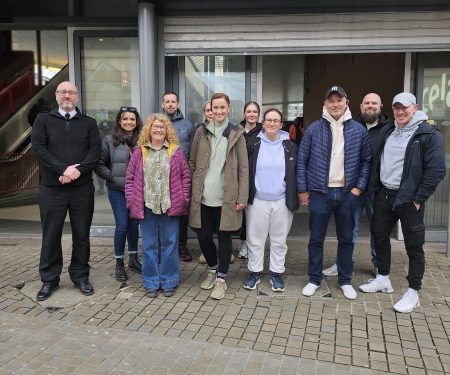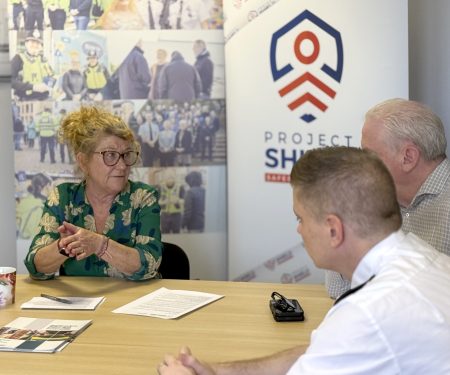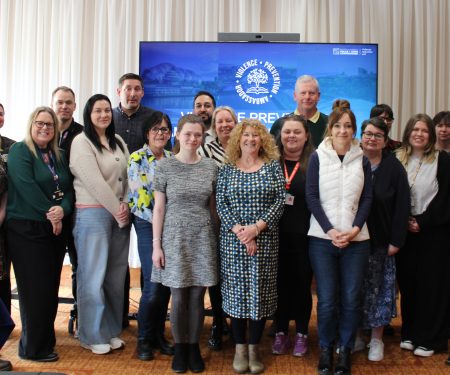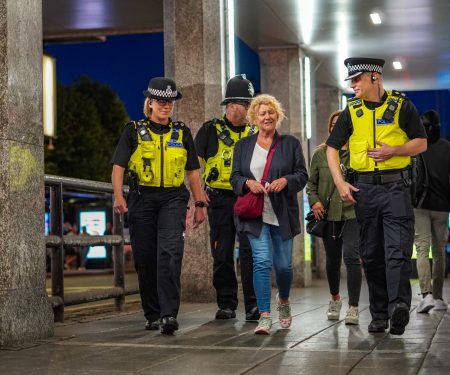
MORE than £1 million pounds worth of projects to drive down crime on public transport across Northumberland, Tyne and Wear have been rolled out through the Safer Transport Northumbria Project since it was launched by Police Commissioner Kim McGuinness two years ago.

Welcomed by both passengers and transport bosses, the raft of work dedicated to improving how safe people feel when travelling throughout the region has included enhanced policing operations, youth engagement patrols, days of action and development of a reporting app. It has all been designed to boost policing efforts and improve people’s experience of public transport in the area.

With the help of organisations like Edge North East and Inspire Youth, who are dedicated to working with young people to tackle youth violence and criminal exploitation, the project has engaged with 3210 young people on identified routes and stops. This work has also been amplified by patrols from the street pastors, Nexus and local councils who have engaged with nearly 7,000 more people.

Enhanced policing operations funded by the project aiming to improve police visibility and deter crime have also reported notable success. One example is Operation Princess, which since its launch has seen theft offences fall 78 per cent and public order down by 68 per cent.

Last month Kim McGuinness also announced she would be helping fund security teams on most of the Metro’s evening train services. This is to help people feel safer when making journeys after dark and is a step towards reducing ASB on board as well as at the platforms and stations. This move brings the security presence on the Metro to the highest level it has ever been.

Northumbria Police and Crime Commissioner, Kim McGuinness, said: “Reliable, affordable, and crucially, safe – that’s what people tell me they want from our public transport services.  Metro bosses say this is the highest security presence they’ve had so we really are delivering on making travel safer and people are starting to tell me things are feeling better. Our Metro connects our communities and links people to opportunities, and it is so important that people feel safe and comfortable when on board.

“Sustainable transport options like the Metro and our buses need investing in to make travel safer in the North East. I have made this my mission and I’m working with others to map out more plans and solutions to keep bettering our public transport – this is just the start of the journey. I will keep fighting for funding to achieve this because it matters to local people and will help our region thrive.”

The Office of the Police and Crime Commissioner is currently waiting on Government go-ahead to make a further one million pounds worth of investment to tackle ASB across the North East’s transport networks. The Police Commissioner has previously spoken out on how cuts to policing, public transport and councils over the last 13 years have had consequences, with rising ASB being one of them. She is determined to turn this around and is bidding for the investment that can make it happen.


Our Stats

A successful grass roots diversion project that steers young people away from knife crime is heading into its 5th year of improving lives, having already supported hundreds of young people.

Police Commissioner Kim McGuinness sets out how sport can play a crucial role in bringing down knife crime by having dedicated mentors from the YOLO project, working with young people aged 10 to 16 who have come to the attention of police for carrying a knife or weapon in recent months.

The project aims to divert young people away from violent crime, with 87% of those benefiting saying they feel more confident, more able to set and achieve goals and are now more optimistic about their future.

Both Newcastle United Foundation and the Foundation of Light are funded by the Northumbria Violence Reduction Unit to deliver a range of opportunities and support to help young people make positive life choices that divert them from crime.

Through the popular 20-week programme, young people are provided with a mentor and the chance to take part in one-to-one sessions, and engage in activities such as sport, music, art, social action projects, as well as tailored interventions to support them in making positive behaviour change and address their needs.

Giving feedback, a young person supported by the project, said: “They’ve done so much to help me. Simple things that I struggled with before, I can now focus on. The Foundation got me back on track and showed me better ways to spend my time.”

Northumbria Police and Crime Commissioner Kim McGuinness, said: “To tackle knife crime, we need to get ahead of the problem and that means reaching young people before they ever consider picking up a knife. But for those who have already made that choice or are at risk of becoming involved in violent crime, this fantastic project helps us to recognise the challenges that some young people face and allows us to work with them to address their behaviour and deter them from crime. That’s why projects like this are so important as they show young, often vulnerable people, that there is another way – violence doesn’t have to be a part of their life.”

She added: “Sport is one of many tools used by the Violence Reduction Unit and our regions two football foundations, but this project is not just about football, far from it. The programme is all about identifying the wider issues that can lead to a young person becoming involved in crime, understanding what matters to them, addressing their needs and supporting them in making real change for a more positive and fulfilling future. That’s how we prevent violent crime.”

Head of Youth and Community Education at Foundation of Light, Lee Crosby, said: “The Foundation of Light are extremely proud to be part of the YOLO scheme, and since commencing the partnership with the Violence Reduction Unit and Newcastle United Foundation, we have seen first-hand the impact and benefit for the young people we have engaged. Our mentors work hard to forge a positive relationship with the young people and develop a bespoke pathway that diverts the young person away from crime and violence, offering opportunities that promote positive behavioural change, whilst addressing their needs”.

Jordan Wragg, Youth Violence Coordinator at Newcastle United Foundation, said: “The YOLO intervention programme provides us with the opportunity to support participants in gaining confidence and awareness around making better decisions. We now have a renewed focus on knife crime awareness, working side by side with Foundation of Light and Northumbria Violence Reduction Unit to reach out to those vulnerable people that need our intervention the most. We do this through using the power of sport, one-to-one mentoring and tailored intervention sessions for everyone referred into the programme. Thanks to the support from the VRU, we can provide safe learning environments for each of sessions and activities we provide for vulnerable people across the local authorities.”

For more information, please contact the Northumbria Violence Reduction Unit by email vru@northumbria-pcc.gov.uk.

ENDS 

Our Stats

EMPOWERING people, particularly men, to challenge poor attitudes and change behaviours towards women, is at the heart of a new strategy to tackle Violence Against Women and Girls (VAWG), launched today by Kim McGuinness.

Setting out a series of priorities and actions for her office, she commits to tackling the root causes that lead to VAWG and is investing in a raft of prevention and intervention work as part of determined efforts to make the North East safer for all.

The Commissioner’s new plans also include investing £1 million into working directly with perpetrators following a successful bid to the Domestic Abuse Perpetrator’s fund. The focus of this work will be around prevention in order to protect people, including children, from experiencing domestic abuse.

More than 1400 people responded to a Safer Streets survey conducted by Kim’s team at the end of 2022 and all the views and experiences collated have helped inform the development of the strategy and the work being delivered by the Police and Crime Commissioner’s office.

As an example – many highlighted the need for better education on the importance of speaking out whenever they see or hear problematic behaviour. In response to this, the Commissioner’s office along with her Violence Reduction Unit commissioned a programme of ‘active bystander’ training which has recently been rolled out across the region.

An ‘active bystander’ is someone who recognises that a situation is potentially harmful and takes steps to intervene and make a positive difference. This approach helps shift responsibility away from victim-survivors onto the wider community.

Northumbria Police and Crime Commissioner, Kim McGuinness, said: “For me, this VAWG strategy sets out our stall with everything we need to be doing to drive real, lasting change. We owe it to the young girls growing up here in the North East. As well as continuing to ensure there is valuable support for victim-survivors and that we continue to improve their journey through the criminal justice system; I want to work towards a future where we don’t have victims at all.

“Society needs a reset. Men absolutely need calling out when they make women feel uncomfortable. I want their friends to challenge their mate’s behaviour or actions, not pump them up or egg them on. If we intervene, we’re telling the perpetrator that their behaviour is not OK, but by saying nothing it’s almost an endorsement. This is the problem, and this plan is all about solutions. Work like the active bystander training is just one of many projects we want to build on to achieve that vision of a safer North East for everyone.”

Up and down the region, there are already many businesses and organisations who have signed up to schemes such as the domestic abuse champions scheme and the active bystander training such as Nissan, Hays Travel and most recently Northumbrian Water.

Northumbrian Water who have just signed up colleagues to the Northumbria Violence Reduction Unit’s domestic abuse champions scheme, which trains staff to understand and spot the signs of domestic abuse so they can help others access support and raise awareness.

Elouise Leonard-Cross, Head of People Strategy & Experience at Northumbrian Water said: “Creating a culture where it is safe to speak up and get the support you need has been key to helping build a great place to work. Within Northumbrian Water we have developed an award winning health and wellness offer, Living Well, and this includes a network of colleagues who volunteer as Mind Mates. We have almost 50 colleagues trained around the business who are on hand to provide peer support if a colleague has concerns that are impacting their life in a negative way. ​​​​​​​Joining the Domestic Abuse Champions Scheme is a positive way to extend how we are able to support our colleagues, whatever they are facing”

The Commissioner’s VAWG strategy sets out clear commitments and calls to action for the next two years including lobbying, interventions and awareness campaigns.  It identifies four areas of focus, which are: prevention, support for victim-survivors, pursuing perpetrators and creating stronger systems.

Two of the Commissioner’s prevention commitments are below with more detail outlined in the strategy.

  1. I will lobby Government to provide more funding for important prevention work and education programmes, in particular those that engage with children and young people.
  2. I will fund active bystander training to give people, including men and boys, in our communities the knowledge and skills to challenge problematic attitudes and behaviours where this is possible and safe.

The VAWG strategy acknowledges that men and boys can also be victim-survivors of VAWG crimes, and women can perpetrate abuse against men and other women. – in the year ending March 2020 alone, there were an estimated 618,000 female victims (aged 16-74) and 155,000 male victims of sexual assault (including attempts). 98.3% of perpetrators were male.

Chief Constable of Northumbria Police Vanessa Jardine said: “Tackling violence against women and girls is rightly an absolute priority for Northumbria Police.

“Abusive behaviour against women in any form is simply not acceptable and I therefore welcome and fully support any initiatives which will help tackle this.”

To view the strategy in full click here.

For information about help and support available to victims click here.

ENDS

Our Stats

A new diversion service is being rolled out across the region, which will place specialist staff in hospitals and local communities to tackle violent crime, by reaching young people before it is too late.

Reducing hospital admissions for knife related serious violence is a key priority for the Northumbria Violence Reduction Unit, with A&E departments identified as a crucial point of contact.

The bespoke service will provide full support and structured interventions for young people, under the age of 25, to reduce their risk of committing serious violence and to prevent them being exploited for crime.

Initially, A&E Navigators will be present within the emergency departments of Sunderland’s Royal Hospital and Newcastle’s RVI, to identify young people who have come in with injuries or concerns linked to violent crime.

Specialist staff will then be on hand in local communities to deliver a range of interventions that are tailored to address individual needs as well as providing support to young people and their families, through one-to-one or group sessions.

The Northumbria Violence Reduction Unit is working in partnership with Humankind Charity to provide the wrap around support and access to services, focusing on the health, wellbeing and interests of the young person to divert them from crime and reduce re-offending.

Northumbria Police and Crime Commissioner, Kim McGuinness, said: “To bring an end to violent crime, we need to prevent it from happening in the first place. That’s why the Violence Reduction Unit works to educate young people on the dangers of becoming involved in crime, identifying those already showing signs of serious violence and addressing any risks in their life that could make them vulnerable to exploitation from organised crime groups. This new service provides a unique opportunity to reach young people at the point they are accessing our hospital A&E departments, with dedicated staff in place to understand what has led them to that moment and prevent it from happening time and time again. Community based staff will then provide tailored interventions and support for young people and their families, to break the cycle of violent crime.”

She added: Positive activities and interventions help us to address an individual’s needs, focus on areas of their life and take steps to improve it – things like re-engaging with education or training and employment opportunities all help to provide a deterrence from crime and to live a life without violence.”

Assistant Director for Community Services at Humankind Charity, Faye Simpson, said: “We are proud of our work providing comprehensive support to young people to improve their health and wellbeing outcomes and believe this work makes a lasting difference to the quality of their lives. We are looking forward to working in partnership with the Police and Crime Commissioner, which will allow us to extend our outreach activity and engage with more people who might not usually come forward for support.”

For more information, please contact the Northumbria Violence Reduction Unit by email vru@northumbria-pcc.gov.uk

ENDS

Our Stats

ONE MILLION pounds worth of investment to make public transport safer for North East passengers hangs in the balance as Northumbria’s Police Commissioner Kim McGuinness awaits the go ahead for her plans to tackle ASB across the region’s transport networks.

The Police Commissioner has spoken out on how cuts to policing, public transport and councils over the last 13 years have had consequences, with rising ASB being one of them. She is now fighting for funding to help passengers feel safer when travelling, which she in turn believes is an important step in helping the region to thrive.

The proposed plans to drive down ASB have been developed with police, transport and local authority partners and would see significant increases in police patrols and boosted neighbourhood warden and security resources.

Proposals now sit with the Home Office who will decide if tackling ASB on public transport across Tyne and Wear and Northumberland can be granted ‘ASB hotspot’ investment. A decision is expected in the coming weeks.

When Government announced ASB hotspot funding earlier this year Ms McGuinness was critical that their plans failed to offer long term funding provisions for youth services and family support. She believes tackling the root causes is crucial in preventing ASB but says she welcomes any police funding she can ‘get her hands on for the North East’ if it means enhancing police visibility and fighting crime.

Northumbria Police and Crime Commissioner Kim McGuinness said: “This is about us, as a region, being able to deliver a stronger, focused approach to tackling ASB on our transport networks as well as in the community.

“At the moment some people have told us they are frightened or uncomfortable using the bus or metro and this is impacting their daily lives – the simple things like getting to work or heading to the shops. Without access to good transport services, so much is put in jeopardy – income, education and healthcare. This really is the last thing the region needs – especially as we all know we are already one of the most deprived areas in the country.”

She continued: “These plans for more patrols and more focused operations in busy periods and at key interchanges and stations would help address people’s concerns and improve overall feelings of safety. It’s so important we get our region’s transport right. It matters to local people, and it matters to me – we just need the green light.”

Last year the Police Commissioner’s office conducted a range of surveys to explore how people felt about using public transport in the North East with most citing they want buses and trains that are reliable, affordable and crucially, safe. She also set up a regional board to tackle ASB which has found ASB on public transport to be a top priority issue for the area.

If successful, this funding will add to the two million pounds the Commissioner has previously secured for the Safer Transport Northumbria project which has included employing youth workers across the transport networks, developing a phone app to make it easier for people to report concerns, women’s safety campaigns and dedicated days of action and policing operations.


ENDS


Our Stats

Another action packed summer is set to get underway in a bid to stop spikes in violent crime and keep people safe.  

Having successfully piloted this approach last year, summer violence dropped by 12.2% and continued on this downward trend throughout the winter with a 10% reduction in offences, in targeted areas.  

This has led the Northumbria Violence Reduction Unit to embed this approach in its strategy for driving down violent crime across the region. 

With more people heading out to enjoy the warmer weather, this increased action will put a range of activity in place to make everyone feel safer, including more police officers, youth workers and positive activities to engage young people and divert them from crime.  

Getting ahead of the curve is a vital part of the Violence Reduction Unit’s response to tackling violent crime, so there will also be a focus on iconic events over the summer, such as The Hopping’s, football matches and the regions bustling night-time economy.  

Through working together with the Community Safety Partnerships and other key services in Northumberland, Tyne and Wear to develop projects aimed at reducing serious violence, it has led the Violence Reduction Unit to invest over £100,000 in local communities, which will see areas benefit from the following actions:  

  • In Gateshead there will be additional youth workers and police patrols in communities and neighbourhoods that are experiencing higher rates of crime and anti-social behaviour.  
     
  • A task force will be working in Newcastle city centre to reduce crime in parks and other green spaces by engaging with the public, and focusing on events that increase footfall to the area such as The Hopping’s and concerts.  
     
  • North Tyneside will see more action taking place in areas experiencing higher reports of serious crime, with Project Vita stepping in to provide more activities for young people to divert them away from offending. 
  • In Northumberland, there will be more stop and search activity and an increased visibility of community teams and officers to prevent offences relating to serious violence, knife crime and possession.  
     
  • In South Tyneside, work will continue to identify and engage young people at risk of serious violence and to provide support to them through weekly sessions.   
     
  • Sunderland will see an increase in police officers, neighbourhood wardens and ASB staff during the summer months to provide reassurance for residents, businesses and visitors that the city is doing all it can to prevent violent crime. 

Northumbria Police and Crime Commissioner, Kim McGuinness, said: “Violent crime can happen at any time of the year, but we do see increases during the summer months when there is more to do while enjoying the warmer weather and then again during the winter when the festive season gets underway. That’s why this increased action is so important – it helps us to get ahead of the problem and put a stop to it. We know that this approach really does work and following the results of last year, I am delighted that the Violence Reduction Unit are again working closely with police, councils and other key services across the region to target interventions and action where they are needed most.” 

She added: “Making sure you feel safe is so important to me, which is why we will continue throwing everything we have at tackling violent crime, and that starts with investing in our communities to provide real change.” 

Cllr Jim Foreman, Lead Member for Housing and Community Safety, South Tyneside Council, said: “Our close working with the Office of the Police and Crime Commissioner last summer on a range of youth seasonal diversionary activities resulted in a reduction in violent crime and this funding will allow us to plan and deliver further initiatives this year which we hope will prove to be just as successful. By taking an early intervention, preventative approach, alongside our partners, we hope that our young people can enjoy the summer safely and with consideration for others.” 

For more information, please contact the Northumbria Violence Reduction Unit by email vru@northumbria-pcc.gov.uk

ENDS 

Our Stats

Exit
Site