
NATIONAL research has found almost one in three parents have noticed misogynistic behaviour among children at their child’s school prompting a call from Northumbria’s Police and Crime Commissioner for adults to lead by example and challenge harmful attitudes.
The findings come from a YouGov survey of 900 UK parents, published in October 2025. While 31% had noticed misogynistic attitudes or behaviours among children at their child’s school, 17% had noticed it among their child’s friends and just 7% had noticed it in their own child.
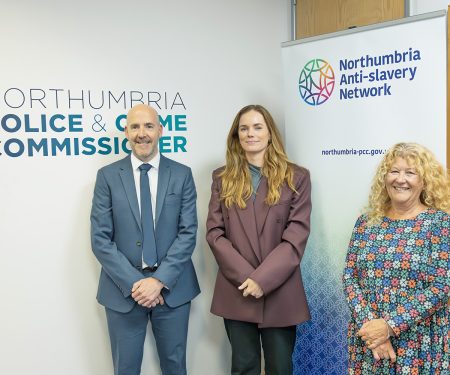
And so Northumbria’s Police and Crime Commissioner, Susan Dungworth, is encouraging parents to sign up for free active bystander training, helping them build the confidence and practical skills to safely challenge sexism, harassment and misogyny if they see it, as well as empowering them to have constructive conversations to help prevent such attitudes and behaviours.
The training explores the different forms of violence against women and girls (VAWG), the attitudes and myths that can contribute to harmful behaviour, and why people sometimes hesitate to intervene when they witness something wrong.
Through group discussions and practical scenarios, participants learn how to assess situations, choose an appropriate response and intervene safely and effectively. This could mean challenging a sexist comment, distracting someone to defuse a situation, checking on a person who is being targeted or calling on others for help.
The course also explores how to have constructive conversations with friends, family and colleagues about sexism and misogyny, helping participants challenge harmful attitudes and encourage others to do the same. Intervening does not have to mean confrontation — a few calm words or a simple offer of support can make a difference.
For parents and carers, it is also an opportunity to lead by example. Children and young people learn from the behaviour they see around them, including how adults treat others and whether they are prepared to challenge disrespectful behaviour.
Northumbria PCC Susan Dungworth, who has made Women’s safety in public places a flagship commitment in her refreshed Police and Crime Plan, said: “We all have a role to play in tackling violence against women and girls, and as parents that starts with the example we set and the conversations we have.
“We all need to be prepared to challenge harmful behaviours when we see them — whether that is a sexist comment, a misogynistic joke or someone being made to feel unsafe.
“Not everyone feels confident about how to intervene, or knows what to say in the moment – I get that. This training gives people practical tools to assess a situation, respond safely and support someone who may be experiencing harassment.
“By challenging behaviour rather than brushing it off as banter shows children that sexism and misogyny aren’t acceptable. I would encourage parents, sports coaches, anyone around kids – to sign up.
“In the UK, 71% of women have experienced sexual harassment in a public space. It doesn’t have to be this way.When we see or hear sexual harassment and do nothing, we empower the harasser. My message is we can all do something – this training will teach you how.”
The free training is open to adults aged 18 and over who live, work or study in Northumberland or Tyne and Wear. It is delivered over two half-day sessions at the Office of the Police and Crime Commissioner, Victory House, Balliol Business Park, Benton Lane, Newcastle, NE12 8EW.
The next course takes place on Friday 4 December and Friday 11 December 2026, from 9.30am to 1pm on both days. Participants must be available to attend both sessions.
Parents and carers can register their interest by emailing enquiries@northumbria-pcc.gov.uk. Further information is available at northumbria-pcc.gov.uk/bystander.
ENDS
Quotes from previous participants of the course:
- “It was challenging having to acknowledge, as a man, that a lot of men behave in these ways”
- “Education is so important. Safety considerations as a woman haven’t reduced with time, they appear to have increased. The training reinforced the damage words can do; something that someone perceives to be relatively low level can cause devastating effects.”
- “It taught me how to address somebody with harmful views, that arguing with somebody about their views doesn’t help them change it. It also showed the police are taking this seriously.”