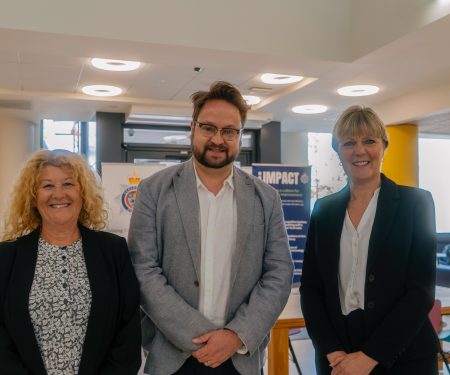

Northumbria Police and Crime Commissioner Susan Dungworth and The Dialogue Society this week brought together faith and cultural representatives for a roundtable aimed at ensuring the voices of marginalised communities help shape a refresh of the PCC’s Police and Crime Plan.
Set against a backdrop of growing national concerns around antisemitism, Islamophobia and wider community tensions, attendees from across the force area called for greater efforts to encourage the reporting of hate crime and to improve public understanding of what constitutes a hate crime and hate speech how the reporting process works.
The community cohesion-focused event brought together residents and professionals from a wide range of faiths, cultures and backgrounds to discuss how local partners can work together to keep communities safe and inclusive for everyone. Community engagement officers from Northumbria Police also attended to take part in discussions and share local insights and policing knowledge.
The roundtable formed part of the PCC’s summer engagement programme, the Commissioner’s Community Catch Up, which has been designed to hear directly from local people and ensure her plans for safer streets and stronger communities accurately reflect the evolving priorities and concerns of residents.
Among the key issues raised during discussions at the event were women’s safety in public spaces and on public transport, Islamophobia, antisemitism, racism, online hate and the importance of building stronger community cohesion.
Speaking at the event, PCC Susan Dungworth reflected on the themes and priorities highlighted by participants. She said: “When we set out to hold this roundtable with the support of The Dialogue Society, we thought if we could bring together 12 or 15 people, that would be great. In fact, the response was more than double that. It demonstrates the strong commitment we have across our region, with people wanting to come together, build understanding and live free from hate and prejudice.
“Improving the reporting of hate crime is a key takeaway for me as we refresh the Police and Crime Plan. While some forms of hate crime appear to be declining, I am very aware that official statistics do not always reflect people’s lived experiences.
“Many incidents go unreported because people are unsure what constitutes a hate crime, how to report it, or what support is available. We need to do more to raise awareness and give people the confidence to come forward.
“Whether that is reporting to Northumbria Police, contacting Crimestoppers, accessing our commissioned support through organisations such as Connected Voice, or visiting one of our Hate Crime Safe Reporting Centres, there are a range of options available and there is a great deal of support out there. We just need to up our game making people aware of that.”
She added: “I believe the fear of crime can often have a greater impact on people than crime itself. Unfortunately, misinformation online can fuel anxiety and division. There are individuals, including politicians, who choose to exploit fear for their own purposes, and that only serves to deepen tensions and create further challenges for our communities and our police too.
“Fear and misunderstanding can drive division, which is why we all have a responsibility to challenge misinformation and help build stronger relationships between communities. Many of the people in the room recognised that promoting community cohesion is not solely the responsibility of the police or public bodies – it is a shared responsibility for all of us.”
Tugay Yalcin, from the Dialogue Society, a charity dedicated to advancing social cohesion by fostering dialogue, community engagement, and understanding spoke after the event. He said: “Everyone who joined us was someone who works tirelessly for the benefit of our communities, building bridges from heart to heart and bringing people together across different backgrounds. That is why we are here. At a time when divisions, hatred, discrimination and racism are increasing across the world, our responsibility is to create more opportunities for dialogue, understanding and friendship. At the Dialogue Society, together with our 150 volunteers across the country, we remain committed to being part of those bridges and strengthening the relationships that make our communities safer, more connected and more united.”
The PCC is encouraging everyone to take part by completing a short survey which is open until 31 August, and everyone who lives, works or studies in the Northumbria Police force area is encouraged to take part.
Residents can complete the survey link here. Those wishing to respond via post or telephone can do so by calling 0191 2219800.