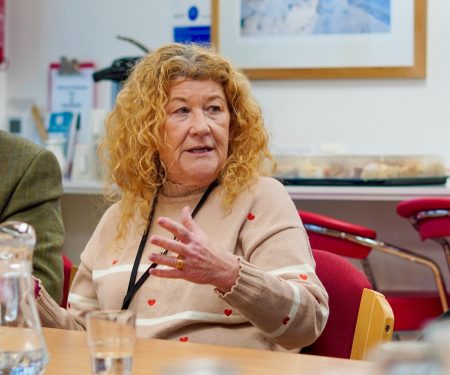
Young offenders at risk of slipping into a life of crime are being steered away from the courts and down a new pathway as part of a new revolutionary project.

Under a diversionary scheme being piloted in the area, teens caught up in criminal activity will be diverted back in to education, training and peer mentoring, rather than enter the justice system – where they could risk being convicted and ruining their futures.

The move is being spearheaded by the Force’s Prosecution and Victim services team, alongside partners from the Violence Reduction Unit (VRU) all six local authorities and Youth Justice services. Together the partners have been guided and assisted by The Crown Prosecution Service.

Chief Inspector Rob Bosson, who has been instrumental in rolling out the scheme, said the main aim was to make a meaningful difference in young people’s lives, while reducing demand on the criminal justice system.

He said: “We know factors such as poverty, trauma, and mental health can all have an impact on a young person’s life and make them more likely to come into contact with the police.

“But we also know the right intervention can make all the difference. The preventative measures, including diversion schemes set up and supported by the police forces across the country, are reducing the number of children entering the criminal justice system – so why not replicate it for young adults and offer them another chance?

“In a lot of circumstances, putting first time offenders and young people before the courts has a detrimental effect as the stigma associated with it can make it difficult for that person to find a job, stay in education and make a positive contribution in their local community. This in turn can cause reoffending, and the spiral goes on and on.

“Our communities can be assured this scheme is not a get-out-of-jail-free card for those continually breaking the law or wreaking havoc. It’s a robust new system which ultimately looks at what is best for that young person as well as what’s in the public interest.

“If and when a person is eligible, a panel of experts will work together to make a decision on whether an out of court disposal, such as mentoring, education or counselling could serve as a better outcome for that individual.”

Families will also be an integral part of the process, with access to support services and counselling on offer to tackle any root causes which may be behind offending.

Another driving factor behind the scheme is to help free up officers and the courts, making way for more serious offences to be heard more swiftly.

Ch Insp Bosson added: “If a panel decides to send a young person on a mentor scheme, instead of issue a court summons, that’s not only a better outcome for that individual who can now benefit from their experience with law enforcement, but it also helps officers and the courts to focus on bringing more serious perpetrators to justice and safeguarding their victims.”

Northumbria Police and Crime Commissioner Kim McGuinness added: “It is vitally important that we break the cycle of criminality and give young people in particular a chance to avoid a life of crime, and strong role models with lived experience of turning lives around is a key part of that.

“That’s why I am proud to be backing our police by introducing  new Youth Navigators later this year. They will work directly with young people and their families to address the root cause that led them to commit crime.

“If we stop young adults going on to commit more crime we can free up our police to get on with the job of keeping us safe.”

Young people who commit serious offences, continually fall foul of the law or who are arrested and kept on remand will not be eligible for an out of court disposal.
Our Stats

Thousands of school children have seen the reality of carrying a knife after Police and Crime Commissioner Kim McGuinness funded specialist education sessions.

Over the last school year, the PCC’s Violence Reduction Unit worked with almost 3,500 children and young people to raise awareness of knife crime and the impact of carrying a knife, despite the restrictions in place due to lockdown.

The Education Team delivered interactive sessions for young people in schools and youth groups with a focus on awareness and prevention of knife crime.

The sessions covered why young people might carry a knife, the law, as well as providing advice on additional information and support. An incredible 152 sessions were delivered to young people throughout the North East, as part of a long-term ambition to fight crime.

Northumbria Police and Crime Commissioner, Kim McGuinness said: “It is vitally important that we continue to educate young people to provide them with the knowledge to make positive decisions for the future. I am delighted by how many young people my Violence Reduction Unit have engaged with and I encourage anyone in a school or youth setting to contact the team to arrange a session”.

During the pandemic the number of offences involving a knife dropped by 8% and hospital admissions for assault were down. Ms McGuiness added: “Although our region is very safe there is always a possibility that crime could increase as we come out of lockdown. Therefore, we must engage young people now to ensure they are diverted from crime by having the right support and opportunities. My Violence Reduction Unit are here to ensure that Northumbria Police are not alone in standing up to violent crime.”

The Education Team recently delivered a knife crime session at Barnardo’s Employment Training Skills North in North Shields. Helen Skea, Curriculum Lead said: “We had a great session with all the young people within our centre in partnership with Northumbria Youth Action. The session was about raising awareness of knife crime and the students were educated on the consequences and impact of carrying knives, not just for themselves but also for their family, friends and community. All our students have left the session with the clear understanding of the implications and devastating impacts and not to carry knives. In addition learners are now more aware of where to get advice and support in particular the #knifefree website and Fearless (Crimestoppers).”

Training is also available to those who work with young people to ensure they have an understanding of issues relating to knife crime such as the law and factors that increase a person’s vulnerability to becoming both a perpetrator and a victim.

For more information or to arrange an education session, please contact the Violence Reduction Unit by email VRU@northumbria-pcc.gov.uk.

Our Stats

Newcastle United Foundation and Northumbria Police and Crime Commissioner Kim McGuinness are celebrating a major milestone as part of an ongoing project to protect, educate and inspire young people to live a life away from crime.

Since 2019, the official charity arm of Newcastle United has worked closely with the PCC’s Violence Reduction Unit to provide interventions and support for children and teenagers aged eight to 14 who are on the fringes of criminal or anti-social activity.

Now, two years on from launching the YOLO project, the Foundation has successfully provided direct mentorship support and positive interventions for 103 young people in the past year through more than 500 hours of face-to-face delivery during the pandemic.

Delivered by a dedicated team of Foundation staff, YOLO offers one-to-one support in schools and community settings, with sessions educating youngsters about drug and alcohol abuse, laws and consequences, county lines operations and targeted interventions to suit each individual.

To mark the two-year anniversary since YOLO began, Northumbria Police and Crime Commissioner Kim McGuinness met with participants and staff at a Newcastle United Foundation Premier League Kicks session to see the initiative in action.

Kicks, also delivered by the Foundation, provides free weekly football for children and teenagers from Berwick to Gateshead and is an informal way to engage young people who could or have benefitted from YOLO intervention.

Northumbria Police and Crime Commissioner, Kim McGuinness, said: “I know the Foundation really well and they totally get it – if we are truly going to fight crime, we need to get ahead of it, and prevent it from happening in the first place.

“Making sure young people have access to positive activities, role models and support is vital – and this is what YOLO is all about.”

She continued: “My Violence Reduction Unit has worked with the project right from the beginning – it’s a key project for us as it gets kids on the right track and steers them away from trouble.

“Grassroots projects like this can, and do, make a real difference to young lives and it’s so important that we reach young people before it’s too late.”

Through face-to-face interaction, activity packs and physical activity, an amazing 87 per cent of participants exiting the YOLO programme report felling more confident, able to set and achieve goals and are feeling more optimistic about their future.

Jacqueline Critchley, Newcastle United Foundation Youth Violence Project Coordinator, said: “It has been a pleasure to welcome Kim to our Redheugh Kicks session and to introduce her to some of our incredible participants who we work closely with week-in and week-out.

“It’s been particularly challenging for children and teenagers during the last year and we’ve been in constant contact with each individual to ensure they are supported to engage with schoolwork, spend time with family and friends and stay active.

“Our YOLO sessions are really there to target and address the needs of each young person and to equip them with the skills and confidence in themselves to move away from a lifestyle that will hurt and negatively affect them, their loved ones and the general public.

“Alongside the PCC and Northumbria Violence Reduction Unit, we truly believe that we can improve lives to prevent crime in the future and there is no better time to do this than at the start of life.”

For more information on the YOLO project, please visit nufoundation.org.uk or alternatively visit the PCC’s Violence Reduction Unit website here.

Our Stats

KIM MCGUINNESS – Northumbria Police and Crime Commissioner – has warned that more and more children from the North East are leaving their home region to pursue county lines work in other parts of the UK.

Her concerns were raised following what PCC McGuinness hailed a robust and successful County Lines Intensification Week for the police force which saw 23 arrests made, as part of tough action to fight crime across the region.

County Lines is a form of criminal exploitation where criminals persuade, coerce and force children and young people to store drugs and money or transport them to other areas.

Recently, children as young as 13 have been caught working as drugs runners for criminals operating within our region, with some even relocating to other parts of the UK where County Lines is a bigger problem and there is more work as ‘drugs runners’ on offer.

Last week a large-scale County Lines clampdown resulted in 23 people arrested and seized more than £20,000 in criminal cash.

Northumbria Police and Crime Commissioner, Kim McGuinness, said: “Northumbria Police is pulling out all the stops– the raids, the covert operations, they’re doing it all to get on top of this as a region, but fighting this crime is not a job for our officers alone.

“Drug dealing is a dangerous world and we have to stop our young people getting caught up in a cycle of fear and violence. That’s why youth and outreach workers have such a vital part to play in the solution and it pains me that these services have been cut time and time again by Government.

She continued: “As well as searching for the dealers, the search is on for the children they prey on so we can look after them – they are the victims, not the criminals here. It’s a real concern how we are hearing of more and more children getting embroiled in moving drugs for gangs and they’re ending up all over the country.

“We can’t – and won’t let – the North East become a go-to place fore recruiting and exploiting young people. Youth and outreach workers have to be part of the solution more than ever – it’s a no brainer. My Violence Reduction Unit will keep working closely with organisations like Edge North East who reach out to young people in their time of need; they listen, they work with them and help ensure they’re safe. Whatever mess victims find themselves in, with the right support they can get out of it and out of a life of crime.”

Collette Devlin-Smith, from Edge North East, said they had seen an increase in young people becoming involved County Lines over the past few years, not helped by lockdown increasing young people’s vulnerability.

She said: “It’s a big problem you know. Young people often don’t see themselves as victims. They can be completely brainwashed. It’s grooming. There are kids going missing from home and from care all the time. It’s like they get sucked it – more drugs, more rewards, maybe they feel pressured to rise through the ranks of the gangs to survive. But it’s happening to children from our region – we have victims right here on our doorstep – and we often end up finding them far away, far from home. Without support and a place to turn to, to trust for help to get out, it’s frightening to think where they might end up.”

Detective Chief Superintendent Aelfwynn Sampson, who runs Northumbria Police’s Crime department said:

“The ripple effects of this type of criminality are far reaching and can have a significant impact on those involved as well as those living in the communities we serve.

“County Lines is an aggressive, often violent method of drug dealing which relies heavily on the exploitation of the vulnerable and young people, with many of them unaware of what is even happening to them. And this is completely unacceptable.

“As a Force, we are working hard to ensure this appalling practice does not take a hold in our region.

“As well as taking part in national intensification periods, we regularly carry out a range of activity as part of Operation Sentinel which includes targeted strikes and arrests aimed at shutting down the deal lines and pursuing offenders, to working with our partners to ensure vulnerable victims are identified and safeguarded.

“We would ask the public, especially parents, to work with us and report any concerns to help us put a stop to this despicable method of drug dealing.”

Our Stats

£1.6 MILLION TO BE INVESTED IN TACKLING SERIOUS VIOLENCE ACROSS NORTHUMBRIA

Northumbria’s Police and Crime Commissioner has secured a further 12 months funding to tackle serious violence and its root causes, but has called for a long term approach from the Government.

The regions Violence Reduction Unit, led by Police and Crime Commissioner Kim McGuinness, will spearhead the preventative approach to tackling serious violence across Northumbria for another 12 months after receiving a third round of Government funding.

Since launching, the Unit has contributed to the regions decline in crime, serious violence, and fall in number of knives used on our streets. Though the Commissioner believes even more could be done if the Government tackled serious violence with a long term approach.

Going into the third phase of their work, Northumbria VRU will again be focusing on supporting the region’s most vulnerable young people, providing interventions and diversionary activities, as well as working in the heart of communities to build resilience and relationships.

Kim said: “Funding this work for another 12 months is absolutely the right thing to do – but we cannot keep approaching this with a year on year approach, the Government need to properly finance this with a long term strategy.

“In the 12 months since the Unit launched, we’ve seen a 10% fall in knife crime – this was reducing even before the pandemic hit. Whilst obviously pleasing, it is frustrating to think what we could truly be achieving if we had the knowledge this was going to funded past the 12 month guarantees from Government.

“In our plans for the next year, we are looking at life changing work – not something that can just be delivered with a few weeks’ notice and a short term approach, this is intensive work with some of the most vulnerable young people in the region. We are stopping them being exploited for criminals personal gain, preventing them being involved in County Lines, and diverting them onto a positive lifestyle path.”

Running until the end of March 2022, the year ahead will see the unit invest in a range of direct interventions and programmes, including an expansion of their Community Hub and Link Worker model – taking services directly to communities most in need. The Unit currently fund Hubs in Southwick, Gateshead and Howdon, with a further 3 planned in the coming months.

A further three areas will also benefit from funding to provide a Link Worker, adding to the already funded programmes currently supporting communities in Gateshead, North Tyneside and Northumberland. The roles focus on building relationships with those in the community at risk of becoming involved in violence, and often use those with lived experiences to mentor those identified from following this route.

The expansion of the programme promises to provide vital support services, having already successfully worked with families & individuals around issues including; domestic abuse, drug misuse, anxiety, mental health concerns, school exclusions and housing support.

However, not all was a positive – the Commissioner has warned that as lockdown eases and the economy feels the impact of the past 12 months, crime has the potential to rise unless preventative measures like her Violence Reduction Unit, are the focus of Government plans.

Kim warned: “Whilst we are all looking forward to restrictions easing, and getting back to some form of normality, not everything will be as it was before. I am concerned about the lack of opportunities for young people come the easing of restrictions.”

“There is likely to be significant challenges in regards to youth employment – something we know can lead to increased vulnerability. We are exploring options around this, having discussions with employers and providers, and will continue to support the regional recovery post-pandemic.”

The third phase of Northumbria VRU will begin in April 2021.

Our Stats

Police and Crime Commissioner Kim McGuinness has announced that a one-off pot of money totalling £354.126 is to be awarded throughout our region to services who currently support survivors of domestic abuse (DA) and sexual violence (SV).

This funding will provide additional support to meet demand/need in the 2021-2022 financial year (1 April 2021 – 31 March 2022). Funding can be used to support existing clients as well as new referrals and will enable a lot of the good work that has been happening in our region to continue.

Organisations which may be eligible for this funding are registered charities, charitable incorporated organisations, social enterprises and statutory services. They must, however, provide support services which have the purpose of helping victims (adults and/or children) of SV or DA cope with the impacts of crime, and, as far as possible, recover from the harm they have experienced.

DA/SV support services could include, but are not limited to: counselling for survivors and their families, support for particular groups such as Black and Minoritised/disabled/LGBT/male survivors, IDVAs/ISVAs, CHIDVAs/CHISVAs and family court support. Funding may be used to address short term income disruption, meet essential costs of sustaining activity or to address an increase in demand or anticipated demand.

We have attempted to streamline the process to alleviate services of as much work as possible by not running a competitive bidding process. However, to apply for funding, organisations must complete the attached template and return to maxime.rowson@northumbria-pcc.gov.uk, along with a copy of their annual accounts, by Tuesday 2 March 2021.

Whilst we cannot guarantee that we will be able to offer the level of funding requested, we will endeavour to make sure those in need benefit.

Please note, that funding cannot be used for:

  • Campaigning activities
  • Religious activities outside of projects benefiting the wider community and not containing religious content
  • Political or lobbying activities
  • Loan repayments
  • Activities that make profit for private gain
  • Capital works e.g. building repairs, but can be used for other capital costs such as ICT equipment to enhance your communications and help reach local people.
  • Refuges/accommodation and their staff

If you have any questions, please do not hesitate to contact Maxime Rowson, Policy and Research Officer – maxime.rowson@northumbria-pcc.gov.uk

NB: This is MoJ funding. The MoJ has also released a separate pot of funding for ISVA/IDVA services. Your organisation should have received an email from the OPCC about this if you offer IDVA/ISVA provision. If you have not, please do get in touch.


Our Stats

Exit
Site