16th December 2025
ASB and crime
0191 2219800
enquiries@northumbria-pcc.gov.uk
Northumbria Police will increase its community policing presence after getting the green light to boost its recruitment plans.
Nationally, there is a drive to deliver an additional 13,000 neighbourhood officers, PCSOs and special constables over the next your years.
A Neighbourhood Policing Guarantee (NPG) has also been outlined to tell the public what they should be able to expect from local neighbourhood teams.
The Force already has a strong Neighbourhood Policing approach which seeks to prioritise visibility and public engagement.
Effective problem solving, prevention and proactive policing are essential elements of that approach to ensure people feel safe and to provide an outstanding service to the public.
Northumbria submitted an ambitious proposal which has been accepted. It will recruit an additional 95 police officers, 27 PSCOs and 30 Specials over the next year to increase its community policing presence.
The Force are also seeking to be the first in the country to offer a direct entry route into Neighbourhood Policing Teams enabling new officers and staff to make a real difference in their local communities and tackle the issues that matter most.
Northumbria Police and Crime Commissioner, Susan Dungworth, said: “Like me, residents want to see officers out there on the streets, embedded in their local communities. So, this is a hugely welcome boost for our police, as a workforce, and for local people who we want to feel safe in their daily lives.
“With my full backing, the Chief Constable put forward an ambitious bid for more officers for our region – to help make those in uniform more visible and accessible wherever you live – whether in our busy towns or our more remote rural areas.
“As PCC, I have set out a clear plan for Northumbria for safer streets and stronger communities and the neighbourhood policing guarantee will play a vital role in helping deliver on my priority to ensure we have an engaged and responsive police force.
“With dedicated funding from Government for neighbourhood policing, we can now press on with big recruitment plans for the region so we can get more officers out where they are needed tackling crime, preventing disorder and providing that welcome police reassurance we all like to see.”
Chief Constable Vanessa Jardine said: “When we learned of the opportunity to increase our numbers, we decided to grab it with both hands.
“This will enable us to provide a more visible presence that the public always tell us they want to see.
“We have always valued neighbourhood policing here in Northumbria but this will give us a real boost to help us make communities safer, prevent crime and disorder, solve local problems and build on our already strong relationships with our fantastic communities.”
Want to join the best police force in the country? Visit Police Officer Jobs – Northumbria Police to begin your Northumbria Police journey.
NORTHUMBRIA’s Police and Crime Commissioner is asking landlords to be on the look-out for possible cannabis farms in their rental properties, following a string of dangerous fires and a fatal across the force area.
PCC Susan Dungworth said those setting up cannabis farms in their homes are placing themselves, their neighbours, and the emergency services in serious danger.
Susan is appealing directly to landlords for help in tackling the growing problem – urging them to be vigilant and report concerns.
Signs of a cannabis farm at a property might include extra security, windows that are covered, lots of moisture, and a strong, sweet smell. Also, bright lights always on, more air systems, and wires that have been changed could mean trouble.
Nationally, the issue of growing cannabis in rented homes is on the rise. 90% of cannabis used in the UK is grown in cannabis farms set up in rented homes – with criminals attracted to the anonymity and the ease of being able to quickly abandon premises without a financial tie in.
Such home-based drug farms have resulted in tragedies up and down the country, with fatal fires happening here in the North East.
As well as putting lives at risk through fire danger, police often uncover cannabis production links to other illegal activity like human trafficking and violence, with organised crime groups often behind this.
Northumbria Police and Crime Commissioner, Susan Dungworth, said: “Growing cannabis in a rented home is bad news for everyone. It makes the area less safe and can lead to devastating consequences that impact innocent families and entire communities as we saw recently in Benwell. My thoughts remain with the loved ones of Archie York whose whole life was taken away from so unfairly because of people choosing to illegally grown cannabis at a residential property.
We should all report any concerns or suspicions we may have about drug production in our areas. I want landlords to help too by watching for the signs that it could be happening in their property.
“Growing cannabis at home is like setting up ‘death traps’ because of the many risks involved. Landlords and letting agents have a responsibility to check on their tenants and be aware of what their properties are being used for. I’d encourage landlords to regularly visit their properties and make sure nothing suspicious is going on. Make sure you carry out background checks on those who want to rent too. Any illegal and dangerous activity, such as cultivating cannabis plants, should be reported to the police or Crimestoppers, if preferred.
She continued: “Our police have had some great results in the past few months – dismantling multiple farms, arresting suspects and even safeguarding a number of people. Intelligence sharing from landlords and the wider community has helped achieve this, and we welcome more of it.”
Police officers in the North East have seized over £3.2 million worth of cannabis plants and arrested ten in a drug crackdown.
Co-ordinated efforts under Operation Mille from North East Regional Organised Crime Unit (NEROCU), Cleveland Police, Durham Constabulary, Northumbria Police saw 28 warrants executed and 3,200 cannabis plants seized.
Earlier this year, charity Crimestoppers launched a campaign in Northumberland and Tyne & Wear to raise awareness of the dangerous cannabis extraction processes that produce butane honey oil (BHO) and shatter. BHO can be processed using various techniques to create several different products, including shatter.
Anyone with information about drug production can contact Northumbria Police online or via 101. Otherwise, contact the independent charity Crimestoppers, anonymously, on 0800 555 111 or by completing a safe and secure online form at Crimestoppers-uk.org. In an emergency, always call 999.
ENDS
The region’s police organisations have teamed up with partners to host a unique event aimed at shining a light on evidence-based practice that reduces the harm caused by serious and organised crime.
The North East Serious and Organised Crime Conference, was an innovative two-day event, that saw key specialists come together to deliver inputs showcasing national and regional examples of success, demonstrating new opportunities, highlighting new threats, and detailing new capabilities that can be utilised to assist in the prevention of serious and organised crime.
Held at the amazing Glow Centre in Aycliffe Business Park, on March 25 and 26, it was led by the North East Regional Organised Crime Unit (NEROCU) with the support of Durham Constabulary, Cleveland Police and Northumbria Police.
The Society for Evidence-Based Policing kindly sponsored the event and it also saw all three of the region’s Police and Crime Commissioners attend and show their support, with Susan Dungworth and Joy Allen, introducing speakers throughout both days.
Northumbria Police and Crime Commissioner, Susan Dungworth said: “Criminal networks often prey on the most vulnerable members of our communities, fuelling violence, exploitation, and fear. The impact this has on individuals, families, and communities is devastating – and this has to stop.
“Tackling serious and organised crime is everyone’s responsibility. We all have a role to play, and no single organisation can tackle it alone. That’s what this conference was all about, bringing together experts from across policing, sharing innovative approaches, and highlighting new opportunities.
“This is a relentless fight but one we are absolutely committed to winning. By sharing intelligence, strengthening our partnerships, and focusing on both disruption and prevention, we will continue making it harder for criminals to operate. Together we will create safer, stronger communities for everyone.”
Detective Chief Superintendent Phil Shutt, Head of NEROCU, said: “It was a fantastic event and we’ve had an incredibly positive response from those who attended.
“I want to thank all those who attended the conference and a special thank you to those who delivered a presentation. Everybody engaging with sessions is what made it the success it was.”
The event also had stalls from Cyber and Economic Crime specialists, Tackling Organised Exploitation (TOEX), Northumbria Police’s Trainee Detective Programme that tackles knife crime, and the City of London Police.
DCS Shutt added: “In the North East we are proud of the connected and coherent response we deliver to the threat of serious and organised crime, providing a collaborative whole system approach across the region with our ROCU, three police forces, NCA and all our partners.
“NEROCU plays a pivotal role in connecting local to national delivery, and events like this are crucial in sharing best practice and raising awareness of the latest innovative capabilities available to maintain our momentum in targeting those involved in serious and organised crime and protecting our communities.”
Northumbria’s Police and Crime Commissioner, Susan Dungworth, is urging schools to sign up for The Alice Ruggles Trust school assembly programme, as it gains momentum across the force area..
Funded by the PCC’s office, the Trust is delivering free assemblies to secondary schools across the Northumbria Police force area to help students learn about the warning signs, understand the law, and know where to seek help if needed.
18 schools across the region have already signed up to the project, with 13 assemblies delivered to date. The Alice Ruggles Trust seeks to give young people the confidence to recognise stalking behaviours and empower stalking victims to seek help much sooner, and to build a society that responds in the right way.
Stalking often leads to emotional, psychological, and sometimes physical harm and has been experienced by 1 in 5 young people in the UK. 47% of young people who reported being stalked experienced it online.
Working with partners to prioritise prevention to help reduce violence against women and girls (VAWG) is a key focus for the PCC, who launched her ‘Safer Streets: Stronger Communities’ Plan last month. The Commissioner believes this school assemblies programme is a great example of that prevention work in action.
Northumbria Police and Crime Commissioner, Susan Dungworth, said:
“A real way to protect our young people is to get more education around stalking in our schools. The more young people we can get in front of to raise awareness of what stalking can look like and how to enjoy healthy relationships, the better.
“We need to support young people and not normalise or trivialise unwanted behaviours and we need to bust the misconceptions – it’s not just a problem for celebrities – it can happen to anyone. Anyone can become a victim, and anyone can become a stalker if their behaviour towards another person is fixated, obsessive, unwanted and repeated.
“As these engaging assemblies cover, the impact it can have on the victim and their families can be devastating. So, I am appealing to students and to teachers to take a proactive approach in raising awareness by reaching out to The Alice Ruggles Trust and make an important assembly happen in your school.”
Feedback following the school assemblies included a 16-year-old girl commenting “Even if it seems like innocent intentions, your feelings are still validated.” A 14-year-old boy added that he’d learnt “It should always be taken seriously; even if it’s nothing, it’s better to tell someone before it’s too late.”
Lydia Bond, Community Engagement Officer for The Alice Ruggles Trust, who delivers the programme in schools, said:
“Seeing students engage with these sessions and hearing their reflections has been incredibly rewarding. Their words show just how vital it is to educate young people on the seriousness of stalking and healthy relationship behaviours. We’re also incredibly grateful for our volunteers, whose support makes all of this possible—but we still need more people to get involved and help us reach even more young people. We’re making real progress in Northumbria, and I’m excited to keep expanding this work.”
Clive Ruggles added: “It is the mission of the Alice Ruggles Trust to foster generations of young people who understand stalking, the potential risks of stalking, and what they can do about it. We know our assemblies across Northumbria are starting vital conversations that are part of the prevention puzzle to bringing stalking to an end.”
To arrange an assembly or learn more about how to volunteer with this vital initiative, contact Lydia at The Alice Ruggles Trust lydia@alicerugglestrust.org
Just four months after its launch, the Violence Prevention Ambassadors Programme has reached a major milestone, training over 100 ambassadors and engaging more than 500 individuals, in the fight against serious violence.
Led by the Northumbria Violence Reduction Unit, the initiative is growing rapidly, building a strong network of frontline staff, youth workers, and community leaders equipped with the knowledge and tools to intervene early and prevent violence before it escalates.
With tackling serious violence remaining a top priority across the Northumbria force area, this surge in trained ambassadors reflects a growing commitment to breaking cycles of violence and creating safer communities.
By identifying risk factors early, Violence Prevention Ambassadors can support young people before they are drawn into violence.
The programme’s online training, made up of four interactive modules, offers individuals with crucial insights into:
Upon completing the training, participants become Violence Prevention Ambassadors, joining the fast-growing network dedicated to tackling the root causes of serious violence.
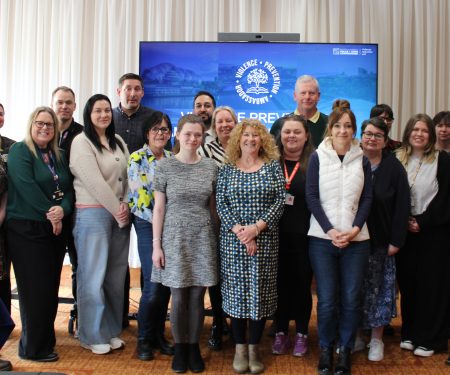
To mark this significant milestone, the Northumbria Violence Reduction Unit brought together the first cohort of trained ambassadors, recognising their commitment to preventing violence, and encouraging more professionals to take part.
Northumbria Police and Crime Commissioner, Susan Dungworth said: “Tackling serious violence isn’t just about policing, it’s about prevention, education, and empowering those working with young people to intervene at the earliest point. In just four months, we’ve built a network of over 100 Violence Prevention Ambassadors, all committed to keeping young people safe and diverting them away from harm.”
“Becoming an ambassador isn’t just about knowing the facts, it’s about taking action. For every young person reached, every conversation had, and every barrier broken down, this contributes to a future where violence does not define our communities.”
She added: “Please keep spreading the word about this programme. Tell your colleagues, share it with your networks, because imagine the impact we could have if even more people got involved. Together, we can build safer, stronger communities for everyone.”
Steven Hume, Director of the Northumbria Violence Reduction Unit said: “The Violence Prevention Ambassadors Programme is part of the wider work of the Northumbria Violence Reduction Unit, and our partners, in tackling the root causes of serious violence and diverting people from violent crime. Every ambassador represents a trusted adult who can help support a young person in making safer, more informed choices. The fact we’ve already surpassed 100 trained individuals in just a few months shows the demand for this kind of support. We’re determined to keep growing the network, and I encourage you to sign up.”
As the new Netflix show Adolescence grips the nation, Northumbria’s Police and Crime Commissioner is backing calls for the series to be shown in schools across the region, as supported by Prime Minister Sir Keir Starmer earlier this week.
The gripping series tells the story of a 13-year-old boy arrested on suspicion of murdering a female classmate. It exposes how online misogyny and sexism are radicalising men and young boys – fuelling behaviours that can lead to Violence against Women and Girls (VAWG).
Tackling VAWG is a key priority in Northumbria Police and Crime Commissioner Susan Dungworth’s Police and Crime Plan for safer streets and stronger communities. The delivery of educational programmes engaging men and boys to reduce harm to women and girls is a key area of work for her office.
With growing concerns among parents and teachers alike, the PCC is highlighting other free resources available to schools in the area to help educate young people and open up conversations.
Examples include:
It All Adds Up – created by Rape Crisis Tyneside and Northumberland and funded by the PCC’s office, this free digital resource helps schools, youth groups and educators address sexual harassment and harmful attitudes through early education. DETAILS
Pol-Ed – an innovative educational programme designed to enhance learning around healthy relationships, staying safe, and understanding the law – funded by the Northumbria Violence Reduction Unit. DETAILS
Northumbria Police and Crime Commissioner, Susan Dungworth, said:
“There’s been a lot of talk about the Netflix series ‘Adolescence’, and ‘toxic masculinity’ this week and it’s an issue I am very aware of. If we don’t educate others and speak out on this topic things will only get worse. This may be a drama, but it highlights very real lessons for us all.
“As we saw with the character Jamie – misogynist toxic views can escalate into the unthinkable. It makes you think as society what more can we be doing to stop this and intervene earlier whether it’s calling out behaviours or making mental health support more accessible.
“Adolescence showed a relatable ordinary family whose life is torn apart and it highlighted how parents and schools, all of us, can be clueless about the language young people are using, what young minds are absorbing and how it’s impacting them.
She continued:
“I worry for teenagers who are regularly served up horrific content on social media apps, including violent and sexually explicit material – they say it pops up randomly – they’re being targeted through algorithms and who knows what influence it can have.
“I want to support teachers navigating this issue and that’s why my office has funded various packages to help guide lessons and discussions. I want to really build on this work, and I plan to lobby for more funding to tackle this – it’s a growing cultural crisis.
“Fortunately, we have a Government that’s acutely away of these issues and is encouraging Adolescence to be rolled out in schools to raise awareness, educate and deter young minds. Ministers are pressing on with things like the Online Harms Act and I know lots of top level conversations are being had around how we protect children from an environment that is increasing hostile and dangerous. If a TV drama helps push this work to the top of the agenda to drive change then it has to be a good thing.”
For more information around school resources made available through the Office of the Police and Crime Commissioner’s office visit: www.northumbria-pcc.gov.uk.
Or email enquiries@northumbria-pcc.gov.uk