16th December 2025
ASB and crime
0191 2219800
enquiries@northumbria-pcc.gov.uk
Northumbria’s Police and Crime Commissioner, Susan Dungworth, has said additional funding has been secured to help protect children growing up with domestic abuse around them at home.
Today, Government announced £5.3 million for services supporting children affected by domestic abuse, within the Preventing Violence Against Women and Girls and Supporting Children (PVSC): Children Affected by Domestic Abuse (CADA) grant.
This means the Northumbria Police force area has an additional £178,976.94 of funding to deliver support locally to children and young people affected by domestic abuse. This brings the total level of CADA funding from 2022-2026 to £570,210.94, a 25% increase compared to the previous year’s funding.
Local services commissioned by the Office of the Police and Crime Commissioner include Acorns, Action for Children, the Angelou Centre, Community Counselling Cooperative, Impact Family Services and Wearside Women in Need.
These organisations will continue to offer a range of support from 1:1 counselling and group work, to play therapy and therapeutic support for children alongside their non-offending parent.
Last year, these organisations all exceeded their service targets and extended their service offer due to rising demands.
Altogether, 382 children were supported with 1:1 and group work sessions, 280 joint parent and child sessions were delivered, and 244 parents were involved in engagement work.
Northumbria Police and Crime Commissioner, Susan Dungworth, said: “It is so important that children grow up in a safe and stable environment. Sadly, not all do – so it’s vital they have somewhere to turn, especially those growing up in an environment where they’re exposed to stress, controlling behaviours and even violence. These children experience the domestic abuse and are very much the victims too.
“We know the damaging impact domestic abuse can have on the development of children and young people, so we need to do all we can to make sure they have access to the right support to help them cope with and overcome their experiences.
“Recent years have been a real struggle for services – they’ve been crying out for more funding to offer specialist support to children and feel it’s been more of an afterthought or an add on, yet it needs to be a priority area in its own right.
“They’ve been telling me demand keeps rising, but the money hasn’t been – so this latest funding boost really is a long due increase.
“I am thankful that we have a government who recognises this need and is taking steps to put this right. Of course, we need to keep pushing for more money, but it’s certainly a start and it all helps towards national targets set to halve VAWG over the next decade.
“I’m also particularly thankful to all our CADA services who, despite the financial challenges, have shown such commitment to supporting, advocating for and empowering the children they work with – they’ve been making a difference to so many lives.”
Tackling violence against women and girls (VAWG) is a priority in the PCC’s plan for safer streets and stronger communities. In both her Plan and VAWG Strategy she has outlined a commitment to ensuring all victims of domestic abuse have access to the best support services to meet their needs – and that includes children.
Maxine Tennet, from the Acorns Project, a specialist domestic abuse support service based in North Tyneside and Northumberland, said: “We are delighted at the increase in available funding. Especially as it acknowledges the urgent need to support child victims-survivors of domestic abuse.
“Children have been the hidden victims for so long, and this funding is a crucial next step in ensuring Acorns can continue providing specialist care and support to help them heal and thrive.”
More than 800,000 children in England and Wales are believed to be living in a home where a parent is enduring domestic abuse, according to a recent study.
Under the Domestic Abuse Act, children are classed as victims if they see, hear, or experience the effects of abuse and they are related to the victim or offender. More information on victim services commissioned by the Office of the Police and Crime Commissioner can be found here.
ENDS
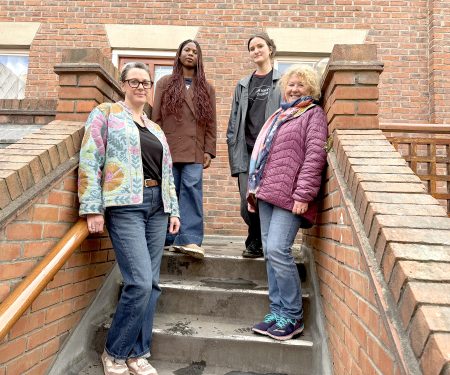
PHOTO: Susan Dungworth at the Angelou Centre – one of the commissioned service providers
May 2025 marks one year since Susan Dungworth took up her post as Northumbria’s Police and Crime Commissioner – setting out on her mission to deliver safer streets and stronger communities.
Over the past 12 months, Susan has been the voice of the public, taking pride in being a visible PCC standing up for people across Northumbria on local and national issues. She has also worked closely with Northumbria Police, partners, and crucially local residents – to help push for improvements that both the public and the police want to see to help keep our region safe and bring local communities together.
She cites launching Project Shield, a partnership driven project aiming to bring down ASB and serious violence among her top achievements – as it has already helped deliver a 50% fall in such crimes in some targeted areas.
She has also said awareness and education are at the forefront of her plans and has already funded various training packages, resources, and educational inputs to help tackle issues such as violence against women and girls and knife crime.
Looking back at her first year in post, Susan said: “It’s been a busy and exciting first year in office and I have spent a lot of time with frontline officers, speaking to local residents and meeting with partners to truly understand the issues they face and how we can work together to deliver on the priorities that matter most to our communities. Getting out and about has helped me get a sense of what is working well and where we need to up our game – it has all helped inform my plan for safer streets and stronger communities that I launched back in March.”
When asked what she considers to be her key achievement since being elected, she said:
Launching Project Shield to tackle anti-social behaviour and serious violence is up there – it’s everything collaborative working should be and it has helped deliver a 17% fall in ASB and 20% reduction in serious violence in the areas that have been targeted.
“I was also proud of how our police responded and the region came together during and in the aftermath of the civil unrest last summer. My office was quick off the mark to launch my commissioner’s community fund and get money out there to fund a range of projects promoting community cohesion and strengthening feelings of safety in our neighbourhoods.
She added, “I have also made education and training a real focus for my office and I am hopeful of the long-term change work in this area can bring. Short-term we must get supporting victims right, but long term we need fewer victims needing support in the first place – education and awareness – that is what is fundamental to crime prevention. We now have 220 active bystanders trained up to help tackle Violence Against Women and Girls and have engaged with 34,350 young people & professionals through knife crime awareness sessions delivered by the Violence Reduction Unit. These are just two examples of many other projects we are funding to get in front of people and push for change.”
The Commissioner went on to add: “I am grateful to the Chief Constable, officers and our partners and of course the people of our region for all the support this year. In Northumbria, we’ve secured more than 150 new officers, staff and volunteers as part of the Government’s Neighbourhood Policing Guarantee and with this I expect Northumbria’s residents will continue to see improvements to policing and I will continue to be their voice, ensuring that they receive the policing service they deserve.”
Susan Dungworth was elected as Northumbria’s Police and Crime Commissioner on Thursday 2nd May 2024, and took up post on May 9th. Her Police and Crime Plan priorities are:
ENDS
Notes to editors
Other highlights include:
Marking five years since its launch, the Northumbria Violence Reduction Unit highlights new figures that show significant progress in preventing and reducing serious violence across the region.
The latest data shows real impact over the last 12 months, with a 5.9% reduction in serious violence, a 5.7% drop in knife-related incidents, and hospital admissions caused by sharp objects are down by 34%.
Established in 2019, the Violence Reduction Unit takes a long-term, public health approach to tackling serious violence, addressing its root causes through early intervention and targeted initiatives.
Over the past year, a range of interventions have been delivered, many of which were co-designed with communities and practitioners to ensure they respond to local needs.
By working closely with partners and local services, these are just some of the initiatives making a real difference:
Now, through the Government’s Safer Streets Mission, the Violence Reduction Unit has secured £2.2 million to build on current achievements, and continue delivering initiatives that prevent violence and improve safety in local communities.
Northumbria Police and Crime Commissioner, Susan Dungworth said: “Listening to what matters most to our communities, you told me that tackling serious violence is crucial, which is why I’ve made this vital prevention work a key priority in my police and crime plan.”
“Over the past year, we’ve seen real progress, with reductions in serious violence, knife crime and anti-social behaviour. But we won’t stop here. This isn’t about quick fixes, it’s about creating lasting change. That means continuing to invest in prevention, intervening early, educating and empowering young people, supporting families, and creating positive opportunities that steer individuals away from crime.”
She added: “Through the Violence Reduction Unit, Northumbria Police and our partners, we are committed to ensuring you feel safe, whether out in public places, or in the comfort of your own home. We will continue to listen and adapt our approaches, because for every individual we reach, and every life we help steer away from harm, is another step towards safer streets and stronger communities for everyone.”
Northumbria Violence Reduction Unit Director, Steven Hume, said: “This isn’t just about reducing violent crime, it’s about changing lives for the better. I’m proud of the progress we’re making, but we know that meaningful change doesn’t happen overnight.”
“A long-term public health approach, focusing on prevention and early intervention, is essential, and so are the strong partnerships that we have across Northumbria. We’re starting to see the results of this joined up effort. We know it works but there is more we need to do. We remain committed to working with our partners and communities to tackle the root causes of serious violence.”
For more about the Northumbria Violence Reduction, visit the website or email vru@northumbria-pcc.gov.uk
The father of Alice Ruggles, who was murdered by an obsessive stalker in Gateshead in 2016, has bravely joined pupils at a Sunderland school to see how the charitable Trust, set up in her memory, is sharing Alice’s devastating story through a new schools initiative.
The school assemblies project, delivered by The Alice Ruggles Trust, is free to secondary schools across the Northumbria Police force area and aims to help prevent what happened to Alice from happening to others.
The scheme has been funded by Northumbria Police and Crime Commissioner, Susan Dungworth, who also joined Alice’s dad, Clive, to see the impactful assembly being delivered.
Students at Sandhill View Academy in Sunderland attended the 30-minute assembly, ahead of National Stalking Awareness Week (NSAW) 21-25 April. The school is one of 18 across the force area to have signed up for the assembly.
The Alice Ruggles Trust was set up by Alice’s loved ones to educate people around stalking, the potential risks of stalking, and what they can do about it.
Like many stalking victims, Alice did not realise the very real danger that she was in at the hands of her obsessive ex-partner. Nor was the danger fully recognised by her family, her friends or the police.
The project has therefore been designed to raise awareness of the fixated, obsessive, unwanted and repeated behaviours that can lead to stalking, and how to seek help. It is also focused on prevention and getting the message across to young people that they should seek support when patterns of repeated, unwanted behaviours make them feel uncomfortable and uneasy – so they can access support before behaviours become fixated and obsessive.
By the end of the assembly students should:
One young person said “I was shocked by what happened. It’s made me think about people’s behaviours, and my own too. Checking someone’s ‘last online’ or ‘current location’ – people can get obsessed – it can get out of hand.”
Northumbria Police and Crime Commissioner, Susan Dungworth, said:
“To be sat there, watching such a moving and powerful assembly being delivered, with Alice’s dad sat right next to me – it was incredibly poignant. I’m in awe with how the family have made it their mission to do everything in their power to help prevent what happened to Alice from happening to others.
“It’s really important, particularly in the digital age, that young people recognise stalking and have the confidence to seek support. By getting this assembly rolled out in as many schools as possible, in front of as many young people and their teachers as we can, I hope we are equipping this generation with the knowledge to recognise stalking, along with the confidence to seek help.”
Clive Ruggles of The Alice Ruggles Trust, said:
“The strapline of the Alice Ruggles Trust is ‘Putting an end to stalking’, and we believe the only way to approach that ultimate goal is to change the mindset of a generation. That is why we focus on educating young people, through assemblies like this, to recognise the seriousness of stalking, to look out for those around them, and know where to go to seek help. And an essential part of our strategy is to stop people becoming stalkers in the first place, by helping youngsters identify and tackle problem behaviours before they escalate.
“It never gets any easier to hear Alice’s voice as we play part of her phone call to the police, but sitting in front of the audience at one of our assemblies it was clear to see the impact that our message was having.
“We are hugely grateful for the support of the Northumbria Police and Crime Commissioner which has made it possible to reach so many schools in their area and has provided a model that we are starting to follow around the country. Stalking is shockingly widespread and stalking awareness is an essential part of relationships and sex education. We hope that many of the schools we reach with our assemblies will follow up with our PSHE lessons that are freely available on-line to all teachers.”
Assistant Headteacher Anthony Blake at Sandhill View Academy in Sunderland, said:
“We place great importance on educating our students about healthy relationships and how to stay safe. Hearing Alice’s harrowing story and the impact on her family members really personalised this. We could see the key messages unfold and resonate with students; the dangers of normalising controlling behaviours such as checking people’s locations, ‘last online’ status and understanding when behaviours or attentions are unwanted.
“It was also important for students to learn that anyone can become a victim and where to seek support. These powerful messages were delivered clearly through the assembly, through the support of the Alice Ruggles Trust and reiterated through the conversations that followed.
“We value the strong links we have with our neighbourhood policing team to ensure we are able to work together to support our students and the wider community. This collaboration is essential to keep our students safe along with the other networks of support available.”
Eighteen schools across the region have already signed up to the project, with 13 assemblies delivered to date. To arrange an assembly or learn more about how to volunteer with this vital initiative, contact Lydia at The Alice Ruggles Trust lydia@alicerugglestrust.org
![]()
ENDS
Notes to editors
National Stalking and Awareness Week 2025 runs from April 22 – 25.
For support or advice on stalking, please visit: Stalking and harassment | Northumbria Police
You can also report anonymously using Crimestoppers or visit a local police station. For those unable to contact police in this way, call 101.
In an emergency, or if a crime is taking place, always call 999.
Support agencies who work in the Northumbria area:
For further advice visit:
AN innovative partnership that aims to tackle staking behaviours and prevent reoffending has worked on 43 high risk stalking cases in its first year.
The Northumbria Stalking Interventions Programme (NSIP) brings together police, probation, victim services and health professionals to raise awareness of stalking among colleagues, better manage the risk of those exhibiting stalking behaviours and ensure victims are offered the best protection and support.
The project became operational in 2024, with funding secured through the local Probation Service and the Office of the Police and Crime Commissioner for Northumbria.
In the project’s first year, the key focus has been training practitioners to recognise early signs of stalking behaviours and ensuring stalking-specific risk assessments are carried out for high-risk cases. NSIP has developed and delivered a stalking awareness package to 2332 practitioners throughout probation as well as other partner agencies within the Northumbria force area.
Another part of the project is provided by CNTW who help risk assess the cases of highest concern and advise on risk and safeguarding. Expertise includes the advice from forensic psychiatrists and psychologists who assist other agencies in comprehensively understanding the risks presented and advice on management strategies aimed at protecting the victims and the general public.
Crucially, alongside all this work, the project also ensures all agencies are communicating to ensure victims access specialist emotional support and safeguarding advice through Paladin National Stalking Advocacy Service and Northumbria Victim and Witness Service (NVWS). Together they have supported 26 people through NSIP.
Examples of behaviours of perpetrators referred to the programme include making threats, tracking victim whereabouts (often online), making unwanted contact, breaching restraining orders, turning up at a victim’s home or a children’s school and other behaviours.
Of the 43 individuals successfully referred onto the programme, the most common relationship between perpetrator and victim was ex-intimate partner (81.4%), and of the 43 referrals, 42 were male.
Project successes to date include influencing court disposals and assessments, arrests for the most concerning stalking perpetrators, enhancing safeguarding and support to victims, increasing information sharing between partners, victims having increased feelings of safety, and there are early indicators of reduced harm to identified victims and future victims through action taken.
The Northumbria Stalking Interventions Programme (NSIP) is a multi-agency project involving collaboration between partners from the Probation Service, Northumbria Police, Cumbria, Northumberland, Tyne and Wear NHS Foundation Trust (CNTW), the Office of the Northumbria Police and Crime Commissioner (PCC), Northumbria Violence Reduction Unit, Paladin National Stalking Advocacy Service, Northumbria Victim and Witness Service and the Alice Ruggles Trust.
Northumbria Police and Crime Commissioner, Susan Dungworth, said:
“Stalking is a very frightening and intimidating crime and the earlier we can all come together to protect the victim and change the behaviours of those doing the stalking, the better. We call this a multiagency approach, and I really believe it’s the best way to address stalking by ensuring effective communication and information sharing.
“Tackling Violence Against Women and Girls in all its forms is very much a priority of my Police and Crime Plan. We know stalking remains an under-reported crime and I want to make victims feel empowered to speak up and report it. I want to highlight this programme, so people know stalking is something we’re taking seriously whether that’s improving the policing response or working to change perpetrator behaviours. This programme is presenting a real opportunity to reduce offending, while supporting victims and improving their overall experience of the criminal justice system.
The PCC added: “Fortunately we have a government that’s taking stalking seriously too, looking to introduce new measures to strengthen enforcement and better protect victims, such as making it easier for courts to issue Stalking Protection Orders and improving information sharing with victims. I believe these new measures will make it easier to protect victims and hold perpetrators to account. These are meaningful changes that will help us tackle stalking head on.”
Paul Weatherstone, Head of Newcastle upon Tyne Probation Delivery Unit, said:
“We know that stalking causes significant harm and distress to those involved and the best way to tackle it effectively is by organisations working together to hold the perpetrator to account and promote behaviour change while also making sure that the victim is kept safe.
“As the Probation lead for the Northumbria Stalking Interventions Programme I am really proud of all that we’ve achieved to upskill literally hundreds of Probation staff across the North East Region to better recognise, assess and address the risks associated with stalking. I’m also really proud of the central role that Probation has played in establishing this important multi agency approach to address an issue of increasing concern.
“By working collaboratively we’ve already been able to deliver some really positive change about the way we work with stalking. Looking ahead, it’s crucial that we build on what we’ve achieved so far and continue to work together to better protect victims and make our community safer.
Dr Rajesh Nadkarni, Executive Medical Director and Deputy Chief Executive for Cumbria, Northumberland, Tyne and Wear NHS Foundation Trust (CNTW), said:
“We have a long history of working in partnership with police, probation, courts, and other agencies. This includes providing clinical advice, training, and working strategically with our partners. Stalking and associated behaviours cause significant harm and distress to those involved and often needs a multiagency management response. The Northumbria Stalking Interventions Programme has formally brought together much of this work and expanded the team of people and resources dedicated to it. We are delighted to provide specialist expertise to this programme and, with our partners, continue to strive to make our communities safer.”
Chief Operating Officer, Louise from Paladin NSAS, said:
“A member of our team sits within the clinic meetings and discusses the weekly referrals to ensure the victim’s voice is considered, support offered and to highlight the lifelong impact that stalking has on victims. The NSIP is a positive step forward for the area to improve the response to stalking across the local criminal justice system, with the aim to better identify, support and protect victims of stalking and effectively manage stalking offenders.”
Clive Ruggles, The Alice Ruggles Trust, said:
“Stalking is a hideous form of abuse that can take many forms but always involves unwanted intrusions into people’s lives, repeated endlessly, leaving victims in despair and distress and often in fear of their lives. In the worst cases this fear is justified, as I know all too well following the murder of my daughter Alice in Gateshead back in 2016.
“Stalking is shockingly widespread and cases, when they come to the attention of criminal justice or healthcare professionals, are all too often inadequately dealt with. This is why projects such as NSIP, which brings together a range of agencies to mitigate the risk to stalking victims and help them navigate a way forward, are so vital.
“In the Alice Ruggles Trust we believe that the only way to tackle the problem in the longer term is to change the mindset of a generation, which is why we focus on educating young people to recognise the seriousness of stalking, to look out for those around them, and know where to go to seek help. And an essential part of our strategy is to stop people becoming stalkers in the first place, by helping youngsters identify and tackle problem behaviours before they escalate.
“We are proud to be part of the NSIP project, which ties together these approaches, and are confident it will help lead the way to a future with far fewer stalking victims and adequate protection and support for those who do remain. The ultimate goal has to be to bring stalking to an end, and we can only do that by working together.”
Assistant Chief Constable Alastair Simpson, of Northumbria Police, said: “Stalking is a crime which sadly can often have a lifelong impact upon victims.
“Since it was launched last year, the Northumbria Stalking Intervention Programme (NSIP) has been making steady progress in assessing the highest risk offenders – before intervening and diverting them away from stalking behaviours through agency appropriate management and referrals.
“The initiative also seeks to further equip specialists across the multitude of agencies involved in NSIP with the tools to increase their knowledge, understanding and confidence when identifying and dealing with stalking.
“As a Force, we are supportive of the collaborative and innovative approach by joining agencies together in the pursuit of perpetrators and the safeguarding and protection of vulnerable victims.”
![]()
Almost 600 staff working across the region’s night-time economy have now been trained to recognise signs of vulnerability and exploitation, as part of a growing initiative to improve safety in local areas.
The training is designed to equip staff with the knowledge and skills to recognise when someone may be at risk, and give them the confidence to take action before harm escalates.
Staff from pubs, bars, hotels and student accommodations have taken part in the online sessions, delivered by the Northumbria Violence Reduction Unit and supported by officers from Northumbria Police.
The training has been rolled out to bar staff, security personnel, hotel teams, and venue managers, helping them to:
This proactive approach aims to improve safety in the night-time economy by ensuring staff have the tools to intervene early and respond when someone may be at risk of harm.
Northumbria Police and Crime Commissioner, Susan Dungworth said: “Staff working in bars, clubs, and hotels are often the first to spot when something isn’t right, whether that’s a woman who’s been separated from friends, someone showing signs of distress or intoxication, or an individual being targeted by others. We all have a responsibility to look out for each other.”
“This training helps raise awareness of vulnerability and exploitation, but it also empowers staff to act. It helps them understand how to step in safely, where to direct someone for help, and how to play their part in safeguarding those at risk. The more people who can intervene early, the more we can prevent crime from happening in the first place.”
“Everyone has the right to feel safe when enjoying everything our fantastic towns and cities have to offer. That’s why through the Violence Reduction Unit, Northumbria Police and local partners, we’re committed to creating safer streets and stronger communities, and this training is a key part of delivering on that promise.”
This training programme forms part of a wider effort in preventing serious violence across the Northumbria force area, creating safer, stronger communities for everyone.
For more about the Northumbria Violence Reduction Unit and the awareness sessions it delivers, visit the website or email vru@northumbria-pcc.gov.uk