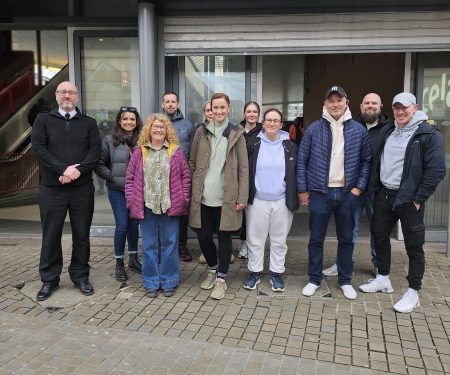
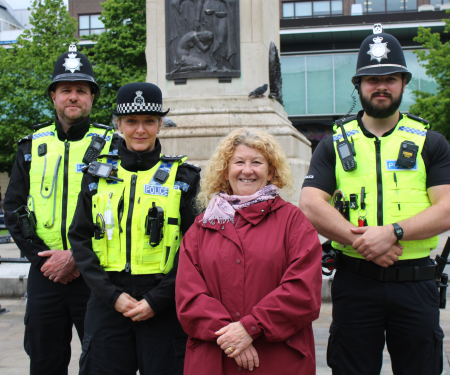
Police Commissioner Susan Dungworth has today announced the return of the Local Youth Fund, giving more young people the chance to put forward innovative ideas on how serious violence and knife crime is prevented.

With £12,000 available for youth-led projects, this initiative aims to harness the creativity and insight of young people, in a bid to create safer streets and stronger communities.

The Violence Reduction Unit’s Local Youth Fund invites young people to share their views and experiences of serious violence, and propose forward-thinking solutions, to be in with a chance of receiving a share of the funding.

The initiative provides young people with a platform to have their voices heard, as they help shape the future of their local areas.

In previous rounds, the fund has supported over 80 projects, directly benefitting more than 5,200 young people, who have seen their ideas brought to life with projects ranging from sports activities, youth-led campaigns and drop in sessions.

This highlights the creativity and dedication of young people across the region, and through the return of the fund, it seeks new ideas to continue making a positive impact.

Northumbria Police and Crime Commissioner, Susan Dungworth said: “I am committed to making our streets safer and communities stronger – but to achieve this, it is essential that our young people are involved in key decisions made about their local areas.”

“In doing so, we not only address the issue of violence head on, but also empower our young people to take an active role in shaping the future of local areas. That’s why the Violence Reduction Unit’s Local Youth Fund is a pivotal step in giving them the chance to make a real difference.”

“I’m delighted to announce the return of the fund, giving more young people the chance to share their vision, so if you have a creative idea, apply now to bring your project to life. I am looking forward to hearing your ideas, and to seeing them in action soon.”

Young people are now encouraged to apply for funding, with the support of community and youth-based organisations, by submitting project proposals that they think will prevent serious violence and knife crime in their local areas.

When the fund closes on Monday 13th October 2025, a panel of young people will review all bids, before selecting one successful project per local authority area to receive a share of the funding.

For more information about the Local Youth Fund, and how to apply, visit the Northumbria Violence Reduction Unit website.

Our Stats

THIS National Rural Crime Action Week, Northumbria Police and Crime Commissioner, Susan Dungworth is joining forces with Northumberland Domestic Abuse Service (NDAS) to highlight domestic abuse in rural communities – and crucially – the help that’s available.

Often isolated victims of rural crime face unique challenges – and that includes domestic abuse victims. These victims often face prolonged suffering, difficulty accessing support and fears around community stigma.

Domestic abuse accounts for 20% of total crime in the Northumbria Police Force area, and 97% of the land in Northumberland is classed as rural.

Domestic abuse in rural communities affects people of all genders and ages, with abuse lasting, on average, 25% longer than in urban areas, according to the National Rural Crime Network. In 2024–25, NDAS supported 555 adult survivors of domestic abuse and responded to 6,909 domestic abuse incidents in Northumberland, over 40% of which involved children.

Rural locations can often be exploited by abusers who use remoteness and isolation as a  control tactic. NDAS has supported clients who have had legally held firearms and farming equipment used to threaten and intimidate them. NDAS recently provided critical help to a 56-year-old by working with the police to remove firearms from the home and reclaim control over her life.

Another victim, a 61-year-old woman who lived on a remote farm was subjected to technology-enabled surveillance and isolation. NDAS crafted safety plans, supported her legal action, and helped her regain financial independence.

A key area of concern for the Commissioner is that reports suggest rural victims are half as likely to report abuse compared to those living in more built up, urban areas. She wants to use Rural Crime Action Week help raise awareness and encourage women and men to break free from abusive relationships and for members of our rural communities to speak out and support those suffering in silence.

Northumbria Police and Crime Commissioner, Susan Dungworth said: “We often think of our rural communities in an idyllic sense, but rural doesn’t mean safe from abuse – it means we must look harder.

“This week is about amplifying voices that are too often left unheard. Isolation can heighten risks around domestic abuse, but awareness and the right support can help end it.”

“I want to reassure anyone suffering that help is there and that Northumbria Police take reports of domestic abuse very seriously. We have brilliant support services too, like NDAS, who always go the extra mile to ensure support reaches those in need, sometimes travelling long distances, in dangerous, challenging conditions to reach victims.

“Education is also key”, she added. “Through my office we are funding programmes and supporting the work of a partners to ensure young people can recognise the signs of abuse and know where to turn for help.

“The tragic murder of 15-year-old Holly Newton in Hexham reminds us all that early education and awareness are vital. National Rural Crime Action Week is not just about raising awareness—it is about action, support, and change.”

Sharon Brown CEO from NDAS, which supports victim-survivors from Berwick to Haltwhistle, echoed that no victim is too far to reach. She said: “At NDAS we pride ourselves on literally going the extra mile.  This is crucial in a county with half of its population living in rural and isolated areas. Our 22-year history of providing vital support to victims-survivors means we both know and are known in rural communities across Northumberland. We are also working hard to prevent domestic abuse through providing prevention education, last year working with over 3500 children and young people in 29 schools.  NDAS continues to take action, to provide essential support when and where it is needed and works to create change for the future.”

Chief Inspector Andrew Stephenson, of Northumbria Police’s Safeguarding Department, said: “As a Force, we’re committed to tackling domestic abuse and protecting those most vulnerable within our society.

“We recognise that those living in rural areas may experience domestic abuse in different forms than those who are living in urban areas, with different concerns and challenges as a result of more remote locations.

“That’s why it’s so important that police, and other services, tailor their support accordingly.”

Chief Inspector Stephenson added: “We have dedicated domestic abuse specialists in our contact centres to provide expert advice when responding to victims to help ensure they are safeguarded and receive the support they need – wherever in our region that may be.

“And nationally, there is greater awareness of taking domestic-abuse related crimes forward to prosecution with an evidence led approach, to better support vulnerable victims, providing us with further opportunities to safeguard those who need protection.

“We would always encourage anyone who has been a victim of abuse to come forward, either to ourselves or one of the dedicated support agencies. There is so much support available.”

Northumberland Domestic Abuse Service

Our Stats

Northumbria’s Chief Constable Vanessa Jardine is set to retire after receiving approval from the Police and Crime Commissioner but, subject to the agreement of the Police and Crime Panel, will rejoin following a short break.

The move would take place under the national Retire and Rejoin Scheme, widely used by police officers up and down the country. It does not create any additional costs to the taxpayer.

It is a scheme designed to retain skills and experience at all levels of policing. It allows for any police officer, including a Chief Constable, to formally resign as an officer before being re-appointed into the same rank. This process requires a break in service of at least one calendar month.

The scheme is in accordance with updated guidance from the National Police Chiefs’ Council (NPCC), the Association of Police and Crime Commissioners (APCC) and the College of Policing.

The Police and Crime Commissioner will present a report to the Police and Crime Panel at its meeting on the 14th October, when she will recommend the re-appointment of Northumbria’s Chief Constable.

Subject to the Panel’s approval of these arrangements, as it is a legislative requirement for every force to a Chief Constable in post, Deputy Chief Constable Jayne Meir becoming Temporary Chief Constable and Assistant Chief Constable Alastair Simpson becoming Temporary Deputy Chief Constable.

To comply with the requirement of legislation for every police force area in England and Wales to have a Chief Constable in post at any given time the Deputy Chief Constable will be the Acting Chief Constable for this short period.

With the panel’s approval, Vanessa Jardine will return to her role as Chief Constable from October 22nd.

Our Stats

THIS week isn’t just about back to school, for Northumbria Police it’s about getting more officers back on the beat.

That’s because on Monday,104 new police officer recruits were welcomed to the Force – the highest single intake in years.

On their first day of training, new starters were personally welcomed by Chief Constable Vanessa Jardine and Police and Crime Commissioner, Susan Dungworth.

Both took time to talk about their plans and ambitions for Northumbria Police and underline the vital role new recruits will play in helping deliver safer streets and stronger communities for the people of Northumberland, Tyne and Wear.

Over the last year, Northumbria Police has met national uplift targets bringing the total number of officers to 3,853.

Workforce numbers are set to be bolstered even further in the year ahead through the Government’s Neighbourhood Policing Guarantee. This will see a further 95 neighbourhood police officers, 27 PCSOs and 30 Specials join the Force.

The boost to numbers also reflects Police and Crime Commissioner Susan Dungworth’s Police and Crime Plan; which prioritises having an engaged and responsive police force.

She said: “These recruits represent a visible investment in community safety – more officers on the ground, more reassurance for residents, and a stronger police presence for the future.

“My Police and Crime Plan is all about safer streets and stronger communities, and these new officers are key to delivering that vision – we’re getting police numbers back up to where they belong.

“Policing is a career that demands commitment, compassion and professionalism – and I am confident the officers that were there in the room will rise to that challenge. I look forward to catching up with them again as they progress through the training and settle in to the role. Some may want to progress into neighbourhood policing, investigations, safeguarding or specialist roles – whatever they go on to do, I am sure they can make a real difference in our communities.”

Chief Constable Vanessa Jardine said: “It is always a real privilege to welcome new officers as they begin their policing journey.

“It was fantastic to see such a large number, who have made the commitment to serve and protect our fantastic communities here in the North East.”

Chief Constable Jardine added: “With officer recruitment now open, I would encourage anyone who is passionate about making a difference and providing an outstanding service to find out more about joining us.

“We know that people want to see officers out and about, that is why we are delighted to be offering a direct route into neighbourhood policing which puts you right at the heart of our communities tackling the issues that matter most to them.”

Both the PCC and Chief Constable emphasised the importance of continuing to attract people from all backgrounds, ensuring that the workforce reflects and represents the diverse communities it serves.

The ongoing recruitment scheme aims to increase police visibility, especially in town centres as well as boosting community engagement, and tackling issues like anti-social behaviour and crime.

Northumbria is the first College of Policing accredited Force in the country to offer new recruits a direct route into community policing, meaning those who choose the neighbourhood option will specialise in this area from joining. This pathway can be accessed by graduates, non-graduates and those seeking a degree level apprenticeship.

Visit the careers website at Careers – Northumbria Police for more information.


Our Stats

NORTHUMBRIA Police’s ‘Trojan’ bus – a decoy bus where the passengers are plain clothes police officers – has been back on the beat, as part of the Safer Streets Summer Initiative, helping officers take tough action at anti-social behaviour hotspots.

The innovative policing tactic sees officers on board what appears to be a regular bus service, but it is in fact a staged service on route to pick up anti-social behaviour (ASB) offenders at bus stops and stations and helps officers make any necessary arrests.

Northumbria Police’s decoy bus is in conjunction with Stagecoach, and the initiative uses additional funding as part of Commissioner Susan Dungworth’s Project Shield, which was launched a year ago and has helped achieve a 19 per cent reduction in ASB in targeted areas.

Project Shield is part of joint activity from police and partners working to keep town centres across the force area safe this summer. As well as the Trojan Bus, the project involves increased visible patrols, proactive policing, and community engagement to improve feelings of safety and reduce crime.

Previously the initiative has run in the winter months, and so this is the first time it’s being rolled out in the summer season. Warmer weather and longer daylight hours often encourage more people to gather in public spaces – parks, streets, town centres, transport hubs – where ASB is more likely to occur.

The destination of the bus varies, as it is dispatched as a direct response following complaints from local residents or public transport users. Current deployments are covering South Tyneside and Sunderland.

Northumbria Police and Crime Commission, Susan Dungworth, said: “It’s really important we take people’s concerns around ASB seriously and that is why I made it a priority in my Police and Crime Plan.

“Through Project Shield, The Trojan bus tactic is one of many strategies being used by officers to tackle ASB. It shows we are listening and trying a range of methods to catch those responsible and put a stop to behaviours that people understandably have had enough of in their area.

“Throwing stones at vehicles, vandalising bus stops or riding motorbikes on pedestrian pathways – it’s all unacceptable and those responsible need to watch their backs as the trojan bus could be pulling up to their street at any time.

Susan continued: “During the summer months when it’s warmer and the nights are lighter, we know more people are out and about in our town centres and this always leads to higher levels of both daytime and nighttime ASB and crime.

“And so, we have been coming together with our partners like our councils and Stagecoach, so we can get ahead of problems. We hope all the work that’s happening will help prevent or deter crime, whilst also improving overall feelings of safety.

“Why the bus works is it brings an element of surprise, capturing more authentic behaviour and this means our officers can intervene and can take appropriate action. We know people want to see a visible policing presence, but I want residents to know about other policing that are less visible but can still make an impact towards delivering safer streets and stronger communities.”

Minister for Crime and Policing Dame Diana Johnson said:

“Anti-social behaviour brings misery to local residents which is one of the reasons we launched the Safer Streets Summer Initiative to get more police out in local areas tackling crime and anti-social behaviour.

“Northumbria Police’s Trojan Bus is a brilliant example of how bespoke local tactics are being used up and down the country to make a real difference to communities, alongside the nationwide effort to put more police officers back on the beat and increase visible patrols.

“With every force now providing a named, contactable officer in every neighbourhood, and thousands of police and community support officers returning to our streets in the coming year, we’re sending a clear message: anti-social behaviour and crime will not be tolerated. This isn’t just about enforcement—it’s about rebuilding trust and pride in our communities, and making our streets safer for everyone.”

Chief Inspector Phil Baker, of Northumbria Police, said: “As a Force, we fully recognise the anti-social behaviour of a minority of people can have a significant and detrimental impact on the communities we serve.

“ASB is not a victimless crime – and nobody should have to put up with it on their doorstep, or face issues when using the wider transport network in the region.

“The Trojan bus has previously been run in the winter, but we know that the warmer weather and lighter nights during summer often means an increase in ASB and disorder, with more people out and about at our transport hubs.

“Policing in this way gives us a unique opportunity to identify those behaving in an anti-social or criminal way in real time – helping us to disrupt offenders swiftly and take appropriate action against those involved.

“Ultimately, we are using the Trojan bus as a way to fight crime as its happening, prevent further disorder – ensuring that all passengers and residents feel safe when using public transport.

“Together, alongside our partners, we will continue to use every tactic at our disposal to tackle these forms of criminality and ensure our communities remain as safe as they can be.”

Stagecoach North East Managing Director, Steve Walker, said: “Our buses are a safe, convenient, cost-effective and sustainable way to travel and we’re committed to working alongside our partners to ensure they remain that way. Through initiatives such as the Trojan Bus, we want to make it clear that any kind of antisocial behaviour will simply not be tolerated.”

Cllr Tracey Dixon, Leader of South Tyneside Council, said: “Residents consistently tell us that anti-social behaviour is one of their top concerns, and we’re responding with our partners to tackle disorder head-on. The Trojan Bus is just one of the innovative tactics being used to make our streets safer and send a clear message that ASB will not be tolerated.”


ENDS

Our Stats

A dedicated police and partner operation is further driving down crime and anti-social behaviour in a coastal community this summer.

Operation Coastwatch, which runs in North Tyneside, was launched in 2014 by Northumbria Police, North Tyneside Council and to tackle pockets of disorder which often spring up close to the coast.

The scheme, which is part of the Safer Summer Streets Initiative, aims to reassure the community and take swift action to prevent any disorder during periods of warmer weather through extra foot patrols, both uniformed and plain-clothed, preventative work at Metro stations and beach wardens who monitor coastal activity.

Staff from the council’s Community Protection Team patrol the beaches to look out for litter and anti-social behaviour issues while colleagues at Tyne and Wear Fire and Rescue Service are also involved in identifying areas where nuisance fires are likely to be started.

In the first three months of this year’s partnership – from the beginning of May to the end of July – there has been a 47 per cent fall in the number of anti-social behaviour (ASB) incidents compared with 2024, while the number of ASB incidents on the Metro transport network has dropped by 74 per cent.

Vehicle crime reports have dropped by a huge 63 per cent compared with the same period last year, with criminal damage dropping 25 per cent and serious violence reducing by nine per cent.

The Police and Crime Commissioner (PCC) for Northumbria Susan Dungworth joined Op Coastwatch officers on their patrols to see first-hand the impact that the scheme is having on North Tyneside.

The PCC said: “We have a brilliant coastline in the North East and our coastal towns really come alive during the summer months as our beautiful beaches are enjoyed by residents and visitors – this is why we need heightened police visibility and Operation Coastwatch delivers this.

“The operation is part of our Safer Streets Summer Initiative and is about ensuring officers and partners are they when you need them – keeping the atmosphere safe and welcoming supporting local businesses and helping to prevent things like anti-social behaviour.

“I joined patrols across North Tyneside to see work in action – as well as engagement there was some useful intelligence sharing and problem solving. All this joint working is helping towards the significant falls we are seeing in the area in terms of antisocial behaviour and serious violence.

“It’s all part of our efforts working towards safer streets and stronger communities.”

Inspector James Younas, of Northumbria Police’s North Tyneside Neighbourhood Policing Team (NPT), said: “We’re really proud of the progress made through the use of Operation Coastwatch and would like to thank those right across our community who support us in this important work.

“Sadly, we know that the actions of a minority can have a serious detrimental impact on the lives of others and that is why we are committed to addressing any issues by having a visible policing presence to reassure residents.

“The joined-up, collaborative approach is key and by continuing to work together and pooling our intelligence, we can keep on effectively tackling anti-social behaviour and minimise criminality at our coastal spots and transport hubs.”

Councillor Sandra Graham, Cabinet Member for Community Safety and the Climate Emergency, said: “I feel very proud of the progress we’ve made in driving down anti-social behaviour along our coast. Thanks to the dedication of our Community Protection Team and the strength of our partnerships with Northumbria Police, Nexus, and others, North Tyneside’s beaches and town centres are safer and more welcoming for everyone.

“But we know we can’t be complacent, which is why we’ll keep up proactive patrols and early intervention to build on this success.”

Erika Allen, Quality Health Safety Security and Environment (QHSSE) Director at Nexus, said: “It’s great to see Operation Coastwatch having such a positive impact in lowering crime and anti-social behaviour and the hard work on this will continue.

“As the operator of the Metro system, we have a key part to play in supporting the police and our local authority partners in keeping the public safe and secure as we provide Metro services into North Tyneside.

“This builds on the work we have already done to improve safety and security on the transport network, including the roll out of our dedicated security teams, investment in new CCTV, and the launch of our text message alert system.

“Metro is a safe system to travel on and we are determined to keep it that way.”

Paul Russell, Area Manager Community Safety, Tyne and Wear Fire and Rescue Service, said: “We are pleased to see the progress being made in the North Tyneside area where incidents of anti-social behaviour had become an issue.  It represents the hard work being produced by our partners, who are delivering Operation Coastwatch through operational and prevention activities.

“We will continue to support colleagues at Northumbria Police, Nexus and the local authority to ensure people are aware of the impact that ASB can have on the local community.”

Anyone who has issues with ASB in their area can send Northumbria Police a DM on social media or use the live chat or report forms on the Force’s website.

For those unable to make contact via the above ways, call 101.

Commissioner, police and councillors at the beach as part of Op Coastwatch

Commissioner, police and councillors at the beach as part of Op Coastwatch

Our Stats

Exit
Site