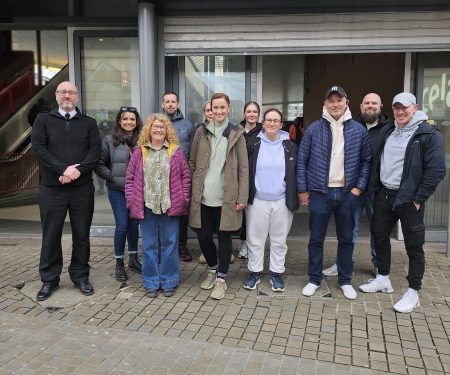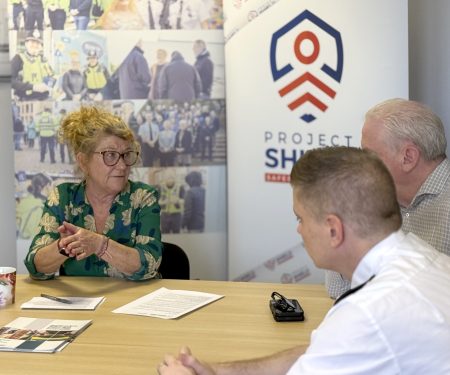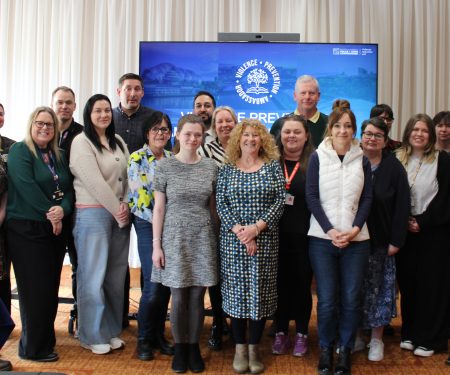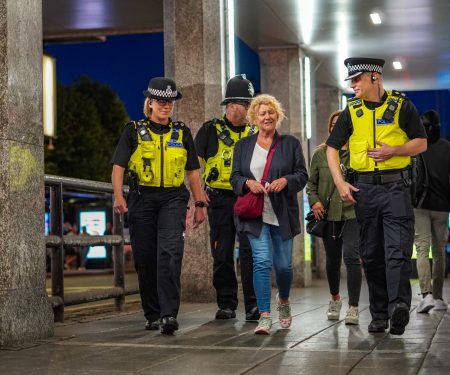
KIM MCGUINNESS, NORTHUMBRIA POLICE & CRIME COMMISSIONER, LAUNCHES VIOLENCE REDUCTION UNIT WITH £930,000 FUNDING TO TACKLE VIOLENT CRIME.

Police and Crime Commissioner Kim McGuinness has revealed the life-changing organisations which will benefit from nearly £1m in Violence Reduction Unit funding.

The specialist Violence Reduction Unit was set up earlier this year by the police commissioner in a bid to ensure Northumbria remains a safe region, with a team dedicated to preventing violence among at risk teenagers and adults.

30 organisations across the Northumbria area have been awarded a share of £930,000 as part of joint efforts to reduce violent crime, ensuring much needed investment in vital youth and community services suffering after ten years of austerity.

The chosen projects will focus on ensuring that the violent crime seen in other cities does not become a reality in the North East. The Police Commissioner’s Violence Reduction Unit will at first focus on early intervention, youth diversion, mental health, and drugs, alcohol & homelessness.

Projects benefiting from the funding include:

  • The Foundation of Light’s Kicks Town scheme, using sport to give young people worthwhile activities.
  • Increasing the reach of the YOLO project across the Northumbria area. The scheme works with 8-14 year-olds who are at risk of slipping into a life of crime and prevents them from becoming involved in anti-social behaviour, knife crime and serious youth violence.
  • Changing Lives’ street support officers, helping address the issued which lead people to begging and becoming at risk of being a victim or perpetrator of serious violence.
  • A Newcastle United Foundation scheme dedicated to helping young people avoid violent behaviour

The Violence Reduction Unit will build on the techniques first seen on the streets of Glasgow, where police, councils, the NHS and charities worked with communities to treat violence as a public health emergency. This hugely successful approach saw at risk people targeted early in order to prevent crime, and is credited with a 50% reduction in some violent offending.

The 30 projects receiving funding will commit to this  public health approach to crime reduction, working  with Northumbria Police, six local authorities, health, education, and other service providers to better understand the root causes of violent crime.

Launching the VRU funding, Kim McGuinness said: “By establishing a Violence Reduction Unit we are saying loud and clear, we will not accept rising crime in our region. Northumbria is not a violent place, it’s safe and it’s everyone’s responsibility to keep it that way.

“I’m incredibly proud that so many local organisations, from charities to housing providers, have quickly come together with local councils and our NHS and committed to the goal of preventing crime before it happens. They are making the changes necessary in our region to give people opportunities, improve lives and divert people from crime.

“Violent crime is a symptom of inequality, and like a contagious disease it spreads if we don’t treat it. By taking urgent measures now we can prevent this. Ten years of austerity has shown that when you cut public services such as youth services, Sure Start and help for those with addiction or mental health needs, crime rises.

“The funding I have provided will help people in the short term, but this is something we need the government to commit to long term. We need a long term fix to solve deep-rooted issues.”

Funding for the Violence Reduction Unit was secured by the Police Commissioner from the Home Office. At present funding is only in place until March 2020, and the Commissioner has called on all political parties to commit to providing a dedicated interventions fund from next year onwards.

The Commissioner’s VRU has the long term vision of reducing violence by providing a clear support route for individuals and families. Its success will depend on organisations coming together to make tackling violence everyone’s problem. As part of that approach the Commissioner will work with a strategic board to ensure dedicated organisations from across the region can come together to share their expertise and resources.


Our Stats

THE POWER OF SPORT SHINES THROUGH AT THE FOUNDATION OF LIGHT AS NORTHUMBRIA PCC PRAISES ‘FANTASTIC’ INTERVENTION WORK IN SUNDERLAND

 Northumbria Police and Crime Commissioner Kim McGuinness hails the intervention work being delivered in Sunderland to young people vulnerable to falling into crime.

The Foundation of Light, the registered charity of Sunderland AFC, is one of the 30 interventions across the region to benefit from funding through the Commissioners Violence Reduction Unit – a team formed in late 2019 to tackle serious violence with a public health approach.

Kicks, a football based session delivered Mondays and Fridays at the Beacon of Light, provides an opportunity for young people to play football and be educated around the impact a life of crime can have on the individuals and their families.

Kim McGuinness said: “The fantastic thing about Kicks is that it harnesses the power of football and the power of sport. It uses the Sunderland brand to bring young people in and give them something to do.”

The Commissioner heard about the workshops delivered by the foundation and the importance of educating the young people around the topics of; knife crime, mental health and exploitation.

After taking time to observe the session, the PCC spoke to several young people attending around the benefits of the session and what skills they have gained since taking part. Kim went on to praise the Foundation and thank them for their work to date and evolving partnership. She said: “A massive thank you to the Foundation of Light, this is exactly the sort of thing that gives young people positive mentors and keeps them away from crime, anti-social behaviour, and difficult behaviour.”

With over 120 referrals to the programme already, including 49 girls, Foundation of Light Kicks co-ordinator, Dave Jeffries highlighted the important work of an activity like this in the local area. He said: “A lot of the kids attending these sessions would otherwise be involved in other activities, not always positive ones. So giving that opportunity is a big thing for them, because otherwise anti-social behaviour, which we know a lot of the kids have been involved in the past, can occur.”

Northumbria Violence Reduction Unit, along with the funded interventions and several partners including education and health are working together to improve the lives of young people and provide an accessible pathway to support for those in need.

This approach has been praised by the Foundation, recognising the opportunities young people are now being provided with. Dave explains: “Projects like this, and support from the Police and Crime Commission are vital, for the area. It gives the kids such a positive and safe environment to be in.”

For more information on the sessions delivered by the Foundation of Light, please visit https://www.foundationoflight.co.uk/.


Our Stats

KIM MCGUINNESS: OUR WORK TO IMPROVE LIVES TO PREVENT CRIME HAS JUST STARTED, BUT THE EARLY SIGNS ARE POSITIVE

Phase 1 of the Northumbria Police & Crime Commissioners Violence Reduction Unit concludes at this months end, and phase 2 hopes to build on the hard work and positive change across the force area seen to date.

 Northumbria Police & Crime Commissioner, Kim McGuinness, launched her Violence Reduction Unit 6 months ago with the objective of ‘improving lives to prevent crime’, and results so far indicate a positive response to the Commissioners vision – a reduction in knife enabled serious violence since the previous year of 18%.

Despite the challenges currently facing the charity and voluntary sector, the VRU continues to operate, ensuring suitable support is available to those who need it – both individuals and organisations.

Kim said: “We have obviously had to adapt to a new way of working during these challenging times, but we stand by our commitment to support the most vulnerable in any way that we can. The lockdown has caused a change in crime patterns and we are responding to this – we will continue to work with providers to ensure the support required is accessible to all.”

Since launching the unit, funding provided has enabled 32 organisations to directly impact over 3700 young people and adults through intervention work with the aim of improving lives to prevent crime.

The PCC pledged to support those most vulnerable and committed £930,000 to fund local services and organisations who would provide a range of intervention and outreach work across the Northumbria area.

Kim said: “When I set up my Violence Reduction Unit I outlined the need for organisations to come together to tackle the effects austerity has had on our society and our support networks, 6 months later and we are starting to see positive signs in response to our work.”

“Through the hard work of my office, Northumbria Police, and the organisations we are working with; thousands of young people have been educated through direct interventions in school and the community, we have developed our insight and understanding on this topic and we are in a stronger position now to expand our work and directly impact even more individuals.”

“Despite the situation we find ourselves in currently, we will build on these early successes and continue to improve lives to prevent crime as we have so far.”

Four key areas were identified that the Commissioner vowed to support; early intervention, youth diversion, mental health, and drugs, alcohol and homelessness. The response to tackling these issues has seen overwhelming support from the police, local authorities and other key partners – an approach which has delighted the PCC.

Kim said: “We know that we cannot solve this issue alone, we need people to come together and use our joined resources to provide a clear support pathway for those most vulnerable.”

“The support structure that was once there for young people is no more due to the cuts the public sector has seen over the years. We are looking to reverse the effects of this, but it is going to take time.”

All six local authorities have benefitted from the funding provided by the PCC, with a wide range of interventions on offer to their communities, including; school based awareness raising sessions, sport themed outreach work, drop in sessions for young people, early years support for families, and support for military veterans with housing and employment.

The Violence Reduction Unit will move into phase 2 post March 2020 following confirmation from the Home Office for another 12 months funding. To follow the work of the VRU, please visit https://facebook.com/northumbriavru.


Our Stats

KIM MCGUINNESS: REOFFENDING RATES ACROSS YOUNG PEOPLE ARE FALLING, SHOWING OUR INDIVIDUAL BASED APPROACH IS WORKING AND IMPROVING LIVES

Reoffending rates amongst vulnerable young people across Northumbria are falling after funding from the PCC launched the Out of Court Disposal programme – a new way of diverting young people away from a life crime, and instead given high quality mentoring and support.

Despite only running for 6 months, the initial impact is clear – in North Tyneside alone, only 1 of the 37 participants engaged through this programme has went on to become an entrant into the Criminal Justice System. Taking an individual and values based approach is key to the long term success of this project, and one the PCC is keen to encourage.

Kim said: “Through this new way of dealing with offending, and understanding what has happened in that young person’s life that may have led to this, bespoke individual support can be provided by a range of professionals. It is the exact sort of work that will lead to improving lives to prevent crime.”

The project, which encourages the use of the Out of Court Disposals, allows the Youth Justice Services to work with the individuals involved to build a programme of mentoring and support alongside services including; health, education, employment and other third sector organisations.

Northumberland Youth Justice Service, which has seen a 44% reduction in violence against the person offences (Jan – Mar 2018/19 vs 2019/20), has praised the collaborative approach and committed to this way of supporting young people past the funded period.

Cllr Wayne Daley, Deputy Leader and cabinet member for Children’s Services at Northumberland County Council said: “Northumberland Youth Justice Service has always been passionate about making a difference to the lives of young people, their families and their communities.  This commitment to making a difference informed a new collaborative approach, with Northumberland YJS being a key driver in the development and introduction of the new Out Of Court Disposal Panel right across the Northumbria Police Force area.

 “The new initiative enables the Youth Justice Services to support young people at the earliest opportunity with a swift response to identified problems and has proven to be very successful in reducing further offending, whilst providing support and direction to the young people and their families.”

By understanding what adversity in this young person’s life may have led to this event, the PCC aims to ensure reoffending continues to decrease, along with the number of young people entering the Criminal Justice system for the first time.

Kim said: “By understanding past circumstances and providing tailored support around that, we hope we can have a long term impact on these young people. The work being delivered will only be a success if it prevents these individuals from falling back into crime and offending once their direct support concludes.”

“This approach will not only benefit those involved, but the families of those individuals, the communities in which they live, and also the operational demands on the force. By supporting those who can quickly become repeat offenders at the first opportunity, the burden on the force to deal with these individuals repeatedly over time is removed.”

Since the Out of Court Disposal option commenced, North Tyneside Youth Justice Service have recorded a 63% reduction in first time entrants, clear signs that the approach is working and supporting those involved. Inspector Rob Bosson, who has played a key role in developing this approach in Northumbria, praised the work and highlighted the wider impact on communities and operational demands of the force.

Inspector Bosson said: “The development of this approach highlights the commitment of Northumbria Police and our partners to deliver meaningful interventions which change mindsets and support young people.

“We know from past experience that criminalisation of young people adds to the prospect of further criminality.

“With intervention and diversion work, we have a chance to change that person’s outlook to prevent reoffending and entry into the criminal justice system.

“The Youth Justice Services in the area have been instrumental in the delivery of this project and our strong partnership working is making a real difference to people’s lives.

“This approach is already leading to better outcomes for young people and in the long-term will hopefully see a reduction in demand across all services – all of which will ultimately benefit the communities we serve and are proud to be a part of.”

Given the success and impact of the results during the funded period, the Youth Justice Services have committed to continuing to use the Out of Court Disposal option where appropriate, and work with the PCC and Northumbria Police to reduce reoffending and first time entry.


Our Stats

KIM MCGUINNESS: LOCKDOWN CONTINUES TO SEE CRIME FALL, BUT MENTAL HEALTH CHALLENGES & FUTURE CONSEQUENCES RISE

 With lockdown restrictions being eased, Northumbria’s Police & Crime Commissioner outlines the impact it has had on young people over the past 9 weeks and the potential consequences that may follow as we enter post-lockdown life.

Following the lockdown announcement on the 23rd March, crime has gradually fallen across the region – a 20% decrease in the number of reported incidents via 999, 101 and Northumbria Polices online crime reporting system in comparison to the same period last year.

Serious violence offences have fallen by 37% and overall arrests down 5%, but Kim McGuinness, the Northumbria Police & Crime Commissioner highlighted that these short term positives did not tell the full picture.

Kim said: “Whilst certain crime has understandably fallen, we must provide the support required now to ensure that as lockdown is lifted, crime does not spike up again.”

“Lockdown has meant that the ‘safe places’ like schools and youth centres have been closed and young people have found themselves isolated at home, sometimes in unsafe and dangerous households.”

“Our charities and organisations have adapted fantastically well to be able to deliver their services digitally or at a social distance, often being the only outside contact with many vulnerable people during this period.”

Upon lockdown, the PCC launched a Coronavirus response fund, along with other funding opportunities and has awarded over £420,000 to local charities, organisations and services to allow them to adapt their ways of working during the pandemic.

One charity to benefit from the funding, who have witnessed the effects of lockdown first-hand are Newcastle based, Play in Newcastle.

Michelle Mitchell from the organisation said: “Some of the young people have never been enclosed with their parents, whom are now under immense stress due to loss of jobs and many other reasons and this is causing conflict, violence from both the parents and the child. We are working closely with the police to ensure everyone is safe.”

The PCC has warned that as lockdown continues, this could be creating more challenges for the force and local services in time to come.

Kim said: “Whilst we remain in lockdown, the factors that often led to crime being committed continue to increase. The force, my Violence Reduction Unit, and services across the region are working incredibly hard to support the most vulnerable to prepare them for post-lockdown.

Pallion Action Group in Sunderland have been inundated with requests for support during the lockdown period – especially around mental health and wellbeing.

Karen Wood, Centre Manager at PAG, said: “In the last 7 weeks we have prepared and distributed over 2,200 activity and wellbeing packs to help young people deal with lockdown. We have identified an increased need in mental health support for both young people and the elderly, as well as IT support and information about debt and benefit advice.”

Youth Almighty, who operate in West Sunderland, have also been providing activity and wellbeing packs to their service users, as well as conducting welfare checks from a social distance where guidelines have allowed.

Joanne Laverick, Project Manager at Youth Almighty, highlighted the challenges that services will face post-lockdown as they attempt to support the young people back into ‘normal life’.

Joanne said: “We are providing socially distanced welfare check visits to ensure that young people are coping well with their mental health and wellbeing.  We are also able to identify any immediate concerns if young people are at risk.”

“Post-lockdown, we can expect to see an increase in mental health issues and social anxiety, as well as a rise in young people not in education, employment or training which can in turn led to an increase in risky behaviour.”

The Commissioner, through her Violence Reduction Unit, will soon be launching a public survey for young people to gather feedback on life during lockdown and the support they may need once lifted.

Schools, youth services and wellbeing groups are expected to be the frontline response in dealing with the impact of lockdown and the PCC has pledged her support to help improve lives to prevent crime. A recent survey by the Royal Society for Public Health reported that 70% of 18-24 year olds have reported experiencing anxiety more than usual during this period.


Our Stats

KIM MCGUINNESS: AS LOCKDOWN EASES, OUR COMMITMENT TO TACKLING SERIOUS CRIME STRENGTHENS

As we move from lockdown to the next form of ‘normal’, Northumbria’s Police & Crime Commissioner outlines how crime reduction will be at the centre of her regional recovery work, as her Violence Reduction Unit moves into phase 2 of their work.

Following a successful first phase that saw nearly £1 million invested into local charities and services supporting the vulnerable, the regions Violence Reduction Unit, led by Northumbria PCC Kim McGuinness, has outlined how they plan on supporting the regions recovery post-lockdown and continue to drive down crime across the area.

Serious violent crime is currently at the lowest level across Northumbria since before 2018, and whilst lockdown has clearly contributed to this, it had been reducing prior to the measures being implemented. The PCC has now unveiled the next steps and areas of priority for her VRU which is tasked with ‘improving lives to prevent crime’ across the region.

Kim said: “Following the recent announcement regarding the further easing of lockdown restrictions and the wider reopening of society, we must ensure that this does not lead to a rise in crime and continue to support our communities and the most vulnerable.”

“Through my Violence Reduction Unit we have been engaging our communities and services throughout the lockdown period and have acted where local issues have arisen. The combination of lockdown easing, establishments where people will be congregating reopening and the summer holidays approaching, there is the potential for the factors that often lead to crime reappearing.”

“Using the excuse of lockdown easing for any crime to rise is not acceptable. Our services have done an incredible job over the past 3 months supporting young people and the most vulnerable, and this will continue, albeit in a different format. We know the importance of communities supporting one another, and we’ve shown how well we can do this during lockdown – this connected community spirit will be vital to overcome any challenges the post-lockdown period brings.”

What society looks like post-lockdown is still unclear, but with many predicting job losses & a rise in unemployment, the VRU are working across the region to ensure the support networks that people may require are firmly in place.

Phase 2 of the Northumbria VRU, which will run until end of March 2021 following a second round of funding from the Government, will focus on 4 priority areas of; connecting communities, reduce offending, working with families and youth diversion.

Launching the areas of priority, Kim said: “Even in the short timescale that the Unit has been in operation, the landscape has changed drastically and we must respond to that. We are confident that through these four areas, along with our passionate delivery partners, we can support our communities and prevent a spike in crime.”

“Acts of crime can have devastating impacts on communities and individuals, and we must not allow that to happen. Through our work to date we have seen the impact we can have in deterring those on the cusp of criminality away from that lifestyle, as well as preventing reoffending through meaningful intervention work.”

“By delivering on our four priorities, we will ensure that the young people of Northumbria are given the best possible chance in life, and that their communities are there to support in times of need. Through our youth diversion programmes we will stop acts of criminality before they can take place – ultimately improving lives to prevent crime.”

The VRU, who take a ‘whole system approach’ to supporting families and aim to build resilience whilst reducing the risk of vulnerability, will be funding projects based at three Community Hubs in the next phase of their work. The hubs, based in Gateshead, Howdon & Southwick with the aim to increase pathways of support for families at the earliest opportunity.

Sarah Gorman, CEO of Edberts House, who will oversee the Gateshead based hub welcomed the joint approach to supporting families and expanding the existing support network on offer.

Sarah said: “We are excited about the potential of the Larkspur Life Team, who will be funded by the VRU.  They will be a vital addition to the strong partnership we have developed in the area, and will be able to build strong relationships with local young families, offering practical support and help, as well as piloting a new therapeutic approach, testing it in a community setting.”

Along with the launch of the this phase of work, the PCC is currently conducting a regional consultation with young people aged 14-25 that is seeking their views on lockdown, the impact of it, and what services may be required to support them as they transition back to school later in the year. With many young people unclear about what the future holds, the Commissioner is ensuring their voices are heard and feedback acted upon.

Kim said: “This has been an extremely difficult period for young people who will anxious about how this has impacted their education, employment opportunities and regularly used services. We will take the feedback gathered and work with the regions schools and services to ensure they get the best support possible.”

The survey can be accessed via https://bit.ly/CovidYouthSurveyNBria and a full list of the projects being funded by the VRU in this phase of the work will shortly be available to view on the PCC website.


Our Stats

Exit
Site