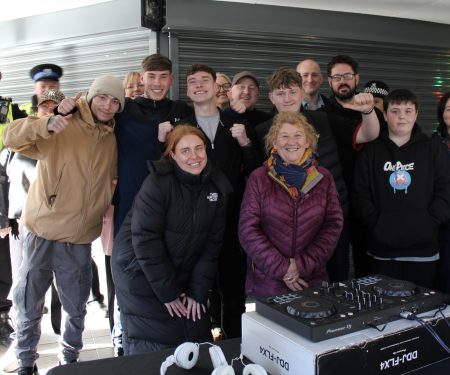
A ground-breaking programme from Action for Children which diverts young people away from a life of serious organised crime is being rolled out to Newcastle.

As part of a roll out across the UK to Newcastle, Edinburgh, and Cardiff, funded by £4.6 million from The National Lottery Community Fund, Action for Children with Northumbria Police and Newcastle City Council, will work with families and schools in communities over a three-year period.

The programme, made possible thanks to National Lottery players, will target vulnerable young people on the cusp of serious organised crime such as drug supply and distribution, money laundering, stealing to order and illegal enforcement. It will offer targeted support to 11 to 18-year-olds through intensive one-to-one support, peer mentoring, education and employment training.

Today, Northumbria Police and Crime Commissioner, Kim McGuinness, and senior members of the Police and Newcastle City Council joined representatives from Action for Children for a launch event on the innovative project which is designed to help some of Newcastle’s most vulnerable children and young people.

John Egan, director for England at Action for Children said: “Serious organised crime is an issue for the whole of the UK, disproportionately impacts the more vulnerable in our communities, and has a greater presence in socially and economically disadvantaged areas.

“Since 2013 this project has worked intensively with more than 150 young people across Glasgow, diverting them away from a life in serious organised crime and into employment.  As we bring the project across the border, the success from Scotland will lead the way in helping reach those most at risk in Newcastle.

“We are pleased to be working in partnership with Northumbria Police and Newcastle City Council, which will help ensure every child and young person has a safe and happy childhood, free from the dark grip of serious organised crime.” 

Kim McGuinness, Northumbria Police and Crime Commissioner, said: “Over the past 12 months my Violence Reduction Unit have been working hard to improve lives to prevent crime, so the launching of Action for Children’s latest serious organised crime programme is very much welcome in Newcastle.

“Young people now are more exposed to criminality and negative life choices than ever before – so additional mentoring, support and education around the impact of criminality will have a profound impact on its participants. By understanding the root causes and what leads people to offend for the first time, we can then support and deter them away from a life of criminality, improve their resilience and promote positive life decisions.

“I fully support this programme, it’s approach and desired outcomes – my VRU will be working hard with Action for Children to ensure this reaches our most vulnerable young people and positively impacts on their lives.”

Judith Hay, Director of Children, Education and Skills at Northumbria City Council, said: “I am delighted to see the launch of the serious organised crime project in Newcastle. This is a great initiative that has clearly made a huge difference to the lives of young people at risk in Glasgow.

“The introduction of this programme into Newcastle will without doubt impact positively on the lives of our young people who are at risk of involvement in serious crime. The key to engaging young people in all walks of life is the quality of relationships that they have with key adults. This programme offers as the core of its operations intensive one to one support and a trusted mentor who will help our young people navigate the many obstacles that they face.

“Newcastle has such strong partnerships across the council, police, health, voluntary and community sector – a key success factor to deliver innovation – and I look forward to seeing the difference this project will make.”

ENDS


Our Stats

LOCAL domestic abuse support services predict their referrals will soar when children head back to the classroom this September, and we must be ready for it says Northumbria Police and Crime Commissioner, Kim McGuinness.

In recent weeks, Kim has spent time with a range of organisations that support families who have experienced domestic abuse. All are predicting that when school gates re-open there’ll be a surge in the number of young people needing help to cope and recover from experiences at home.

After what was, for many, a worryingly low number of referrals during the peak of lockdown, many victim services are now reporting a sharp increase as the easing of lockdown enables more victims to reach out for help.

One such service is Gateshead Domestic Abuse Service, which has seen an almost 40 per cent rise in referrals over the last six weeks, in comparison to this time last year. The difference not only highlights the increased risk of abuse during this time but also reveals the devastating impact on young people.

Although referrals are on the up, there are still many children at home suffering in silence, ‘and it’s these children we have to shine the light on and rescue’ says Police Commissioner Kim McGuinness.

She explained: “Schools provide so much more than an education for our children. Walking through the school gates can be like entering a place of sanctuary for some. It’s these children who have had the longest, toughest summers and seeing the friendly, familiar face of a teacher may lead them to open up about their experiences at home.

“There will also be those who aren’t ready to talk but fortunately, through initiatives like ‘Operation Encompass; The Next Steps’, which I fund through my Violence Reduction Unit, we have many teachers in our region who are trained to spot the signs so they can help.

“In fact, many of the services I’ve spoken to have praised their education colleagues for their continued efforts in finding ways to get out and speak to families of concern, even while schools are closed. Some teachers have played a really valuable part in keeping strong links to support going, and to them we are very grateful.”

Earlier this year PCC Kim McGuinness launched the Children Affected by Domestic Abuse emergency fund, which made £120,000 in Home Office funding available to specialist organisations. The money was to help children at risk by supporting services adapt to new demands as a result of the Coronavirus pandemic. One organisation that benefitted from funding was Acorns in North Tyneside.

Kim continued: “There’s been a lot of talk about the rise in demand for services during lockdown but we now have to prepare for the aftermath of lockdown – an expected surge once term starts. Fortunately, services like Acorns in North Tyneside and Gateshead Domestic Abuse Service, have been planning for this for some time, recognising this is a crucial period in a much wider recovery. Now is the time to give those who have experienced abuse a voice, encourage them to share their experiences so they can be supported and move on with their lives.

“Of course the pockets of funding from Government have been welcomed but throwing small pots of cash at the problem won’t fix it. It’s a start, and yes we are seeing society, the media, MPs and so on are all talking about the problem more, which is great, but we need a long term funding commitment to ensure help reaches everyone. What we are seeing now is just the tip of the iceberg, and it’s crucial we now look to prevent future generations accepting abusive relationships as the norm, they’re not and there is real work to be done improving lives to prevent this appalling crime.”

Cllr Gary Haley, Cabinet Member for Children and Young People at Gateshead Council, said: “In Gateshead we have long recognised the traumatic impact that living with domestic abuse has on those affected, including children and young people. Aided by funding from the OPCC, Gateshead Council’s Domestic Abuse Team continues to reach out to adults and children affected by domestic abuse to let them know that they are not alone. The Domestic Abuse Team offers holistic practical and emotional support to keep children and adults safe, break the cycle of abuse and aid the road to recovery.”
Abby Burton, Project Manager at Acorns Project in North Shields, said: “We know from our work that early intervention and support can make a huge difference to adults, children and young people who have gone through these very traumatic, usually multiple experiences of domestic abuse, giving them the best possible chance of recovery. It is imperative that fami-lies are able to reach out, and when they do, that our services are there for them, not just in the short term, but over the coming months and years”.

If you are experiencing domestic abuse, you can report an incident by ringing 101 or visiting www.northumbria.pnn.police.uk. Also in a non-emergency situation you can text the police on 07786 200814.
In an emergency, always call 999. If you dial 999 and are unable to speak, the emergency operator will ask you to dial 55 and to follow their instruction to quickly put you in touch with police.
The OPCC commissions a range of specialist support services for children and young people affected by domestic abuse. More info can be found here.
Help is also available From Victims First Northumbria, who can be found at www.victimsfirstnorthumbria.org.uk or on 0800 011 3116.

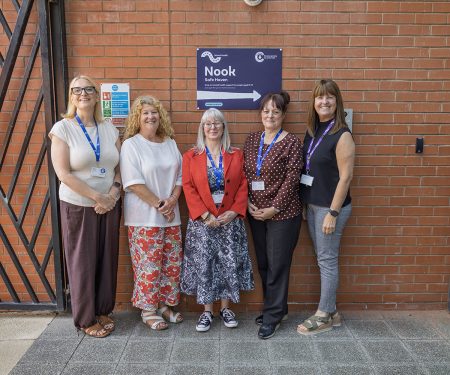
PHOTO: Kim and the team at Acorns


Our Stats

‘We can’t let the North East become the worst hit region for youth unemployment, and urgent action is needed’, warns Police and Crime Commissioner, Kim McGuinness.

Her calls for action follow recent predictions from the IPPR that the unemployment of young people in the UK is set to become the highest on record.

Their research suggests that without further government action there will be an extra 620,000 young UK citizens unemployed by the end of the year.

Citing this research the Commissioner said that tackling youth unemployment not only needs to be at the centre of our regional recovery plans, but there also needs to be a complete overhaul of how we support our young people into employment, and that needs to come from the top.

She has urged the Government to make youth employment a priority in the upcoming spending review.

Kim McGuinness, said:  “I am more worried than ever for our young people.  Youth unemployment is set to go through the roof. We can’t let the long-term impacts of this virus be underestimated. We can’t see these headlines that youth employment could rise to two million, and do nothing about it. Some regions are going to be hit harder than others. It’s not an even playing field and I for one don’t want the North East to get the ‘worst in the country’ label.

“Let’s face it, a lot of the jobs filled by young people in our bars, our gyms, our shops – they were the first to disappear in lockdown and they’re the last to come back, and that’s if workers are coming back from being furloughed at all.”

Last year the Commissioner set up a Northumbria Violence Reduction Unit setting out plans across the region to improve lives and prevent crime. In recent months the unit has been working with local organisations such as Movement to Work and the Newcastle United Foundation, trying to increase work experience opportunities and develop the skills that can get young people into work.

“We all know that unemployment goes hand in hand with high crime rates.” Kim said. “That’s why we’re doing everything possible to support young people and ensure they have opportunities right here on our doorstep, but the Government needs to act fast and address the bigger picture.”

According to the Youth Voices Census Report 2020, young people who had experience of being NEET, not in Education, Employment or Training, highlighted lack of work experience and anxiety as being the top two barriers to getting a job, and these views were captured largely before Covid-19 struck.

Kim added: “I’m proud of many of the young people in our region who have had to adapt to big changes and disruption overnight. School have been closed, exams cancelled, and they’ve also had lots of their independence and face-to-face support networks stripped right back.  So we need to ask – is the Government meeting the needs of young people right now, are there enough local opportunities and are we looking ahead to their futures?”

Our Stats

Chief Constable Winton Keenen along with Northumbria Police and Crime Commissioner Kim McGuinness last week welcomed 52 student officers into the Force.

Their arrival means a total of 217 new recruits have joined since lockdown was announced on March 23, as part of the Force’s ongoing recruitment campaign to increase the number of officers across the area.

Due to Coronavirus, special measures have been put in place to allow training to go-ahead, with an increased emphasis on digital and virtual learning.

Chief Constable Keenen said: “These new officers are needed now more than ever, to support the vital services we provide to the communities we are proud and privileged to serve.

“We set out to recruit exceptional people from all communities, who will bring a range of experiences and who are determined to make a real difference.

“In doing so, we want to make Northumbria Police more representative of our wonderfully diverse communities here in the North East so that we can continue to serve their needs as best as possible.

“I wish all of our recruits every success with their training and for the future.”

The latest recruits have joined the Graduate Initial Police Learning & Development Programme (G-IPLDP).

This is a bespoke two-year programme, open to student officers who already hold a degree and will be focusing their development in an investigative role whilst working towards the Level 3 Policing Diploma.

It is the first G-IPLDP programme Northumbria Police have delivered.

Commissioner Kim McGuinnes said: “Our police officer numbers are growing and growing and the more we have in their uniforms out on our streets, the better. This is what people want to see, especially when the Force has been hit hard by a decade of austerity. We are doing everything in our power to invest and build the force back up – to make people feel safe and keep crime down.

“I’ve had the pleasure of meeting many of the latest round of new recruits. They were a really pleasant bunch, committed to their new role and from all walks of life. All were really itching to get started. I’m grateful to each of them for signing up to be a police officer, especially in these challenging times, and I look forward to meeting them again as they progress their careers with us.”

Keep an eye on our Northumbria Police’s LinkedIn page for more information on recruitment.

Our Stats

Domestic abuse victims are most likely to call on friends and family for help, says new survey

VICTIMS of domestic abuse are most likely to confide in friends first not the police, so it’s vital the friends know where to get help from, says Police and Crime Commissioner, Kim McGuinness.

According to a recent anonymous survivor survey carried out by Wearside Women in Need (WWIN), 37 per cent of victims disclosed to a friend first and 25 per cent told a family member to begin with. 11 per cent contacted the police in the first instance.

The survey helped inform a recent campaign devised by the Police and Crime Commissioner with the support of specialist services across the region. The idea behind the campaign was to reach out to those concerned about loved ones and to provide advice and contact information that can be passed on.

The campaign has built on the idea that domestic abuse is everyone’s business and that we all have a role to play in taking our concerns seriously and not making excuses for unacceptable behaviour such as blaming stress or alcohol for causing violence and abuse.

Northumbria Police and Crime Commissioner, Kim McGuinness, said: “It’s such a big step finding the courage to open up about being abused. So whoever a victim chooses to confide in, it doesn’t matter. What’s important is that we seize that moment, especially right now with more victims being allowed out of the house as they’re perhaps doing the school run or returning to work. Whoever they tell needs to know where to turn for specialist support.

“Almost two-thirds of people reach out to friends and family first – it’s these people who need to have information on what to do. They have a vital role to play in bridging the gap to specialist services. That’s why last month we launched a campaign which set out how we can all help those suffering domestic abuse. We’re not asking the general public to be experts here, of course not, but these people are the gate keepers. Their response is very important and can guide a victim to the right services and change their life for the better.”

She added: “We have specialist officers trained in domestic abuse who are great too, but what I’m saying here is that if someone isn’t comfortable with the idea of going to the police we get that, we really do, but there are other ways. We just want support to get to those who need it as quickly and as easily as possible, however that may be.”

Becky Rogerson MBE, Director at Wearside Women in Need, said: “This campaign acknowledges the important role that family, friends and work colleagues play in supporting people in abusive relationships; they are frequently the first people who spot the signs, receive the disclosure and have the opportunity to seek help. We want to ensure everyone knows what to do, who to call and how to make a difference. At least 2 women a week lose their lives to violent partners – we can all make a difference to that shocking statistic if we ‘Ask and Act’, our services are open and can help you”.

The VAWG survey, produced by WWIN outlines many of the ways in which the pandemic reinforces inequality and increases the incidents of domestic abuse and the impact on victims.

For campaign information and a list of support services visit here.

In an emergency, always call 999. If you dial 999 and are unable to speak, the emergency operator will ask you to dial 55 and to follow their instruction to quickly put you in touch with police.

ENDS

Our Stats

PRESS RELEASE

VICTIMS of domestic abuse and sexual violence will get extra help from a £500,000 fund set to help local voluntary groups.

Extra funds secured by Police and Crime Commissioner Kim McGuinness will ensure specialist support reaches victims by helping support services to cope with increased demand and ongoing financial pressures brought on by the Coronavirus pandemic and social distancing.

Supporting victims of domestic abuse trapped at home during the Coronavirus crisis has been a priority across the region. Now, a wide range of charities and organisations are set to benefit from this money. Some have been previously commissioned by the PCC whereas others are newly on board working with the office. All funding will be used to help the vulnerable and those who are most in need across all communities.

Services welcoming this cash boost include Wearside Women in Need, Northumberland Domestic Abuse Services, Streetwise, Community Counselling Co-Operative and Children North East.

Police and Crime Commissioner, Kim McGuinness, said: “We’ve been calling out for this money for victims since lockdown began and I’m beyond pleased that we are now in a position to get it out there and help some of the brilliant support services that need it the most.

“Sadly, for many victims lockdown has made them more vulnerable. The struggle and fear for those trapped at home with their abuser is very real and finding those who are suffering and reaching out to them with the right support can be difficult too. So this funding will help keep some of our valuable support services up and running, helping them to keep on doing all they can – supporting people and saving them from some of the worst experiences imaginable.

“Safe spaces, helplines, web chats – they can all be such an important lifeline. We need to be doing everything possible to make sure victims don’t feel alone, providing them with support and a ray of hope so they know they can escape from the abuse and recover from their experience.”

She added: “I hope this funding is the start of things to come. Supporting those suffering domestic abuse and sexual violence is absolutely crucial but it can’t stop there, there are many other victims who are getting caught up in this this health crisis who can’t get forgotten too. Some young people are being criminally exploited, some old people being subjected to scams – the list goes on. We need to ensure specialist support reaches all our vulnerable victims of crime and I will keep calling on the Government to help fund support in other areas too.”

Michele Deans, Children North East Operations Director, highlighted the importance of this funding after being confirmed as one of the successful beneficiaries of the funding. She said: “We know that there has been an increase in incidents of domestic abuse during this pandemic which is why this funding from the PCC is so welcome and also so essential. It will enable us to increase the range of help we offer to those affected by violence in the home, supporting those affected to find a lifeline for themselves and their children”

The money has been made available through the Ministry of Justice’s Extraordinary Covid-19 Fund.

If you are experiencing domestic abuse, you can report an incident by ringing 101 or visiting www.northumbria.pnn.police.uk. Also in a non-emergency situation you can text the police on 07786 200814.

In an emergency, always call 999. If you dial 999 and are unable to speak, the emergency operator will ask you to dial 55 and to follow their instruction to quickly put you in touch with police.

Help is also available from a range of local support services detailed here.

More information on the fund can be found at www.northumbria-pcc.gov.uk/police-crime-plan/commissioning-services-grants/


Our Stats

Exit
Site