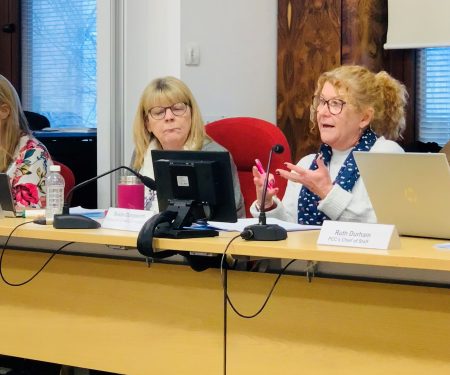
“Right now, in our region, the pandemic is growing again and it’s only right that we come together to fight the spread of this deadly virus.

“We have to take action now to withstand this threatening storm. Nobody wants a return to the time when the disease was spiralling out of control – our NHS struggling to keep afloat, and so many loved ones taken from us far too soon. We all have a role to play to stop our region getting to this point again and just because you’re fit and healthy doesn’t mean you’re not carrying this virus around, you could be.

“These restrictions asked for by local councils will need a region-wide approach to make them effective.  Enforcement action will be taken against those who refuse to comply with these restrictions, including the rule of six, and put others at risk, but we need to avoid getting to that situation. It’s also crucial that the Government supports our region’s efforts with a testing strategy that’s fit for purpose and meets our local increased demand needs.”

“It’s important that we curtail the spread of this virus together, act sensibly and keep our region safe.”


Our Stats

A series of attacks on emergency workers in the Northumbria region has prompted Police and Crime Commissioner, Kim McGuinness, to team up with independent charity Crimestoppers to offer a reward of up to £1,000 for any information leading to the arrest and charge of those responsible.

Across the Northumbria force area there have been some worrying attacks in recent weeks where police officers have been spat on, paramedics have been assaulted and firefighters have had rocks thrown at them when attending deliberately started fires.

Crimestoppers is now appealing for people to speak up anonymously against these unacceptable behaviours and help prevent further threats.

The most recent figures for Northumbria show that in the 12 months to June 2019 there were 897 assaults on police officers, and 863 in the following 12 months. Alongside this, since November 2018, there have been 101 recorded incidents of assaults on other emergency workers.

Kim McGuinness, who is calling on Government to ensure the courts use their full powers when sentencing those convicted of attacking emergency service workers, said: “These attacks make me furious. We need to do everything possible to fight these crimes and prevent them from happening. This reward is about encouraging reporting and seeking justice – we have to make sure we catch those who are responsible and that there are appropriate punishments in place.

“Our emergency workers are the very people who put their lives on the line to save others. They absolutely shouldn’t have to put up with this. We don’t always know who the culprits are so anyone who does know or who has information, needs to do the right thing – it could be you and your family needing help one day.

“A paramedic attending to an assault on a fire officer, which will then have to be investigated by the police – this ties up all our valuable resources, taking them away from other emergencies and putting everyone in our communities in real danger. It keeps happing and it has to stop.”

Ruth McNee, North East Regional Manager at the charity Crimestoppers, said:

“This sort of behaviour is totally unacceptable. Even if no one is hurt or killed, arson can leave people homeless and penniless, and attacks on emergency services are now making matters so much worse. We need people in these communities to speak up, to tell us what they know – hence why we are offering a reward of up to £1,000 for information to help prevent future fires from damaging communities and threatening lives – and to ensure that those who assault our critical emergency workers are stopped in their tracks.

“At Crimestoppers, our charity has kept our promise of anonymity for over 32 years, so you can trust that when you tell us anything, no one will ever know. Anyone can contact us online via our untraceable online form at www.crimestoppers-uk.org, or you can call our 24-hour UK Contact Centre on freephone 0800 555 111. The number will not show up on any phone bill and we are not interested in who you are, just what you know.”

Please note: Computer IP addresses are never traced and no-one will ever know you contacted us. For telephone calls, we have no caller line display, no 1471 facility and have never traced a call.

-ENDS-


Our Stats

MORE youth diversionary activities are the answer to curb growing anti-social behaviour problems, say two top North East police and fire figures.

As ASB goes up, so do related fire incidents and both Police and Crime Commissioner, Kim McGuinness, and Tyne and Wear Fire and Rescue Service Chief Fire Officer, Chris Lowther, share fears ASB could escalate, as the region recovers from the impacts of the Coronavirus.

TWFRS has attended 1430 ASB related fire incidents between 01 April 2020 and 21 August 2020. The incidents take valuable resources away from their primary role of protecting life and property.

These figures also come at a time when young people have experienced the upheaval of lockdown, a lack of school routine, exam results chaos and now the ever-growing threat of youth unemployment hitting an all-time high.

Northumbria Police and Crime Commissioner, Kim McGuinness, said: “After years of austerity and the recent challenges brought by Covid-19, the ongoing battle to tackle ASB is only going to get tougher – especially if we don’t look at the causes and do something about them.

“Problems are often linked to drink, drugs and deprivation. Many young people have had a tough time of late. Most kids who get up to trouble do so because they are bored. We know this because they tell us. They’ll say they simply have nothing better to do. So, we need to be putting a better option right there in front of them, giving them chances and choices.”

Speaking at a meeting with the fire service last week, Kim said: “Nobody here is measuring success in terms of how many arrests we make or the amount of fires we put out. Success for us is reducing the number of times people need to call our services for help. We both want the communities we serve to be the safest they can be and education is key.

“It’s about listening to and working with young people, finding out what’s going wrong in their lives and helping them to turn things around whether it be through sport, youth clubs or any place where they can meet positive, supportive role models and gain new skills and aspirations.

“We know this approach works, my Violence Reduction Unit has seen some fantastic results in areas where young people have been presented with opportunities, but youth services come at a price. If we don’t invest early on we have to pick up the pieces later and I worry the Government is still yet to grasp this. Youth services are the real emergency service and it’s our young people we have to rescue before it’s too late.”

Tyne and Wear Fire and Rescue Service Chief Fire Officer, Chris Lowther, went on to explain: “Anti-social behaviour is one of the biggest challenges that we face. There’s clearly a need to educate young people on the consequences of their actions, particularly when it comes to deliberate fires.

It may seem like harmless fun, but even small fires put people at risk because our crews can’t be in two places at once. If we’re called out to a wheelie bin fire, that could affect our ability to respond to a life-threatening car accident or house fire.

Firefighters are often met with hostility when they’re called out to deliberate fires and we have seen too many instances of verbal abuse and even physical attacks. Youth engagement programmes, like those offered at our Community Hub in Sunderland, not only give young people the chance of a brighter future, but they also help them to see emergency service workers as role models they can trust – not the enemy. ”

According to Northumbria Police, reports of anti-social behaviour (ASB) rose during the coronavirus lockdown, although this can at least partly be attributed to ‘COVID-related offences’ being recorded as ASB.

ENDS

Our Stats

SUPPORT FROM NORTHUMBRIA POLICE & CRIME COMMISSIONER TOTALS OVER £1 MILLION AS KIM MCGUINNESS OUTLINES PLANS TO KEEP CRIME IN THE REGION FALLING

With fears that the pandemic could create a ‘lost generation’ of young people, widen the education attainment gap and lead to an increase in vulnerability, Northumbria’s Police & Crime Commissioner responds with a further £135,000 to tackle crime in the region.

Recent analysis by the Office of National Statistics showed positive signs for Northumbria – from March 2019 to 2020 the area recorded less total recorded crime, a reduction in knife related offences and a fall in serious violence offences. Whilst this was welcomed by Kim McGuinness, Northumbria’s Police & Crime Commissioner, the PCC is already looking ahead to the next 12 months

Kim said: “This is clearly very positive news – a reflection that investment into my Violence Reduction Unit (VRU), and through proactive enforcement work by Northumbria Police, we can improve lives to prevent crime across the region. My concern now, is how we ensure we see crime continue to fall in the year ahead.”

“Young people are telling us that they need some extra support this summer, and we will be there to help them. Through my VRU we are allocating a further £135,000 to organisations to tackle the financial challenges arising from Covid-19 in order to help and support vulnerable children.”

A total of 21 organisations will be funded by the PCC, with the grants supporting micro-charities who are working with vulnerable young people at risk of being involved in serious violence. This announcement will bring the total amount of funding provided via the Police & Crime Commissioner, during the Coronavirus pandemic to the regions charities and organisations, to over £1 million.

To ensure the funding is supporting the most vulnerable and in need areas, the PCCs Violence Reduction Unit consulted with 14 to 25 year olds during lockdown to understand the challenges faced during this period and what support may be required as they return to education and other settings in September.

The consultation, which received high engagement as well as praise from education providers & youth organisations, raised key concerns across the respondents in relation to mental health, health & wellbeing and employment support.

Kim said: “I was delighted with the response we got to our youth consultation – over 1300 young people telling us their lockdown experiences and how we can support them going forward. This insight will be crucial in guiding our work and ensuring services are available to provide interventions that will address their vulnerabilities.”

“We know that young people have been more vulnerable than ever during this period, and we cannot let that materialise and lead to criminality. This funding will allow charities to deliver positive diversionary activities and help guide these individuals in a positive direction.”

The funding will not only support young people, but also charities who have been incredibly hard hit during this period as funding uncertainties and lack of support risked the future of many in the sector.

David McGuigan, Project Manager of Longbenton Youth Project, highlighted the importance of this funding on the future of their organisation.

David said: “The grant allows us to bring back our workers from furlough on a part time basis and continue the fantastic work we have achieved since opening in May 19994. Without the grant we may well have never re-opened again and that would be a huge tragedy for those young people we serve.”

Responses to the VRUs youth consultation highlighted anxiety from young people about returning to school and community settings, a challenge overcome by Sporting Chance, one of the organisations funded by the PCC.

Jamie Cairns, Director at Sporting Chance, explained how the funding has been used to support young people during the summer holidays. Jamie said: “We have adopted an open door policy for young people during the lockdown and summer half term which has become a success, however for some young people it has become a norm to not attend the provision therefore home visits have been conducted to provide the support required along with empowering positive behaviours.”

“Each session has been tailored to the individual need of the young person and so far has included; supporting with emotional well-being, offering support to parents to encourage positive behaviours within the community and ensuring young people are safe.”

A full list the funded interventions can be viewed here. The funding, provided by the Home Office, comes as part of an additional £2.9million fund to the 18 Violence Reduction Units to support the VCSE sector.

ENDS


Our Stats

Northumbria Police and Crime Commissioner, Kim McGuinness, has praised the region’s rural volunteers for their help supporting a series of successful clampdowns to keep countryside crime down.

A new report by published by NFU Mutual last week revealed their efforts have paid off as last year saw the North East record the lowest regional increase in the cost of rural crime – an increase of just 0.4 per cent.

Despite the good work happening to tackle this crime, the small increase still brings the total cost of rural crime across our region to £8.6m, which the Commissioner points out is far too high.

Voicing her concerns, she said this will only get worse if our rural areas become the forgotten priority in the government’s Spending Review this autumn.

The Spending Review is where the government sets out spending plans for the next financial year, allocating monies to each different department, determining where taxpayers’ money will be spent.

Many predict budget cuts are looming, as the country tries to build itself back up following the impacts of Covid-19.

This year the Commissioner ensured there has been funding to grow police vehicle fleets and buy vital tools to help rural policing, something she fears won’t be possible if the funding of our police service is stripped right back and we return to a time of austerity.

Northumbria Police and Crime Commissioner, Kim McGuinness, said: “As these numbers show, we’re fortunate to be the region that’s seen the lowest increase in the cost of rural crime, and for this we must give credit to Northumbria Police and the dedicated volunteers that we are lucky to have on board.

“That said, we’re still hit by rural crime that costs our region millions. That’s not even taking into account everything that gets left unreported. Whether it’s the theft of livestock, quad bikes, cars – it doesn’t matter, it can all have a devastating impact on victims and their families. For me, it’s not just about practicalities and money, it’s the worrying mental impact and fear felt by those targeted – you can’t put a price on that. Rural crime has to be thrown into the spotlight and must not become an after-thought for the Government at a time they’re going to be looking to make big savings.”

She continued: “Right now with the wider impacts of the virus rippling through all aspects of society, we’re going to see an impact on rural crime but the need to protect rural policing is very much on my radar.

“I promise to continue with our plan to recruit more local people from rural backgrounds so they get it, they know the nature of the crimes and the way the communities work. I will continue to do all I can to make sure we are funding victim services and youth groups in our isolated neighbourhoods to make sure we are looking after those in need and helping prevent crime.

“And we must not forget rural areas are not immune to other awful crimes like county lines and domestic abuse, far from it. Tackling all this is only made possible if Government chooses to fund policing properly. Right now, we need more investment in our force, not less, if we are going to get a real grip of rural crime.”

Last year the national figure for the cost of countryside crime was £54.3m – the highest it’s been in eight years and an increase of almost 9 per cent on the previous year.

For the second year running, the report points to a sharp rise driven by thefts of high-value tractors, quad bikes and other farm vehicles. Livestock theft also increased in 2019, with organised gangs taking large numbers of sheep, which are thought to be entering the food chain illegally.

Our Stats

A ground-breaking programme from Action for Children which diverts young people away from a life of serious organised crime is being rolled out to Newcastle.

As part of a roll out across the UK to Newcastle, Edinburgh, and Cardiff, funded by £4.6 million from The National Lottery Community Fund, Action for Children with Northumbria Police and Newcastle City Council, will work with families and schools in communities over a three-year period.

The programme, made possible thanks to National Lottery players, will target vulnerable young people on the cusp of serious organised crime such as drug supply and distribution, money laundering, stealing to order and illegal enforcement. It will offer targeted support to 11 to 18-year-olds through intensive one-to-one support, peer mentoring, education and employment training.

Today, Northumbria Police and Crime Commissioner, Kim McGuinness, and senior members of the Police and Newcastle City Council joined representatives from Action for Children for a launch event on the innovative project which is designed to help some of Newcastle’s most vulnerable children and young people.

John Egan, director for England at Action for Children said: “Serious organised crime is an issue for the whole of the UK, disproportionately impacts the more vulnerable in our communities, and has a greater presence in socially and economically disadvantaged areas.

“Since 2013 this project has worked intensively with more than 150 young people across Glasgow, diverting them away from a life in serious organised crime and into employment.  As we bring the project across the border, the success from Scotland will lead the way in helping reach those most at risk in Newcastle.

“We are pleased to be working in partnership with Northumbria Police and Newcastle City Council, which will help ensure every child and young person has a safe and happy childhood, free from the dark grip of serious organised crime.” 

Kim McGuinness, Northumbria Police and Crime Commissioner, said: “Over the past 12 months my Violence Reduction Unit have been working hard to improve lives to prevent crime, so the launching of Action for Children’s latest serious organised crime programme is very much welcome in Newcastle.

“Young people now are more exposed to criminality and negative life choices than ever before – so additional mentoring, support and education around the impact of criminality will have a profound impact on its participants. By understanding the root causes and what leads people to offend for the first time, we can then support and deter them away from a life of criminality, improve their resilience and promote positive life decisions.

“I fully support this programme, it’s approach and desired outcomes – my VRU will be working hard with Action for Children to ensure this reaches our most vulnerable young people and positively impacts on their lives.”

Judith Hay, Director of Children, Education and Skills at Northumbria City Council, said: “I am delighted to see the launch of the serious organised crime project in Newcastle. This is a great initiative that has clearly made a huge difference to the lives of young people at risk in Glasgow.

“The introduction of this programme into Newcastle will without doubt impact positively on the lives of our young people who are at risk of involvement in serious crime. The key to engaging young people in all walks of life is the quality of relationships that they have with key adults. This programme offers as the core of its operations intensive one to one support and a trusted mentor who will help our young people navigate the many obstacles that they face.

“Newcastle has such strong partnerships across the council, police, health, voluntary and community sector – a key success factor to deliver innovation – and I look forward to seeing the difference this project will make.”

ENDS


Our Stats

Exit
Site