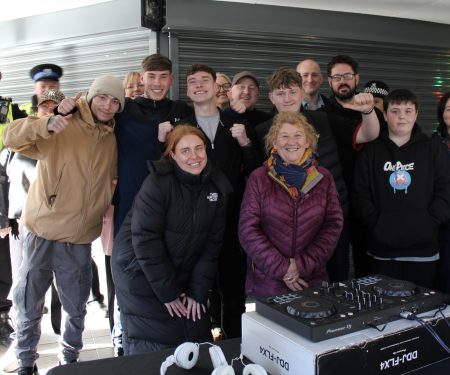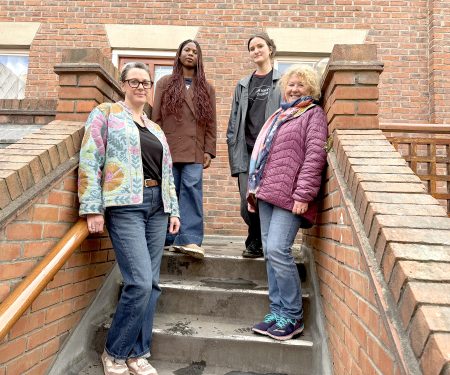
Young people across the region have secured more than £14,000 in funding to lead a series of innovative projects designed to prevent serious violence, promote positive choices, and improve local areas.

The funding, provided through the Northumbria Violence Reduction Unit’s Local Youth Fund, places young people at the heart of decision-making – empowering them to take action on the issues that matter most to them.

From support groups to an outdoor gym, these youth-led projects are creating safer spaces, offering alternatives to crime, and showcasing the drive and creativity of young people determined to make a real and lasting difference.

One young person said it’s about: “having more safe, welcoming places to go – where you can build friendships, keep active, and have positive role models.”

Another added: “It’s important for us to come together as a community to support each other. Only through unity and kindness can we create a safer environment for everyone.”

A third said: “When there’s stuff to do and places to hang out, people are less likely to get into trouble.”

After a thorough selection process by a panel of young people, eight projects have been chosen to receive funding and turn their ideas into action:

  • Weights & Cakes (Sunderland): Strong Futures is a youth-led project empowering young people through fitness, cooking, and creative workshops, while raising awareness about knife crime and the importance of making positive choices.
  • Felling ABC (Gateshead): Creating a community hub and games room within a boxing gym, giving young people a place connect, build discipline, and find positive alternatives to crime and violence.
  • Family Gateway (North Tyneside): Developing an outdoor gym where young people can take part in fun, peer-led bootcamp-style sessions, giving them a safe, positive space to stay active, build confidence, and make friends.
  • Foundation Futures CIO (Newcastle): Hosting a youth safety event and football tournament to raise awareness about knife crime, provide practical first aid training, and bring young people together through sport.
  • South Tyneside Ability (South Tyneside): Running support groups for young people to learn about staying safe, understand the dangers of knife crime, county lines, and exploitation, and gain the confidence to make informed and positive choices.
  • Gen D CIC (Sunderland): Creating a Digital Youth Hub where young people can socialise, play games, and learn skills including art, animation, and online safety — promoting creativity, teamwork, and positive choices in a safe space.
  • 242 (Cramlington) Squadron Air Cadets (Northumberland): Delivering a three-month programme combining sport and education to promote fitness, teamwork, and informed decision making, helping young people build resilience and deter them from crime.
  • Wallsend Boys Club (North Tyneside): Providing a range of workshops and activities focusing on mental health, wellbeing, nutrition and social harm, as well as coaching opportunities for young people to gain vital skills.

Congratulating young people on their funding success, Northumbria Police and Crime Commissioner Susan Dungworth said: “I’m delighted to see such a wide range of projects put forward to by young people in the latest Local Youth Fund. And at the heart of it all is one clear message – the importance of having safe places to spend time with friends, have fun, and even learn something new.

“Earlier this year I launched my Police and Crime Plan, setting out a collective vision for creating safer streets, and stronger communities. I want to keep building on the progress we’re making, which is why I asked young people to tell me what matters most to them – and they’ve done exactly that.

“These projects are not only about helping to prevent serious violence, but they’re also giving young people the opportunity to develop vital life skills, boost their confidence, and take pride in bringing their ideas to life.

“The creativity and passion shown by our incredible applicants has been remarkable, and I know the selection process was incredibly tough for the panel. I’m looking forward to seeing these fantastic projects in action.”

ENDS

Our Stats

New policing base opens at North Shields Transport Hub to tackle anti-social behaviour

A new policing base has opened at North Shields Transport Hub, to help address anti-social behaviour and improve safety for passengers, staff and the wider community.

It means Northumbria Police and North Tyneside Council’s community protection team have a visible presence on site, with a faster response to incidents in the area.

The base provides a drop-in point for members of the public to speak directly with officers and community protection staff.

It’s part of Project Shield, a force-wide programme launched in July 2024 to tackle anti-social behaviour and violence in hotspot locations. Delivered in partnership with Northumbria Police, North East local authorities and transport providers, Project Shield aims to increase patrols, strengthen community confidence and reduce crime.

North Shields Transport Hub was targeted in a vandalism incident in January 2025, which caused significant damage to the main entrance.

Councillor Sandra Graham, Cabinet Member for Community Safety, said: “This is a practical step to make North Shields town centre safer and more welcoming for everyone.

“By placing officers where issues are happening, we can respond more quickly and work closely with local businesses, transport staff and the public to tackle problems before they escalate.”

Early feedback from town centre businesses has been positive, with quicker responses to shoplifting and other incidents in and around the Transport Hub.

Northumbria Police and Crime Commissioner, Susan Dungworth, said: “For me, having an engaged and responsive police force is a top priority and this base will help with joint efforts to combat local issues. We know the area has been targeted with vandalism and anti-social behaviour in the past and Project Shield is about ensuring we have targeted patrols and engagement in areas of concern. This base will allow police and partners to take action efficiently and effectively, which in turn should help feelings of safety for public transport users in North Shields.”

Sergeant Leanne Hall, of Northumbria Police’s North Tyneside Neighbourhood Policing Team, said: “People using the Transport Hub in North Shields should feel safe and confident. Having a shared base here helps us to tackle problems straight away, while reassuring the public that we’re on hand for them.

“This collaborative approach with our partners helps us to identify anti-social behaviour issues earlier, deter offenders from carrying out crime, share intelligence and plan our activity accordingly.

“The base provides our dedicated multi-agency team with an excellent vantage point to keep an eye on any ASB around the Transport Hub so that we can get out quickly and take the appropriate action when we see problems arise.

“Please remember we’re here to help so if you want to drop into the hub for a chat with our officers, don’t hesitate to do so.”

Our Stats

A powerful new online resource designed to challenge misinformation and promote understanding about migration has been launched today by the North East Migration Partnership, in collaboration with the offices of the Police and Crime Commissioners for Durham, Cleveland, and Northumbria.

The Migrant Myth Busters leaflet directly addresses common myths about asylum seekers, refugees, and migrants, providing clear, evidence-based facts on issues ranging from welfare, employment, crime, and housing. It also includes up-to-date UK and regional statistics to help communities better understand the realities of migration.

This launch comes at a time when reports of hate crime are on the rise across the region. Latest figures show:

  • Northumbria has seen a 5% increase in overall hate crime reports over the past year.
  • Durham has experienced a 7.2% year-on-year rise in hate crime reports, as of the end of September 2025.
  • Cleveland saw a 17% increase in 2024 with 1,795 reported hate crime in the area compared to 1,534 the year before. It was noted that the figures had been influenced by the period of violent disorder during the summer of 2024.

Police and Crime Commissioners Joy Allen (for Durham), Matt Storey (for Cleveland), and Susan Dungworth (for Northumbria) have jointly backed the initiative, which they say is urgently needed to dispel harmful myths and reduce community tensions.

Key facts from the leaflet include:

  • There is no evidence to suggest that migrants increase crime.
  • The UK ranked 17th in Europe for asylum applications per capita in 2021.
  • Migrants contribute an estimated £341,000 more to public finances than they take over their lifetime.
  • Asylum seekers are less likely to claim benefits than UK-born individuals.

The leaflet also addresses legal barriers faced by asylum seekers, such as being unable to work while awaiting decisions, and clarifies that migrants are less likely to access social housing than those born in the UK.

Durham Police and Crime Commissioner, Joy Allen said; “We know that misinformation fuels fear and can lead to hate crime. Tackling hate crime is one of the key priorities in my Police, Crime and Justice Plan under ‘Safer People, Safer Places’. Everyone in our community deserves to feel safe and respected, regardless of their background. This initiative is about stopping harmful narratives in their tracks and promoting compassion and truth across our region.”

Northumbria Police and Crime Commissioner, Susan Dungworth, said: “Time and time again online and in the media we’re all being fed harmful myths. All this incorrect information isn’t just misinforming us, it’s dividing us too. We know education is the key to building stronger, safer communities across the North East and we want to reach as many people as possible with the factual information in this leaflet. We came together on this project because we all want to set the record straight – replace the fiction with the facts – and hate with understanding.”

Cleveland Police and Crime Commissioner Matt Storey said: “This myth buster is crucial to ensuring that the public have the facts about immigration and asylum in the North East. There is so much disinformation, particularly on social media, which pushes false, negative messages with no basis in fact. We must do all we can to get the reality of the situation regarding immigration into the public domain and challenge those divisive voices. Minority communities in our region need to know they have advocates like us who will speak out and defend them as we try to foster tolerance over division.”

A digital version of the leaflet is now available: Myth Busting Migration Facts.

To learn more, scan the QR code on the leaflet or visit the North East Migration Partnership.


Our Stats

Vanessa Jardine is to be reappointed as the Chief Constable of Northumbria Police following a short break from the position.

The move has been approved by the Police and Crime Commissioner with the agreement of the Police and Crime Panel who met today (Tuesday 14 October) and put a range of questions to the Chief Constable ahead of ratifying her reappointment.

This now means Vanessa Jardine will retire as Chief Constable as of tomorrow (Wednesday 15 October) and will rejoin on Wednesday 22 October under the national Retire and Rejoin Scheme.

The scheme is open to officers of all ranks and is used across a range of professions up and down the country. The scheme is designed to retain skills, knowledge and experience within the police service by removing the financial disincentive that some officers may face once they reach 30 years’ service. It does not create any additional costs to the taxpayer.

The scheme is in accordance with updated guidance from the National Police Chiefs’ Council (NPCC), the Association of Police and Crime Commissioners (APCC) and the College of Policing.

Under legislation, Deputy Chief Constable Jayne Meir will be Temporary Chief Constable and Assistant Chief Constable Alastair Simpson becoming Temporary Deputy Chief Constable during this short period.

Police and Crime Commissioner Susan Dungworth recommended the re-appointment of Vanessa Jardine. Afterwards she said: “Vanessa’s reappointment is in the best interests of not only Northumbria Police but of our communities too – and I am pleased today her rejoining was unanimously supported by the Panel.

“There is nothing unusual about this scheme, in fact it’s been widely used by Chief Constables up and down the country. It’s allowing us to retain the services of a proven leader of high calibre and experience.

“Under her leadership we have seen significant response time improvements and reductions in total crime figures – these are things residents will be keen for her to build on. She can now continue to put her vision for the Force into action, and I look forward to continuing to work alongside her to deliver on the priorities set out in my Police and Crime Plan for safer streets and stronger communities.”

Chief Constable Jardine said: “It has been a real privilege to have been Northumbria’s Chief Constable for the last two-and-a-half years and I’m immensely proud of the Force and the people I work alongside.

“I now have more than 31 years of service, but I want to continue and provide that leadership continuity to deliver outstanding services to the people of the Northumbria area.”

ENDS

Our Stats

NORTHUMBRIA Police and Crime Commissioner, Susan Dungworth, has today (October 6) launched a new Supporting Victims Programme offering funding to help boost support for victims of crime across the Force area.

It’s hoped the fund, which will run from 2026 to 2029, will give local services the stability they need to plan ahead and provide quicker, better support for victims.

Backed by Government funding through the Ministry of Justice and Violence Against Women and Girls programmes, the scheme will channel money into the areas victims say matter most. This will cover emotional, practical and therapeutic support to victims of crime, as well as advocacy services.

The PCC hopes the new fund, which closes on November 16th, can help towards reducing waiting times, easing pressures on frontline services, and ensuring help is available when people need it most.

The PCC’s Office has carried out extensive victim needs assessments, service reviews and victim surveys to identify local priorities.

These include:

  • Domestic abuse
  • Sexual violence
  • Stalking
  • Children and young victims
  • Hate crime
  • Violent crime
  • Exploitation and modern slavery
  • Victims with other vulnerabilities

Listening directly to those affected by crime and those who support them has helped shape the new funding package. One clear message was that came from the victims’ survey was that emotional support is the number one need for victim after crime. Children and young people also told the office that family-wide support is key, with half of respondents highlighting its importance.

Organisations supporting teenage victims of domestic abuse and those offering support to address child-to-parent violence and abuse are just some of the areas in which the PCC is keen to receive bids covering.

Northumbria Police and Crime Commissioner, Susan Dungworth, said: “I know from listening to victims that access to the right emotional and practical support makes all the difference, and that families often need support together. I’m determined that no victim feels they have to go through this alone. That’s why this funding programme is about responding to real needs, identified here in Northumbria. By working in partnership with local organisations I want to build stronger, more resilient victim services across the region.

“But funding alone is not enough—we must also keep raising awareness, so people know what help is out there and of course working to prevent crime from happening in the first place by creating safer streets and stronger communities.”

Last year alone, through the Supporting Victims Programme, services in Northumbria reached nearly 30,000 victims. But with demand rising, the new fund aims to cut waiting times, ease pressure on frontline workers and ensure no victim has to go without help.

Earlier this year, the PCC also launched a Victim Services Directory, making it easier for victims to see what support is available to them locally.

Minister for Victims and Tackling Violence Against Women and Girls, Alex Davies-Jones, welcomed the programme launch and said:

“Every victim deserves to feel heard, supported, and empowered, which is why the Government invests in important help for victims like this. This initiative will be a lifeline for victims in the region, offering the emotional and practical support they need to report crime, rebuild confidence, and begin to recover. I look forward to seeing the impact this programme will have, and I commend Susan and her team for the vital work they’re doing to support victims across Northumbria.”

Last year alone, through the Supporting Victims Programme, services in Northumbria reached nearly 30,000 victims. But with demand rising, the new fund aims to cut waiting times, ease pressure on frontline workers and ensure no victim has to go without help.

Earlier this year, the PCC also launched a Victim Services Directory, making it easier for victims to see what support is available to them locally.

Notes to editors:

  • Funding applications open October 6, 2025, and close November 16, 2025.
  • The Supporting Victims Fund combines allocations from the Ministry of Justice Victims Fund and Violence Against Women and Girls (VAWG) funding.
  • The programme will run from April 2026 – March 2029.
  • Applications can be made here.


Our Stats

AS thousands of students have been arriving in the North East to begin their university journey, Northumbria Police and the region’s Police and Crime Commissioner, Susan Dungworth, are offering them a warm welcome — and a clear message that student and community safety is a top priority.

In Newcastle, a key part of the support in place this Freshers’ Week  and beyond is the Safe Haven Van – parked up in the heart of the Bigg Market at peak times or when events are taking place. The well-known safety hub is funded through the Office of the Police and Crime Commissioner. It provides a safe, supportive space for anyone who finds themselves in difficulty during a night out. Whether someone feels unwell, has lost their friends, or needs help getting home – the Safe Haven Van is there to ensure no one is left feeling vulnerable.

The Safe Haven Van is just one of a raft of safety plans working alongside Newcastle and Northumbria Universities, North East Ambulance Service (NEAS), Newcastle City Council, and the dedicated Street Pastors — aiming for students to feel safe and supported right from the start.

Dedicated policing operation, Operation Salus, is a year-round initiative to safeguard people in the city centre. Officers monitor CCTV, gather intelligence and respond quickly to signs of vulnerability. The operation not only includes increased patrols, but also CCTV surveillance and Automatic Number Plate Recognition. Background work like this helps address issues before they escalate, leaving people free to enjoy their evenings in safety.

Northumbria Police and Crime Commissioner Susan Dungworth who has been visiting freshers’ fairs across the region, including in Newcastle and Sunderland, said: “Starting university is a big step — for students and for parents too. For many young people it’s their first taste if independence and so we want to make sure it’s a positive one. I want to reassure students and their families that here in Northumbria, we take student safety seriously. From extra policing operations to trusted services like the Safe Haven Van, we’ve made real investment in keeping our city centres safe, especially during busy times like Freshers. Newcastle is an incredible place to study, and we’re committed to doing all we can, alongside our partners, so people are safe and can enjoy their time here.”

Chief Inspector Rob Bosson, of Northumbria Police’s Newcastle Area Command, said: “Newcastle is renowned as a vibrant, welcoming and safe place for students to live, study and enjoy a fun night out and we are determined to keep it that way. We work with a range of partners, including the Police and Crime Commissioner, the local authority, businesses, licensees, door supervisors, hotel staff, as well as street pastors and taxi drivers, so we can all come together so that people are safe. The Safe Haven Van remains a vitally important part of our multi-agency work within the night time economy, so that alongside our partners we’re there when needed by those who may have become split up from friends or found themselves worse for wear on an evening out. We also run Op Salus, in which our officers work hard alongside partners to ensure the safety of all people visiting the city centre at all times of the year. We are proud of the role we play within the night-time economy and our dedicated and innovative approach has been rolled out elsewhere in the country. As a Force, we remain committed to building on this work to ensure people can continue to have a safe and enjoyable time while on a night out. Please remember that if you do need us, we are here for you.”

Vashti Hutton, Director of Student Life and Wellbeing at Northumbria University and speaking on behalf of both Universities, said: “The health and safety of our community is our number one priority, and we work actively with several partners across the city to help make this possible at this exciting time for our new students. We encourage all students to familiarise themselves with up-to-date guidance about keeping safe in the city, attend campus and accommodation inductions, as well as look for support from the emergency services should they need it when exploring their new home. In addition, we continue to work with Northumbria Police as part of our ‘Operation Oak’ partnership, which provides extra police officers to work in areas such as Jesmond, Heaton, Sandyford, Shieldfield and Ouseburn, providing reassurance to all residents. This police-led initiative funded by the universities works to encourage good community relations and minimise disruption to the daily lives of all residents because of anti-social behaviour, along with addressing any vulnerabilities or safeguarding concerns and offering crime prevention advice.”

Stu Holliday, head of emergency preparedness, resilience and response at North East Ambulance Service said: “Working closely with the police in the city centre means that we can assess and treat people quickly. This frees up our resources to help patients in the greatest need. It also helps relieve pressures on local hospitals and provide a secure environment to pass on safety information and give medical assistance to anyone might need it. We want everyone to enjoy their time at university in Newcastle without needing us, but the Safe Haven allows us to be there for those who do.”

Our Stats

Exit
Site