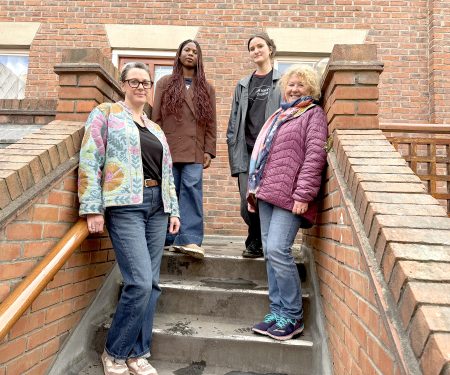
Northumbria Police and Crime Commissioner, Kim McGuinness, said:


“Sarah was a daughter, a sister, a friend and Sarah was killed in the most horrific circumstances, the worst kind of male violence.

“Society is consistently failing women and girls. This case shows how horrendous the consequences can be and I am just so sorry Sarah and her family have paid the price of these failings.

“The impact statement from Sarah’s mother is one of the most heart-breaking and powerful things I have ever read. No mother should have to experience the loss, suffering and anguish conveyed in her words.

“It is beyond troubling to think his role as a Metropolitan police officer enabled him to commit these grotesque and I understand how concerning this is to women everywhere. His actions are the ultimate insult to the police officers who serve to protect people who I know are sickened to the core by his evil actions. Whilst he terrifyingly used his profession to lure Sarah, it was his misogyny that made him a killer.”

“The real worry is that there were warning signs though. He slipped through the net. How did this happen? There is no doubt there are some very serious questions that need to be answered. No punishment will bring Sarah back, but a whole life sentence is appropriate and I hope it brings some comfort to the family. We can only hope this is the beginning of real change to protect and make women’s and girls’ lives safer.”

Our Stats

“Young people shouldn’t have to say they are at the brink just to get the help they need”, warns Police and Crime Commissioner, Kim McGuinness as she calls on Government to urgently invest in young people and their futures

CONCERNS for the mental health of children in the Northumberland, Tyne and Wear have been raised by PCC Kim McGuinness, as new research also shows children in deprived areas are struggling to cope.

A national survey of more than half a million children across England revealed this week found that one in five children are unhappy with their mental health.

The national report comes just days after the Police Commissioner’s local services report, which pulls together the views of almost 100 North East youth work organisations, revealed that  78% of organisations are dealing with more young people displaying mental health concerns now than in 2011, following a decade of cuts to youth services.

They also said that now, more than ever, they are having to provide support to young people with increasingly complex mental health issues.

Overall, the report, conducted as part of Kim McGuinness’s preventing crime strategy, reveals a bleak outlook in terms of support for the younger generation.

In fact, 71% of the youth organisations surveyed have seen their funding cut or reduced since 2011. Overall there has been a 75% decrease in local authority spending on youth services in Northumbria since 2011. This means funding has been slashed by £31.5 million pounds.

These findings have prompted the Commissioner to call on the Government for an urgent rescue strategy, to save the youth sector and young people from losing their way and provide early mental health support for those who need it.

Northumbria Police and Crime Commissioner, Kim McGuinness, said: “Poverty, deprivation, poor health, mental health and a lack of youth services– it’s all interlinked with crime and becoming vulnerable to it. Anyone who says these are excuses is wrong, these are often the root causes. You leave youth services to struggle; you leave young people to struggle. They go on to struggle as adults, as families, as entire communities. It’s that simple.

“South Tyneside and Sunderland, and Northumberland, Tyne and Wear are amongst the worst in the country for mental health treatment waiting times. This coupled with staff shortages means youth workers are telling us they are being forced to fill the gap in trained counsellors. It’s problem after problem. We hear that there is a mental health crisis happening and these findings show that is very much the case.

“Youth services and mental health support need to kick in early – before kids reach the youth offending service and before they get a drug and alcohol misuse service referral. We need to prevent things getting so bad that a social worker has to step in and intervene with their lives.

“The system is so very flawed if people need to be saying they are at the brink for the help to kick in.  And we mustn’t forget the vulnerabilities – people with mental health problems are more likely to be victims of violent crime, rather than perpetrators. We find they are often preyed upon and get drawn into County Lines.”

“It’s the support and opportunities outside the home are critically important. Youth services can be a safety net catching children before they fall into crime or become a victim to crime. Our region, sadly, has some of the highest levels of deprivation in the country, and this impacts upon our wellbeing and mental health.”

The Police Commissioner added: “All too often the police and their 24/7 availability are left to pick up the pieces at the end of that 999 call, coming to the aid in moments of real crisis but it’s like things are being allowed to get that bad. We have youth services bridging the gap too, some really amazing ones but it’s not – nor should it be – up to them or the police alone.

“My Violence Reduction Unit is tasked with improving lives to prevent crime and I will make sure we are doing everything we can when it comes to supporting the next generation. You take away youth services you take away the opportunity to intervene. Problems we have will persist, or worse still, grow and we can’t let that happen in Northumberland and Tyne and Wear.”

To read the findings in full and the recommendations set out by the PCC please visit:

Voices from the Frontine – A report into the future of youth services

ENDS

Notes to editors

Key findings from Voices from the Frontline:

  • 75% have seen their central/local Government funding cut/decreased
  • 45% have seen their staffing levels decreased since 2011
  • 41% report being in a worse financial position than in 2011

It features a series of key recommendations on how Government, local authorities and PCCs can come together to support future generations. These include:

  1. The Government should appoint a minister who has a portfolio focussed on youth services.
  2. Youth services should be backed with urgent Government investment in the next Comprehensive Spending Review.
  3. The Government should devolve the funding and powers needed to create localised youth strategies in collaboration with young people themselves.

People working with young people have shared their thoughts on topics such as funding cuts, staffing levels and concerns for future generations. Findings include:

  • 82% of respondents believe safe locations for young people to gather and meet would help prevent those involved from falling into a life of crime.
  • 77% stated that there needs to be an increase in youth services in their local area.
  • 63% said that more employment and skill development opportunities were required to prevent youth criminality.

Other information of note:

  • The Big Ask Survey by the Children’s Commissioner found more than half a million children across England revealed this week found that one in five children are unhappy with their mental health.
  • The NHS Digital report What About YOUth? Survey, taken from PHE Fingertips

estimates that around 9.2% of 5-16 year olds in England have a mental health disorder, with the prevalence in the North East predicted to be slightly higher at 10.0%.

  • A report from Public Health England stated that for every £1 spent on identified prevention activities, the returns are often double that.
  • According to mental health charity Mind, people with mental health problems are three times more likely to be a victim of crime.

 

Our Stats

Northumbria’s Police Commissioner Kim McGuinness reacts to today’s hard-hitting report which calls for urgent, radical action to protect women and girls from violence. Kim said:

“This report couldn’t be any clearer and spells out what so many who work with victims and survivors have been crying out for, for years- action and change. The figures in the report are alarming and represent an epidemic of violent and abusive offending against women and girls across England and Wales.

“I don’t want to take anything away from the progress, hard work and commitment we have seen in recent years, including the progress in Northumbria Police, but the whole system has to work every, single, time. 

“This report doesn’t tell us anything new though. In fact, we don’t need more reports about this we need change and change will only happen if it is backed up by the right level of funding. This is not something to be skimped and saved on and after 11 years in power it’s time for this government to step up.

“Time is ticking, there are women and children who are suffering unimaginable abuse. This cannot go ignored. Ignoring a problem only means it gets worse. We have to work to prevent it. This is absolutely a top priority for me, for our police and for our region and it’s about time it is for Government too. Through my Violence Reduction Unit, here in Northumbria we are really focusing on this prevention, working to stop reoffending and supporting families at risk of violence and abuse. Our police need all the support possible to help them to get a grip of this because it really is not a job for the police alone. Let’s hope this is the beginning of real change to protect and make women’s and girl’s lives safer.”

Our Stats

PRESS RELEASE

“LACK of youth services have hit our kids in the countryside the hardest”, says Police Commissioner Kim McGuinness as she publishes a new report on how a decade of cuts to youth services are exposing rural youths to criminality.

Fearing the worst is yet to come, PCC McGuinness is calling on the Government to urgently invest in youth services, particularly in rural communities, if serious about levelling up.

The research, conducted as part of the Commissioner’s preventing crime strategy, highlights how local youth provisions are at breaking point revealing the true toll budget cuts and the Coronavirus pandemic have had on youth services.

Echoing calls made by the National Youth Agency, she wants to see the Government working with local authorities, frontline services and young people to create a Rural Action Plan to radically transform the provision of youth services in rural areas, which in some parts is largely non-existent.

Youth services across England and Wales are struggling but the Northumbria police force area, comprising 6 local authorities, has been hit disproportionately hard, in particular the rural areas in Northumbria and elsewhere. There has been a 75% decrease in local authority spending on youth services in Northumbria since 2011, with Northumberland suffering the greatest financial blows.

In fact, the average net expenditure on youth services is currently £62 per head in urban areas, whereas in rural areas it is £47 per head (a decrease from £108/head in 2011).

Nothumbria Police and Crime Commissioner, Kim McGuinness, said: “Young people are telling us they have little, if any, access to youth provision; they say there is nowhere to go and nothing to do. They tell us all the action and opportunity is in the towns and cities and quite frankly they are getting a raw deal simply because of where they live. Some don’t have a clue what a youth club is. There are however some fantastic youth organisations supporting young people but the struggle to keep afloat is so real – we’ll see fewer and fewer at this rate. Some are already feeling there only choice will be to close.”

“Unfortunately the lack of youth services has most impact on teenagers who could get into trouble, even if they’re not already. They prevent problems arising and can prevent the vulnerable from getting caught up in county lines and other forms of criminality.

“Young people and their needs and constantly being overlooked. It’s particularly our rural youths who seem to be missing from the government’s levelling up agenda. Government is also missing a sense of urgency on this.”

She continued: “Without real investment 2.25m young people will be left behind living in predominantly rural areas, living in villages, towns and coastal areas, more than 30,000 of these young people are from Northumberland alone.”

The report, which pulls together the views of almost 100 North East youth work organisations, has prompted the Commissioner to call on the government for an urgent rescue strategy, to save the youth sector and young people from losing their way.

It features a series of key recommendations on how Government, local authorities and PCCs can come together to support future generations. As well as a Rural Action Plan (RAP), it recommends:

  1. The Government should appoint a minister who has a portfolio focussed on youth services.
  2. Youth services should be backed with urgent Government investment in the next Comprehensive Spending Review.
  3. The Government should devolve the funding and powers needed to create localised youth strategies in collaboration with young people themselves.

People working with young people have shared their thoughts on topics such as funding cuts, staffing levels and concerns for future generations.

Findings include:

  • 82% of respondents believe safe locations for young people to gather and meet would help prevent those involved from falling into a life of crime.
  • 77% stated that there needs to be an increase in youth services in their local area.
  • 63% said that more employment and skill development opportunities were required to prevent youth criminality.

A separate report by the Audit Commission into the benefits of sport and leisure activities in preventing anti-social behaviour by young people estimates that a young person in the criminal justice system costs the taxpayer over £200,000 by the age of 16. But one who is given support to stay out costs less than £50,000.

To read the findings in full and the recommendations set out by the PCC please visit

https://northumbria-pcc.gov.uk/youth-survey-kim-mcguinness/

ENDS


Our Stats

PRESS RELEASE

A new report published by Police and Crime Commissioner, Kim McGuinness, calls on the Government to urgently invest in youth services, if serious about levelling up.

The research, conducted as part of the Commissioner’s preventing crime strategy, highlights how local youth provisions are at breaking point and one youth worker said they know of young people who have never even heard of a youth club saying “they just don’t know what one is”.

This statement, along with other findings, reveal the true toll budget cuts and the Coronavirus pandemic have had on youth services.

In fact, 71% of the youth organisations surveyed have seen their funding cut or reduced since 2011. Overall there has been a 75% decrease in local authority spending on youth services in Northumbria since 2011. This means funding has been slashed by £31.5 million pounds, with Northumberland being the hardest hit. One organisation cited suffering a “100 per cent cut to funding in 2014”.

The report, which pulls together the views of almost 100 North East youth work organisations, has prompted the Commissioner to call on the government for an urgent rescue strategy, to save the youth sector and young people from losing their way.

It features a series of key recommendations on how Government, local authorities and PCCs can come together to support future generations. These include:

  1. The Government should appoint a minister who has a portfolio focussed on youth services.
  2. Youth services should be backed with urgent Government investment in the next Comprehensive Spending Review.
  3. The Government should devolve the funding and powers needed to create localised youth strategies in collaboration with young people themselves.

People working with young people have shared their thoughts on topics such as funding cuts, staffing levels and concerns for future generations.

Findings include:

  • 82% of respondents believe safe locations for young people to gather and meet would help prevent those involved from falling into a life of crime.
  • 77% stated that there needs to be an increase in youth services in their local area.
  • 63% said that more employment and skill development opportunities were required to prevent youth criminality.

Northumbria Police and Crime Commissioner, Kim McGuinness, said: “These findings spell out very clearly how young people struggle to find support throughout the North. We have charities giving their all, putting everything into making young people’s lives better but some are having to fundraise for every penny that comes in. They need real help.”

One organisation said: “Youth services are at breaking point. There is not enough money to support the essential services never mind the more specialised help some young people need.” While another worryingly revealed “Finances are tight and we will soon be at a point where we need to start an exit strategy, if no additional funding is found by October 21”.

As organisations emerge from the pandemic restrictions, there is concern about the increased vulnerabilities and needs of young people too, and the impact on youth services. 68% of respondents stated that it is very likely that referrals and service demand will increase to support the additional vulnerability amongst young people. Feedback from one organisation was that although they “tried to deliver remotely that didn’t attract those most in need”. Another reported that “200-300 young people did not return to projects that they previously attended” and they are now conducting an exercise to find out where they are.

Kim continued: “The aftermath of the pandemic is a crucial time for us to be getting things right – we can’t afford to let young people down so we all need to come together on this.

“Resources have never been so scarce. It’s time for some serious levelling up for young people in the North not only in our towns and cities but in our rural areas. It starts with funding youth services, funding youth workers and making young people and their futures at the top of the agenda. If we invest in young people, we are investing in the future and the whole criminal justice system can reap the benefits of this. Research has shown a growing link between cuts to youth services and the country’s knife crime epidemic and we’ll need to work together to turn this around. If we improve lives we prevent crime.”

Clare Williams, Regional Secretary at Unison said “The work undertaken by PCC Kim McGuinness shows the reality behind the rhetoric of the Government which talks about levelling up when actually our young people across communities in our region have no access to youth services.  This is because the Government has for the last 10 years cut local funding year on year.  Unison has been calling on the Government to listen to the evidence and to provide adequate funding.”

A separate report by the Audit Commission into the benefits of sport and leisure activities in preventing anti-social behaviour by young people estimates that a young person in the criminal justice system costs the taxpayer over £200,000 by the age of 16. But one who is given support to stay out costs less than £50,000.

To read the findings in full and the recommendations set out by the PCC please visit:

Voices from the Frontline – A report into the future of youth services


Our Stats

Northumbria Police and Crime Commissioner Kim McGuinness has backed a new scheme to prevent crime which will see dedicated employment support handed to those trying to turn their back on criminality.

The Commissioner’s flagship preventing crime project will see newly released prisoners supported back into full time employment to reduce reoffending across Northumbria.

Employment upon an individual’s release is one of the biggest contributors in reducing re-offending as it provides them with much needed stability and keeps them from returning to familiar paths of criminality.

The scheme was set up as Government data shows nearly half of prison leavers re-offend. Newcastle based The Recruitment Junction, will work alongside the PCC’s Violence Reduction Unit, with an aim to provide support for up to 150 individuals in the first year with the expectation that 50% will secure employment in that period.

Securing employment upon release is not only crucial to reducing reoffending, but also to reducing the £15 billion cost of reoffending that falls to taxpayers.

Northumbria Police and Crime Commissioner Kim McGuiness said: “I made a commitment to reduce reoffending, and this is exactly what my Violence Reduction Unit and The Recruitment Junction are doing. Providing newly released prisoners with support into full time employment not only benefits the individual but their family, community and the wider public, with the aim of preventing crime in our region.”

The Recruitment Junction work with an individual to support them in anything from writing a CV, to preparing a disclosure note, sourcing clothes for an interview and helping with transport – all of which are vital to the process of securing employment.

The Recruitment Junction have supported over 70 ex-offenders into employment in the past 12 months in industries such as construction, hospitality and administration.

Ms McGuinness added: “This is a local solution to a much bigger problem and the success of The Recruitment Junction’s employment support so far speaks volumes in reducing re-offending. We will continue to work locally to provide support for individuals to enable them to make positive decisions for the future.”

Director of The Recruitment Junction, Beverley Brooks said: “I am excited to have launched the North East’s first recruitment agency for people with convictions – and am thrilled to count 70 men and women moved into paid work since October 2020 – and to see 90% keeping these jobs and thriving.”

She added: “The Recruitment Junction sees people with convictions rediscover a sense of purpose through work and become role models who drive positive generational impact across their families – breaking the cycle of children following parents down the wrong path. We deliver on skills shortages for employers across the North East, we combat persistent regional unemployment and we contribute to a national reduction in re-offending, with fewer victims of crime.”

For more information please contact the Northumbria Violence Reduction Unit by email vru@northumbria-pcc.gov.uk

ENDS

Our Stats

Exit
Site