The Government must learn the lessons of Gateshead and “level up” neighbourhood services if it wants to end anti-social behaviour, Police Commissioner McGuinness has said.

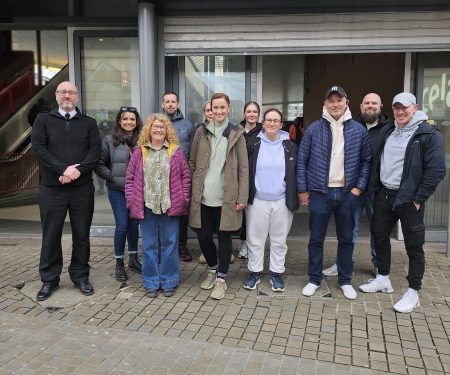
Northumbria Police and Crime Commissioner Kim McGuinness has applauded community-led organisation Edberts House on their work helping families and fighting poverty.

Staff at Edberts House provide people in Gateshead with support for everything from youth services to housing help and family support.

The results have been dramatic drops in anti-social behaviour. One estate in Gateshead, which had the highest level of anti-social behaviour problems ten years ago, with 14.7 out of 100 tenants, has seen this reduce to 0.7 out of 100, below the Borough average as a direct result of supporting local people.

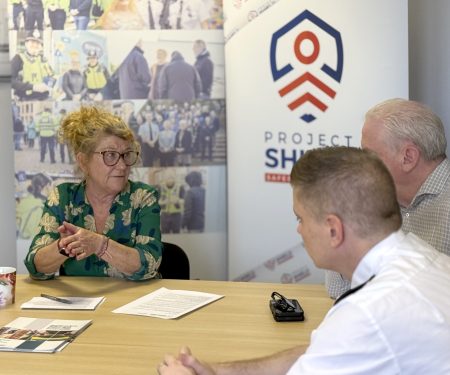
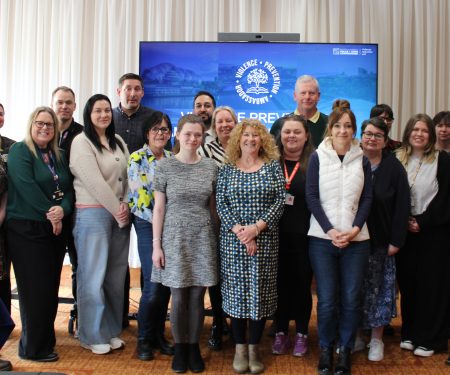
Kim McGuinness, the Police and Crime Commissioner for Northumbria, said she was happy to back the community group with support from her Violence Reduction Unit, but called on the Government to build up these organisations across the north.

She said: “For me it is clear, if we fight poverty we fight crime and if the government is serious about levelling up the north it needs to look at supporting our hardest hit neighbourhoods.

“We have shown that by investing in strong community support centres we can help people take control and turn their neighbourhood around. But there is only so much we can do locally. It is time the Government got serious about levelling all parts of the North, not just business parks and train stations.”

With the launch of three community hubs in the last 10 years, the Edberts House organisation has helped 6000 individuals in a range of activities for families and children, supported by volunteers and local apprentices, who following training, have successfully moved into employment.

The team of experienced community development workers, along with groups of people from the local community, have provided social activities including children and young people’s groups, family learning, arts activities and theatrical productions.

Ms McGuinness added: “I’m incredibly proud that organisations like Edberts House exist in our communities and the impact of the work they do to support those in most need is truly inspiring. Along with my Violence Reduction Unit, they recognise how important it is to give people opportunities to improve lives and ultimately prevent crime in our region.

Sarah Gorman, CEO of Edberts House, says “Violence is always a serious matter, but it is a symptom: a symptom of trauma, a symptom of poverty, a symptom of unemployment, hopelessness, lack of belonging…the list goes on.  By working collaboratively with other organisations, and embedding long term support in our communities, we can address the root causes, and really make a difference.”

For more information please contact the Northumbria Violence Reduction Unit by email vru@northumbria-pcc.gov.uk

ENDS

Our Stats

Police and Crime Commissioner, Kim McGuinness, has spoken out as local transport bosses fear big cuts loom for travel operators across the Northumberland, Tyne and Wear.

North East bus services face major cuts and the Government’s Covid bailout funding for the Metro is due to be axed at the end of next March, causing great uncertainty.

The warnings come just weeks after Kim McGuinness vowed to prioritise women’s safety and announced nearly £250,000 is being channeled into a range of measures to improve safety across public transport in the Northumbria Police force area.

Northumbria Police and Crime Commissioner, Kim McGuinness, said: “Our public transport is vital. It plays such an important part in many of our lives here in the North East, helping us get to work, school and to see friends and family.

“Without access to good transport services, so much is put in jeopardy – income, education and healthcare. This really is the last thing the region needs – especially as we all know we are already one of the most deprived areas in the country.”

She continued: “We’ve just secured Safer Streets funding to make some real improvements to help make our transport systems safer too. But with cuts in other areas all the transport systems that help people get from A to B are being denied the chance to better the service they offer local people.

“Sustainable travel options like the Metro need to be grown and developed not left facing 40 per cent cuts or even potential closures. If the Government doesn’t go back on this we could have a real transport crisis on our hands. Local people don’t need this.”

“It really is just another example of the North South Divide. No HS2 Eastern leg, no Northern Powerhouse Rail (NPR). The list goes on. Once again I ask what levelling up is happening? I just don’t see it.”

Cllr Martin Gannon, Chair of the North East Joint Transport Committee, said: “Our bus and our Metro services are vital to local people and support our economy, helping people to travel for work, education and leisure in a sustainable way.

Public transport up and down the country has been hugely impacted by the pandemic and passengers levels are still recovering. As a direct result of lower passenger figures caused by the pandemic, Nexus forecasts an estimated shortfall in its budget of £20.8m for the next financial year. We urgently need Government to provide further support for our public transport network or sadly we face cuts to services. Government has stepped in to fix this problem elsewhere with the national rail network, we need them to do this at a local level and we’re working to make the case for our region.”

Our Stats

Northumbria’s Police and Crime Commissioner Kim McGuinness has vowed to prioritise women’s safety and has announced that nearly £250,000 is being pumped into more late night policing and a range of measures to address the night time fears of females across Northumberland, Tyne and Wear.

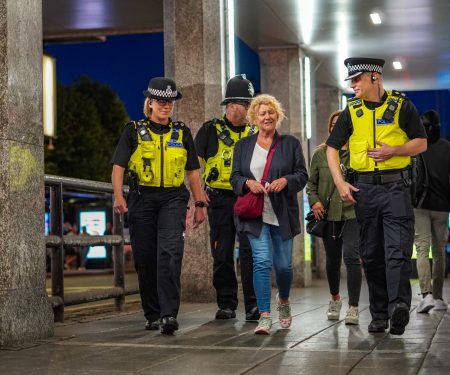
More dedicated late night patrols will be happening across the region as part of Operation Cloak, which is being expanded throughout Northumbria’s nightlife. This will be teamed up with making specialist support services readily available to victims at the earliest possible opportunity.

The money will help build on existing successful initiatives designed to keep vulnerable people safe as well as new schemes and awareness campaigns to help change behaviours.

Well received prevention projects such as street pastors and street angels are also to be built upon and there are plans underway to work with offenders and potential offenders to change behaviours.

Nationally, the cases of Sarah Everard and Bibaa Henry have sparked a great deal of anger with many calling for change.

The need to make women feel safer at night has also been echoed locally in the responses to the Commissioner’s Safer Streets survey – where local women were invited to share their experiences and concerns with Kim McGuinness, as well as their thoughts on what could be done to make things better.

Key findings of the survey have been used to help inform plans. For instance, it was revealed that half the sexual harassment that happens in our area happens in bars and pubs and ‘not in a public place’. It also found 42 per cent of respondents felt unsafe or very unsafe at night, compared to 11 per cent during the day.

Northumbria Police and Crime Commissioner, Kim McGuinness, said: “What kind of society do we live in where women are scared to walk home at night or worry about their drink getting spiked? Things have to change and if anyone says otherwise they are part of the problem.

“I know ours is, thankfully, one of the safest regions but when we carried out The Safer Streets survey earlier this year it really hit home – we clearly don’t feel safe enough. And so, I am setting out plans to do something about it. This is women’s day-to-day lives – women must feel safer.

“As much as I wish we could, we can’t fix society over-night but we can and will do better. More police at night, more training of businesses in the night time economy, more education and interventions – we’re joining it all up so women in Northumbria will feel safer and women will be safer.”

Funding for the plans has been secured by PCC Kim McGuinness – the result of a successful application to the Home Office’s Safer Women at Night Fund. The Office of the Police and Crime Commissioner will be delivering the initiatives alongside Northumbria Police, Street Pastors, Rape Crisis Tyneside and Northumberland and the local authorities throughout the Northumbria Police force area.


Our Stats

THE findings of a new youth report, revealing young people living in areas of deprivation have less access to youth clubs than those in more affluent areas, have been met with anger by Police and Crime Commissioner Kim McGuinness.

A report published by the National Youth Agency this week uncovered young people in England’s 10% most deprived areas have half as much access to youth services as those in the 10% most affluent postcodes.

The north of England is home to 90 per cent of the most deprived neighbourhoods in the UK, sparking growing concern from the Police Commissioner whose office has previously calculated that youth services across Northumberland, Tyne and Wear have experienced a 75% real-terms funding cut since 2011.

Northumbria Police and Crime Commissioner, Kim McGuinness, said: “It really shouldn’t matter where you live but it clearly does. I care so much about the North East and it beggars belief that the areas that need youth services the most are being deprived of them. Social inequality is rife. It makes absolutely no sense – the exact opposite of levelling up is happening and it’s just not right.”

She continued: “There will be consequences to ignoring this too. We don’t want kids hanging around on the Metro causing antisocial behaviour or setting bins on fires – so let’s give them places to hang out, things to do.”

According to the End Child Poverty Coallition, the North East has the second highest rate of child poverty in the UK at 37 per cent. The region also saw the UK’s biggest increase in child poverty from 2014/15 to 2019/20.

Government analysis has shown that South Tyneside and Newcastle have the highest levels of child poverty in our region.

The Commissioner continued: “We have some shameful levels of poverty in our area and a shameful lack of youth services to match. South Tyneside and Newcastle have some of the highest child poverty levels in our region. Fewer youth services means young people in deprived areas are far more likely to get caught up in crime and preyed upon by criminals who draw them into crimes like County Lines.

“Fear of crime also plagues the lives of the poor more than the affluent too. We know poorer people are more than twice as likely to fear becoming a victim to burglary or being attacked – this because more criminals live in the more deprived areas.

“Tackling all these issues has to start with children and young people – it begins with investing in prevention. We have to fight poverty to fight crime.”


Our Stats


POLICE Commissioner Kim McGuinness has called on neighbourhood groups and community projects to bid for funds from her ‘Operation Payback’, the funding pot were criminals’ cash is handed back to good causes.

The aim is to prevent crime and anti-social behaviour, which will ultimately improve lives for those living in neighbourhoods across Northumberland, Tyne and Wear, particularly some of the more disadvantaged areas.

Grass root projects and community causes can bid from today (November 1) for a share of the £130,000 pot of funding by telling the Commissioner of local needs and ideas that will help prevent crime and support the work of Northumbria Police.

Kim says she wants to ensure that the cash criminals have taken from communities in the Northumbria Police Force area is put back into projects and initiatives that make a difference to the places that need it most.

Northumbria Police and Crime Commissioner, Kim McGuinness, said: “This is what we all want to see – cash seized from criminals in the North East being put back where it belongs – into the grass roots of local communities.

“I want to see this money end up in the right hands – the volunteers, the doers, those who know the needs of their community and are doing things that make a real, positive difference to local lives. It’s about empowering local groups to find solutions that work in their community.”

This all ties in with the aim of preventing others going down a path that leads to a life of crime, and in turn preventing there being more victims of crime.

The funding initiative will offer micro grants of up to £1,000 or larger grants of up to £5,000, and so the hunt is on for stand-out projects that have a really positive impact at a local level, particularly those struggling with poverty and those areas affected by high crime rates.

Kim continues: “The best way we can help our police is by helping prevent crime in the first place, rather than leaving them to pick up the pieces. I want as many people as possible to know about this opportunity – it’s a chance to make good things happen in your area – to really empower those behind a worthwhile project.”

In the years to come the fund will be topped up with money seized from criminal activity under the Proceeds of Crime Act.

Applications are welcome from communities, charity, social enterprise or voluntary groups from within the Northumbria Police force area that strive make their community a better place and focus on the PCC’s  Police and Crime Plan priorities such as tackling ASB.

Successful applications will demonstrate how a project will help combat the impact of crime, reduce crime and provide diversionary activities. For more information, full criteria and terms and conditions please visit the Northumbria Police and Crime Commissioner’s website.

Since becoming Police and Crime Commissioner in 2019, Kim has awarded over £985,000 in grants to community causes across Northumberland, Tyne and Wear.

Applications close Friday 3rd December. The Commissioner will announce final decisions W/C 10th January, 2022. Operation Payback funding will be open for applications twice a year. Anyone requiring further information should contact enquiries@northumbria-pcc.gov.uk.

APPLY NOW

Our Stats

Northumbria Police and Crime Commissioner Kim McGuinness has announced she’s stepping down from her national role negotiating pay deals for police staff in response to the “grossly unfair”  pay offer made to police staff and officers.

In the run up to the budget police staff and officers were told they would have to accept a 0% pay freeze. And while the Chancellor has this week promised a partial pay U-turn, he has refused to bring in any pay rise before this winters crippling fuel bills hit hard working staff, or to say if he will match rising inflation rates.

Over the course of this year Kim McGuinness has led talks between PCCs nationally and the Home Office, but has now announced that “if ministers won’t stand by our workers then there is no point negotiating with this Government.”

Police staff have previously been the only group of emergency responders to have had a pay freeze imposed on them.

PCC Kim McGuinness, said: “Yes, we absolutely want to see an end to the pay freezes, especially to police staff, who have suffered a kick in the teeth when left out of previous pay rise announcements. But any rises offered at the expense of rising fuel bills and food costs, is an absolute no for me. It will make no difference whatsoever.

“We cannot wait until next year, these staff and officers are people who got us through a pandemic, they put their families at risk, and they did it for us.

“We need Government to fund an above inflation payrise for staff and officers urgently.”

Trade Union body UNISON has also called for fair pay for key workers.

UNISON regional secretary Clare Williams said:  “If the chancellor doesn’t allocate extra money to government departments to fund the much-needed wage rises, the pay freeze will continue in all but name.”

“There’s never a good time to freeze public sector pay. Doing so at the peak of a pandemic was the height of folly.

“Staff were doing their all to keep under-pressure services running, and ministers looked like they didn’t care.

“There can be no decent public services without the people to run them. Pay freezes don’t help employers hold on to experienced staff, nor attract new recruits.

Kim McGuinness resigned in writing as the lead negotiator for the Association of Police and Crime Commissioners regarding staff pay. It came after the Home Office refused to fund any pay rise for staff and police officers.

Earlier this year, the Commissioner joined UNISON, GMB and Unite in writing a joint letter which highlighted that police staff were the only group of emergency responders to have had a pay freeze imposed on them, which Kim McGuinness described as ‘beyond insulting’.


Our Stats

Exit
Site