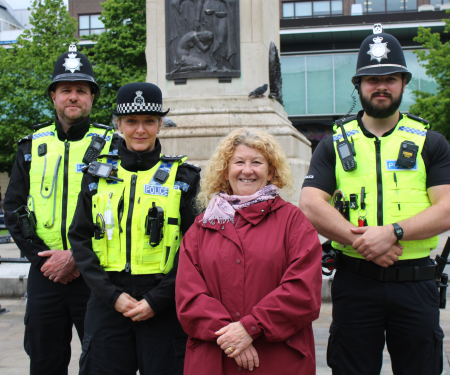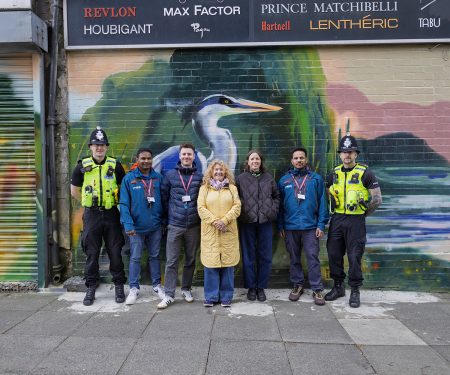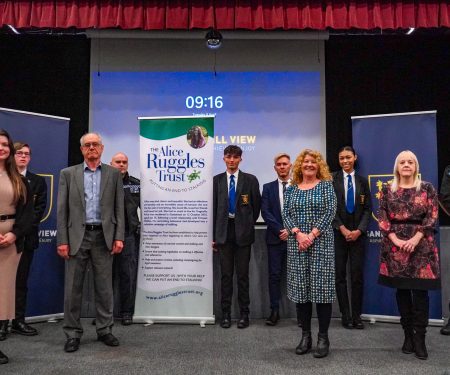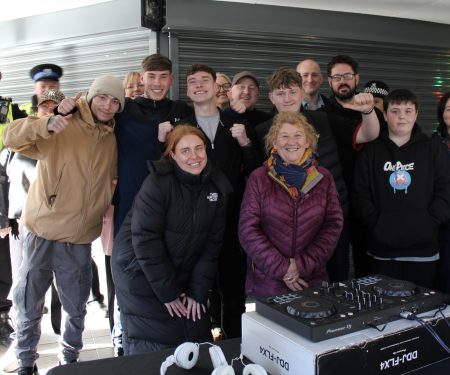
KIM MCUINNESS has raised fresh concerns over the impact of poverty on young people, as she warns the Government’s latest cash gesture to the youth sector only covers a fraction of what’s been taken from our poorest communities.

The £16.5 million pledged by Government last week as part of its long anticipated Levelling Up strategy was to cover the whole of England and Wales. However, this figure has come under criticism from the Commissioner who says Northumbria alone has had its youth services funding slashed by £31.5 million pounds since 2011.

She said it was a ‘pitiful offer to young people and the services that support them, especially after funding for youth clubs promised in 2019 was never spent’.

It follows a decade of austerity where local authority annual expenditure on youth services in England and Wales dropped by £1bn in real terms.

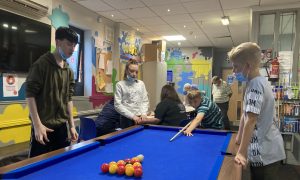
Last year, Kim McGuinness’ office produced a report on the views of youth organisations across the North East. It highlights the desperate struggles faced by many groups and clubs and what they need to help young people access opportunity and divert them away from crime.

Many organisations stated that short-term funding grants were making it difficult to recruit and retain quality staff to meet demand. The survey found that 57% of the Northumbria organisations surveyed were supporting more young people than 5 years ago, despite most (29%) of those organisations being in a worse financial position, and having staffing issues.

Northumbria Police and Crime Commissioner, Kim McGuinness, said: “I wish Government would stop doing this. They want us to get the fanfare out for throwing a smidgen of cash at our youth services or at our police forces but the truth is it only covers a fraction of what’s been taken from our poorest communities during the last 12 years of Government.

“The Levelling Up money announced by Government the other day is about building a few youth centres, but then what? What’s the long term plan? Where are the salaries to staff them going to come from?

“Youth work positions are not getting filled – it’s not an easy job, there’s many hats to it and as poverty worsens things like mental health, homelessness, additions will worsen too and they have to deal with it all. When vulnerable young people aren’t given the support they need they can easily get drawn into crime. We have to fight poverty to fight crime.

“There are young people in our region who face a very uncertain future. So many are rolling out of a pandemic and headed straight into a poverty trap. The only thing worse than lockdown for North East kids is poverty and I’m hearing of more and more families, who are at breaking point because that’s exactly what’s happening.

“The struggles in the North East are nowhere near those of the South East. I worry Government doesn’t see the true toll budget cuts and the pandemic have had on this generation, especially as we have some of the worst poverty levels in the UK. The role of youth services has never been more important – they need more help than this.”


Notes to editors:

Voices from Frontline Report – A report into the future of youth services in Northumbria

Government funding for youth services

Our Stats

PCC Kim McGuinness says she’s disappointed that “years of austerity have forced us into a corner on this” as the green light is given to raising the police precept by an average of £6.67 a year for a Band A property. This is to prevent cuts to vital services that fight crime and allow for essential investment.
The increase would be approximately 56p for those living in a Band A property and that accounts for more than half of the households in the Northumbria Police Force area. This is 83p per month for a Band D property.

Since 2010 budget cuts have meant Northumbria Police has taken the biggest financial hit of all the forces in England and Wales. This has meant the Force has lost more than 1,100 officers and £140m in funds.

A public consultation has revealed the majority of people of Northumberland and Tyne and Wear are prepared to pay a slight increase to keep up work to fight and prevent crime throughout the region.

The PCC and Chief Constable have outlined the essential investment that can now be made that wouldn’t be possible if reliant on funding from Central Government alone.

  • Additional call handlers to improve performance for 999 and 101 services.
  • Extra resources to tackle cyber-crime and serious and organised crime.
  • More civilian investigators to support investigations and free up officers.
  • Workforce investment –supporting our officers to keep them on the beat and tackling crime

At the start of the year, the Police and Crime Commissioner ran a public consultation to see how local residents would feel about paying a small tax rise to ensure Northumbria Police continue to deliver on the priorities that keep local communities safe.

Overall, 61% of those surveyed supported an increase to their council tax contribution, which is to help the police cover the shortfall in government funding and to invest in services. 39% said that they were not prepared to support any increase.

Local precept income is therefore essential to maintain spending power and make sure the Force has the resources it needs to keep neighbourhoods safe, she explained during Tuesday’s Police and Crime Panel the Commissioner.

Northumbria Police and Crime Commissioner, Kim McGuinness, said: “There’s no hiding from the fact that central government funding just isn’t enough. It hasn’t been for a long time. The funding is grossly unfair and regionally biased. It’s yet another example with how out of touch Westminster is with the needs of communities at the other end of the country.

“Without this money we couldn’t ramp up the things that really matter to local people like getting more officers out in the communities.

“Certain areas of our police service would be at risk without this money,” she continued.

“The people of the North East want more police not less but there is a lot of bitterness. People shouldn’t have to dig into their own pockets to keep their families safe, but they get how important this is – if only those at the top did too.

“I know this is the right decision but it’s a decision I make reluctantly especially at time when so many are facing their own financial struggles, particularly in our region where we are left to struggle on.”

“We have to do whatever it takes to support local policing though and make the investment needed to fight crime and prevent crime in our area.”

The precept was signed off by the Police and Crime Panel at a meeting which took place on Monday 7th February.

ENDS

Our Stats

KIM MCGUINNESS, Northumbria’s Police and Crime Commissioner, has been banging the drum for more cultural opportunities for young people in the North East to help boost the region’s regeneration and the vital need to tackle poverty.

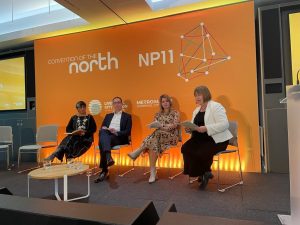
Speaking at this year’s Convention of the North in Liverpool, the PCC has set out her stall that – if we reduce the number of families in poverty we will reduce crime. To do this we have to increase young people’s access to opportunity.

In an address on Levelling Up to Minister Michael Gove and fellow Northern Leaders, Kim called for the funds to support cultural activities to be handed back to the regions and for the power to deliver them to be handed back to the people. She explained this is so they can take ownership of the culture of their home town and reap the benefits – job creation, poverty reduction and crime prevention.

Kim McGuinness said: “Cultural activities in my part of the world are basically two things – they are hope and they are the path back to the straight and narrow. As any police officer in my patch will tell you, we cannot simply arrest our way out of trouble. Kids need opportunities but not enough get them, especially in the North East.

“From football to music lessons, museums to festivals, boxing coaches to digital design, when we invest in young people we give them healthy role models and we can divert them away from the temptations of criminality.”

She cited local talent Sam Fender whose poverty stricken life could be singing a different tune had he not found music.

“What a great cultural export North Shields’ Sam Fender is, but let’s face it, his talents almost never made it to our playlists. His lyrics share with us the full force of poverty on his family; from courts summons to benefit worries. These are real struggles experienced by real people. He saw the easy wins from the drug dealing happening around him; he came close to being swept up with it all. But he didn’t. He joined a band, and he grew as a person and just look at him now.

“We need more young people saved, more talent uncovered, and more reason to stay and shine in the North East.”

She added: “This really is all about investment, something the North hasn’t seen enough of for a long time. If there is one thing I hope we can get from these discussions it’s an agreement that the days of London picking the winners and losers in Rotherham or Blyth have to come to an end.

“The people in our regions should have the only say on where investment goes; the opportunities created. It is time for an end to the bidding wars and to acknowledge that far more than a white paper needs to be done to turn around the North.”

ENDS

Our Stats

The Government has finally faced up to huge gaps in opportunity, employment and transport for people in regions like ours.

But what we don’t see in the levelling up paper is evidence of a Government-wide belief that the best people to steer the future of Northumberland, Tyne and Wear are the people that live here. Our fate is still in the hands of officials in Whitehall.

Right now, we see only a piecemeal, and in some cases threadbare commitment to devolution. According to this paper we still get what we’re given.

The North-East, for example, is about to see the hardest hit communities cut off from public transport with 17% bus cuts caused by a lack of Government funding. A vague Government promise of them getting “something close to” London-style bus powers by 2030 is frankly a joke.

And for young people,  our region has seen on average 70% cuts to youth services-  this is a direct path to recued life chances and crime. Let the young people of Ashington, Byker, Hebburn, Houghton tell us what they need. Give us the money and the power and we will deliver.

Throughout this paper, we see examples of funding held by Whitehall officials which local areas are asked to bid in to, with a team in London deciding the winners and losers. That is not devolution, it won’t level us up. It is the exact thing we are campaigning against and a worrying sign that ministers still want control of local decision-making from the centre. To level up we urgently need new investment and powers and decision making handed to local people to control their own destiny.

Our Stats

POLICE and crime commissioner, Kim McGuinness, wants to hear your views on safety and policing to help shape her plan to fight crime and prevent crime throughout the Northumbria Police force area.

Last year, Kim McGuinness collated the views of families, businesses and support services to help understand local policing needs.

Thousands had their say, which helped shape the region’s Police and Crime Plan – a plan which sets out the key priorities for the Force. The Force’s performance is then measured against this plan on behalf of the public.

Since being elected as Police and Crime Commissioner in 2019, Kim McGuinness has backed her priorities with action on the ground. Her work has included setting up a Violence Reduction Unit, launching a safety app for public transport users and getting plans in motion for a region-wide ASB task force.

The Commissioner has also delivered on promises around recruitment. She has listened to calls from the public for more police serving in their communities and has worked with the Chief Constable on the Force’s largest recruitment drive to date and says she is proud to have smashed recruitment targets set by Government.

Northumbria Police and Crime Commissioner, Kim McGuinness, said: “When we launched the plan last year – our priorities were clear but it’s crucial that we check in and make sure they are still the right ones.

“Recent years have brought lots of challenges with rising demands and pressure on resources. Also, we see crime change, policing change, technology change and so our priorities have to reflect all this; they have to grow too.

“I’m proud of our police force and how our region came together through the pandemic; there’s a lot of good work happening and I want this plan to build on this and keep improving lives across the region. We want to be doing everything we can to keep you and your family safe.”

Kim added: “For me it’s really important that this plan looks far ahead too. It’s easy to think of policing for the now but I’d urge people to think about long-term, lasting improvements for generations to come.

“To really fight crime we need to look at the causes – what drives people into crime – the poverty, the vulnerabilities and so on – these things we really need to be tackling too. If people are given the best start in life they won’t start getting into trouble in the first place.”

The current Fighting Crime, Preventing Crime plan can be viewed here.

The survey runs until Friday 18th and you can take part here

Information from this and other surveys carried out by the Office of the Police and Crime Commissioner, including transport and safety surveys, will be used to refresh the police and crime plan for 2022. The final document will be published in March 2022.


Our Stats

“FUN without fear” is a new awareness campaign from Northumbria Police and Crime Commissioner, Kim McGuinness alongside Rape Crisis Tyneside and Northumberland.

The campaign speaks up for the rights of women across the area and aims to promote behaviour change in men, encourage reporting and signpost victims to help and support.

The Northumbria Police force area is regularly cited as one of the safest places to live, work but incidents of sexual harassment, and other serious crimes against women do happen everywhere in the country and since the Sarah Everard tragedy in London, male violence against women has been made an urgent national priority.

The Commissioner believes society needs real change and wants to see the North East leading the way.

The vibrant eye-catching campaign, supported by all six local authorities and Northumbria Police, focuses on women’s safety in the night-time economy and ensuring they are supported. Posters can be found in public spaces as well as digital and social media channels. It features information on how to get support as well as messages around zero tolerance and reassurance that action is being taken.

The project also features vulnerability training for those working in the night time economy – delivered by Northumbria Violence Reduction Unit and the expansion of Northumbria Police’s Operation Cloak, which protects vulnerable party-goers and catch offenders.

The campaign complements other campaigns promoting women’s safety in other public places such as on public transport or out in the region’s parks. Together, it is hoped women will be safe and feel safe throughout the region.

Northumbria Police and Crime Commissioner, Kim McGuinness, said: “I love that cities and towns across our region are known for offering the best night out; this campaign is about making sure we are the safest too. Women have the right to feel safe whatever they are doing; whether they are on the dance floor or walking home from work.

“There is a real passion amongst everyone involved – this is us coming together to say that we just won’t stand for it in Tyne and Wear and Northumberland. Being grabbed, followed, touched up – whatever – it’s all very, very wrong.

“I want this campaign to make things crystal clear – these things aren’t acceptable, they should be reported and the support is there ready and waiting for you; we believe you and want to help.”

Northumbria Police Assistant Chief Constable Neil Hutchison said: “We fully support this campaign which builds on the extensive work we do with partners to ensure our region remains one of the safest in the country to enjoy a night out.

“This includes working with local authorities, charities, businesses, licensees, door supervisors, hotel staff and taxi drivers, so we can all come together to create a safe and friendly environment.

“In 2019, we also launched a pioneering pilot scheme known as Operation Cloak in Newcastle city centre, an initiative which sees dedicated officers on patrol in our night-time economy to protect those who may be vulnerable and target anyone looking to commit offences. This has now been rolled-out elsewhere in our region and other parts of the country.

“We are very clear that any form of harassment, inappropriate behaviour and other sexual offending is completely unacceptable and will not be tolerated.

“We would urge anyone who has been a victim to come forward – we are here for you, we will support you and we are committed to bringing offenders to justice.”

For more information about the campaign visit HERE

The campaign has been funded following a successful bid to the Home Office’s ‘Safety of Women at Night’ Fund.

ENDS

SUPPORTING QUOTES FROM PARTNERS:

Gateshead:

Councillor Angela Douglas, chair of Gateshead’s Community Safety Board said: “Women and girls have a right to feel safe in our borough and when socialising at night in neighbouring towns and cities. Harassment and violence against women, in any form, should never be normalised and behaviour like this needs to be challenged. This campaign will give the public the confidence to know where to go to report incidents and to feel reassured that they will be taken seriously if they do experience it.  We’re proud to be involved and it’s great to see the North East leading the way in putting women’s safety first.”

Newcastle:

Councillor Clare Penny-Evans, Chair of Safe Newcastle and Cabinet Member for Climate Change and Public Safety at Newcastle City Council, said “Newcastle is a friendly city where women and girls should feel safe and be safe when they are out, whatever the time of day or night, which is why we have prioritised our work in this area.

“Harassment, unwanted attention and violent or abusive behaviour can be very frightening and leave women feeling vulnerable.

“We look forward to working with the PCC, on the Safer Nights for Women campaign.  This is about making it very clear that this type of behaviour is not welcome and won’t be tolerated in our city and that, if and when it does happen here, we will work with the police to hold the perpetrators to account.”

South Tyneside:

Councillor Ernest Gibson, Lead Member for Area Management and Community Safety, at South Tyneside Council, said: “Everyone has the right to feel safe when they are out after dark in South Tyneside, whether they are socialising and enjoying a night out in our bars or clubs, waiting for a taxi or making their way home from work.

“Unwanted harassment and sexual behaviour towards women is completely unacceptable and it is important that we talk about the issue and call out the behaviour and attitudes that make women feel threatened, nervous or frightened at night.

“We fully support this campaign to help provide better protection for women and girls and for them to know that support is available should they need it. South Tyneside is a friendly and welcoming area with many great night-time venues. We want everyone to enjoy a night out in the Borough, but to remain safe, and to feel safe, while doing so.”

Northumberland:

Councillor Colin Horncastle, Cabinet Member for Community Services at Northumberland County Council, said: “While the county and the wider region remain a very safe place, we will not tolerate this kind of behaviour.

“Women in Northumberland have every right to feel safe wherever they are and we are fully supportive of this campaign to promote behaviour change and signpost where help and support is available.”

North Tyneside:

Cllr Carole Burdis, Cabinet Member for Community Safety and Public Protection, North Tyneside Council, said:  “We have fantastic nightlife here in North Tyneside and the Council and our partners are committed to making sure the borough is a place where everyone feels safe.“Our recent White Ribbon accreditation recognises the wide range of initiatives already underway to end violence against women and this campaign is a great opportunity to continue to build on that work. “We must all stand together to send out the very clear message that sexual harassment, intimidation or violence will not be tolerated in any shape or form and we all have a part to play in making sure women are safe and feel safe wherever they are.”


Our Stats

Exit
Site