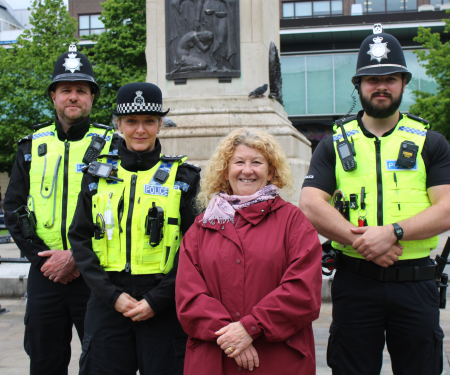
Northumbria Police and Crime Commissioner Susan Dungworth is raising awareness of the Dog’s Trust’s urgent appeal for more volunteer fosterers across the North East to support people fleeing domestic abuse by caring for their dogs. This follows new data showing that referrals to its specialist domestic abuse pet fostering service have doubled in the last five years.

Freedom is a service provided by Dogs Trust which offers temporary foster care for dogs, giving owners the ability to find freedom from domestic abuse without the heartache or risk of leaving their pet behind.  It was established in response to growing evidence of the link between domestic abuse and animal abuse, alongside the lack of pet-friendly accommodation. Fosterers play a critical role, providing safe and loving homes for dogs until they can be reunited with their families.

Dogs Trust is now calling for more people to volunteer as foster carers across the Northumbria Police force area, as demand for the service continues to grow. from Northumbria Police shows that the prevalence of domestic abuse continues to remain high, with 1 in 5 calls to its control room being domestic abuse related and, on average, police receive a domestic abuse related call every 30 seconds.

97% of domestic abuse professionals (including police) recognize that pets are used as tools of coercion and control. That’s why Freedom is widely supported by frontline agencies, including the police, local councils, Women’s Aid, and many local domestic abuse services, which often make referrals to the scheme for survivors needing help with their dogs.

Those wanting to help as volunteer foster carers receive full support from Dogs Trust’s experienced Freedom team, including all necessary pet supplies and veterinary care. Regular updates are sent to the dog’s owner, helping them stay connected with their pet while they are apart. Confidentiality is maintained at all times – no personal information is shared between foster carers and pet owners.

Crucially, there is no cost to the foster carer. All expenses are covered by Freedom making fostering an accessible and rewarding way to support people and their pets in times of crisis.  To find out more, or to sign up to become a fosterer, visit www.dogstrustfreedom.org.uk.

The need for such services is underscored by Dogs Trust research*, which found that pets are often used by perpetrators of domestic abuse as a means to control and coerce. In some cases, animals have been physically harmed or killed. In a survey of professionals supporting survivors of domestic abuse, 97% reported that animals were commonly used to exert control over those they abuse.

Northumbria Police and Crime Commissioner, Susan Dungworth, said:

“Abusers know the power of a pet — and they use it. For too many victims, the fear of leaving a beloved pet behind is the final barrier to escaping abuse. We see a rise in people reaching out for help after Christmas, yet many still stay because they believe their dog or cat won’t be safe. That must change. Through specialist fostering projects like the brilliant Freedom, we can offer a path to safety for both survivors and their pets.

“You can leave — and your pet doesn’t have to be left behind. During the 16 Days of Action, I want to raise awareness of the support available and back calls for more foster carers to help make this possible. No one should have to choose between escaping abuse and protecting the animal they love.”

Laura Saunders, Freedom Manager at Dogs Trust, said:

“Sadly, too often we see cases where perpetrators of domestic abuse have used dogs as tools of coercion and control, often threatening or harming them to exert power. This creates a devastating barrier for people trying to escape – many delay leaving purely out of fear for their pet’s safety.

“Through Freedom, and with collaboration between other UK pet fostering services, we provide a vital lifeline, giving survivors the chance to reach safety while knowing their pet is in a loving, secure foster home.

“Right now, demand for our service is higher than ever. We urgently need more volunteer foster carers to step forward. Offering a temporary home not only protects a dog from harm – it helps transform a survivor’s life at a time when they need support the most.”

Anonymous case study
After enduring over two years of abuse, Yvonne (name changed) made the difficult decision to leave her home for the second time; this time for good. Her greatest concern throughout was for her beloved dog, Henry, who had been a source of emotional comfort and protection throughout her experience. Initially unable to bring Henry with her to the refuge, she was referred to the Dogs Trust’s Freedom team which offered a lifeline. With support from her refuge worker, the referral process was simple and fast. Henry was placed in foster care through Freedom, where Yvonne received regular updates and photos, bringing her reassurance and emotional support during a traumatic time. From health check-ups to grooming, every detail of Henry’s care was handled with compassion. The experience brought such peace of mind that Yvonne has since included a legacy donation to Dogs Trust in her will. She expressed deep gratitude to the foster carers and highlighted how vital the Freedom is for people facing domestic abuse: “I put up with abuse for over two years because I couldn’t leave my dog, Henry, behind. Freedom gave me the lifeline I needed, and knowing he was safe meant I could finally escape. If I’d known about it sooner, I would’ve left sooner, and Henry wouldn’t have had to suffer either.”


To find out more about Freedom, or to sign up to become a foster carer for the project, visit www.dogstrustfreedom.org.uk.

Our Stats

As this year’s 16 Days of Activism to end gender-based violence continues, Police and Crime Commissioner Susan Dungworth is calling on more schools to make use of Pol-Ed, a suite of educational resources covering a wide range of important topics.

Thanks to continued funding from the Northumbria Violence Reduction Unit, the programme is available free of charge and already adopted by 81% of schools from across the force area, reflecting a growing demand for more preventative education.

Pol-Ed provides teachers with a powerful tool to address behaviours, pressures, and risks that can contribute to violence against women and girls, with lessons covering the law, consent, red flags in relationships, online safety, sexism, and more.

The programme equips students from primary and secondary school education with the knowledge, skills and confidence to make informed, positive choices in their everyday lives.

It encourages open and honest discussions, helps break down barriers, challenges misconceptions, and supports practitioners in identifying those at risk earlier, ensuring support is available when it’s needed most.

More than 417,530 students across the region have now taken part in this innovative educational programme. Developed by West Yorkshire Police in partnership with teachers, Pol-Ed helps young people better understand the law, build healthy relationships, and stay safe from harm.

The initiative complements the wider awareness work delivered by the Northumbria Violence Reduction Unit and Northumbria Police Education Teams, ensuring young people not only recognise the risks associated with gender-based violence, but also feel empowered to seek help when they need it.

Calling on more schools to use the Pol-Ed resources to help prevent violence against women and girls, Northumbria Police and Crime Commissioner, Susan Dungworth said: “We all want our children to grow up feeling safe, supported and confident in making the right choices, and Pol-Ed is one of the tools helping us achieve that.

“We’ve already had fantastic take-up with 81% of schools in our region using the resources, but I want to make sure that all children are able to access this learning. That’s why I’m asking more schools to adopt this approach.

“What’s important here is that it’s not just about delivering the lessons and assemblies. It’s about having those open and honest conversations early on, providing opportunities to identify those at risk, and ensuring young people feel heard and supported.”

“When I set out my police and crime plan earlier this year, residents, local services and partners said they want to see more done to reduce violence against women and girls. That’s exactly why I made it a key priority.

“Preventative approaches, such as educating young people, are essential to achieving that goal, and through the work of the Violence Reduction Unit, Northumbria Police, and our partners, we continue to prioritise early intervention, support for survivors, action against perpetrators, and strengthening the systems that keep people safe.”

She added: “And while we continue to support the 16 days of activism campaign, our commitment to ending abuse must continue all year round. Together we will continue to drive meaningful, lasting change, and build safer stronger communities for everyone.”

Sergeant Simon Reid, Problem Solving and Early Intervention at Northumbria Police, said: “We’re delighted that such a wide-range of important resources are available free to schools through Pol-Ed and would encourage educators who haven’t yet taken a look to do so.

“Education is vital so that our young people make informed decisions, helping them to ultimately lead better lives.

“By providing an educational resource such as Pol-Ed we are also helping to fight crime by preventing people being harmed, which is something that reduces the demand placed on our public services.

“Tackling gender-based violence is not an issue we as police can do alone and we believe that this programme helps us to address the factors that contribute to these types of crimes.

“Although more than 80 per cent of schools have adopted the programme, we want as many as possible to do so in order for Pol-Ed to have the greatest impact it can across our Force area.

“We would also encourage those already signed up to embed the lessons as part of their ongoing PSHE curriculum.”

If your school is interested in signing up to deliver Pol-ed resources, or would like more information, please contact Northumbria Police: school.liaison@northumbria.police.uk

Our Stats

Dedicated students have unveiled a lasting tribute to knife crime victims as part of a pioneering art project.

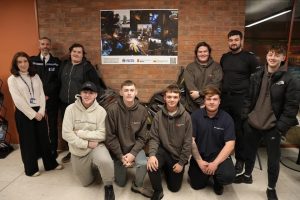
Young people studying at Northumberland Skills at the Port of Blyth have used the college’s state-of-the-art welding centre to design and produce a bench made out of confiscated or donated blunted knives.

It will now go on display at The Pavillion in Blyth for the public to see and use.

The unveiling of the bench comes during Sceptre, a week of activity across the Northumbria Police Force area to tackle knife crime and its root causes by carrying out education and engagement activity in the community.

The students have also received inputs from the Violence Reduction Unit (VRU), which is funded by the Office of the Police and Crime Commissioner for Northumbria, Susan Dungworth.

Nicky Boyle, 18, who was on the Northumberland Skills learners who worked on the bench, said: “It’s been hard work to put the bench together, but now that it’s finished it looks phenomenal. I’ve loved every second of it and I’m really proud of what we’ve produced.”

The project has the backing of a number of families who have been affected by the devastating impact of knife crime, including the loved ones of Samantha Madgin.

Samantha was aged just 18 when she was fatally stabbed in Wallsend in 2007, just months after she had given birth to her son.

Samantha’s family, including mum Alison and sister Carly, have used their heartbreak to fight tirelessly to prevent serious violent crime in the North East, setting up Samantha’s Legacy in her memory.

During the process of creating the bench, Samantha’s family have given talks to the students about the devastating impact knife crime has had on them.

Through Project Shield, which is funded by the Office of the Police and Crime Commissioner for Northumbria, the Force is committed to tackling ASB and serious violence right across the length and breadth of the communities it serves.

Alison said: “I’m quite emotional now that I’ve seen the finished bench. I’m so proud of everyone who’s put in the effort towards this, they’ve done an excellent job and they were so excited to unveil it.

“Hopefully, it’ll make people think about knife crime and lead them to have conversations with their families of the dangers of becoming involved in it.”

Superintendent Scott Cowie, of Northumbria Police’s dedicated Prevention department, said: “It’s been fantastic to see the hard work and skill that has gone into creating the bench during the past few months.

“Northumberland Skills’ learners have taken considerable time to not only design the sculpture but also put in many hours of work to complete it too.

“The project is a fitting tribute to those we have sadly lost their lives to knife crime in our region, but we also hope it acts as a serious deterrent to those thinking of arming themselves with such weapons.

“We hope it will be used as a point of reflection for people to stop and take time to think about how dangerous knives are.

“As part of our work, we believe it is vital that young people don’t just hear about knife crime but are part of the solution to solving these problems too.

“We know as police that we alone can’t prevent knife crime, which is why it’s so important that everyone plays their part in tackling this issue within society.

“We are building on the work we do to tackle and prevent knife crime each and every day in our Force area as part of Sceptre this week. Officers are carrying out warrants at addresses to arrest those suspected of knife crime and serious violence while also seizing weapons and drugs.”

As part of other activity, colleagues in the Violence Reduction Unit (VRU), which is funded by the Office of the Police and Crime Commissioner for Northumbria (OPCC), are putting on engagement sessions at schools and colleges to emphasise the dangers knife criminality.

Alongside counterparts at British Transport Police, teams are riding the rails on the region’s Metro system to spot any knife crime issues and pass on safety advice to the public.

As part of Operation Sceptre, knife surrender bins are out in place at the following stations:

  • Middle Engine Lane in Wallsend, North Tyneside
  • Alnwick, Bedlington, Berwick and Hexham in Northumberland
  • Etal Lane and Forth Banks in Newcastle
  • Gateshead station
  • Millbank in South Shields
  • Southwick in Sunderland

Northumbria Police and Crime Commissioner Susan Dungworth said: “It’s inspiring to see young people using their skills and creativity to raise awareness and take a stand against knife crime.

“Sadly, too many families have experienced the heartbreak of losing a loved one to such senseless violence. Knives destroy lives, and the impact ripples through entire communities, which makes initiatives like this all the more important.

“By creating this bench, the students have given their community a place for reflection and a powerful reminder of the consequences of carrying a weapon – encouraging people to stop, think, and make positive choices.

“This project complements the wider work taking place across our region, during Sceptre and throughout the year, including enforcement activity led by Northumbria Police, extra patrols through Project Shield, and targeted interventions and education sessions delivered by our Violence Reduction Unit, and partners such as Samantha’s Legacy.”

She added: “Thank you to everyone involved, but most importantly the students whose hard work and creativity have brought this vision to life. Together, we are sending a clear message that there is no place for knife crime, and we will continue to build safer, stronger communities for everyone.”

Cllr Guy Renner-Thompson, Cabinet Member for Inspiring Young People at Northumberland County Council, said: “This project captures everything that education should stand for – creativity, collaboration and community impact.

“By transforming confiscated knives into a symbol of hope and remembrance, our learners have not only developed exceptional technical skills but also a deeper understanding of the difference they can make in society.

“It’s a powerful example of learning with purpose.”

Anyone who wants to report suspected knife crime can do so by sending Northumbria Police a direct message on social media or by using the live chat or report forms on the Force website.

For those unable to make contact via those ways, call 101.

In an emergency situation, always ring 999.

To report suspected criminality you can speak to the charity Crimestoppers anonymously by calling 0800 555 111.

Our Stats

PCC launches £100,000 fund to help deliver safer streets and stronger communities

AS the festive season approaches, Northumbria’s Police and Crime Commissioner, Susan Dungworth, has launched a new £100,000 Commissioner’s Community Fund and is inviting local organisations to look ahead to the new year with ideas to make communities feel safer, stronger, and more connected.

The fund has been designed to help deliver the goals of her Police and Crime Plan for Northumbria and is there to help grassroots projects and local groups that provide locally led support for vulnerable people, create positive opportunities for young people, and reduce anti-social behaviour and crime.

Some of the money used to create this fund has been recovered by police under the Proceeds of Crime Act (PoCA). This ensures that money taken from criminals is reinvested into the communities it once harmed.

Northumbria Police and Crime Commissioner, Susan Dungworth, said: “This fund is about helping communities take the lead in making their neighbourhoods safer and stronger. It reflects the priorities set out in my Police and Crime Plan for Northumbria – to prevent crime, tackle anti-social behaviour, and build confidence in policing.

“By investing in our communities and supporting ideas from the local area, we’re showing we’re listening, that crime doesn’t pay, – and we’re empowering communities to make real, lasting change.”

This year, the Commissioner’s Community Fund applications are being managed by Community Foundation North East – a charity that helps make sure funding reaches good causes across Northumberland, Tyne and Wear and the wider North East

Small grants of up to £1,000 are available for one-off or community events, and larger grants of £1,001 to £5,000 are for projects lasting up to one year.

The Commissioner is looking to award funding to projects and initiatives that:

  • Deliver diversionary activities for young people, particularly during school holidays.
  • Reduce anti-social behaviour and crime.
  • Repair the harm caused by offending and improve community cohesion.
  • Support vulnerable people and families.

Adam Lopardo, Chief Funding and Partnership Officer at Community Foundation North East, said:

“We are delighted to be working with the Northumbria Police and Crime Commissioner and her team on the Commissioner’s Community Fund. We know from our Vital Signs Justice report the positive impact the type of projects and initiatives this fund will support can have on our communities. We look forward to seeing those projects in action.”

Previous rounds of the fund have supported workshops improving understanding of the criminal justice system and hate crime reporting, youth projects giving confidence and new skills, peer mentoring programmes helping young people make positive choices. The funding can help towards, staff deliver, equipment, accessibility, venue hire, transport and more.

Applications are now open from today, Monday 24 November and will close at 12pm midday on Wednesday 7th January, 2026.

For more information click below.

APPLY

ENDS

Our Stats

HOW SAFE ARE WE? is the new vulnerability awareness package rolled out by the Northumbria Violence Reduction Unit as part of its winter safety campaign, helping more people to spot the risks and keep others safe.

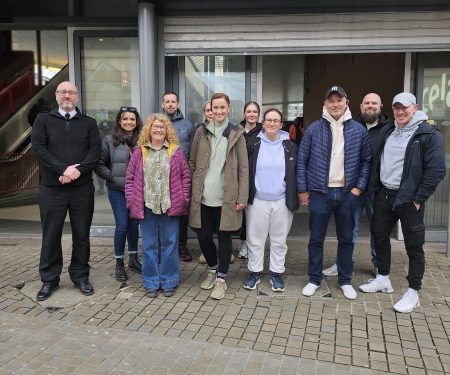
Staff from the popular South Shields venue Arbeia – which is owned by pop star Jade Thirlwall and who has backed the vulnerability training – were among the first to take part, along with colleagues from nearby pubs, clubs and food outlets.

They were joined by Police Commissioner Susan Dungworth and representatives from Northumbria Police, who praised the collective effort to make the town centre safer for everyone.

The practical sessions give bar staff, door supervisors and club managers the skills to recognise signs of vulnerability, assess risk and step in to support someone when they need it most.

The launch marks the start of a programme of activity from the Violence Reduction Unit over the winter months, in a coordinated effort to raise awareness, prevent violence and build safer, stronger communities.

Among the activity planned:

  • Taxi marshals, extra visible patrols and youth diversionary activities funded through the Seasonal Violence Fund, ensuring resources are directed where they are needed most.
  • Online awareness sessions on topics including knife crime, joint enterprise, gangs and youth violence, and hidden harms – building a growing network of nearly 300 Violence Prevention Ambassadors, one year on from the programme’s launch.
  • Providing education in schools and community settings, helping young people understand the impact and consequences of split-second decisions, giving them the knowledge and confidence to keep themselves and others safe.
  • Delivering targeted interventions to address the behaviour of those causing the most harm in communities, alongside key services.

Together, these initiatives highlight the ongoing commitment of the Violence Reduction Unit and partners including Northumbria Police, and through campaigns such as Punched Out Cold, in reducing violence, protecting vulnerable people, and keeping communities safe this winter and beyond.

Northumbria Police and Crime Commissioner, Susan Dungworth said: “When I introduced my Police and Crime Plan earlier this year, I set out six key priorities that residents told me where important to them. And at the heart of it all was making sure you feel safe, such as when out in public places”

“The How Safe Are We? training is a fantastic example of how we can empower those working on the frontline of our night-time economy to recognise when someone may be vulnerable and step in to offer support.

“Keeping people safe isn’t just about enforcement, it’s about prevention, education and working closely with a range of services. Through our Violence Reduction Unit, We’re bringing partners together from police, schools, businesses, youth services and community groups, to tackle the root causes of violence, and make a long and lasting difference.

“This winter, our message is clear: whether you’re out enjoying the festivities or working in our wonderful towns and cities, we all have a role to play in preventing harm, and building safer, stronger communities for everyone.”

Backing the training, pop star and owner of Arbeia Bar, Jade Thirlwall said: “We’re really proud that Arbeia was one of the first venues to take part in this important training. Creating a safe and welcoming environment for everyone who comes through our doors has always been a top priority for us. The ‘How Safe Are We?’ sessions give our team the confidence to spot when someone might need help and to step in in the right way.”

“As part of the South Shields community, we all have a role to play in looking out for each other — especially during the busy winter months. It’s amazing to see local venues, the Violence Reduction Unit and Northumbria Police working together to keep people safe and make our town centre somewhere everyone can enjoy.”

Chief Superintendent Aelf Sampson, Area Commander for South Tyneside, said: “Our region is renowned for having a vibrant and welcoming nightlife, where those who live here and visit can enjoy a safe night out. We work collaboratively with our partners every day to ensure it stays that way – and that often involves supporting businesses operating in our busy night time economy and their frontline staff.

“One way we can enhance our collective response to keeping people safe is through specialist training, and I’m pleased we’ve been able to extend the offering to this event which is being hosted by the Arbeia Bar.

“This training across our licenced premises will support staff in identifying those who may be vulnerable in these venues, and the impact that alcohol and substances can have on a person – as well as what the appropriate next steps might look like. We also run dedicated operations year-round, as well as plain clothed and uniform patrol activity, so we can identify pockets of disorder and help those in need.

“Please remember that if you do need us, we are here for you – and a helping hand will also be available through the bar staff you interact with too.”

ENDS

Our Stats

“This morning I took an urgent call with the Policing Minister who updated myself and other PCCs ahead of an announcement she made in Parliament this morning, around the Police Reform White Paper. The announcement was that – as of the elections in 2028 – the role of the PCC will be ceased.

I have always believed in the role of PCC and the important link it provides between individuals, communities, and businesses and effectively holding our Police to account.

I look forward to receiving further information and working with Government on how a new representative body will work. Police governance must continue, and victims will still need to be supported.

I have a fantastic team, who do great work alongside partners, which is crucial to local residents. Although uncertainty remains, I am hopeful this will bring opportunities for my staff, and we will be working closely with partners through this time of change, ensuring we keep building on the good work being delivered.

In the meantime, nothing will change in our committed efforts working towards safer streets and stronger communities for the people of Northumberland, Tyne and Wear.”

Our Stats

Exit
Site