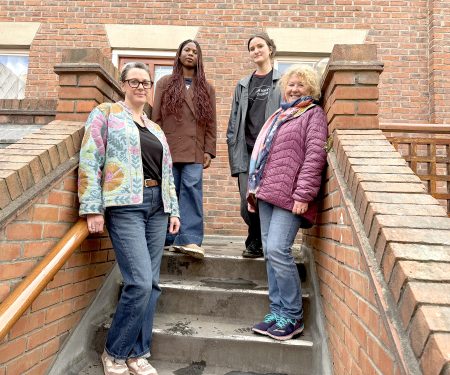
Northumbria Police and Crime Commissioner, Kim McGuinness, has warned North East households will be left behind if the chancellor, Rishi Sunak, fails to address the region’s growing poverty in Wednesday’s spring statement.

With the cost-of-living crisis believed to be hitting struggling families in the North East the hardest, the Commissioner is piling on the pressure ahead of the budget. She is urging the Government to offer more help to the growing number of people in the region who are finding it hard to pay their bills.

Ahead of the Chancellor’s financial update, the Commissioner has warned that those growing up in deprived areas are far more likely to be a victim of crime – and this needs addressing urgently.

Illustrating her concerns, she points to worrying research by the University of Manchester which shows children growing up in poverty are seven times more likely to harm themselves and be involved in violent crimes as young adults. Findings elsewhere in England have also shown 80% more crimes were recorded in the most income-deprived areas – something which the Commissioner believes highlights the importance of fighting poverty.

Northumbria Police and Crime Commissioner, Kim McGuinness, said: “The Chancellor has a clear choice. He takes the opportunity to address poverty now or he leaves North East households to face rising costs and poverty.

“He needs to come up with something drastic to help ordinary struggling people” she continued.  “We are sick and tired up here. 11 kids in every class of 30 in our region are living in poverty. Never mind heating bills, some kids don’t even have a warm winter coat to go to school in. It’s both heart-breaking and disgusting that we are even in this position.”

She went on to explain: “If we reduce the number of families in poverty we will reduce the number of victims of crime. We need to back our young people with opportunities that divert them away from causing trouble. Any police officer here will tell you, we cannot simply arrest our way out of crime.”

ENDS

Our Stats

“Give us back our cops”, says PCC Kim McGuinness

Northumbria Police and Crime Commissioner Kim McGuinness has criticised the Government for failing to put police officers back on our North East streets.

It’s more than 900 days since Boris first promised to replace 20,000 new police officers nationally, but the Commissioner has now revealed that Government ministers have so far only provided the funds for Northumbria Police to recruit 427 new officers.

A further 673 would need to be hired by September to return to the pre-austerity levels of 2010.

Since 2010, Northumbria Police has taken the biggest financial hit of all the forces in England and Wales – losing more than 1,100 officers and £148m in budget cuts –  a result of what the PCC calls ‘grossly unfair and regionally biased’ budget cuts.

Northumbria Police and Crime Commissioner, Kim McGuinness, said: “What happened to the Government’s promises to protect? When our Prime Minister got into Number 10, police figures were 20,000 down on 2010. There was an entire decade where Government never bothered replacing officers.

“We still need our missing police officers.

“This is why the Chief and I have prioritised recruitment and set out our own recruitment drives which have smashed Government targets. But to make this possible we have had to look at other ways to get the income we need to build our force back up and keep the people of our region safe. It really should not be like this – they should be giving us back our cops.”

Concerned these numbers fell well below the mark needed to fight crime and prevent crime in Northumbria, additional officers have been recruited through making savings elsewhere and by the Commissioner reluctantly rising the precept.

The Commissioner added: “Crime evolves, demand grows but Government funding fails to match what is a very clear need time and time again. Getting the funding right is so important when it comes to maintaining an efficient and effective police service.

“The goals, the claims, the promises – they’re not being realised. Cuts to the police force endanger communities and endanger police officers too. It’s no wonder 93% of police officers do not feel respected by the Government. I’m standing up for our police on this. I’m standing up for our region – its families; its future – give us back our cops.”

ENDS

Our Stats

PCC Kim McGuinness: The North East’s only dedicated Violence Reduction Unit sets out plan to cut crime.

The Northumbria Violence Reduction Unit is taking a radical new approach to combat violent crime in Northumberland, Tyne and Wear, as it embarks on its fourth year.

The Unit will work with young people and troubled families to make it clear there is an alternative to violence and crime.

This comes as levels of serious violent crime and knife enabled offences increased during November before seeing a 13% decline in December.

Now, Police Commissioner Kim McGuinness has set out how the specialist unit will help fight crime and tackle the effects of poverty on hard hit families  in the North East.

As well as building on the positive work to date, the plan for the next year of action will include:

  • Engage young people to divert them from offending and reduce their risk of being involved in crime.
  • Focus on the continued importance of community-based interventions, involving individuals with lived experience in specialist help centres.
  • Work direct with the whole family to tackle issues of violence, through community-based interventions.
  • Target interventions in areas of most need.  

Some of the fantastic results, through vital mentoring programmes like YOLO, have seen 48 young people with reduced risk of committing serious and violent crime, 66 young people no longer on the police radar and 18 young people reporting increased feelings of safety.

The Violence Reduction Unit continues to make a positive impact on the individuals it supports. With early intervention as a priority, its dedicated education team have delivered 272 awareness sessions to 5622 young people in areas of most need, over the last few months.

Over 800 frontline staff have now received specialist awareness training to better support young people on the cusp of, or involved in knife crime. Staff feel they are able to better support the young people in their care thanks to the information on spotting the signs, the laws around carrying and using a knife, and the support services available.

Northumbria Police and Crime Commissioner, Kim McGuinness said: “No-one should be become the victim of violent crime. That’s why it’s so important for the Violence Reduction Unit to intervene and deter individuals from crime at the earliest opportunity. We cannot just arrest our way out the problem – instead we must continue to educate young people, upskill our professionals and provide that vital support for those individuals and families in most need”.

She added, “By increasing the number of people who know what to look out for, we can support more people before they are exploited or get involved in crime.”

Northumbria Violence Reduction Unit Director, Steven Hume said: “We are committed to reducing serious violence and vulnerability in our region. In the last three years, we have made significant progress but we know there is always more work to do and challenges to overcome. That is why we are taking such a radical approach to tackling the root causes of violent crime and address the offending behaviour of those causing the most disruption to our communities”.

 ENDS

Our Stats

With rising living costs, a lack of stable jobs and the North East labelled the child poverty capital of the UK, the PCC wants to tackle poverty to prevent future generations from falling into crime or being targeted by criminals.


Figures show three and a half times as many criminals live in the 20% most deprived areas of the UK, compared to the 20% least deprived areas. This results in the less well-off fearing crime and suffering crime the most. Shocking figures also show those on the lowest incomes experience 62% more personal crime.

To kick-start the unveiling of the new approach to tackling crime, PCC Kim McGuinness is awarding £130,000 of cash to a range of community causes through the first round of her Operation Payback 2022 scheme.

The scheme uses cash seized from criminals to fund meaningful grass roots initiatives, improve local lives and repair the harm caused to communities by crime. Beneficiaries announced today include:

  • New Beginnings – Sunderland
  • Sports for Youth – Newcastle
  • Primrose Park Alliance – South Tyneside
  • Stomping Ground Forest School – Gateshead
  • Mindstars NE – North Tyneside
  • Prudhoe Youth Project – Northumberland

Full list available here

Speaking at an event to launch her fighting poverty, fighting crime plans Kim outlined how:

  • Her Violence Reduction Unit will be working with local businesses to grow job, training and work experience opportunities for the region.
  • She is working closely with public transport providers to ensure travel is affordable, reliable and also safe.
  • Will continue to fund positive youth opportunities and her VRU will build on its work with Northumbria Police around early interventions.

Opening the launch, Kim said: “We need to look at crime through a different lens. We need to see the wider picture. Reducing the number of families in poverty will help reduce crime in the North East – it’s what we all want.

“As any police officer here will tell you, we cannot simply arrest our way out of trouble – we have to take things right back to the very beginning.

“People need to be able to afford the bus that gets them to a job that pays them to feed their family and give kids opportunities.

“While criminals are likely to come from poorer backgrounds, this is not to say people who are poor are likely to be criminals. It does, however, make you more likely to be a victim of crime.

“There is clear evidence – the poor are by far most likely to be affected by crime. Those on lower incomes are six times more likely to be a victim of domestic abuse, three times more likely to be robbed, twice as likely to suffer violence. It’s awful. Nobody deserves to be the victim of crime.

“Crime is the biggest social justice issue facing our region”, she continued. “If we reduce poverty we reduce crime and this benefits everyone, regardless of your income or your postcode. Not to mention the ever-growing demands and pressures on our hard-working police force.

“Energy, food, fuel, it’s all going up and we’ve been looking to Government for help for years now but it seems the true scale of poverty in our region is brushed under the carpet; much like the need for real investment in our police service. Nothing is getting fixed. As a region we have to come together and take things into our own hands – hands that actually care about poverty, about crime and about our region.”

Bridget Phillipson, Shadow Secretary for Education, welcomed the new focus on early intervention and its role.  “I believe education is how we secure the best life for every one of us, supporting children across our country to achieve and thrive. Life should not come down to luck.  But too many of our children grow up in poverty, too many kids don’t get the support they need at school, and too often that means storing up problems for adult life.”

Lambton Street Youth and Community hub in Sunderland ‘one of the oldest youth and community centres in Europe’ are set to receive funding from the Commissioner’s Operation Payback fund. The Centre’s manager, Kevin Howard, said: “Tackling poverty and investing in our young people is paramount. Many youth centres are struggling or have closed over the years due to the lack of funding and government cuts. This has resulted in increased youth crime and anti-social behaviour. Youth Centres are safe environments for young people. They learn standards, life values – skills that will enhance personal and social development, guidance and support to achieve their aspirations. Young people will never go out of fashion they will always be there, always be our future. How that turns out will depend how seriously we take them and the opportunities we as society present to them.”

In the coming weeks the Commissioner will be setting out a new Police and Crime Plan which details policing priorities for the region as well as plans to tackle poverty to help support the work of Northumbria Police.

Our Stats

The Northumbria Violence Reduction Unit, in partnership with Probation Service, has launched a new intervention aimed at making communities safer by breaking the cycle of offending in Northumberland, Tyne and Wear.

A community alternative to short prison sentences is a new and innovative intervention to divert individuals causing the most disruption in communities by addressing the root cause of their offending behaviour.

Reducing re-offending is a key priority of the Violence Reduction Unit and research has found that short prison sentences of 6 months or less can often lead to higher re-offending rates.

This is due to the disruption from positive factors and influences such as family relationships, housing, employment and access to healthcare and support, meaning individuals return to crime, which has a huge impact on communities.

This exciting project, coordinated by the Violence Reduction and Local Criminal Justice Board, is initially available to Newcastle and South Tyneside Magistrates’ Courts.

Those who are eligible for this intervention will be determined by the local courts in conjunction with the North East Probation Service. Any crimes involving domestic abuse and sex offences will not be considered.

This diversionary route will see probation staff working intensively with individuals to provide practical and mentoring support. They will also ensure engagement with community based services to address issues that trigger their offending.

Northumbria Police and Crime Commissioner, Kim McGuinness said: “The North East is a wonderful place and it is imperative that we do everything we can to make sure our communities remain a safe place to live. That’s why, along with the Violence Reduction Unit and Local Criminal Justice Board, we are working with offenders who repeatedly bring disruption to our communities, in order to tackle the underlying causes of their offending. This intervention will bring vital benefits to our communities by understanding and changing those individuals offending behaviour to prevent crime”.

Bronwen Elphick, Regional Director for Probation Services in the North East said: “I am really excited to be supporting such an initiative in our region. A Community Alternative to Short Prison Sentences gives us and our key partners, a real opportunity to try and intensively address re-offending outside of the prison walls, and ensure a level of continuity for individuals in an attempt to enable them to change their behaviour”.

ENDS

Our Stats

KIM MCUINNESS has raised fresh concerns over the impact of poverty on young people, as she warns the Government’s latest cash gesture to the youth sector only covers a fraction of what’s been taken from our poorest communities.

The £16.5 million pledged by Government last week as part of its long anticipated Levelling Up strategy was to cover the whole of England and Wales. However, this figure has come under criticism from the Commissioner who says Northumbria alone has had its youth services funding slashed by £31.5 million pounds since 2011.

She said it was a ‘pitiful offer to young people and the services that support them, especially after funding for youth clubs promised in 2019 was never spent’.

It follows a decade of austerity where local authority annual expenditure on youth services in England and Wales dropped by £1bn in real terms.

Last year, Kim McGuinness’ office produced a report on the views of youth organisations across the North East. It highlights the desperate struggles faced by many groups and clubs and what they need to help young people access opportunity and divert them away from crime.

Many organisations stated that short-term funding grants were making it difficult to recruit and retain quality staff to meet demand. The survey found that 57% of the Northumbria organisations surveyed were supporting more young people than 5 years ago, despite most (29%) of those organisations being in a worse financial position, and having staffing issues.

Northumbria Police and Crime Commissioner, Kim McGuinness, said: “I wish Government would stop doing this. They want us to get the fanfare out for throwing a smidgen of cash at our youth services or at our police forces but the truth is it only covers a fraction of what’s been taken from our poorest communities during the last 12 years of Government.

“The Levelling Up money announced by Government the other day is about building a few youth centres, but then what? What’s the long term plan? Where are the salaries to staff them going to come from?

“Youth work positions are not getting filled – it’s not an easy job, there’s many hats to it and as poverty worsens things like mental health, homelessness, additions will worsen too and they have to deal with it all. When vulnerable young people aren’t given the support they need they can easily get drawn into crime. We have to fight poverty to fight crime.

“There are young people in our region who face a very uncertain future. So many are rolling out of a pandemic and headed straight into a poverty trap. The only thing worse than lockdown for North East kids is poverty and I’m hearing of more and more families, who are at breaking point because that’s exactly what’s happening.

“The struggles in the North East are nowhere near those of the South East. I worry Government doesn’t see the true toll budget cuts and the pandemic have had on this generation, especially as we have some of the worst poverty levels in the UK. The role of youth services has never been more important – they need more help than this.”


Notes to editors:

Voices from Frontline Report – A report into the future of youth services in Northumbria

Government funding for youth services

Our Stats

Exit
Site