HOUSEHOLDS suffering from persistent anti-social behaviour have been offered extra support as Police Commissioner Kim McGuinness launches a new complaints process, with the support of local councils.

The PCC’s office will now oversee complaints to councils regarding ASB cases– a move designed to help to give victims a voice when demanding action.

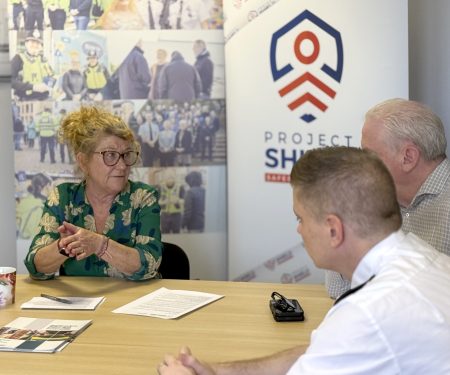
In practice, the new process means the PCC can now bring together a high-level panel of organisations such as police, councils, housing providers and others to review persistent cases.

Kim McGuinness is urging people to use the new review process and have their say and seek solutions.

The process known as the ‘Community Trigger’ gives people the right to ask for a review of long-term ASB complaints and Kim McGuinness’ office is the first PCC’s office to roll-out the ASB complaints process this way.

As part of her ongoing commitment to improving lives and supporting victims, a dedicated ASB specialist has also been appointed to closely monitor people’s issues and help bring partners together to address the causes and prevent further issues.

In the first instance, any ASB should be reported as normal to either their landlord, council or police. The community trigger should be viewed as a last resort for victims of anti-social behaviour if they believe more needs to be done. They can raise their case for consideration by completing a form on the PCC’s website.

Northumbria Police and Crime Commissioner, Kim McGuinness, said: “No-one should have to put up with ASB over a long period of time and worry that nothing is being done to stop it.

“I want to make sure we are getting the response right and that we are putting victims first; making sure that things are handled efficiently and effectively.

“I see the Community Trigger as a way of empowering victims, particularly our most vulnerable and giving them a chance to be heard. I hope our new way of doing things will build trust and improve the quality of life for long term sufferers of ASB. The police, councils and so on – everyone is on board – everyone wants to help residents and see improvements.”

Councillor Claire Rowntree, Deputy Leader of Sunderland City Council said: “Everyone has the right to feel safe without being subjected to anti-social behaviour.

We know that ASB is a real concern for many of our residents which is why we work closely with key partners to protect our communities and tackle ASB where we find it.

“So, we welcome the Community Trigger as an additional means of identifying and tackling persistent cases by bringing key partners together to review and resolve them.”

More information can be found at: https://northumbria-pcc.gov.uk/asb-community-trigger/

Our Stats

Northumbria Police and Crime Commissioner Kim McGuinness’s Violence Reduction Unit has put plans in place to ramp up activity over the summer in a bid to stop spikes in violence and keep people safe.

With more people heading out to enjoy the warmer weather and the Violence Reduction Unit having already successfully piloted more activity over the Jubilee weekend and at iconic events such as The Hopping’s, it has made summer plans a key focus in the weeks ahead.

The Violence Reduction Unit aims to get ahead of the curve this year after launching its Summer Violence Fund, as part of its response to reducing crime.

Through working closely with the Community Safety Partnerships in Northumberland, Tyne and Wear to develop projects to reduce serious violence over the summer period, it has led the Violence Reduction Unit to invest over £100,000 in local communities to provide:

  • Newcastle with additional staff to engage the public and young people in the City Centre as well as the parks and green spaces.
  • Northumberland with a team of officers and youth workers deployed in identified areas to disrupt a rise in crime.
  • Gateshead with a team to engage young people over the summer holidays to prevent increases in anti-social behaviour.
  • North Tyneside with funding to enable staff to further engage with young people and provide diversionary activities.
  • South Tyneside with additional resource to identify, engage and support young people in sports activities and educational sessions.
  • Sunderland with youth outreach work taking place in and around the City Centre, supported by additional wardens and officers.

Northumbria Police and Crime Commissioner, Kim McGuinness, said: “Violence is unacceptable at any time of the year, and now that summer has arrived, we all want to enjoy everything our region has to offer – especially now we are seeing some normality back in our lives. But, it’s so important to me that everyone feels safe and that support is readily available to those who need it. That’s why my Violence Reduction Unit have provided additional resource throughout the summer, to engage with individuals at the earliest opportunity and prevent crime before it starts.

Assistant Chief Constable David Felton said: “As a Force, we are committed to cutting serious violence and tackling the underlying causes of repeat offending.

“Our collective approach to reducing serious violence is succeeding, as supported by national figures which show hospital admissions fell by eight per cent and 14 per cent year-on-year in 2019-20 and 2020-21 respectively.

“The number of offences involving firearms have also significantly reduced.

“This shows that the important work we are doing with partners to protect our communities and prevent these types of incident from happening in the first place is making a difference.

“We will continue to look to build on the excellent work already under way, including to help educate people about the dangers of being involved in such activity and help them make better choices.

“By working together we can continue to drive down crime and help ensure our region remains a safe place to live, work and visit.”

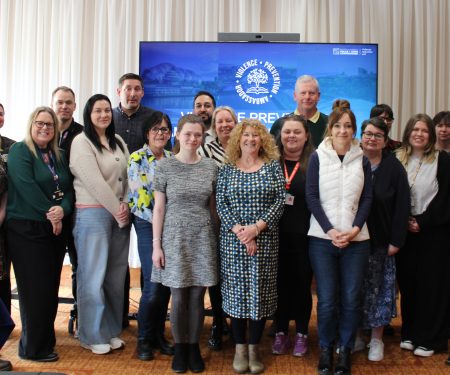
Now in its fourth year, the Violence Reduction Unit will continue its work to interrupt violence by using data and local intelligence, addressing offending behaviours, educating young people and providing diversionary activities to prevent crime by improving lives.

For more information, please contact the Northumbria Violence Reduction Unit by email vru@northumbria-pcc.gov.uk

ENDS

Our Stats

MORE than two years have passed since Northumbria Police and Crime Commissioner Kim McGuinness launched her Covid Response Fund – and yet community groups are still facing the same financial pressures they were at the start of the pandemic, she warns.

Pallion Action Group in Sunderland was one organisation who applied to the fund when it was set up by Kim McGuinness. They received cash to work with Northumbria Police to improve the wellbeing of those most at risk of becoming involved in criminal activity.  Manager Karen Noble said they thought things were bad then but the need for funding is just as great now.

She said: “This funding was vitally important to our local communities, we are trying to support our most vulnerable residents who often have complex issues. We have been lucky to be able to make a difference with the funding we received then, but these problems have not gone away, things are getting worse especially with the high rise in cost of living.”

Back in April 2020 Kim McGuinness brought forward her annual community fund to make £300,000 available to local charity organisations helping them to continue their vital work supporting local people and preventing crime as the pandemic took hold.

In particular, the Coronavirus Response Fund was set up to support vulnerable people at risk of abuse, neglect and the impacts of poverty.

Now, increasing gas and electricity costs, food and transport going up – budgets of organisations that are there to help are being pushed to the limit and at a time of growing demand due to the cost of living crisis.

Data revealed last month by the campaign group for community power ‘We’re Right Here’ has shown four in ten of the local groups which sprang up in the first days of the Covid pandemic have also become permanent hubs of neighbourly support as struggles continue.

Northumbria Police and Crime Commissioner, Kim McGuinness, said: “It feels like there’s no light at the end of the tunnel for so many crucial organisations that do incredible things supporting our communities.  We’ve rolled from one crisis straight into another.

“Organisations are telling me they’re up to their ears in grant applications. They’re often desperate to cover overheads and just keep things afloat never mind helping more victims or supporting more young people.

“And I worry about the knock-on effects. We need to be fighting poverty to be fighting crime too. This is how we reduce the number of victims.

“Youth groups, victim services, community clubs – these organisations played such an important part in the region’s response to Covid. Now they’re wanting to grow or help in other ways because that’s the spirit in the North East but they’re up against it.

“We may be moving on from the pandemic but there’s a whole new set of challenges our region is facing but there’s no more Government funding to cover it. They can’t hide behind Covid now. There are so many gaps in services and provisions and there are groups trying desperately hard to plug them but with such little financial help.”

NE Youth also successfully bid for funding to supporting disadvantaged young people at the start of the pandemic and they say funding is just as tight. Jon Niblo NE Youth’s CEO said: “Our funding was a key element of our Covid Response plan for Young People facing additional challenges during this difficult period. Our well-being packs were warmly received and provided Young People with important resources. The support and trust from the PCC during this period was incredibly important for Youth Charities like ourselves.”

Other beneficiaries included Northumberland Domestic Abuse Project, North Benwell Youth Project, Impact Family Services.

 Kim McGuinness and the team at Pallion Action Group in Sunderland

Our Stats

Police and Crime Commissioner Kim McGuinness has announced new plans to help find work for those at risk of criminality as a key step to reducing the number of victims in Northumberland, Tyne and Wear.

The new jobs scheme forms a key part of her flagship policing plan for the region, focused on Fighting Poverty, Fighting Crime.

Her Violence Reduction Unit has teamed up with the Co-op, in its aim to help find work for women and young people who might otherwise turn to shoplifting or other crimes.

In a ground-breaking new project, the Commissioner has backed the coaching programme in order to stop crime before it starts.

This programme seeks to work with individuals over a 6 month period, and has seen 10 women, with custody or community probation supervision, having benefitted from one-to-one sessions through the support of an experienced business coach.

The programme, which results in an interview with the Co-op if requested, is aimed at those who want to make a difference in their life and are able to fully commit to the workshops and coaching sessions.

Northumbria Police and Crime Commissioner, Kim McGuinness said “This is a fantastic example of how an organisation is supporting people in our region. A job can turn lives around – and this exciting new programme aims to do just that. By addressing the barriers to employment, offering support to re-build confidence and explore new skills, those in most need will have positive aspirations for the future and be diverted from a life of crime”.

She added, “The Violence Reduction Unit continues to engage those most at risk of becoming a victim or committing serious violence and we are doing everything we can to break the cycle of criminality by improving lives. Having a job provides that sense of purpose and achievement – it can help stop poverty and crime. That’s why I’m calling for more businesses to get involved and provide opportunities for people in our region”.

Co-op Director of Campaigning and Public Affairs, Paul Gerrard said: “We are delighted to support the Commissioner’s plan and play our part in helping people to rebuild their confidence and lives. We strongly believe that business has a vital role to play in building stronger and safer communities, and even more importantly, that everyone should be supported to reach their full potential”.

The Police Commissioner recently launched her new plan for the region, Fighting Poverty, Fighting Crime. In this she set out how her number one priority is more police recruits.

But with limited Government funds and only around half the force’s 1,100 lost officer numbers replaced by Government, the Police Commissioner has made preventing crime a key focus.

For more information please contact the Northumbria Violence Reduction Unit by email vru@northumbria-pcc.gov.uk

Our Stats

LITTLE MIX star Jade Thirlwall’s bar in South Shields has become the latest venue to roll-out vulnerability training delivered by the region’s dedicated Violence Reduction Unit.

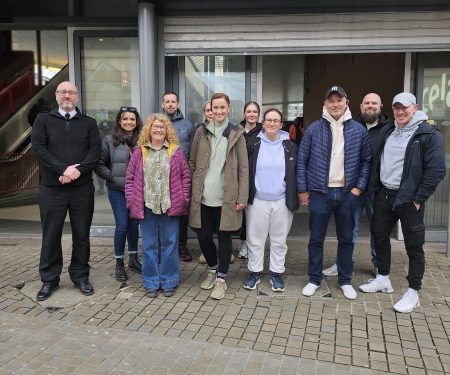
Staff at the pop star’s venue, Arbeia, on Ocean Road, and other Pubwatch staff in the area were joined by Kim McGuinness and trainers from her Violence Reduction Unit and Northumbria Police, which delivers comprehensive sessions aimed at improving safety on a night out.

Bar tenders, door staff and club managers all came together at the popular venue to take part in the training which educates night-time economy staff around vulnerability, identifying risks and their duty of care.

Last year a survey by the Office of the Police and Crime Commissioner for Northumbria found that 43% of sexual harassment and 44% of unwanted sexual touching happened in city centres including bars and clubs.

Northumbria Police and Crime Commissioner, Kim McGuinness, said: “I just love that cities and towns across our region are known for offering the best night out but it’s incredibly important to me that we are the safest too. Everyone has the right to feel safe whatever they are doing; whether they are on the dance floor or getting a taxi home.

“There is a real passion amongst everyone involved and everyone taking part in the training, to make change, to make sure we’re all safe. Being grabbed, followed, touched up – whatever – it’s all very, very wrong and we want to support staff who are in a position to look out for others. This whole campaign of work is about saying we won’t stand for it, and this is how we can help.”

The vulnerability training is part of the ongoing force-wide ‘Fun without Fear’ campaign in conjunction with Rape Crisis, Northumbria Police and local authorities.

The campaign aims to promote behaviour change, encourage reporting and signpost victims to help and support.

The training also covers factors and risks around refusing entry of a vulnerable person and how to identify exploitation through County Lines and the warning signs of Modern Day Slavery.

Other activity from the campaign has included enhanced police patrols, street pastors helping people get home safely and specialist support for victims through Rape Crisis.

The campaign complements other campaigns promoting safety in other public places such as on public transport or out in the region’s parks. Together, it is hoped people will be safe and feel safe throughout the region.

Our Stats

ROCKETING prices are piling pressure on police budgets, warns Northumbria Police and Crime Commissioner, Kim McGuinness.

Doubling electricity bills, force gas contracts rising by 77 per cent and soaring diesel and petrol prices – it could all cause a staggering £3 Million dent in Northumbria Police’s budget, accountants predict.

With the cost of living crisis sweeping the country, the Commissioner says that police finances here and elsewhere, are up against it more than ever and this is a real concern.

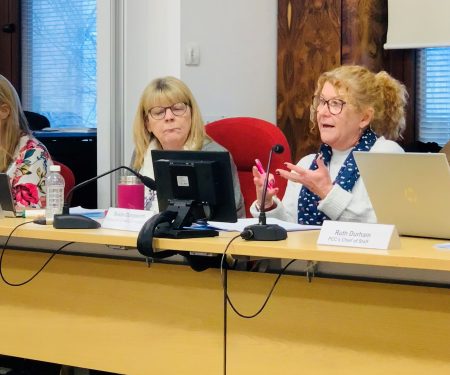
Speaking ahead of the Northumbria Police and Crime Panel on Tuesday, Kim McGuinness said it was important to be clear about the financial challenges the force faces, especially at a time of increased police demand.

She said: “Energy, fuel, bills – budgets all over are taking hit after hit and our police force is no exception. Keeping communities safe and fighting crime comes at a price and prices are soaring.

“Against the backdrop of years of austerity, the cost of living crisis, rocketing inflation and the recovery from the pandemic – I want to be very upfront about the potential budget pressures our police force is facing.

“It’s easy to say we’ll look to find efficiencies but the force has had to do that for ten years battling cuts – money really is tight.

“Policing plays such a vital role and supports some of the most vulnerable people in our communities. With increased poverty comes increased likelihood of being a victim crime or being drawn into committing crime.”

“I am worried about the cost of living’s impact on our region but I’m also worried about the cost of policing too. We have to have resources in place to deal with the demands; we’ll have no choice but to go into emergency reserves” Kim added.

Our Stats

Exit
Site