NORTHUMBRIA’s Police and Crime Commissioner Susan Dungworth has today launched her annual survey asking residents for their views on the part of the council tax that pays for local policing.

The PCC is committed to ensuring Northumbria Police delivers on the priorities set by the public in her Plan for Safer Streets and Stronger Communities. And so, she wants to know how much local people are prepared to contribute to help keep neighbourhoods safe, especially when financial pressures aren’t only impacting police budgets, but household finances too.

With early indications from government suggesting grant funding will fall short due to inflation, and national policy changes, the Commissioner is asking residents if they would support a small council tax increase, as they have in recent years. Residents of Northumberland and Tyne and Wear would still pay the lowest policing precept in England and Wales.

Rising costs are placing pressure on police budgets just as they are on household finances, so the PCC is asking for a precept increase of 19p per week, however this does leave a funding gap for Northumbria Police of £6.1m – a concern she is raising with Government

The PCC also needs to know, through this precept consultation, if local people would pay a little extra to retain current resourcing levels and investment in policing. This would be a precept increase of 37p per week for a Band A property.

This would help ensure vital services can continue to meet the community’s needs and help protect frontline services. Northumbria Police will also continue to invest in priorities such as further reducing anti-social behaviour, new technologies and proactively safeguarding women and girls.

Northumbria Police and Crime Commissioner, Susan Dungworth, said: “The police precept helps provide essential support for neighbourhood policing and the resources required to keep our communities safe. The budget will be tight and unfortunately there are difficult choices to be made – raising a precept being one. Just a small increase would help us to keep our heads above water whilst continuing to invest in the improvements that matter most to local people, despite these difficult financial challenges.

“Although the role of PCC is changing in 2028, right now I have a job to do — and that is to make sure Northumbria Police is properly resourced and in the best possible position to deliver for our communities. People’s views on the police part of their taxes is an essential part of this, and I recognise that while our police force is facing financial pressures, so too are many households in our area.

She continued: “We have made real progress over the last year— from faster response times to reductions in crime across all area commands. This all demonstrates the impact of sustained investment in local policing. I am determined to build on this good work but fully recognise the need for investment to help meet operational demands, boost visibility in our communities and keep delivering on the issues that matter for the people of Northumberland, Tyne, and Wear.”

Northumbria Police will continue to provide value for money, and the PCC has made it clear that any budget decisions must help protect the frontline and maintain the progress made over the last year.

Complete survey

Survey closes Monday 19 January

Our Stats

Statement in response to the new VAWG Strategy launched by the Home Office

Northumbria Police and Crime Commissioner, Susan Dungworth, said:

“We finally have a new national strategy – one that recognises VAWG as the serious threat that it is – and crucially recognises the parts the whole of society can play to improve safety for our women and girls in the future.

“While I welcome the approach, I’m proud Northumbria is already leading the way with how we put victims first, prioritise prevention, target perpetrators early, and work hand-in-hand with partners and communities to improve response and systems. We were at the forefront of introducing domestic abuse specialists in our control rooms, have long had a specialist rape investigation unit and have a range of policing operations that seek out predatory behaviours before harm happens. All this, and more, is designed to boost victim confidence, and get ahead before the harm takes hold.

“Our own local VAWG strategy already recognises the need to tackle root causes and educate people. The issue is about so much more than enforcement – we need long-term culture change. That’s why my office has long been championing work around training, awareness campaigns and bystander education – all designed to shift attitudes and encourage reporting.

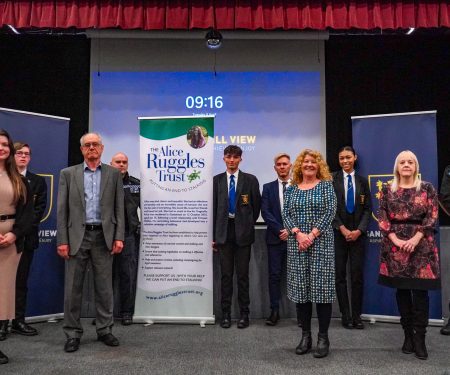
“A stand out focus of the strategy is clearly our young people – and the role of our schools. We already commission a range of educational inputs and resources working closely with partners such as the Alice Ruggles Trust and Rape Crisis Tyne and Wear and through the Northumbria Violence Reduction Unit schools can sign up to the popular Pol-Ed programme designed to enhance learning around healthy relationships and the law. We support the whole school approach laid out in the strategy and as an office believe we have lots in place that can benefit local schools helping teachers tackle misogyny in the classroom. I am pleased Government is investing in this work and training to support it.

“Let’s be clear though, tackling these crimes requires more than words — it demands partnership and sustained action – and I know we are already committed to this in our region. I look forward to building on this work to make the Government’s strategy real on the ground.”

Our Stats

RESPONDING to growing online crime demands, tackling Violence Against Women and Girls (VAWG), and building on significant reductions in anti-social behaviour are set to define policing in the year ahead – that’s according to Northumbria’s Police and Crime Commissioner, Susan Dungworth.

Speaking at the latest Police and Crime Panel in Gateshead on Tuesday (16, December) she said these areas represent “the most urgent and fast-evolving challenges facing Northumbria Police,” and confirmed that they will be key areas for investment in 2026 as the force continues to adapt to changing crime trends both on the streets and online.

She highlighted that online crime has risen by 24%, since the introduction of the Online Safety Act. This Act covers a broad range of crimes to better protect victims and encourage reporting – recognising the harmful impact these crimes can have on people’s lives. These new laws encompass sexual violence and harassment, intimate image abuse and child sexual abuse as well as inciting violence and racially or religiously aggravated public order offences. She went on to express the need for officers to have the right tools, skills and capacity to tackle growing challenges presented by the digital world.

She also renewed her commitment to tackling Violence Against Women and Girls, drawing the Panel’s attention to the scale of the issue. One in five calls to the police control room now relates to VAWG, underscoring the need for sustained focus and prevention and education work.

Alongside these growing demands, the Commissioner vowed to keep up momentum in reducing antisocial behaviour. Recent data shows a 22% fall in ASB across the force, with Project Shield hotspot areas achieving an impressive 32% reduction in Quarter 2 compared with the same period last year. She confirmed that a new ASB Action Plan will be developed to build on this progress.

These priorities were underlined as she told the Police and Crime Panel about the emerging pressures facing the force and the strong foundations laid over the past year. She reported that 93% of 999 calls are now answered within 10 seconds, and overall recorded crime has continued to fall, which she welcomed.

Northumbria Police and Crime Commissioner Susan Dungworth said: “There are some pleasing figures here to end the year on and I welcome them, but with caution – the policing landscape is shifting, and our police need to be ready for the challenges ahead. From rising online crime to the volume of VAWG calls received every day, officers must continue to evolve their response to meet new demands and growing pressures, so they keep delivering for the public. While the public rightly value visible policing in their communities, it is equally vital that officers have the capacity and resources to investigate ever-growing online offending too. For me, my mission to deliver safer streets and stronger communities continues – and this needs to be both in person and online. I will keep working alongside our police force, partners and the public to keep making progress to improve feelings of safety and keep driving crime down.”


Our Stats

NORTHUMBRIA Police and Crime Commissioner, Susan Dungworth, says a collective mission to tackle anti-social behaviour is working – as new data confirms the growing impact of Project Shield.

The latest quarter figures show targeted action in priority locations across the force area has delivered a 32% reduction in ASB, and on the region’s transport network this has fallen by an even sharper 38% – when compared to the same period during the previous year.

These reductions have been achieved with the help of 8,465 additional hours of police and partner patrols funded through Project Shield. Alongside this the initiative has rolled out youth diversion schemes, and policing tactics like the popular Trojan bus. This is a decoy bus carrying plain clothes officers used to catch offenders unaware.

During Quarter 2 alone, Shield teams made 67 arrests, conducted 113 stop and searches, used 13 ASB powers, undertook 39,925 engagements, and seized 13 weapons.

Funded through £1.8 million secured by the Office of the Police and Crime Commissioner via the Government’s Hotspot Action Fund, Project Shield was the first initiative to be introduced by the Commissioner since taking office.

It brings together Northumbria Police, British Transport Police, Nexus, Stagecoach and all six local authorities, combining high-visibility patrols with long-term problem solving to address the root causes of ASB and tackle serious violence.

Alongside the police, community safety officers and transport staff on patrol, the project has a dedicated team of analysts and researchers who ensure deployments are guided by local intelligence and real-time data — allowing resources to be focused where they make the greatest difference.

Northumbria Police and Crime Commissioner, Susan Dungworth said:

“Our mission to tackle anti-social behaviour is working — and these figures prove it. People told us they wanted more visibility; more action and more results. That’s exactly what Project Shield is delivering; great ASB reductions in our targeted areas, particularly on our transport.

“Residents have been telling me they feel safer because they’re seeing more uniforms out and about and retailers, I’ve been speaking to have said they’ve noticed improvements too. For me, this is targeted neighbourhood policing at its best.”

“Since launching Project Shield, we’ve seen it go from strength to strength, and it shows how we are putting my Police and Crime Plan for safer streets and stronger communities into action – working together to tackle things like ASB and serious violence.

Looking ahead to 2026, the Commissioner emphasised her determination to build on this year’s progress: “These are strong results to end the year on, and I want us to keep going further: continuing to cut crime, strengthening our partnership work, and improving how safe people feel in every neighbourhood. People want more of this — and I look forward to continuing to monitor the project’s progress into the new year.”

Superintendent Scott Cowie, of Northumbria Police’s Prevention department, said: “These latest figures are testament to the hard work and dedication of our officers and partnership staff working on Project Shield.

“The statistics show that we are significantly driving down ASB, particularly on our transport network where everyone should feel safe and secure when travelling around our region.

“The feedback we’re getting from members of the public and businesses is that they are seeing a real tangible difference right across our communities. This is something we aim to build on in the coming weeks and months with further activity planned, using all of the powers and tactics available to us.

“Rest assured, we remain determined as ever to do everything we can to further reduce ASB. To the public, thank you for your support and please continue to help us by reporting any crime or suspicious activity in your area so that we can grow our intelligence picture and plan accordingly.”

Erika Allen, Quality Health Safety Security and Environment (QHSSE) Director at Nexus, said: “It’s great to see Project Shield having such a positive impact in lowering crime and anti-social behaviour on our public transport network.

“Nexus has a key part to play in supporting the police and our local authority partners in keeping the public safe and secure when using the local bus and Metro system.

“This builds on the work we have already done to improve safety and security on the transport network, including the roll out of our dedicated security teams and investment in new CCTV.”


  • ENDS

Our Stats

REPORTING domestic abuse takes immense courage. Staying engaged with the criminal justice system can feel overwhelming – even frightening – but victims are not alone. That’s the message from a new video resource launched by the Northumbria Local Criminal Justice Board (LCJB) designed to help victims of domestic abuse feel informed, supported, and confident as they move through the criminal justice process.

The video is a response to feedback from victims who have said they want more information to better understand the process and support available. It is hoped the resource will improve the overall victim experience, helping more victims stay engaged in the system, feeling confident to attend court and in turn increase conviction rates.

The video explains the range of protective and supportive measures available to victims at every stage of the criminal justice journey. Examples include pre-trial visits, separate court entrances, safe waiting areas, and special measures to make giving evidence easier.

It also highlights the key role of Independent Domestic Violence Advisors (IDVAs) and victim services, who provide emotional, practical, and financial support – from transport and childcare arrangements to guidance about court proceedings.

Northumbria Police and Crime Commissioner, Susan Dungworth, who is also the Chair of the LCJB, said:

“The very idea of going to court can feel scary, but it doesn’t have to be a total unknown. Knowing what to expect will help victims feel calmer, more confident, and in control – and that’s what we all want. People who feel supported are far more likely to stay engaged with the process.

“We need to reduce the number of victims who drop out by addressing the causes and making people aware of the help and solutions that already exist that might make it easier for victims to give evidence in a way that suits their needs.

“As part of my plan for Safer Streets and Stronger Communities, I made victims and justice a top priority and am committed to improving awareness of the support available and ensuring its easily accessible – this new resource is about doing just that.”

Assistant Chief Constable Alastair Simpson, of Northumbria Police, who is the victim and witness lead for the LCJB, said: “The heart of this project has been about making sure victims of domestic abuse are fully informed about what they can expect before their case goes to court.

“We recognise different people have completely different needs – and whatever might be right for one person won’t be helpful for another.

“We want this video to demystify the criminal justice process so that as many victims are staying engaged with the process as possible, as we consistently see more positive outcomes when they do.

“As a Force, we’re committed to doing whatever we can – alongside our criminal justice partners – to ensure victims are supported every step of the way so we can bring their perpetrators to justice.”

Debbie Breen, Deputy Chief Crown Prosecutor with CPS North East, said: “For victims of domestic abuse, this video provides key information about what to expect during the investigation and prosecution of these types of cases. The engagement of victims with the prosecution process is invaluable to us and, in some cases, their attendance at court may even be sufficient to secure early guilty pleas to domestic abuse offences. We understand that any involvement in criminal proceedings can be a daunting prospect for victims of crime, but we hope that this video can address some of that apprehension by explaining how we can use special measures to support them if they are asked to give evidence.”

Domestic abuse is a significant issue across Northumbria, accounting for around one in five crimes recorded by the police each month. In a typical month, over 2,000 domestic abuse-related crimes are reported, with the majority of victims being women, though many men are also affected.

The new video resource is designed to be used internally by professionals working with victims as well as publicly as part of awareness campaigns – and it showcases the positive side of the criminal justice system and reinforces the message that support is available every step of the way.

Northumbria’s Local Criminal Justice Board brings partners across the region together to work towards increasing public confidence in the criminal justice system and support people to feel safe in their local communities. Partners include: Northumbria Office of the Police and Crime Commissioner, Northumbria Police, Northumbria Victim and Witness Service, Crown Prosecution Service.

The video can be viewed here.

A full list of support services commissioned by the Office of the Police and Crime Commissioner for Northumbria can be found here – Victims Services Directory – full list – Northumbria PCC

  • ENDS –

Our Stats

Project Vigilant a year on – keeping people across the North East safe at night

Project Vigilant is aimed at targeting perpetrator behaviours, which are often displayed before a sexual offence, spiking or theft takes place.

The initiative is a joint effort by the North East Regional Organised Crime Unit (NEROCU), Cleveland Police, Durham Constabulary, Northumbria Police and all three North East Police and Crime Commissioners, who all work to ensure a safer environment for members of the public enjoying a night out.

It was first launched in the North East in December last year and has already seen numerous targeted deployments across Newcastle, Durham and Middlesbrough.

During activity, specially trained officers are deployed during the Night Time Economy and identify individuals who may be displaying predatory behaviour such as harassment, loitering without reason and stalking behaviour. Those individuals are stopped by police, enquiries are carried out, dispersal orders given or where necessary arrests are made.

The targeted police operations will continue to be carried out across the North East with the aim of proactively preventing violence and sexual offences against women and girls and ensuring a safer environment for all.

Detective Chief Inspector Paul Hallowell, from NEROCU, has reassured the public Project Vigilant will continue to disrupt offending against women and girls.

DCI Hallowell said: “It is important to us that members of the public feel they can have a safe and fun night out in the North East without the fear of assault, violence, or theft. National figures show that violence against women and girls is something that requires robust action and already in a year we have seen fantastic results from this initiative – and we’re not slowing down.

“Predatory behaviour is never acceptable, and we remain committed alongside our partners to continue our work to tackle this issue. We also urge anyone with any concerns about someone’s behaviour to report it to police.”

Northumbria Police and Crime Commissioner, Susan Dungworth said: “During the 16 days of action campaign to prevent and end violence against women and girls, I think it’s really important to be highlighting proactive policing efforts like Operation Vigilant. People don’t necessarily know this work is happening, yet it forms part of a raft of measures we have in place to keep people safe on a night out.

“This activity sends a clear message that our police are doing so much more than responding to crimes and supporting the vulnerable; we have officers whose mission is to proactively target those who cause harm and prevent crime.

“I hope hearing about this operation reassures people about the work in place to catch predatory behaviours before they escalate. The results show the positive impact this is having towards delivering safer streets in our night-time economies across the region, and I will continue to monitor progress in this area.”

Durham Police and Crime Commissioner, Joy Allen said: “Protecting women and girls from sexual harassment and violence and ensuring they feel safe in our public spaces, including our transport systems and within the night-time economy, are top priorities for me as they featured highly in my consultation with the public. I have been clear in my Police, Crime and Justice Plan that I will tackle all forms of violence against women and girls, from spiking and stalking to rape and murder.

“Operation Vigilant has become a vital tool in our work to tackle VAWG, challenging predatory behaviour early, before it escalates, to prevent serious and traumatic crimes that can take victims a lifetime to recover and heal from.

“Women and girls should be able to enjoy a night out safely, without fear or risk. By taking a proactive and intelligence-led approach, putting trained officers in the right place at the right time, we not only safeguard potential victims but build confidence and trust in the police which reinforces feelings of safety.”

Cleveland Police and Crime Commissioner, Matt Storey said: “Our research shows that more than 81% of women surveyed felt unsafe in Cleveland’s town centres after dark. Research like this proves how important work like Project Vigilant is in our communities to protect women and girls from potential predators.”

Anyone who has been the victim of a sexual assault, whether recently or in the past, is encouraged to contact their local police force.

If you have information or concerns about someone’s behaviour you can report it to police or via the independent charity Crimestoppers anonymously on 0800 555 111.

Our Stats

Exit
Site