
Vanessa Jardine is to be reappointed as the Chief Constable of Northumbria Police following a short break from the position.

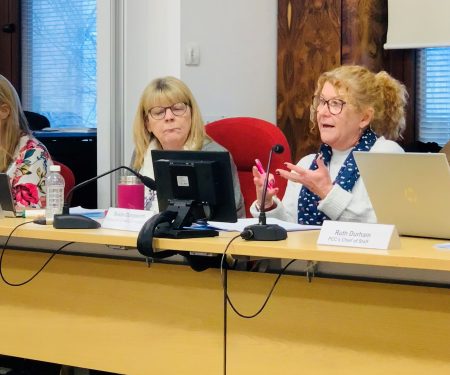
The move has been approved by the Police and Crime Commissioner with the agreement of the Police and Crime Panel who met today (Tuesday 14 October) and put a range of questions to the Chief Constable ahead of ratifying her reappointment.

This now means Vanessa Jardine will retire as Chief Constable as of tomorrow (Wednesday 15 October) and will rejoin on Wednesday 22 October under the national Retire and Rejoin Scheme.

The scheme is open to officers of all ranks and is used across a range of professions up and down the country. The scheme is designed to retain skills, knowledge and experience within the police service by removing the financial disincentive that some officers may face once they reach 30 years’ service. It does not create any additional costs to the taxpayer.

The scheme is in accordance with updated guidance from the National Police Chiefs’ Council (NPCC), the Association of Police and Crime Commissioners (APCC) and the College of Policing.

Under legislation, Deputy Chief Constable Jayne Meir will be Temporary Chief Constable and Assistant Chief Constable Alastair Simpson becoming Temporary Deputy Chief Constable during this short period.

Police and Crime Commissioner Susan Dungworth recommended the re-appointment of Vanessa Jardine. Afterwards she said: “Vanessa’s reappointment is in the best interests of not only Northumbria Police but of our communities too – and I am pleased today her rejoining was unanimously supported by the Panel.

“There is nothing unusual about this scheme, in fact it’s been widely used by Chief Constables up and down the country. It’s allowing us to retain the services of a proven leader of high calibre and experience.

“Under her leadership we have seen significant response time improvements and reductions in total crime figures – these are things residents will be keen for her to build on. She can now continue to put her vision for the Force into action, and I look forward to continuing to work alongside her to deliver on the priorities set out in my Police and Crime Plan for safer streets and stronger communities.”

Chief Constable Jardine said: “It has been a real privilege to have been Northumbria’s Chief Constable for the last two-and-a-half years and I’m immensely proud of the Force and the people I work alongside.

“I now have more than 31 years of service, but I want to continue and provide that leadership continuity to deliver outstanding services to the people of the Northumbria area.”

ENDS

Our Stats

NORTHUMBRIA Police and Crime Commissioner, Susan Dungworth, has today (October 6) launched a new Supporting Victims Programme offering funding to help boost support for victims of crime across the Force area.

It’s hoped the fund, which will run from 2026 to 2029, will give local services the stability they need to plan ahead and provide quicker, better support for victims.

Backed by Government funding through the Ministry of Justice and Violence Against Women and Girls programmes, the scheme will channel money into the areas victims say matter most. This will cover emotional, practical and therapeutic support to victims of crime, as well as advocacy services.

The PCC hopes the new fund, which closes on November 16th, can help towards reducing waiting times, easing pressures on frontline services, and ensuring help is available when people need it most.

The PCC’s Office has carried out extensive victim needs assessments, service reviews and victim surveys to identify local priorities.

These include:

  • Domestic abuse
  • Sexual violence
  • Stalking
  • Children and young victims
  • Hate crime
  • Violent crime
  • Exploitation and modern slavery
  • Victims with other vulnerabilities

Listening directly to those affected by crime and those who support them has helped shape the new funding package. One clear message was that came from the victims’ survey was that emotional support is the number one need for victim after crime. Children and young people also told the office that family-wide support is key, with half of respondents highlighting its importance.

Organisations supporting teenage victims of domestic abuse and those offering support to address child-to-parent violence and abuse are just some of the areas in which the PCC is keen to receive bids covering.

Northumbria Police and Crime Commissioner, Susan Dungworth, said: “I know from listening to victims that access to the right emotional and practical support makes all the difference, and that families often need support together. I’m determined that no victim feels they have to go through this alone. That’s why this funding programme is about responding to real needs, identified here in Northumbria. By working in partnership with local organisations I want to build stronger, more resilient victim services across the region.

“But funding alone is not enough—we must also keep raising awareness, so people know what help is out there and of course working to prevent crime from happening in the first place by creating safer streets and stronger communities.”

Last year alone, through the Supporting Victims Programme, services in Northumbria reached nearly 30,000 victims. But with demand rising, the new fund aims to cut waiting times, ease pressure on frontline workers and ensure no victim has to go without help.

Earlier this year, the PCC also launched a Victim Services Directory, making it easier for victims to see what support is available to them locally.

Minister for Victims and Tackling Violence Against Women and Girls, Alex Davies-Jones, welcomed the programme launch and said:

“Every victim deserves to feel heard, supported, and empowered, which is why the Government invests in important help for victims like this. This initiative will be a lifeline for victims in the region, offering the emotional and practical support they need to report crime, rebuild confidence, and begin to recover. I look forward to seeing the impact this programme will have, and I commend Susan and her team for the vital work they’re doing to support victims across Northumbria.”

Last year alone, through the Supporting Victims Programme, services in Northumbria reached nearly 30,000 victims. But with demand rising, the new fund aims to cut waiting times, ease pressure on frontline workers and ensure no victim has to go without help.

Earlier this year, the PCC also launched a Victim Services Directory, making it easier for victims to see what support is available to them locally.

Notes to editors:

  • Funding applications open October 6, 2025, and close November 16, 2025.
  • The Supporting Victims Fund combines allocations from the Ministry of Justice Victims Fund and Violence Against Women and Girls (VAWG) funding.
  • The programme will run from April 2026 – March 2029.
  • Applications can be made here.


Our Stats

AS thousands of students have been arriving in the North East to begin their university journey, Northumbria Police and the region’s Police and Crime Commissioner, Susan Dungworth, are offering them a warm welcome — and a clear message that student and community safety is a top priority.

In Newcastle, a key part of the support in place this Freshers’ Week  and beyond is the Safe Haven Van – parked up in the heart of the Bigg Market at peak times or when events are taking place. The well-known safety hub is funded through the Office of the Police and Crime Commissioner. It provides a safe, supportive space for anyone who finds themselves in difficulty during a night out. Whether someone feels unwell, has lost their friends, or needs help getting home – the Safe Haven Van is there to ensure no one is left feeling vulnerable.

The Safe Haven Van is just one of a raft of safety plans working alongside Newcastle and Northumbria Universities, North East Ambulance Service (NEAS), Newcastle City Council, and the dedicated Street Pastors — aiming for students to feel safe and supported right from the start.

Dedicated policing operation, Operation Salus, is a year-round initiative to safeguard people in the city centre. Officers monitor CCTV, gather intelligence and respond quickly to signs of vulnerability. The operation not only includes increased patrols, but also CCTV surveillance and Automatic Number Plate Recognition. Background work like this helps address issues before they escalate, leaving people free to enjoy their evenings in safety.

Northumbria Police and Crime Commissioner Susan Dungworth who has been visiting freshers’ fairs across the region, including in Newcastle and Sunderland, said: “Starting university is a big step — for students and for parents too. For many young people it’s their first taste if independence and so we want to make sure it’s a positive one. I want to reassure students and their families that here in Northumbria, we take student safety seriously. From extra policing operations to trusted services like the Safe Haven Van, we’ve made real investment in keeping our city centres safe, especially during busy times like Freshers. Newcastle is an incredible place to study, and we’re committed to doing all we can, alongside our partners, so people are safe and can enjoy their time here.”

Chief Inspector Rob Bosson, of Northumbria Police’s Newcastle Area Command, said: “Newcastle is renowned as a vibrant, welcoming and safe place for students to live, study and enjoy a fun night out and we are determined to keep it that way. We work with a range of partners, including the Police and Crime Commissioner, the local authority, businesses, licensees, door supervisors, hotel staff, as well as street pastors and taxi drivers, so we can all come together so that people are safe. The Safe Haven Van remains a vitally important part of our multi-agency work within the night time economy, so that alongside our partners we’re there when needed by those who may have become split up from friends or found themselves worse for wear on an evening out. We also run Op Salus, in which our officers work hard alongside partners to ensure the safety of all people visiting the city centre at all times of the year. We are proud of the role we play within the night-time economy and our dedicated and innovative approach has been rolled out elsewhere in the country. As a Force, we remain committed to building on this work to ensure people can continue to have a safe and enjoyable time while on a night out. Please remember that if you do need us, we are here for you.”

Vashti Hutton, Director of Student Life and Wellbeing at Northumbria University and speaking on behalf of both Universities, said: “The health and safety of our community is our number one priority, and we work actively with several partners across the city to help make this possible at this exciting time for our new students. We encourage all students to familiarise themselves with up-to-date guidance about keeping safe in the city, attend campus and accommodation inductions, as well as look for support from the emergency services should they need it when exploring their new home. In addition, we continue to work with Northumbria Police as part of our ‘Operation Oak’ partnership, which provides extra police officers to work in areas such as Jesmond, Heaton, Sandyford, Shieldfield and Ouseburn, providing reassurance to all residents. This police-led initiative funded by the universities works to encourage good community relations and minimise disruption to the daily lives of all residents because of anti-social behaviour, along with addressing any vulnerabilities or safeguarding concerns and offering crime prevention advice.”

Stu Holliday, head of emergency preparedness, resilience and response at North East Ambulance Service said: “Working closely with the police in the city centre means that we can assess and treat people quickly. This frees up our resources to help patients in the greatest need. It also helps relieve pressures on local hospitals and provide a secure environment to pass on safety information and give medical assistance to anyone might need it. We want everyone to enjoy their time at university in Newcastle without needing us, but the Safe Haven allows us to be there for those who do.”

Our Stats

Police Commissioner Susan Dungworth has today announced the return of the Local Youth Fund, giving more young people the chance to put forward innovative ideas on how serious violence and knife crime is prevented.

With £12,000 available for youth-led projects, this initiative aims to harness the creativity and insight of young people, in a bid to create safer streets and stronger communities.

The Violence Reduction Unit’s Local Youth Fund invites young people to share their views and experiences of serious violence, and propose forward-thinking solutions, to be in with a chance of receiving a share of the funding.

The initiative provides young people with a platform to have their voices heard, as they help shape the future of their local areas.

In previous rounds, the fund has supported over 80 projects, directly benefitting more than 5,200 young people, who have seen their ideas brought to life with projects ranging from sports activities, youth-led campaigns and drop in sessions.

This highlights the creativity and dedication of young people across the region, and through the return of the fund, it seeks new ideas to continue making a positive impact.

Northumbria Police and Crime Commissioner, Susan Dungworth said: “I am committed to making our streets safer and communities stronger – but to achieve this, it is essential that our young people are involved in key decisions made about their local areas.”

“In doing so, we not only address the issue of violence head on, but also empower our young people to take an active role in shaping the future of local areas. That’s why the Violence Reduction Unit’s Local Youth Fund is a pivotal step in giving them the chance to make a real difference.”

“I’m delighted to announce the return of the fund, giving more young people the chance to share their vision, so if you have a creative idea, apply now to bring your project to life. I am looking forward to hearing your ideas, and to seeing them in action soon.”

Young people are now encouraged to apply for funding, with the support of community and youth-based organisations, by submitting project proposals that they think will prevent serious violence and knife crime in their local areas.

When the fund closes on Monday 13th October 2025, a panel of young people will review all bids, before selecting one successful project per local authority area to receive a share of the funding.

For more information about the Local Youth Fund, and how to apply, visit the Northumbria Violence Reduction Unit website.

Our Stats

THIS National Rural Crime Action Week, Northumbria Police and Crime Commissioner, Susan Dungworth is joining forces with Northumberland Domestic Abuse Service (NDAS) to highlight domestic abuse in rural communities – and crucially – the help that’s available.

Often isolated victims of rural crime face unique challenges – and that includes domestic abuse victims. These victims often face prolonged suffering, difficulty accessing support and fears around community stigma.

Domestic abuse accounts for 20% of total crime in the Northumbria Police Force area, and 97% of the land in Northumberland is classed as rural.

Domestic abuse in rural communities affects people of all genders and ages, with abuse lasting, on average, 25% longer than in urban areas, according to the National Rural Crime Network. In 2024–25, NDAS supported 555 adult survivors of domestic abuse and responded to 6,909 domestic abuse incidents in Northumberland, over 40% of which involved children.

Rural locations can often be exploited by abusers who use remoteness and isolation as a  control tactic. NDAS has supported clients who have had legally held firearms and farming equipment used to threaten and intimidate them. NDAS recently provided critical help to a 56-year-old by working with the police to remove firearms from the home and reclaim control over her life.

Another victim, a 61-year-old woman who lived on a remote farm was subjected to technology-enabled surveillance and isolation. NDAS crafted safety plans, supported her legal action, and helped her regain financial independence.

A key area of concern for the Commissioner is that reports suggest rural victims are half as likely to report abuse compared to those living in more built up, urban areas. She wants to use Rural Crime Action Week help raise awareness and encourage women and men to break free from abusive relationships and for members of our rural communities to speak out and support those suffering in silence.

Northumbria Police and Crime Commissioner, Susan Dungworth said: “We often think of our rural communities in an idyllic sense, but rural doesn’t mean safe from abuse – it means we must look harder.

“This week is about amplifying voices that are too often left unheard. Isolation can heighten risks around domestic abuse, but awareness and the right support can help end it.”

“I want to reassure anyone suffering that help is there and that Northumbria Police take reports of domestic abuse very seriously. We have brilliant support services too, like NDAS, who always go the extra mile to ensure support reaches those in need, sometimes travelling long distances, in dangerous, challenging conditions to reach victims.

“Education is also key”, she added. “Through my office we are funding programmes and supporting the work of a partners to ensure young people can recognise the signs of abuse and know where to turn for help.

“The tragic murder of 15-year-old Holly Newton in Hexham reminds us all that early education and awareness are vital. National Rural Crime Action Week is not just about raising awareness—it is about action, support, and change.”

Sharon Brown CEO from NDAS, which supports victim-survivors from Berwick to Haltwhistle, echoed that no victim is too far to reach. She said: “At NDAS we pride ourselves on literally going the extra mile.  This is crucial in a county with half of its population living in rural and isolated areas. Our 22-year history of providing vital support to victims-survivors means we both know and are known in rural communities across Northumberland. We are also working hard to prevent domestic abuse through providing prevention education, last year working with over 3500 children and young people in 29 schools.  NDAS continues to take action, to provide essential support when and where it is needed and works to create change for the future.”

Chief Inspector Andrew Stephenson, of Northumbria Police’s Safeguarding Department, said: “As a Force, we’re committed to tackling domestic abuse and protecting those most vulnerable within our society.

“We recognise that those living in rural areas may experience domestic abuse in different forms than those who are living in urban areas, with different concerns and challenges as a result of more remote locations.

“That’s why it’s so important that police, and other services, tailor their support accordingly.”

Chief Inspector Stephenson added: “We have dedicated domestic abuse specialists in our contact centres to provide expert advice when responding to victims to help ensure they are safeguarded and receive the support they need – wherever in our region that may be.

“And nationally, there is greater awareness of taking domestic-abuse related crimes forward to prosecution with an evidence led approach, to better support vulnerable victims, providing us with further opportunities to safeguard those who need protection.

“We would always encourage anyone who has been a victim of abuse to come forward, either to ourselves or one of the dedicated support agencies. There is so much support available.”

Northumberland Domestic Abuse Service

Our Stats

Northumbria’s Chief Constable Vanessa Jardine is set to retire after receiving approval from the Police and Crime Commissioner but, subject to the agreement of the Police and Crime Panel, will rejoin following a short break.

The move would take place under the national Retire and Rejoin Scheme, widely used by police officers up and down the country. It does not create any additional costs to the taxpayer.

It is a scheme designed to retain skills and experience at all levels of policing. It allows for any police officer, including a Chief Constable, to formally resign as an officer before being re-appointed into the same rank. This process requires a break in service of at least one calendar month.

The scheme is in accordance with updated guidance from the National Police Chiefs’ Council (NPCC), the Association of Police and Crime Commissioners (APCC) and the College of Policing.

The Police and Crime Commissioner will present a report to the Police and Crime Panel at its meeting on the 14th October, when she will recommend the re-appointment of Northumbria’s Chief Constable.

Subject to the Panel’s approval of these arrangements, as it is a legislative requirement for every force to a Chief Constable in post, Deputy Chief Constable Jayne Meir becoming Temporary Chief Constable and Assistant Chief Constable Alastair Simpson becoming Temporary Deputy Chief Constable.

To comply with the requirement of legislation for every police force area in England and Wales to have a Chief Constable in post at any given time the Deputy Chief Constable will be the Acting Chief Constable for this short period.

With the panel’s approval, Vanessa Jardine will return to her role as Chief Constable from October 22nd.

Our Stats

Exit
Site