Short films take a stand on violence towards women and girls

Violence against women and girls takes centre stage in a hard-hitting short film created by University students and shared across the UK.

This is the 10th anniversary of a film collaboration between Northumbria Police and Crime Commissioner and the University of Sunderland, raising awareness about issues impacting on society, through films created by final-year Screen PerformancePerforming Arts and Film Production students.

The project is funded by Police Commissioner, Kim McGuinness’s office, and in collaboration with specialists from her Violence Reduction Unit.The students’ assignment subject this year is timely with a number of high-profile cases of toxic masculinity and misogyny – from serious sexual abuse to the role of online influencers – hitting the headlines and debated by commentators and government policymakers alike.

With 75% of women and girls as young as 12 experiencing some form of public sexual harassment and an estimated 1.6 million women in England and Wales experiencing domestic abuse, Northumbria Police and Crime Commissioner Kim McGuinness, wanted to draw attention to the issues, setting this year’s brief for the annual project.

For their assignment, the students were asked to focus on the behaviour and reactions of bystanders, in particular men, when they witness harmful or inappropriate behaviour committed against women and girls. Crimes of violence against women include rape and other sexual offences, stalking, domestic abuse, ‘honour-based’ abuse (including female genital mutilation and forced marriage and ‘honour’ killings), ‘revenge porn’ and ‘upskirting’, as well as many others.

Kim McGuinness said: “Not only as your Police and Crime Commissioner, but as a woman, I am passionate about fighting for a North East where our girls and women are safe and free from abuse, violence and inequality.

“With the numbers of violence against women and girls-related reports to police increasing each year, films that help raise awareness of the issues that are faced by women in Northumbria and beyond, are hugely welcomed by me. It’s on all of us to demand change in society and I’m thankful to the students for using their skills and creativity to help drive this change.”

The students produced the films with the help of the VRU and a specialist active bystander practitioner whose expertise is around engaging men and boys in conversations about violence against women and girls. They have researched, scripted, devised, filmed and edited all six films themselves which will contribute to their final-year marks. All productions are turned into an awareness film, to be used as an educational or training tool to promote awareness of the issues locally and regionally.

Other projects in previous years have addressed issues such as male rape, modern-day slavery, the capacity to consent, sexual exploitation, domestic violence, and cyber-crime.

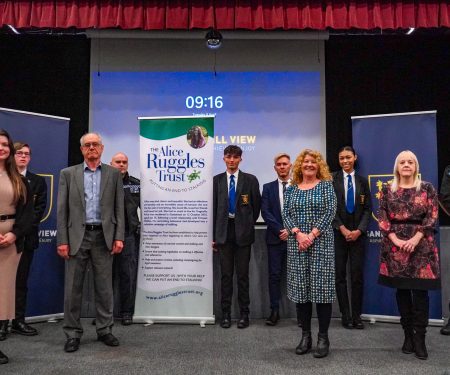
An awards evening has also been organised on Thursday February 2, to announce the winning film, Choosing Silence and attended by the University’s Vice Chancellor, Sir David Bell, and the awards presented by Kim McGuiness.

Dr Adelle Hulsmeier, Senior Lecturer in Performing Arts and Programme Leader for Screen Performance, who helps to organise the awards each year, said: “It has, as always, been an incredibly interesting journey tackling more hard-hitting issues faced everyday by police.

“The issue of male violence against women and young girls demonstrated the types of conversation we need to be having and the responsibilities we need to be facing.

“At the start of the process, Northumbria’s Violence Reduction Unit delivered an eye-opening workshop that asked its recipients to face the realities around how this issue may start and grow. An important analogy was offered about how the roots of an issue can grow from something seemingly innocent, for example ‘banter’ between friends, into sexual harassment disguised as banter, to potentially branching out to something even more toxic, dangerous and potentially life-threatening.

“The point of the brief has been to place some responsibility on the bystander, to recognise the warning signs and to make an intervention, which doesn’t have to be direct, to stop the issue from growing. Cutting it off at the roots and really reflecting on at what point we intervene and at what point we can make a difference has been the continuous focus. The students have tacked this with gusto, determination and maturity, and we have six very strong contenders for this year’s awards.”

Nicholas Glean, Senior Lecturer in Video and New Media, responsible for producing the films with the students, says: “I am incredibly proud of our students for producing a good range of films on these essential issues. I must commend the students on their professionalism, dedication, and organisation. They should all be very proud of what they have achieved.”

The produced films can be viewed here.

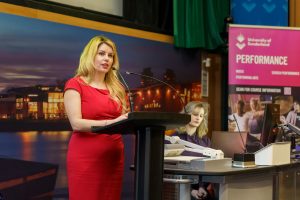
Kim McGuinness, Northumbria Police and Crime Commissioner speaks during the Short Film Awards event at the University of Sunderland Picture: DAVID WOOD

Our Stats

Northumbria Police and Crime Commissioner Kim McGuinness has laid out determined plans to tackle serious violence in the North East.

Stopping young people carrying knives and ruining lives has been named a top priority by the Commissioner who wants to build on promising interventions that are being rolled out across the region.

She says her Northumbria Violence Reduction Unit, Northumbria Police and incredible organisations like Samantha’s Legacy and the Connor Brown Trust are working hard to deliver life-changing interventions and powerful education work – but more needs to be done.

As well as delivering sessions in schools and youth clubs, other promising approaches to reach those on the cusp of crime and encouraging them to make positive choices are happening across the region and the PCC has tasked her Violence Reduction Unit with developing and expanding this work as top priority.

A&E navigators. A&E offers a key touch point for specialists to engage with vulnerable young people who present with injuries and issues which may be a symptom of involvement in serious violence and wider organised crime and vulnerability. The team are therefore looking to explore working closely with health professionals to implement ‘navigators’ into hospitals. The navigators will be there to care, guide and provide practical support in a non-judgemental way to people who may be experiencing trauma and serious adversity.

Student support champions. Champions are now on hand in targeted schools across Newcastle. The champions work to build trusted relationships with young people so they have someone to confide in and get support. A regular presence in the schools, part of the job is identifying young people in need of support in the first place so they can refer them to services and interventions to help them and their families. Kim is keen to expand the scheme further.

New team clamping down on known offenders. A new team has recently been deployed in Sunderland City Centre, focussed on clamping down on known offenders. The team works with identified individuals known for being involved in violence. The message to them is clear – engage with the mentors, and programmes that are being offered or there will be significant consequences.

Northumbria Police and Crime Commissioner, Kim McGuinness, said: “Every time we lose a young life to violence we are reminded of just how important the prevention work we are doing is. My Violence Reduction Unit is tasked with bringing everyone together and saying we will not accept violence in our region and this is how we are going to fight it.

“Nothing I can say will bring back the lives tragically lost in recent months but I can say there is a lot of work happening and we desperately want to be scaling it up and reaching more and more impressionable young kids. You see, it’s not just about officers on the streets and catching those carrying knives. I want to reach kids before that – I want to get in there before a weapon reaches their hands.”

Asked whether she thinks the problem is getting worse, the Commissioner said:
“Yes, I do think it feels like things have got worse over the last decade or so. That’s everywhere – up and down the country – and we are clearly not immune to it up here. That’s why we need to throw everything we have at this – more of the mentoring, the youth diversion schemes, the early interventions. And everyone: parents, teachers, friends we all need to be the having conversations, raising awareness, creating positive opportunities.”

She added: “Crucially let’s not forget the bigger picture either. We have to look at the causes. The links between poverty, deprivation and serious violence are clear. In 80% of our harm hotspot areas in Northumbria, 1 in 10 people suffer from income deprivation. We fight poverty, we fight crime”.

Our Stats

Northumbria Police and Crime Commissioner has warned the North East needs to use every resource it can get its hands on to reinvest in community services and youth provision to help rescue future generations out of hardship.

 Speaking at the Convention of the North in Manchester, she told delegates there is a real need for ‘Sure Start Mark 2’.

Her comments follow saddening statistics out this week from the All-Party Parliamentary Group (APPG) Child of the North, which warned North East child poverty is now the highest since 2001.

In her speech, made in front of business, political and civic leaders discussing the opportunities and challenges facing the North, she outlined how investing in people regardless of their background leads to happier, safer neighbourhoods and a thriving cultural scene.

Established in 1999, Sure Start Children’s Centres brought together health, parenting support, childcare and employment services. Widespread evidence suggests they saved the NHS millions of pounds in terms of improving the lives of those trapped in poverty, as well as helping families to give their children the best possible start in life.

Kim said: “In the North East, where I am Police Commissioner, the strategic policing plan I put in place is called Fighting Poverty, Fighting Crime, and part of what I am doing is bringing back Sure Starts centres by stealth. I’m using money recovered from criminals to reinvest in community services and youth provisions and my Violence Reduction Unit to backing local community hubs that bring people together, helping them through times and keep kids out of trouble.

“Let’s face it, Sure Start Centres should never have been closed down – they brought the North East and its people huge benefits yet since 2010 we’ve seen them ripped from the heart of some of our most deprived communities. And now, over a decade later, there’s no money directly available to fund ongoing interventions despite the benefits they bring elsewhere in the system.

“So, in the North East we’re finding new ways to fund centres that create real opportunity- whether that’s supporting parents to keep kids on the right track or investing in the trusted cultural role models who show there is a better way.

“We have some amazing charity-led centres that are desperately trying to fill the void and help local people to thrive like the Howdon Community Hub in North Tyneside or Pallion Action Group in Sunderland. There are brilliant people doing brilliant things. Not everyone is lucky enough to have support like this on their doorstep though. So, we all must keep doing all we can. If we get the basics right for young people we can prevent criminality later in life and we can ensure that it’s not just the kids going to good schools who go on to become the northern starts of sport, business or culture in the future.”

Our Stats

Northumbria Police has become the first force in the country to be awarded Safer Streets funding specifically to fight rural crime, and is launching a new Northumbria Partnership Against Rural Crime to kick-start plans.

More than £250,000 in funding secured by Police Commissioner Kim McGuinness’s office has meant plans to tackle rural crime and make people feel safer across the region are now underway.

A new package of rural policing plans that involve encouraging reporting, working with others to prevent crime and targeted activity to pursue offenders will be rolled out. Plans also include new technologies covering number plate recognition and thermal imaging as well as research and practical crime prevention tools.

The enhance crime prevention activity will be delivered with the support of Northumberland Council, Farmwatch, Northumberland Fire and Rescue, Northumberland National Park and Mountain Rescue Team, and Forestry England.

The plans mean 2023 is off to a promising start for Northumbria Police’s Rural Policing Team and it’s hoped the new police activity will build on what was a successful year for the team that has recovered more than £1million of stolen farming vehicles and equipment since its launch in 2020.

Addressing the force’s commitment to the serious impact crime can have on farmers and their families as well as others who live in our more isolated communities, Northumbria Police and Crime Commissioner, Kim McGuinness said: “Wherever I go in the country Northumbria Police is often cited for best practice and is praised for leading the way with its work to tackle rural crime. The fact that we were the only force area to apply for this funding specifically with our rural communities in mind shows just how important these communities are to us.

“We may be known for rolling out some of the best rural policing operations in the country but there is always more that officers want to be doing to clampdown on criminal activity and protect our more isolated neighbourhoods.

“It’s vital that officers have the tools to do the job and there are some big plans in the pipeline to improve the technology around data gathering and intelligence sharing with other members of our countryside communities who work hard alongside our policing teams to keep the area safe and fight crime.

“Really stepping up efforts in our area is very much a joint effort – I don’t know of any other rural partnerships that are supported by such significant funding. There really is such a strong commitment to make sure rural policing is certainly not something that’s overlooked and I hope it will make people feel and be safer in the Northumberland area.”

Inspector Garry Neill, of Northumbria Police’s Rural Policing Team, said: “Tackling rural crime is a real priority for the Force and this funding can help us build on the significant work already under way.

“The team are passionate about protecting our most remote communities and we have seen some significant results over the last year – with a number of offenders brought to justice and huge amounts of stolen equipment recovered.

“We run dedicated operations throughout the year to hit criminals hard and make our rural communities feel safe. This funding will help us continue that – using new innovative tactics – and make a real difference in our fight against rural crime.

“I would like to thank everyone who continues to play their part, especially our Rural Crime Volunteers whose contribution is invaluable. By working together, we can continue to protect our rural communities and bring justice against offenders.”

ENDS


Our Stats

PRESS RELEASE

WITH the cost-of-living crisis escalating and crime continuing to evolve, Police Commissioner Kim McGuinness is keen to hear the views of local people to help refresh her plans to keep fighting and preventing crime across the North East.

The PCC’s Police and Crime plan is based on people’s views, feelings and experiences of crime across Northumberland Tyne and Wear, which they can share through the survey HERE.

Last year’s plan focused on fighting poverty and fighting crime, as the Commissioner believes the two social injustices go hand and in hand. Her approach and priorities were met with overwhelming support across the region.

In fact, this was the first plan in the country to recognise that we will never beat crime with just a strong police force and more boots on the ground. From jobs to youth services to better transport, Kim strongly believes there are so many other issues we need to look at in order to keep people out of criminality and improve lives.

The existing plan outlines the current priorities:
Fighting crime: Anti-social behaviour, Reducing crime
Preventing crime: Preventing violent crime, Neighbourhood policing
Improving lives: Support for victims; Tackling Domestic abuse and Sexual Violence


With rising inflation and what the PCC describes as ‘insufficient’ Government funding for the region, Northumbria Police is facing cuts of more than £11million in the next year, meaning difficult decisions lie ahead.

This, she said, makes it more important than ever that the force has the right priorities in place: “From families to policing; everywhere is feeling the pinch right now and our region always seems to fair the worst. Well, I am passionate about our region I want to make sure it’s a safe one and that it’s a place where people thrive.

“So with budgets so tight, we need to really carefully consider our policing priorities and make sure they are right and that we are listening to real people and real concerns. We can then deliver the improvements people want to see.

“We all want to see more officers on the streets, fighting crime and responding to emergencies and we are making this happen as best we can with the finances and resources we’ve got. From knife crime to antisocial behaviour to domestic abuse, I want to hear your concerns to help put plans into action. The more people’s insight we get through this survey, the better.

She continued: “Fighting crime is and still will be the number one priority for myself and Northumbria Police but we have to get ahead of it and prevent crime from happening in the first place. It’s about the future of our region. Too many of our children grow up in poverty, too many kids don’t get the support they need as they’re growing up, and too often that means they store up problems that play out in adult life and in some cases, lead to crime. We have to tackle the root causes to beat this.

“If we reduce poverty we reduce crime and this benefits everyone, regardless of your income or your postcode. Not to mention the ever-growing demands and pressures on our hard-working police force. We have to get this right and I want your help. Together, we can improve lives for the people of the North East.”

ENDS

Our Stats

NORTHUMBRIA POLICE’s Operation Cloak has been praised in parliament, as the force continues to lead the way with efforts to keep people safe when enjoying a night out in Newcastle.

In a debate at the House of Commons on women’s safety on Wednesday (11, January) Sarah Jones MP, Shadow Mister for Policing and Fire Service, cited police work happening in the North East of England as a positive example of how we protect the vulnerable in the night time economy.

First launched in 2019, with the backing of Northumbria Police and Crime Commissioner, Kim McGuinness, Operation Cloak sees dedicated officers placed in busy areas or out on patrol across the city. Officers look for signs someone may be vulnerable or in need of help and identify those who may be out to commit offences.

The police-led initiative involves teaming up with Newcastle City Council, licensees, door supervisors, hotel staff and taxi drivers and is part of a city-wide commitment to reassure partygoers and helping them enjoy a night out in a safe and friendly environment.

Highting Northumbria’s proactive policing of the city at night Ms Jones said: “There is good work being done across the country on this. In Northumbria, Police and Crime Commissioner Kim McGuinness has placed dedicated officers on patrol in Newcastle’s bustling night-time economy, which I enjoyed when I was at Durham University.”

In the latest round of Safer Streets funding, the Police Commissioner’s office secured nearly £2 million to progress work to make public spaces safer with plans that promised more patrols, more interventions and more education.

PCC Kim McGuinness, who recently joined officers out patrolling in the night time economy, said: “Operation Cloak is one of many measures in place to keep women safe across Tyneside. It’s about protecting those who may be vulnerable on a night out and targeting anyone looking to commit offences. It was a key part of the force’s policing plans over Christmas and a lot of good results came from it. I’m glad the hard work that goes into it is getting the recognition it deserves – and not just from politicians, but other police forces and also the very people it’s designed to help who are out enjoying our nightlife.

“I’m really proud of Northumbria Police’s work on this but real change can’t just be about policing. The bigger picture has to be about educating men and young about respect My office is exploring behaviour change programmes for young men exhibiting inappropriate behaviours – we have lots in the pipeline on this and it will continue to be an ongoing priority.”

Our Stats

Exit
Site