Another action packed summer is set to get underway in a bid to stop spikes in violent crime and keep people safe.  

Having successfully piloted this approach last year, summer violence dropped by 12.2% and continued on this downward trend throughout the winter with a 10% reduction in offences, in targeted areas.  

This has led the Northumbria Violence Reduction Unit to embed this approach in its strategy for driving down violent crime across the region. 

With more people heading out to enjoy the warmer weather, this increased action will put a range of activity in place to make everyone feel safer, including more police officers, youth workers and positive activities to engage young people and divert them from crime.  

Getting ahead of the curve is a vital part of the Violence Reduction Unit’s response to tackling violent crime, so there will also be a focus on iconic events over the summer, such as The Hopping’s, football matches and the regions bustling night-time economy.  

Through working together with the Community Safety Partnerships and other key services in Northumberland, Tyne and Wear to develop projects aimed at reducing serious violence, it has led the Violence Reduction Unit to invest over £100,000 in local communities, which will see areas benefit from the following actions:  

  • In Gateshead there will be additional youth workers and police patrols in communities and neighbourhoods that are experiencing higher rates of crime and anti-social behaviour.  
     
  • A task force will be working in Newcastle city centre to reduce crime in parks and other green spaces by engaging with the public, and focusing on events that increase footfall to the area such as The Hopping’s and concerts.  
     
  • North Tyneside will see more action taking place in areas experiencing higher reports of serious crime, with Project Vita stepping in to provide more activities for young people to divert them away from offending. 
  • In Northumberland, there will be more stop and search activity and an increased visibility of community teams and officers to prevent offences relating to serious violence, knife crime and possession.  
     
  • In South Tyneside, work will continue to identify and engage young people at risk of serious violence and to provide support to them through weekly sessions.   
     
  • Sunderland will see an increase in police officers, neighbourhood wardens and ASB staff during the summer months to provide reassurance for residents, businesses and visitors that the city is doing all it can to prevent violent crime. 

Northumbria Police and Crime Commissioner, Kim McGuinness, said: “Violent crime can happen at any time of the year, but we do see increases during the summer months when there is more to do while enjoying the warmer weather and then again during the winter when the festive season gets underway. That’s why this increased action is so important – it helps us to get ahead of the problem and put a stop to it. We know that this approach really does work and following the results of last year, I am delighted that the Violence Reduction Unit are again working closely with police, councils and other key services across the region to target interventions and action where they are needed most.” 

She added: “Making sure you feel safe is so important to me, which is why we will continue throwing everything we have at tackling violent crime, and that starts with investing in our communities to provide real change.” 

Cllr Jim Foreman, Lead Member for Housing and Community Safety, South Tyneside Council, said: “Our close working with the Office of the Police and Crime Commissioner last summer on a range of youth seasonal diversionary activities resulted in a reduction in violent crime and this funding will allow us to plan and deliver further initiatives this year which we hope will prove to be just as successful. By taking an early intervention, preventative approach, alongside our partners, we hope that our young people can enjoy the summer safely and with consideration for others.” 

For more information, please contact the Northumbria Violence Reduction Unit by email vru@northumbria-pcc.gov.uk

ENDS 

Our Stats

Security will be deployed on the majority of trains on the Tyne and Wear Metro to provide customer reassurance in the evenings and tackle anti-social behaviour where it arises.

It will take the security presence on the Metro network to its highest ever level, with security personnel on board almost every single service from 19:00 every day.

Nexus, the public body which owns and manages Metro, said it had listened to feedback from its customers and the Metro team before making this significant commitment in an aim to provide greater reassurance to people using public transport in the evening.

The cost of the expanded security team is being met from increased Metro revenue, together with a contribution from the Safer Streets ASB and transport initiative provided by the Police and Crime Commissioner Kim McGuinness’ office and will start operating from the forthcoming Spring Bank Holiday weekend.

It will provide a specific presence on board Metro trains to provide customer reassurance, and to deter anti-social behaviour, working alongside Northumbria Police, the British Transport Police, and the Metro Customer Service Team.

Managing Director of Nexus, Martin Kearney, said: “This represents a major change in how we operate, providing reassurance and support to our customers and the Metro team.

“We will provide a security presence on the majority of Metro services from 19:00 every evening. We are grateful to the Police and Crime Commissioner and local authorities for their support. By working together we can ensure public transport is safe for everyone. This commitment will take the security presence on Metro to its highest ever level.

“The security team will work alongside the dedicated police patrols we get from the Northumbria Force, and from the British Transport Police on the Sunderland line.

“We have listened to what customers and our Metro team have asked for. People said there needed to be a greater visible presence of security on board the Metro trains at night and we are delivering on that.”
Northumbria Police and Crime Commissioner, Kim McGuinness, said: “Reliable, affordable and crucially, safe – that’s what people tell me they want from our public transport services and this is an example of how, together, we are delivering on this. Our Metro connects our communities and links people to opportunities, and it’s so important that people feel safe and comfortable when on board.

“These enhanced security measures are a welcome boost supporting our continued policing efforts and other Safer Transport Northumbria initiatives I’m funding such as youth engagement and focused days of action. Sustainable transport options like the Metro need investing in to make travel safer in the North East and I will keep fighting for this because it matters to local people and will help our region thrive.”

Nexus first introduced the Metro security team in March 2022.

Nexus has previously invested in body worn CCTV for its frontline staff and improved digital CCTV cameras on Metro, as well as annually spending £1.2m on a dedicated Metro police unit.


Our Stats

POLICE COMMISSIONER Kim McGuinness has announced the welcome news that dozens of Northumbria’s PCSO posts that were under threat will now be saved – but warns the fight is still on to secure more long-term funding for Northumbria Police.

Enhanced neighbourhood policing plans are now set to save 98 PCSO posts, an uplift of 38 on the original 60 posts the force said it would be able to save in March.

Since then, additional grant funding for recruitment has been secured, allowing the force to save more PCSOs than it had previously thought possible.

Plans earlier this year also announced 134 new warranted police officers will be invested into the new neighbourhood policing model to boost police visibility and help prevent crime. This number remains unchanged.

The news will be welcomed by communities across the Northeast who also value the presence of PCSOs in their neighbourhoods.

Northumbria Police and Crime Commissioner, Kim McGuinness, said: “We’ve evaluated neighbourhood policing plans in great detail and taken valued feedback on board. To my relief – we have good news – we secured funding for recruitment which thankfully means our PCSO numbers can take less of a hit than we feared. We are now in a financial position where we can retain 38 more PCSOs than we thought.

“We still need more police officers, and police staff supporting them, but until Government funds our police force properly and gives us back our cops we are in uncertain times. Many people and their families are impacted by this. And we still have £10 million we need to save through efficiencies.”

“Like so many others, I really value what our PCSOs bring to local communities and being able to keep nearly 100 in post means we are in a much better place.”

She added: “On another positive note, with smashing targets for recruiting more police officers and now retaining more of our highly valued PCSOs, people can expect to see more of those in uniform out on the streets preventing and fighting crime in their area. As best we can, the Chief Constable and I will keep delivering the visible policing the people of Northumberland, Tyne and Wear expect and deserves.”

ENDS

Our Stats

A youth diversion project has been gathering pace in Sunderland City Centre, acting as a last chance for known offenders, to bring an end to their violent crime.

In a short space of time, the project has been showing some fantastic results including a 22% drop in anti-social behaviour compared to the previous year.

The team have hit the ground running as they continue to identify young people causing the most harm in the city centre and working with them to address their behaviour, as well as responding to the wider needs of their families.

This intensive support has seen young people get back into education or take up training and employment opportunities, therefore providing a positive diversion from violent crime.

This project brings together a range of partners including Northumbria Violence Reduction Unit, Northumbria Police, Sunderland City Council and Sunderland BID, with the shared goal of tackling serious violence and providing some much needed respite for the city’s businesses and residents.

Now, following the success in Sunderland, work is ongoing to replicate this intensive programme of support in Newcastle, to disrupt violent crime by working with known individuals to address the underlying causes of their offending behaviour.

There is no escape for offenders of violent crime, who will now feel the full force of these diversion projects, and for those who choose not to engage, swift enforcement action will be taken.

Northumbria Police and Crime Commissioner, Kim McGuinness said: “This is the end of the line for those who think it is acceptable to cause chaos and devastation in our communities – and having already seen such positive results in Sunderland, I welcome this work being rolled out by the Violence Reduction Unit, as a last chance for individuals to change their behaviour. It’s vital that we keep throwing everything we can at tackling violent crime to make it as difficult as possible for individuals to continue offending.”

She added: “Our cities have so much to offer, so whether you are heading to the shops, off to a match, enjoying a night out or simply going to work, I want to reassure you that, along with Northumbria Police and other key partners, we will continue to do all we can to prevent crime from happening.”

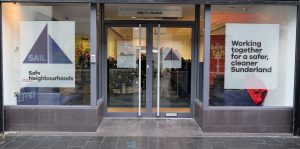
Councillor Graeme Miller, Leader of Sunderland City Council and Chair of the Safer Sunderland Partnership, said: “It’s brilliant to see the difference this has made in such a short space of time as part of the SAIL Project, which is all about working in partnership to make our city centre a more attractive and safer place to be for everyone who lives, visits and works there.”

Knife Crime and Serious Youth Violence Lead for Northumbria Police, Chief Superintendent Helena Barron, said: “It is fantastic to see projects like this making such a difference to the lives of young people and to the wider community. We welcome the roll out in Newcastle and look forward to seeing the results.

“As a Force, we know how detrimental and disruptive youth disorder, antisocial behaviour and violent crime can be for those caught up in it which is why we are committed to working with our partners to tackle this type of criminality in the most appropriate and effective way.”

For more information, please contact the Northumbria Violence Reduction Unit by email vru@northumbria-pcc.gov.uk

ENDS 

Our Stats

COMMUNITY hubs, youth organisations and neighbourhood support services are struggling more from the cost-of-living crisis than during the Covid-19 pandemic, new research from the North East has found.

Kim McGuinness, Northumbria’s Police and Crime Commissioner, whose office conducted the research, has warned frontline organisations supporting those in need are struggling with needs of their own – and are desperate for Government to take notice.

The Commissioner has called on Government to introduce emergency Cost of Living grants for charities and neighbourhood groups – as happened during the pandemic.

A survey of nearly 100 frontline organisations aimed to find out how community groups are supporting people through the cost-of-living crisis and to better understand the ongoing concerns of those they support.

Issues raised have ranged from struggles with paying bills, difficulties affording transport to accessing support, and worries around rising crime.

Findings include:
  • Nearly three-quarters (71%) of organisations who responded are now supporting more service users now than 12 months ago.
  • Over half of the organisations felt that the cost-of-living crisis has had a bigger impact on their organisation compared to the Covid-19 pandemic.
  • The impact of increased costs has also had a negative knock-on impact to crime experienced locally – 55% of organisation reporting increased incidents local to them.

The majority of organisations reported that this crisis has impacted their service even more than the Covid-19 pandemic with many attributing this to the lack of financial support from Government.

The Police and Crime Commissioner’s office helps fund over 140 organisations across Tyne and Wear to prevent crime and improve lives. Representatives from nearly 100 services and community groups voiced their views as part of the survey.

Northumbria Police and Crime Commissioner, Kim McGuinness, said: “These community groups and support services have been, and continue to be, a lifeline in the cost-of-living crisis. With some of the highest poverty rates in the country, there’s no doubt the people of the North East are suffering the most.

“We know bills are going up but it’s more than that – one youth worker said kids are coming to them asking ‘what’s for tea?’. That’s because kids are hungry, they don’t want to stress their mams and dads but they need to eat.”

She continued: “All these groups and hubs are ran by people who are motivated with the desire to help others and improve lives in their local neighbourhoods but they are only coping themselves by taking drastic measures. We’ve been hearing how they have been forced to cut salaries, use up reserves, and cancel sessions – it’s clearly a very stressful time for so many.”

Miss McGuinness is calling on the Government to provide a support package for community groups to cover space, transport and funding. She said: “Many people are telling me they feel nobody is recognising all they are doing and nobody is offering to help foot the bill.

“We all know the pandemic took its toll but there was a lot of short-term funding opportunities which have now come to an abrupt end and a lot of vital work and services will come to an abrupt end too if Government doesn’t step in here.”

Research figures include:
  • 55%, over half of respondents, felt that there had been an increased number of increased requiring a police response locally. Only 6% of all respondents felt that this had decreased in the same time period.
  • 95% of organisations who responded stated they’ve noticed their service users struggling as a result of the cost-of-living crisis.
  • 79% of respondents admitted that they are struggling to meet the demand that their organisation currently faces from service users.

The full report and research can be viewed and downloaded here.

ENDS

Our Stats

POLICE leaders have warned that a police staffing crisis looms despite Government recruitment efforts – as there is still no long-term funding plan to get officer numbers back to pre-austerity levels.

This week the Home Secretary is expected to announce that 20,000 officers have joined UK policing as a result of the high-profile national uplift programme. 

But Northumbria’s Police Commissioner Kim McGuinness says this is no time for celebration as the targets were never enough in the first place and hopes any announcement will include plans for the continued growth needed to fight crime.

Since 2010, Northumbria Police has taken the biggest financial hit of all the forces in England and Wales – losing more than 1,100 officers and £148m in budget cuts – a result of what the PCC calls ‘grossly unfair and regionally biased’ budget cuts.

The Government-funded recruitment campaign was set up to replace officer numbers nationally, but Northumbria Police was only allocated the funds for a maximum of 615 additional recruits. This is 520 short meaning that locally uplift targets set by Government have barely replaced half of those lost.

Northumbria Police and Crime Commissioner, Kim McGuinness, said: “Even if the uplift pledge has been met – this is hardly a time for celebration. The numbers suggest police forces are 30,000 officers short of what is needed to keep the British public safe.

“We all know police numbers are nowhere near what they once were. Our communities know – they can tell. In Northumbria, we have exceeded uplift targets and that’s been our own making, our own financial planning, our own difficult decisions – we’ve had to go above and beyond as Government targets were nowhere near enough.

“Our population is growing; poverty is growing yet police numbers are plummeting. Nationally, it’s claimed forces need 50,000 to join to make any meaningful difference so we just have to sit tight until we know more. If there’s no continuation, no real plan, people will be put at risk and communities will suffer. Our region will suffer. 

“We’ve been plagued by cuts in the North East and need a commitment to a consistent recruitment cycle. We need Government to give us back our cops.”

The Police Federation that represents rank-and-file officers has said forces need 50,000 to join to make any meaningful difference.

Steve Hartshorn, chairman of the Police Federation of England and Wales, said: “No doubt it sounds impressive but when juxtaposed against the massive funding cut levied since 2010, which resulted in over 20,000 fewer officers, the annual loss of around 7,000 officers and population growth of more than 3.5 million over the last decade, does it really offer hope of being able to provide a better service?” 


Our Stats

Exit
Site