As the North East’s powerful #ItAllAddsUp campaign is being shared by social media users up and down the country, important advice on how we can all be better allies if we witness sexual harassment in public places is being shared by Police Commissioner Kim McGuinness.

Earlier this year, the PCC commissioned experts to roll out ‘active bystander training’ across the region. This training is designed to give people the confidence to have conversations with friends and colleagues and equip them with the tools they need to respond safely, support a victim and call out potentially harmful behaviours.

Now, following on from the success of the #ItAllAddsUp active bystander campaign, the Commissioner wants to make sure people know what to do and say if they witness sexual harassment -whether it is on a night out, on the bus or at the local supermarket.

These scenarios were all brought to life in the short film campaign, launched with Rape Crisis Tyneside and Northumberland, and are based on the real-life experiences of local women. It has been backed by men and women up and down the country everywhere from Twitter to TikTok. It has also been shared by some of the country’s leading MPs and campaigners.

Together, this work is part of a women’s safety in public places project which has seen Kim McGuinness invest over £1million pounds in practical solutions and behaviour change projects to keep people safe in our region.

So far, 82 people who work with men and boys across the region have completed the ‘active bystander training’ and 32 have gone on to complete training which will enable them to train others. It is expected that 3000 men and boys and people in our communities will become fully trained active bystanders before the end of 2023.

Northumbria Police and Crime Commissioner, Kim McGuinness, said: “There can be no more turning a blind eye to sexual harassment. We know 71 per cent of women have experienced harassment in public places. My office’s survey also told me women wanted to see more being done to drive the change in attitudes and behaviours towards women and girls – this is exactly what all this work is doing.

“Not doing anything gives some men and boys the OK to go further and this can lead to horrific consequences for the victim. So, with this powerful campaign we are doing the very opposite of turning a blind eye; we’re shining the spotlight on it and calling it out. And with that it’s important people know what to do in the situations shown in the campaign. It’s not to say you should ever put yourself in a dangerous situation but there are times and ways in which we can all help stamp out the unwelcome comments and behaviours that often, as women, we just put up with as they have become part of everyday.

Kim continued: “Research tells us that by training people to be better bystanders we could end up with fewer sexual violence incidents. This work won’t put an end to VAWG overnight but it’s crucial for culture change and long-term prevention.

“It’s also about supporting victims right there in that moment, giving them validation and saying what they’ve experienced isn’t OK. Sexual harassment, sadly, is such a prevalent problem that we really need everybody on side with this, playing their role in prevention.

“Together we can take important steps to empower others in the fight against violence against women and girls in our region and beyond.”

Advice on what to do and say if you witness sexual harassment from Kindling Transformative Interventions:

1.         Pause and take a breath – is it safe to intervene?

2.         Remember, you have options: it doesn’t have to be confrontational. A look, body language or jokey comment can be enough to change the norm… if it doesn’t work that’s when you might escalate – but don’t go in at full steam to begin with.

3.         There are almost always three people you can intervene with in the moment: the victim (“are you okay?”), the wrongdoer (“give it a rest, mate”); and an ally (“did you see that? Can you help?”) which could be a friend, another bystander or specialist services.

4.         If it’s someone you know causing the harm – like a friend or family member – it might be better to intervene ‘after the event’ – like having a chat with them about what happened and why you felt uncomfortable. If alcohol is involved in the moment, it might be more likely to take on board what you’re saying if you talk to them after the event. Remember you can also intervene with the victim and allies after the event – like checking in with them and making a plan should something similar happen again.

5.         Be safe but don’t over think it – remember, interventions don’t have to be perfect – they just have to be good enough. The aim is simply to show the wrongdoer and others that the behaviour is not okay, and the victim will be supported.

The innovative training has been designed to empower bystanders – anyone who witnesses what’s happening or is confided in -who isn’t the victim or the harasser.

and is being delivered by active bystander training specialists, Kindling Transformative Interventions and Beyond Equality. The training seeks to equip people with the skills and confidence needed to speak up when they notice behaviours that aren’t right such as harassment, sexual harassment, or problematic and threatening behaviour.

Samantha Jones, Deputy Chief Executive Officer, Rape Crisis Tyneside and Northumberland, said:

“Sexual harassment is normalised every day, and women and girls have had enough of altering their behaviour to prevent public sexual harassment. The campaign has been incredibly successful so far, and we have seen many men engaging with the videos and sharing them online. We know this will not eliminate male sexual violence against women and girls, but it is a step in the right direction. We are pleased to see such a high uptake of bystander training in the region, and we hope that more funding will be available in the future so that more men and boys can become active bystanders.”

Dr Rachel Fenton, Founder and Director of Kindling Transformative Interventions and Associate Professor of Law at the University of Exeter said:

“It’s been fantastic to work with such a pro-active and committed PCC. Sexual harassment blights women’s lives. To really change our culture where this behaviour is normalised, it’s essential that we are all part of the solution. If everyone takes responsibility in their communities, workplaces and friendship groups to intervene as active bystanders, then we can all be part of stopping sexual harassment happening.”

For more information about the #ItAllAddsUp campaign and to watch the videos click here.

For more information about the Active Bystander Training click here.

Our Stats

HUNDREDS of extra patrols promised as part of a scheme of work to stamp out anti-social behaviour on the North East’s public transport are now underway.

Visible police patrols, more security staff and neighbourhood wardens will all play a part in co-ordinated efforts across the transport networks of Northumberland, Tyne and Wear. This latest announcement of tough action on the region’s transport is being delivered using funding secured by Police Commissioner Kim McGuinness.

Some of the region’s most used transport hubs including Gateshead Interchange, Haymarket and Eldon Square Interchange, South Shields Interchange and Witherwack Bus Station will all have heightened security and safety measures in place throughout the school summer holidays – news welcomed by many of the region’s Metro and bus users.

This policing hotspot action is being seen as is a continuation of determined efforts between transport partners to stop potential anti-social behaviour in its tracks and help people feel safe and secure when moving around the region. It will be data-led, intelligence driven policing to put a stop to any unwelcome rises in antisocial behaviour.

More than £1,624,160 has been invested in transport safety by Police Commissioner Kim McGuinness since 2021. Recently, Operation Princess was rolled out in the East Shields and Whitburn areas. This was in response to ASB and crime concerns raised by residents, commuters and shopkeepers. The operation saw acquisitive crime – where large groups were using the Metro to commit high value shoplifts fall by 81%. Public order offences also dropped 50% during the 6-week period. It is hoped the latest transport crackdown will replicate this success in other areas and lead to more arrests.

Northumbria Police and Crime Commissioner, Kim McGuinness, said: “Boosting policing efforts and improving people’s experience of public transport in the area is something we are working really hard on as a region.

“There has been a whole raft of work happening and we’ve seen the results to match, and this hotspot funding is about doing more of what is working, what the region needs.”

She added: “People want, and deserve, to be able to move around our region safely. We know people want transport that’s affordable and reliable and they certainly want to be safe too. If we get public transport right, we can really improve lives, really improve the North East.”

Chief Superintendent Barrie Joisce, of Northumbria Police, said: “Tackling anti-social behaviour is a priority for the Force and this funding will compliment and help us build on the proactive work already ongoing at our region’s public transport hubs.

“Minimising and preventing anti-social behaviour is only possible by working together, and as ever, I’d like to thank all our partners and the public for their unwavering support.”

Metro Operations Director, Kevin Storey, said: “Extra policing on Metro and the wider public transport network is a really welcome step as we look to deal with anti-social behaviour across our communities.

“We continue to work closely with the police to prevent disorder and build customer confidence in using Metro. This means targeting crime, anti-social behaviour and fare evasion where it occurs. Safety and security is our top priority.

“Nexus invests £1m a year on policing Metro and this is backed up by our own investment in dedicated security team and customer support teams, who patrol at stations and onboard trains. We’ve also invested in new CCTV and body cameras for staff, and our new trains will have 42 more advanced CCTV cameras on board.”

ENDS

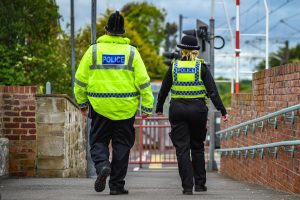
Police walking by Metro line in yellow jackets

Our Stats

EXPERIENCES of women from across the North East have been turned into a series of powerful short films as part of a digital campaign called #ItAllAddsUp which has been developed to tackle misogynistic behaviours and attitudes and prevent sexual harassment.

Ella, Caitlyn, Jude and Maryam aren’t their real names but their stories are the real, everyday experiences of women who live all over our region Each woman has been made to feel intimidated, annoyed, frustrated and even, at times, triggered by the comments, gestures and physical contact made by some men in public places.

The campaign is part of Police and Crime Commissioner Kim McGuinness’ Women’s Safety in Public Places project, which has invested over £1million pounds worth of practical solutions and behaviour change projects to make people feel safer in our region.

As part of the ongoing work, the PCC commissioned Rape Crisis Tyneside and Northumberland to conduct a series of focus groups to capture real-life views and anecdotes to inform the campaign.

The videos feature women of different cultures, ages and sizes to highlight how sexual harassment happens to all women, not just the stereotypical beauty being chatted up in a nightclub. They’re experiencing harassment in different settings too, such as on the bus in a rural community, with a child in a park or when popping to the shops in broad daylight.

One focus group member said, “my mam experienced it [harassment] coming out of the shop – a bunch of teenage lads saying look at the size of that woman’s knockers”. Another told how when she feels uncomfortable in a public place, she texts a friend saying “If I don’t text you in 30 mins, call the police”, demonstrating the real fear that is felt. It was also apparent that sometimes when people do step in, they don’t call the behaviour out but blame the victim saying things like “mate she is clearly on her period leave her be, she isn’t worth it.”

Snapshots like this were collated and Newcastle’s award-winning film production company Meerkat Films produced a series of films which were shot at locations throughout the Northumbria Police force area and feature local acting talents.

Northumbria Police and Crime Commissioner, Kim McGuinness, said: “By turning a blind eye to everyday harassment, it gives some men and boys the OK to go further and can lead to horrific consequences for the victim. So, with this powerful campaign we are doing the very opposite of turning a blind eye; we’re shining the spotlight on it. A simple remark can be intimidating, annoying, frustrating and even at times, triggering. It all adds up, and so we want men and boys to be asking themselves if they are part of the problem. If they are, they need to change.

“So often women change who they are to try and stop sexual harassment from occurring. For example, changing their clothing, where they go, and when they go out. Women are blaming themselves. ‘I shouldn’t have been out so late’ and ‘well I was wearing a lo-cut top’. No. This is all victim blaming and it is wrong. This isn’t a problem with women. The problem sits with men. People are often too scared to talk about it. Well, I am talking about it and I really hope people will join me and do the same so we can spark conversation and drive lasting change.

“My thanks go to all the women who shared their experiences. Without them we wouldn’t have been able to create such an authentic, genuine campaign.”

Deputy Chief Executive Samantha Jones, from Rape Crisis Tyneside and Northumberland, said: “The everyday nature of gendered sexual harassment makes women feel they have to simply accept it as’ part and parcel’ of being a woman. Some men don’t realise that women are impacted way more than they think. If we want to start tackling public sexual harassment, the first step is to understand what behaviours, actions and comments constitute harassment then we can start preventing it. It is about respecting women and their right to feel safe and free from the threat of sexual harrassment.”

Chief Superintendent Lyn Peart, head of Northumbria Police’s Safeguarding department said: “Sexual harassment in any form is completely unacceptable and will not be tolerated.
“We all have a responsibility to tackle harassment such as that shown in the videos, and I urge anyone out there who thinks behaviour like this is remotely acceptable to think again.
“We want everyone to feel safe in our communities and we always encourage anyone who has experienced sexual harassment to please report it to police.

“We are here and we’ll support you in every way we can.”

For more information about Kim McGuinness’ strategy to tackle Violence Against Women and Girls click here.

ENDS

To watch the videos and for more information click here.

Our Stats

ARRESTS for carrying offensive weapons, possession of drugs and shoplifting are just some of the success stories to come from a dedicated Northumbria Police operation launched last month in South Tyneside following a spate of crime.

Operation Princess was rolled out in response to ASB and crime concerns raised by residents, commuters and shopkeepers in the East Shields and Whitburn areas.

To help get feelings of public safety back on track and prevent further crime, Police Commissioner Kim McGuinness’s Safer Transport Northumbria project team teamed up with officers, Nexus and South Tyneside Council to deliver a range of crime fighting measures to tackle local concerns head on.

The operation saw acquisitive crime – where large groups were using the Metro to commit high value shoplifts – fall by 81%. Public order offences also dropped 50% during the 6 week period.

Through the operation, more than 1500 people passed through the knife arch, 38 stop checks were carried out and 14 stop and searches were made as part of the proactive efforts to catch offenders and bring them to justice.

Funding secured by the PCC’s office was used to boost resources and improve police visibility. It’s also been used to implement knife arches and bring in further support from the Multi Agency Transport Team. The team brings together police, transport providers and local authority community safety teams to engage with young people in areas where youth anti-social behaviour has been identified as a particular concern.

Northumbria Police and Crime Commissioner, Kim McGuinness, said: “This operation really has been a job well done. Not only do the numbers speak for themselves but residents and transport bosses have told me so. It’s been a well delivered mix of catching people, detecting crime, and improving people’s general feelings of safety on and around our public transport networks in the area.

“Reliable, affordable, and crucially, safe – that’s what people tell me they want from public transport and I’m making it my mission. I’m working with others to map out more plans and solutions to keep bettering our public transport and I will be fighting for more funding so we can deliver more work like Operation Princess. Safer transport really matters to the people of South Tyneside, and it matters to me.”

South Tyneside’s Cllr Jim Foreman, Lead Member for Housing and Community Safety, said: “Public transport is so important for people to access jobs, learning and social opportunities and everyone should feel safe and secure on our networks.

“This operation was a great example of collaborative working with our partners to deter anti-social behaviour and crime on the system and its knock-on effect on South Tyneside, by providing a visible, reassuring presence in and around the Metro.”

Chief Inspector Phil Baker, of Northumbria Police, said: “We are delighted with the early impact that Operation Princess has made across South Tyneside and it’s a great example of effective partnership that is making a real, tangible difference for our communities.

“Tackling anti-social behaviour is a priority for the Force and this positive activity is not a one-off. We have planned operations throughout the year to target hotspot areas and crime trends, and that work will be continuing over the coming weeks and months.

“As ever, I’d like to thank our residents, commuters and businesses for their support and I hope these results offer reassurance that we have listened to their concerns – and are taking robust action to address them.

“Anyone who is a victim of crime, or who has concerns about criminality in their area, is encouraged to contact police via the ‘Tell Us Something’ page of our website or by calling 101. In an emergency, or if a crime is taking place, always ring 999.”

More than £1m worth of projects to drive down crime on public transport across Northumberland, Tyne and Wear have been rolled out through the Safer Transport Northumbria Project since it was launched by Police Commissioner Kim McGuinness two years ago.


ENDS

Our Stats

Kim McGuinness’ Operation Payback is back, and is looking to hand over £100K to frontline causes across the North East, following a host of successful raids and arrests made by Northumbria Police.

In May, a confiscation order for £33,621 was issued following a case where an Ashington based drug dealer fled to Spain but was later extradited and jailed for 13 years. Also, in March a local drug dealer was ordered to pay back thousands he had earned selling Class A drugs on Wearside. He was also sentenced to 9 years in prison.

Excellent results fighting crime like this have helped contribute to the popular funding pot which is now in its fifth round.

Set up in 2020 by Ms McGuinness, the goal of Operation Payback is to return cash from crime back to the community. To date, the funding opportunity has handed over £1 million to good causes that are determined to improve lives across the region.

Recently, crime fighting officers from Northumbria Police have not only seized large sums of money but have intercepted a raft of illegal drugs and harmful weapons preventing them from causing harm on the streets of our region.

Now, Northumbria’s Police Commissioner is on the hunt for fresh projects and ideas that would benefit from some of this money, which in turn would benefit the whole neighbourhood. Youth clubs, sports teams, community hubs and schools are the types of organisations that the Northumbria Police Commissioner wants to help by providing much needed cash and her office is welcoming applications from Friday 30th June onwards.

Northumbria Police and Crime Commissioner, Kim McGuinness, said: “I’ve been hearing countless success stories from Northumbria Police lately – really good work disrupting organised crime and seizing associated money. It’s this money that I want to get out there in our communities – to create opportunities and improve lives. That’s exactly why I set up Operation Payback.

“There really is no better use for cash seized from crime than giving the money to where it’s needed most – deprived areas, areas lacking in activities to keep kids busy, neighbourhoods where we need to clampdown on things like antisocial behaviour.
“It’s about offering kids the chance to do things they want to do, keeping them entertained or even making sure they are fed and feel supported in life.”
Inviting local groups to apply for funding she said: “Any organisation, youth group, charity or community hub with bright ideas, particularly around fighting poverty and preventing crime, needs to get in touch. They need to get their bids in so together we can make it happen.
“Operation Payback has achieved so much in the past, helping establish Friday night youth clubs, dance classes and even focused knife crime awareness sessions. We’ve had so many activities reaching so many young people and I look forward to seeing what plans people want to bring to bring to life this time around”.

Detective Chief Inspector Chris Riley of Northumbria Police, said: “Operation Payback continues to help support those charities and organisations whose work is vital, and benefits those in the communities we serve.
“Work will continue across the force, and with the support of our partners, to takedown the criminal groups seeking to profit from misery and place them before the courts. Not only that but our financial investigators will continue their vital work, detecting and seizing illicit cash, assets and ill-gotten gains and ensuring they are re-distributed into the communities who are most affected.”

The fund will be open for applications from Friday 30th June to August 11th. Decisions will be made by the end of September. The funding uses money recovered by the police from criminal activity, under the Proceeds of Crime Act (PoCA), with some recovered funds also going to Northumbria Police to help them target more criminals.
Operation Payback seeks to fund projects that:

• Repair the harm caused by ASB
• Prevent/reduce youth or adult ASB
• Provide diversionary activities throughout the year including school holidays.

Operation Payback is part of a much wider of action happening across the Northumbria Police force area as part of plans to tackle issues like ASB and knife crime. The aim of the fund is to support the work of Northumbria Police and help prevent crime and anti-social behaviour, which will in turn improve lives for local people.

For further information on how to apply  – CLICK HERE.

ENDS


Our Stats

We’re excited to announce that we’re partnering with Newcastle City Council and the Police and Crime Commissioner for Northumbria to launch the Make a Change programme in Newcastle.

Following a successful bid to the Home Office’s Domestic Abuse Perpetrator Intervention Fund earlier this year, we’re now working with Newcastle City Council and the Police and Crime Commissioner for Northumbria to plan the delivery of Make a Change’s community-wide, early response to domestic abuse.

Make a Change is a free behaviour change programme that helps people who are concerned that they’re hurting, scaring, or trying to control their current or ex-partner, and who want help to make positive changes for them and their family. The model was developed by domestic abuse charities Respect and Women’s Aid Federation of England, and is currently running in four other locations across the UK.

The project aims to offer support at the earliest possible point, often before other perpetrator programmes can, and ideally before the need to involve a professional agency, such as the family court, social services or police. This includes an offer of parallel, confidential support for partners and ex-partners, with a focus on their safety and wellbeing.

Once operational, Make a Change will be available to people over 18 who live, work in, or have a close connection to Newcastle. Over the course of the 26-session programme, participants will be supported to understand and take accountability for the impact of their harmful behaviour, to change it moving forward, and develop healthy relationships.

As well as working directly with people who are worried about their behaviour, and their partners and ex-partners, Make a Change offers support for professionals and the wider community. Local workplaces and professionals will be able to access free briefings and training to learn to recognise harmful behaviour in relationships, respond appropriately and refer into the service. An education and awareness-raising workshop will also be available to the wider community and anyone who is concerned that they know someone – such as a friend or family member – who is using harmful behaviour, to help them consider how to start a safe conversation that encourages someone to get support.

Rebecca Vagi, National Lead for Make a Change, said, “We’re delighted to be bringing Make a Change to Newcastle. By empowering whole communities to understand domestic abuse and how to tackle the root cause of the problem, we hope to identify people using harmful behaviour sooner, stop it continuing or escalating, and provide people with the support they need to make a change.”

Northumbria Police and Crime Commissioner, Kim McGuinness, said: “I’m excited for Newcastle to be a part of the Make a Change movement. Our whole violence against women and girls (VAWG) strategy for the region is about pushing for real lasting change. A key part of this has to be making those who commit abuse accountable for their behaviours and working with them, at the earliest opportunity, to do something about it. This is about improving the lives of individuals, families and the whole community.”

Cllr Paula Maines, Cabinet Member for a Resilient City, Newcastle City Council said: “I am proud that we are partnering with the Make a Change programme. It is a very positive step for Newcastle and is a key element of our work to tackle male violence against women and girls. This partnership shows our commitment to reducing the risk of domestic abuse for both adults and children as well as tackling the root cause of this behaviour. This initiative is key to identifying and engaging with those individuals perpetrating abuse and helping them to understand, identify and reflect on harmful norms, behaviours and dynamics in their own lives.”

Make a Change will be delivered as part of a comprehensive perpetrator response in Newcastle, alongside Northumbria’s Hub & Spoke model for high-risk, high-harm perpetrators and a flexible service offering needs-led support to ensure everyone can access appropriate help. All services include integrated support for people experiencing abuse. Over the coming months, we’ll work together to establish local delivery partners and put framework in place to open to referrals. For further information, please get in touch at makeachange@respect.org.uk.

Our Stats

Exit
Site