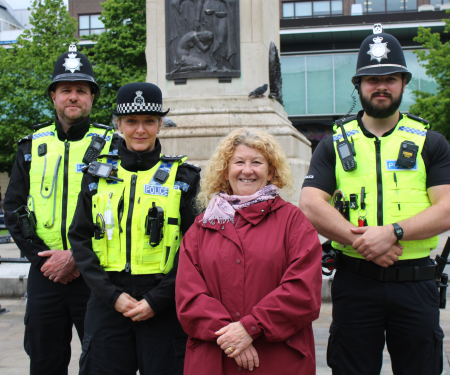
FORCE-wide crackdown efforts to tackle motorbike related crime and ASB is to be stepped up, Northumbria Police and Crime Commissioner Kim McGuinness has announced.

Recent policing operations by officers in Northumbria have had very encouraging results with bikes seized and significant arrests made, and the Commissioner says she is determined to bolster efforts further by investing in what has been identified as an increasing concern among local communities.

Some £196,000 secured from the Home Office will fund a new, dedicated support unit to strengthen intelligence sharing between partners. This will then feed into robust police action and designated operations to target the trouble-makers responsible for causing motorbike related ASB in their neighbourhoods.

Northumbria Police and Crime Commissioner, Kim McGuinness, said: “I’m more than aware just how much of a concern motorbike related crime is across our communities. It’s not only nuisance behaviours but dangerous behaviours too. It may only be a small minority doing it but it can put many people at risk of what can be very tragic consequences.

“We must do all we can to drive out this problem – and this project will focus on really understanding the issue, promoting safety and encouraging reporting. We want to steer troublemakers away from these nuisance behaviours and officers will take tough action on those responsible.

“The minority who ride dangerously need to be clear of the punishments. Nobody wants a fine, nobody wants their bike taken away but these are the things that are going to happen if you chose to ride somewhere illegal, somewhere unsafe.”

“By tackling those responsible for these behaviours we can improve the lives of local residents and that’s what we are setting out to do.”

Funding has been secured through Round 5 of the Home Office’s Safer Streets funding. Two further bids made by the Office of the Police and Crime Commissioner for Northumbria have also been successful. Other work will cover improving women’s safety in public places, tackling transport ASB and cutting down the number of deliberate secondary fires.

If you have any information about bike-related anti-social behaviour in your community, you can report it to Northumbria Police online via the ‘Tell us Something’ pages of their website, call 101 or contact independent charity Crimestoppers anonymously on 0800 555 111.

Our Stats

KIM MCGUINNESS has called on an independent watchdog to investigate crime levels in areas she dubs as Government ‘funding favourites’ for police uplift investment. By contrast, Northumbria has been the force hardest hit by austerity and even post-uplift remains 427 officers short when compared to pre-2010 levels.

Northumbria’s Police and Crime Commissioner has written to the National Audit Office asking them to further investigate police resources following the conclusion of the Government’s uplift programme to recruit 20,000 new police officers. The NAO is the UK’s independent public spending watchdog, supporting Parliament in holding Government to account.

Kim McGuinness believes that data to date shows the way in which funds for recruitment were allocated by the Home Office to police forces has risked permanently embedding a reduction in headcount in those forces hit hardest by Government austerity measures.

In the NAO’s own 2018 report Northumbria Police was cited as one of the forces to suffer most from austerity measures. Around 25% of the force’s budget was cut, the NAO report found, with a reduction in officer numbers of around 1,100 as a result.

In 2022 the NAO looked at value for money from the Government’s Uplift programme and noted that “it is too early to assess whether the additional officers are delivering the wider aims of Government to improve public safety and help to reduce crime”.

Northumbria Police and Crime Commissioner, Kim McGuinness, said: “The impacts of funding formulas and uplift investment on local crime levels needs looking at. People have the right to know. Not all areas of the country have benefited equally from the recent uplift in police officer numbers.

“I believe forces with a smaller police precept base, like we do here in Northumbria, have been denied the chance to fully replace the number of officers they’ve lost since 2010. The allocation of Home Office Uplift funding has effectively embedded this cut in headcount for the foreseeable future. For some of us Government has failed to fix the problem it created.”

Kim McGuinness went on to explain “As the NAO report in 2018 found, Northumbria has been reliant on Government for 81% of our funding. Under uplift we received funds for an initial intake of 615 officers. This figure was increased by 60 after the Home Office re-allocated underspend. Government withheld funding for around 425 extra officers needed to bring Northumbria’s policing numbers up to 2010 levels. This disparity is repeated in forces across the North of England, where the council tax base is often smaller than other areas.”

However, the Commissioner pointed to a very different story elsewhere in the country. Last year Essex Police revealed they now have the highest number of officers in their 182-year-history, funded by Uplift and the local precept which makes up nearly half of their funding. The area has also welcomed a significant fall in crime.

The Commissioner continued: “Home Office officials will have known of the differing reliance on central funding when they allocated Uplift targets. It’s fair to say there is a noticeable North-South divide when it comes to funding favouritism too.  And so, I have asked the NAO to look into this again and consider the impact of uplift on reducing crime, and whether the bias in uplift allocation will be considered when measuring impact at a local level.”

The Home Office estimated that nationally the additional officers will provide net positive benefits of £4.7 billion over the next 10 years through additional charges, reduced reoffending and deterrents, and will reduce the number of crimes by around half a million a year by 2024-25.

In a letter to the head of the NAO, Kim asks whether they will be assessing this return on investment against the criteria, and will it breakdown this assessment on a force by force basis.  She states the public have a right to see how crime has changed in areas with the most policing investment, and how those denied the ability to recruit to their 2010 headcount levels have seen crime levels change as a result. She looks forward to the reply.

The letter sent is available to download here.

Our Stats

The Local Youth Fund has returned, providing young people across the region with a platform to voice their views on how violent crime is tackled, by bidding for a share of the £16,000 fund.

This comes as Police Commissioner Kim McGuinness’s Violence Reduction Unit launched its Knives Impact Everyone campaign, highlighting the devastating consequences carrying a knife can have, as well as pointing young people to further information and support.

Now this exciting initiative provides an opportunity for young people to feel empowered to join the fight against violent crime by not only developing projects that matter to them, but those that will also have a positive impact on their local areas.

Nearly 4000 young people have already directly benefited from previous rounds of this fund, with a range of projects delivered to improve communities and ultimately make them feel safer thanks to almost £30,000 handed out.

For this new funding round, the Violence Reduction Unit have commissioned NE Youth to support with the delivery, and sees young people who attend their youth sessions recruited to form a panel, putting them at the forefront of the decision making process and giving a unique opportunity to gain valuable skills for their future.

With the fund now open, young people are once again encouraged to work with their local community groups and youth organisations to develop and submit their ideas for projects to prevent knife crime and increase feelings of safety in their communities.

When the fund closes on 13th November 2023, the youth panel will take on the responsibility of assessing all bids put forward by young people and selecting one successful project per local authority area to receive a share of the funding.

Northumbria Police and Crime Commissioner, Kim McGuinness said: “When it comes to tackling violent crime, young people have told us that they want to be part of the solution – and that’s why initiatives like this are so important as they provide a platform for them to be heard. No one should feel the need to carry a knife or bring violence to our local communities, which is why I want young people to tell me what actions they want to see happening, what would improve their local areas and what will make them feel safer.”

She added: “After consulting with young people across the region, the Violence Reduction Unit released the Knives Impact Everyone campaign, which helps us to continue getting important information to young people on the dangers, consequences and impact of carrying and using knives. This fund now goes that extra step further by giving young people the tools they need to develop their own projects and crucially provides access to positive opportunities that reduce their chances of becoming involved in violent crime. Together we can really make a difference in building safer communities for all.”

On behalf of the North East Youth Alliance, NE Youth Chief Executive Jon Niblo said: “We are delighted to be once again collaborating with the Violence Reduction Unit on this important fund for Young People. Young People continue to raise concerns about their own safety and this fund provides an opportunity to lead a project or activity that contributes towards making our communities safer.”

To apply for a share of the Local Youth Fund, visit the NE Youth website or for more information, please contact the Northumbria Violence Reduction Unit by email vru@northumbria-pcc.gov.uk

Our Stats

A Police and Crime Commissioner has warned the dire need for mental health support is outstripping the number of hospital beds available – a problem adding to growing pressures on local police resources.


Last week, Kim McGuinness joined Northumbria Police officers to see first-hand how officers respond to 999 mental health callouts, which continue to soar.


Only an hour into the shift a call came in after parents were worried their son who was hearing voices.


Police attended and were joined at the house by an on-call doctor who said the individual needs to be sectioned under Section 2 of the Mental Health Act but not only were there no beds available in the North East, there were none available in the entire country.

This, the Commissioner was told, wasn’t the first time this has happened.


She also heard about a regular caller who felt they could no longer carry on. It frequently falls on officers to attend, spend time with people in crisis and help they try access specialist support – not easy out of hours.


The Commissioner wants to reveal the true demands being placed on overstretched officers who can spend an entire shift filling the shoes of mental health specialists, as NHS and public sector organisations remain underfunded by Government.


Mental health-related incidents in the Northumbria Police force area have increased by 152% since 2017 and Kim McGuinness is calling for urgent investment in mental health services. The College of Policing also estimates police officers spend 20-40% of their time dealing with such incidents.


Everyturn Mental Health, which works on behalf of the NHS and local authorities, provides crisis services to offer practical and emotional support to anyone in mental health crisis backed the Police and Crime Commissioner’s figures and also said its ‘Together in a Crisis’ service (TIAC) has seen an increase of 109% in referrals since 2022. 


Northumbria Police and Crime Commissioner, Kim McGuinness, said: “Police officers are being called out and are saving lives – but that’s not fighting crime. It was such a sobering and at times disturbing experience being out with officers attending to calls for concern and this is what our officers see day in day out. They’re dealing with people who need professional help, but our police so often are the first port of call and as I saw for myself – there’s nowhere for them to go.  It’s not easy and our officers are doing an amazing job but people in a mental health crisis need to be looked after by healthcare specialists. That’s why Government needs to free up pressure on our police by investing in mental health services. We can’t carry on taking the 24/7 availability of our police for granted.


“The current system is not only letting people with mental health conditions down, but also our police officers, and the safety and wellbeing of our community. Poor funding of our essential services is the problem. The mental health service has faced cuts and our police have faced drastic cuts themselves. Northumbria Police has had £148 million cut out of its budget since 2010. We’re seeing the very desperate consequences of all this now and things need to change”.


Although she said it is not a long-term solution, last month the Commissioner announced plans to work with a local charity to put specialist mental health workers into the force’s 999 call handling centres – so people can help straight away. 


Our Stats

Schools across the region are set to receive new guidance on how they can effectively respond to an incident should a knife or offensive weapon be brought onto school grounds.

As part of an on-going commitment to tackling knife crime and ensuring the safety of students and teachers, the Northumbria Violence Reduction Unit, Northumbria Police and local councils have come together to develop this vital guidance for schools.

The guidance was a welcome step at the recent Newcastle community safety meeting, and follows early work from South Tyneside Council, which has been adapted for use across the region to ensure teachers know how to respond if a bladed weapon is found on school premises.

Within the guidance, further information is provided on safely searching a young person suspected of carrying a knife, how to record the incident and when to contact the police.

The guidance also takes a preventative approach by looking to establish why an individual may be carrying a knife and if there are any underlying concerns or risks to address in order to prevent serious and violent crime.

This comes as part of the Violence Reduction Unit’s wider work to educate young people on the impact and consequences of knife crime through its dedicated education team, as well as its Student Support Champions currently working with pupils in Newcastle secondary schools.

Speaking about the new guidance for schools, Director of the Northumbria Violence Reduction Unit, Steven Hume said: “This comprehensive guidance provides a unified approach to addressing incidents involving knives should they be brought into schools, whilst also focusing on prevention and support for those involved. It is essential to equip schools with the tools and knowledge they need to respond to an incident if one were to occur, however no one should be feel the need to carry a knife. The roll out of the guidance is a very important step in tackling knife crime, which will see it sit alongside the wider work of the Violence Reduction Unit and our partners.”

Cllr Paula Maines, Cabinet member for a Resilient City at Newcastle City Council, said: “The safety and wellbeing of pupils and staff at schools is of paramount importance to us. The new guidance is part of our on-going commitment to tackle knife crime and ensures schools have the tools to respond to incidents in a safe and effective manner. We remain committed to working with partners to ensure our schools and communities continue to be safe places where young people can thrive and reach their full potential.”

Chief Superintendent Joanne Park-Simmons, of Northumbria Police, said: “Tackling knife crime is a priority for the Force and we all have a role to play in highlighting the devastation knife crime can cause. A huge amount of work is ongoing with partners to prevent people getting involved in this type of offending, including with schools to educate young people about the dangers of carrying weapons. As ever, we would ask families to continue having those conversations about the potentially fatal and irreversible consequences that carrying a knife can have.”

For more information, please contact the Northumbria Violence Reduction Unit by email vru@northumbria-pcc.gov.uk

Our Stats

PRESS RELEASE

MORE than £160,000 in funding has been granted to a range of projects to improve lives in the North East thanks to Round 5 of Police Commissioner, Kim McGuinness’ Operation Payback fund.

The fund is made up of money that has been seized through successful police action across the region and is now being shared among a range of community-focused projects to help fund everything from football pitches to new security systems.

On the anniversary of the death of promising young footballer Tomasz Oleszak, who was tragically killed in a knife attack, his former club, Gateshead Cleveland Hall, have secured £3,600 to begin the development of a new 4G football pitch in his memory.

Other groups who have received funding to support new facilities, repair CCTV, roll out youth diversionary activities or kick-start community projects include: Ashington Rugby Cricket Club, High Spen Social Action, Sunderland’s Halo Project, and Holding Hands North East.

This Summer, Northumbria Police revealed that jail terms totalling more than 150 years have been handed down to criminals involved in serious and organised crime in the region in just six months. Drugs, cash, and Proceeds of Crime confiscation orders with a value of almost £1.4 million had also been obtained during this time.

It’s money from successful police action fighting crime like this that is now being reinvested into grass root causes through Operation Payback.

Northumbria Police and Crime Commissioner, Kim McGuinness, said:

“There’s no better use for cash seized from crime than channelling it right back into our communities – particularly areas that need it most or where we are wanting to clampdown on things like anti-social behaviour. It’s about presenting kids with the chance to do things they want to do, keeping them entertained or even making sure they are fed and feel supported in life.

“There are such worthwhile projects on the list – the new football pitch in memory of Tomasz being one of them club, this community, has been incredible in how it has come together in the aftermath of Tomasz’s death. When I was at the memorial football match for Tomasz, as well as the outpouring of grief, there was such a warm, supportive atmosphere among everyone there – so many people care and want to make a difference.

“We owe it to him, to put all our effort into stopping kids carrying knives, stopping this devastation happening again. By investing in communities and creating opportunities for local kids I really hope we can have a positive impact on young lives in the area.”

Kim added:

“There are a lot of cash strapped organisations out there and Operation Payback is stripping cash out of the hands of criminals and handing it over to so many grass root cases that matter. It’s thanks to some great police work that I am in the position to do this.

“This has been Round 5 of the fund, which since its launch has given more than £1million pounds back to local communities. This time, we really have been inundated with applications from worthwhile causes – from holiday activities for families struggling, to support work with kids already getting caught up in the criminal justice system. I only wish we could fund them all. To me it’s a clear indicator of how hard so many of our region’s youth projects and community groups are finding things at the moment. Government cuts are being made left, right and centre and yet people’s outgoings are getting higher and higher. There is a real fight for funding that should be more readily available. I’m glad Operation Payback can help some.”

Andrew Watling, Club Leader at Gateshead Cleveland Hall CA, said: “We are so grateful for the support of the PCC’s office to help provide a base for the beginning of our project.

“Losing Tomasz remains the most painful blow imaginable for a community club such as ours. He was a shining light and the nature of his death struck all of us extremely hard.

“There is no place for the carrying of knives and we can’t think of any better way to celebrate his life and his legacy than by building a new facility in his memory.

“We aim for the new pitch to be a safe space for children and young people in Gateshead to enjoy sport. It will also be a monument to his time with us and a reminder for decades to come to the local community of the futility of knife crime.”

A full list of beneficiaries throughout the Northumbria Police force area can be found HERE.

ENDS

Our Stats

Exit
Site