The North East is now home to a first-class facility where all victims of sexual assault and abuse can access medical, practical and emotional support, officially opened today by Northumbria’s Police Commissioner, Kim McGuinness.

The new Sexual Assault Referral Centre, or ‘The Angel Centre’ as it has been more considerately named, is a place where victims will receive initial specialist support. It is a service for anyone who has experienced rape or sexual assault in the Northumbria Police force area.

Tucked away in an unidentified location, with its own peaceful garden and easily accessible facilities, it is set to become one of the leading sites in the country.

When someone arrives at the Angel Centre, they will be offered a forensic medical examination if there is evidence to be gathered, even if they don’t want to prosecute. Samples can be stored for up to two years should they change their mind.

The opening of the new centre is as more victims are choosing to come forward. There have been 570 SARC referrals in the last year in the Northumbria force area. Service use has increased by 27 per cent since April 2022.

The centre has been developed with input from survivors who have previously accessed SARCs as well as working closely with colleagues from across the health and emergency services.

The final result is a centre which fully considers the needs of the victim from arrival at the centre through handover, examination, and aftercare, with particular care taken to avoid retraumatising the victim.

Northumbria Police and Crime Commissioner, Kim McGuinness, said: “If you’re attending a SARC, you’re likely to have just been through one of the worst experiences of your life – a truly abhorrent crime. And so, it’s imperative that for someone who has been brave enough to come through the doors of the centre, that we get everything right – the discreet comfortable environment, the specialist support and also the evidence gathering.

“There has been a great deal of thought and hard work that’s gone into ensuring the Angel Centre is somewhere survivors feel safe and comfortable as they embark on their journey to recovery. I want victims to know what to expect, what type of place and service awaits them, so they feel confident in coming forward. I want victims to know about it, know it’s one of the best of its kind and know they will be looked after here.

Kim continued: “As well as providing everything they need to cope and recover from their horrendous experience we must ensure we’re in the best position possible in terms of evidence too, should the victim choose to so seek justice and ensure whoever is responsible ends up behind bars.”

Keeley Roe, Associate Head of Healthcare, Mountain Healthcare: “The opening of The Angel SARC is not merely opening doors but an avenue for sexual assault victims in the North East to receive the free, quality and confidential care and support that they deserve. In partnership with the NHSE and Northumbria Police and Crime Commissioner, we are committed at Mountain Healthcare to providing the best quality healthcare and trauma-informed services to ensure equal, effective and efficient care to every patient in the North East 24/7/365. ”

Kate Davies CBE, NHS England’s National Director of Health and Justice, Armed Forces and Sexual Assault Services Commissioning, said, “Whilst I hope that no one will ever have to use a SARC, for people who have experienced recent or non-recent sexual assault and abuse or rape, these services are here for them.  It can take a lot to pick up the phone and take that first step – SARCs are available at any time of day or night, and will support individuals through the whole process, whatever they decide to do. The Angel Centre is no exception and has worked tirelessly with people who have lived experience to ensure a safe space is provided to those who need it.”

Assistant Chief Constable Alastair Simpson, of Northumbria Police, said: “As a Force, we take all reports of sexual offences extremely seriously and are absolutely committed to supporting victims and bringing offenders to justice. The Angel Centre is a fantastic facility which first and foremost provides specialist, tailored support to survivors. It is also somewhere we can secure evidence to help pursue an investigation to bring those responsible for such abhorrent offences to justice. Recognising how difficult it can be for victims to come forward, a key aim of the centre was to create a space and environment where people feel as safe and comfortable as possible. We hope that knowing that this centre exists will encourage more brave victims to take that initial step and increase their confidence in coming forward to seek support. We want our message to all victims to be a clear one – we are here for you.”

ENDS


Our Stats

A programme of targeted activity to prevent violent crime is underway across the region, following significant reductions of up to 37% from similar plans put in place during the summer months.

This activity resulted in areas of South Tyneside seeing the largest drop in serious violence following increased efforts to identify young people at risk, and engage them in diversionary activities to deter them from crime.

In Sunderland, additional resource provided an extra 300 hours of policing patrols to carry out dispersal orders, stop and searches and respond to safeguarding concerns to keep people safe.

Having already embedded this targeted approach in its strategy for driving down violent crime, the Northumbria Violence Reduction Unit is working closely with Northumbria Police and the regions six Community Safety Partnerships, ensuring preventative measures are in place to make communities safer this winter.

The programme features a range of initiatives aimed at disrupting violent offenders and improving feelings of safety, including:

  • Deploying uniformed police officers and community safety staff in targeted locations to increase visibility.
  • Utilising enforcement action where needed such as arrests, dispersal orders and stop and searches.
  • Taxi marshals in operation to increase public reassurance and reduce disorder.
  • Diversionary activities to engage young people such as a range of sports initiatives to improve physical and mental health.

This increased action will be will be carried out throughout the winter period as everyone looks to enjoy the many events, nights out and festive celebrations that are set to take place in towns and cities across the region.

Northumbria Police and Crime Commissioner, Kim McGuinness said: “This proactive initiative allows us to get ahead of problems by identifying and engaging with those at risk of violent crime. It also places a stark warning to offenders that we will not tolerate violence – and the best thing about this approach is that we know it works.”

“We have seen the significant impact it has made over the summer, but there is still so much more to do. That’s why the Violence Reduction Unit, Northumbria Police and our partners have expanded on this crucial work, by putting together a programme of targeted activity and support in areas of most need, to drive down winter violence.”

She added: “I’ve said it before, but I will say it again, violence does not belong in our communities. So, I hope that by seeing this work in action, it will provide some reassurance that we will continue to do all we can do tackle violent crime.”

Cllr Jim Foreman, Lead Member for Housing and Community Safety, said: “This is an excellent example of partners working collaboratively, and the significant reduction in violent crime over the summer is testament to the fact that this kind of proactive, preventative approach is effective.”

“Violent crime can have a devastating impact on victims, their families and our communities. We want everyone to feel safe in our borough so will continue to work alongside our partners to protect our residents and drive down crime.”

Funded through the Northumbria Violence Reduction Unit’s Seasonal Violence Fund, this approach brings together a range of key partners including police, local authorities and youth organisations, working collaboratively to tackle violent crime and create safer communities.

For more information about the Northumbria Violence Reduction Unit, visit the website.

ENDS

Our Stats

Northumbria Police and Crime Commissioner Kim McGuinness is calling on the help of creative kids from across the region to design her 2023 Christmas card.

Enter the competition and be in with a chance of winning a £100 voucher for your school and see your masterpiece on show at the North East’s famous gallery, The Baltic!

All school children 16 and under are welcome to submit their designs, the more the merrier!

Each entry must be sent to enquiries@northumbria-pcc.gov.uk including the name, age, address, and school, as well as a parent or guardian’s contact email.

Entries will be shortlisted to include one design from each local authority within the Northumbria Police force area. A winner will be chosen at an event taking place at the Baltic on Tuesday 19th December.

To keep up-to-date with the competition you can follow Kim on social media here.

Full Ts and Cs here.

Our Stats

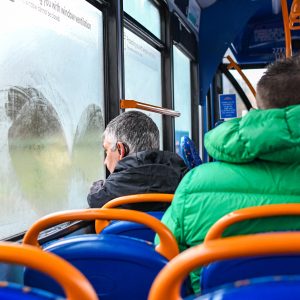
It may look like a normal bus with normal passengers, but troublemakers beware, you could find yourself hailing a bus to the police station.

This is because Northumbria Police’s ‘Trojan’ bus – a decoy bus where the passengers are plain clothes police officers – is being deployed across the North East to take tough action at anti-social behaviour hotspots.

The policing tactic sees officers on board what appears to be a regular bus service, but it is in fact a staged service en route to pick up ASB offenders at bus stops and stations, helping officers make any necessary arrests.

Northumbria Police’s decoy bus is in conjunction with Stagecoach and the initiative uses additional funding secured through Commissioner Kim McGuinness’ Safer Transport Northumbria project which seeks to crackdown on ASB and improve people’s feelings of safety when using public transport throughout the region.

The destination of the bus will vary as it will be dispatched as a direct response following complaints from local residents or public transport users.

Northumbria Police and Crime Commission, Kim McGuinness, said: “The Trojan bus tactic is one of many strategies being used by officers to tackle ASB on and around North East buses. It’s a direct action, responding to community concerns and putting a stop to them.

“Anyone who thinks they can get away with throwing stones at vehicles, vandalising bus stops or riding motorbikes on pedestrian pathways needs to think again – this bus could be pulling up at your feet sometime soon.

“It’s early days but this bus has real potential to help crime fighting officers make any necessary arrests. Buses play such a vital role in helping our communities, getting people where they need to go, linking them with opportunities. People tell me they want public transport that’s affordable, reliable and crucially safe – this bus can really help with that part and help improve lives of those fed up with the ASB that goes on while they are waiting for a bus.

“It really is vital that we take people’s concerns around ASB seriously and that our police respond with positive and robust action to tackle the issues raised. Our Trojan bus is a great example of how we are listening, and how our police are working hard to catch those responsible and put a stop to behaviours that people understandably have had enough of in their area.”

Neighbourhood Inspector Gemma Calvert, of Northumbria Police, said: “As a Force, we recognise that the anti-social behaviour of a minority can have a significant and detrimental impact on the communities we serve – and that includes on public transport.

“The Trojan bus in South Tyneside is just one innovative way we are tackling pockets of disorder and identify those causing issues in hotspot area.

“Already we’re seeing some promising results and, together with our partners, we will continue to use every tactic at our disposal to fight crime and keep people safe.

“We would ask the public to continue to work with us, by reporting any concerns to police using the ‘Tell Us Something’ page of our website or by calling 101.

“In an emergency, or where a crime is taking place, always dial 999.”

The ‘Trojan bus’ is a multi-agency project with OPCC, Nexus, Metro Unit, Stagecoach, Council CCTV Room, Council business responders and the Council Youth Services.

Ends.


Our Stats

FORCE-wide crackdown efforts to tackle motorbike related crime and ASB is to be stepped up, Northumbria Police and Crime Commissioner Kim McGuinness has announced.

Recent policing operations by officers in Northumbria have had very encouraging results with bikes seized and significant arrests made, and the Commissioner says she is determined to bolster efforts further by investing in what has been identified as an increasing concern among local communities.

Some £196,000 secured from the Home Office will fund a new, dedicated support unit to strengthen intelligence sharing between partners. This will then feed into robust police action and designated operations to target the trouble-makers responsible for causing motorbike related ASB in their neighbourhoods.

Northumbria Police and Crime Commissioner, Kim McGuinness, said: “I’m more than aware just how much of a concern motorbike related crime is across our communities. It’s not only nuisance behaviours but dangerous behaviours too. It may only be a small minority doing it but it can put many people at risk of what can be very tragic consequences.

“We must do all we can to drive out this problem – and this project will focus on really understanding the issue, promoting safety and encouraging reporting. We want to steer troublemakers away from these nuisance behaviours and officers will take tough action on those responsible.

“The minority who ride dangerously need to be clear of the punishments. Nobody wants a fine, nobody wants their bike taken away but these are the things that are going to happen if you chose to ride somewhere illegal, somewhere unsafe.”

“By tackling those responsible for these behaviours we can improve the lives of local residents and that’s what we are setting out to do.”

Funding has been secured through Round 5 of the Home Office’s Safer Streets funding. Two further bids made by the Office of the Police and Crime Commissioner for Northumbria have also been successful. Other work will cover improving women’s safety in public places, tackling transport ASB and cutting down the number of deliberate secondary fires.

If you have any information about bike-related anti-social behaviour in your community, you can report it to Northumbria Police online via the ‘Tell us Something’ pages of their website, call 101 or contact independent charity Crimestoppers anonymously on 0800 555 111.

Our Stats

KIM MCGUINNESS has called on an independent watchdog to investigate crime levels in areas she dubs as Government ‘funding favourites’ for police uplift investment. By contrast, Northumbria has been the force hardest hit by austerity and even post-uplift remains 427 officers short when compared to pre-2010 levels.

Northumbria’s Police and Crime Commissioner has written to the National Audit Office asking them to further investigate police resources following the conclusion of the Government’s uplift programme to recruit 20,000 new police officers. The NAO is the UK’s independent public spending watchdog, supporting Parliament in holding Government to account.

Kim McGuinness believes that data to date shows the way in which funds for recruitment were allocated by the Home Office to police forces has risked permanently embedding a reduction in headcount in those forces hit hardest by Government austerity measures.

In the NAO’s own 2018 report Northumbria Police was cited as one of the forces to suffer most from austerity measures. Around 25% of the force’s budget was cut, the NAO report found, with a reduction in officer numbers of around 1,100 as a result.

In 2022 the NAO looked at value for money from the Government’s Uplift programme and noted that “it is too early to assess whether the additional officers are delivering the wider aims of Government to improve public safety and help to reduce crime”.

Northumbria Police and Crime Commissioner, Kim McGuinness, said: “The impacts of funding formulas and uplift investment on local crime levels needs looking at. People have the right to know. Not all areas of the country have benefited equally from the recent uplift in police officer numbers.

“I believe forces with a smaller police precept base, like we do here in Northumbria, have been denied the chance to fully replace the number of officers they’ve lost since 2010. The allocation of Home Office Uplift funding has effectively embedded this cut in headcount for the foreseeable future. For some of us Government has failed to fix the problem it created.”

Kim McGuinness went on to explain “As the NAO report in 2018 found, Northumbria has been reliant on Government for 81% of our funding. Under uplift we received funds for an initial intake of 615 officers. This figure was increased by 60 after the Home Office re-allocated underspend. Government withheld funding for around 425 extra officers needed to bring Northumbria’s policing numbers up to 2010 levels. This disparity is repeated in forces across the North of England, where the council tax base is often smaller than other areas.”

However, the Commissioner pointed to a very different story elsewhere in the country. Last year Essex Police revealed they now have the highest number of officers in their 182-year-history, funded by Uplift and the local precept which makes up nearly half of their funding. The area has also welcomed a significant fall in crime.

The Commissioner continued: “Home Office officials will have known of the differing reliance on central funding when they allocated Uplift targets. It’s fair to say there is a noticeable North-South divide when it comes to funding favouritism too.  And so, I have asked the NAO to look into this again and consider the impact of uplift on reducing crime, and whether the bias in uplift allocation will be considered when measuring impact at a local level.”

The Home Office estimated that nationally the additional officers will provide net positive benefits of £4.7 billion over the next 10 years through additional charges, reduced reoffending and deterrents, and will reduce the number of crimes by around half a million a year by 2024-25.

In a letter to the head of the NAO, Kim asks whether they will be assessing this return on investment against the criteria, and will it breakdown this assessment on a force by force basis.  She states the public have a right to see how crime has changed in areas with the most policing investment, and how those denied the ability to recruit to their 2010 headcount levels have seen crime levels change as a result. She looks forward to the reply.

The letter sent is available to download here.

Our Stats

Exit
Site