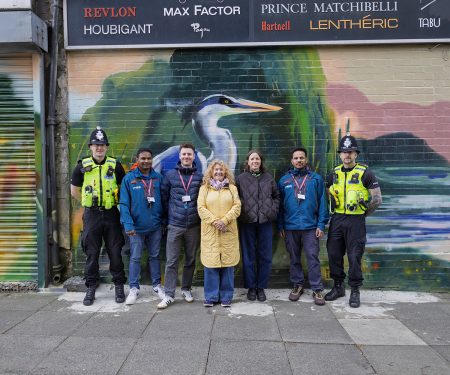
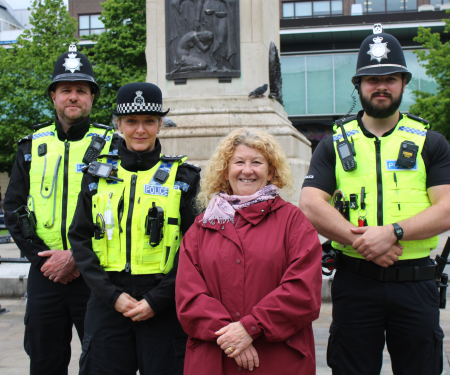
EXTRA police patrols being rolled out across the public transport network, funded through Project Shield, to help as part of ongoing strategies to tackle Violence Against Women and Girls (VAWG).

The additional police and partner patrols are there to help increase visibility, promote engagement and provide law enforcement as required.

So far, during the month of February, British Transport Police have made several VAWG related arrests. A man was charged with Observing a Person Doing a Private Act in the female toilets at Newcastle Central Station. Another was charged with Outraging Public Decency following an incident that took place in a food outlet in the station.

Now, VAWG focused patrols have been introduced on key routes connecting people to nightlife across the force area and aim to help improve feelings of safety and to deter offenders.

Project Shield is a collaborative initiative launched by Northumbria’s Police and Crime Commissioner, Susan Dungworth. It brings local authority, transport and policing partners together in a joint effort to tackle serious violence and ASB which can include VAWG related crimes.

VAWG on public transport might include sexual harassment, intimidation and non-consensual physical contact. These can all make women feel fearful and sometimes lead them to alter plans or even avoid public transport altogether.

Northumbria’s Police and Crime Commissioner says women regularly tell her about VAWG related experiences on transport and national figures suggest 72% of women, compared to 40% of men are concerned about sexual harassment on public transport.

This is why the Safer Transport Northumbria initiative has set up a VAWG working group which brings together Northumbria Police, British Transport Police, North East Mayoral Combined Authority, Nexus, Northern Rail, Stagecoach, Go North East and Arriva together, to take a joined up approach to tackle VAWG across the transport network. The additional patrols through Project Shield are just one example of ongoing efforts across all partners to improve feelings of safety, target predators and bring about lasting change. Other ongoing work includes training for transport staff and a range of educational programmes that help tackle misogyny throughout society.

Northumbria Police and Crime Commissioner, Susan Dungworth, said: “How safe people feel directly impacts whether people feel comfortable using buses, trains, and stations. Nobody should change routes or alter travel plans due to fear. We are very aware of this in Northumbria and are working closely with partners to ensure we are doing all we can to improve people’s feelings of safety particularly in the late hours – that’s why my office has funded these additional patrols through Project Shield.  We know a strong police presence builds confidence and encourages the reporting of incidents.”

Local Inspector for British Transport Police Michael Forster said: “No woman or girl should ever feel uncomfortable on the rail network. We work tirelessly to keep every journey safe, and our officers regularly collaborate with partners through initiatives like Operation Shield to protect passengers. This proactive policing is supported by our campaigns encouraging passengers and witnesses to report incidents, every report helps us to keep people safe. We take all reports of unwanted sexual behaviour seriously. No report is too small, and sexual harassment is never your fault. We urge the public to save our text number, 61016, so they can discreetly contact us whenever they need to.”

Erika Allen, Quality Health Safety Security and Environment (QHSSE) Director at Nexus, said: “These extra patrols across the local public transport network are hugely welcome as we build on the work to reduce crime and anti-social behaviour. Nexus has a key part to play in supporting the police and our local authority partners in keeping the public safe and secure when using the local bus and Metro system. We fully support the strategy to tackle Violence and Intimidation Against Women and Girls across local communities. This builds on the work we have already done to improve safety and security on the, including the roll out of our dedicated security teams on Metro and investment in new CCTV.”

Chief Inspector Phil Baker, of Northumbria Police, said: “The extra patrols play a key part in ensuring that people feel safe when using the transport network in our region. It also shows the overall benefit Project Shield has to our communities through working together with our partner organisations to identify crime trends and take the necessary action. We understand that women and girls can at times feel wary when using public transport and we will continue to do our utmost to help people to feel as comfortable as possible while on a bus or train. We would also encourage anyone who spots anything suspicious on the transport network to approach an officer on duty. Please remember that we are here to help.”

ENDS


Our Stats

NORTHUMBRIA residents have backed plans to pay slightly more towards their council tax to support local policing – but will continue to pay the lowest precept in England and Wales.

Proposals made by Northumbria’s Police and Crime Commissioner at the Police and Crime Panel in Gateshead today (Friday 6, February), had the support of the majority of local residents, following a public consultation.

Panel members agreed to proposals which mean a small increase of 24p per week for Band A council tax payers. Band A properties make up the largest share of properties in the Northumbria force area.

Each year, the Police and Crime Commissioner is responsible for setting the amount of money households contribute to local police services through their council tax bill – this is known as the police ‘precept’. The PCC sets the amount taking into consideration the views of the Chief Constable along with the findings of a public consultation where residents are asked how much they are prepared to pay to support policing in the local area.

This year’s survey showed significant public support for paying a little extra with 59% of respondents saying they would be happy to pay a small rise.  Of those in favour of paying a bit more, the majority (66%) were supportive of an increase of either 28p or 37p.

Of those who shared support for the increase, many cited it would be good value for money if it helps improve visibility and ensures the police are adequately resourced. Common reasons of those reluctant to pay more were affordability and the belief that funding the police should not be the responsibility of the taxpayer.

Addressing the Panel, Northumbria Police and Crime Commissioner, Susan Dungworth, said: “Although the role of PCC is changing in 2028, right now I have a job to do — and that is to make sure Northumbria Police is properly resourced and in the best possible position to deliver for our communities, keeping people safe and offering value for money.

“Police budgets are still reliant on part of their funding being raised through local taxes – and I can’t change that. But people’s views matter, and while I recognise our police force is facing financial pressures, so too are many households in our area. And so, when budgets are tight, there are difficult choices to be made – raising a precept being one – and so I am pleased our survey found the majority back proposals for a small increase.

“We have made real progress over the last year— from faster response times to reductions in ASB across all area commands. This demonstrates the impact of sustained investment in local policing.

“Through the Police Reform White Paper published last week, we know Government has made a real commitment to neighbourhood policing, backed by a funding boost at national level. We can’t be complacent though, ongoing inflation, rising costs and funding changes mean Northumbria Police still faces significant financial pressures.”

She added: “The precept rise agreed today is in line with Government expectations and will bring in an extra in 7.958m for Northumbria Police to help tackle ASB, invest in new technologies and proactively safeguard women and girls.

“I want us to be doing all we can to keep delivering on the priorities outlined in my plan for safer streets and stronger communities. We are fully on track with recruitment as part of the Government’s Neighbourhood Policing Guarantee, and the additional funding we are now able to raise through the precept will allow us to remain resilient and invest in improvements that matter most to the people of Northumberland, Tyne, and Wear.”

ENDS

Our Stats

Project Vigilant has seen some fantastic successes in its initial year in the North East and our partnership work won’t end there with further deployments planned during 2026 to build on the good work already carried out.

The initiative is aimed at targeting perpetrator behaviours, which are often displayed before a sexual offence, spiking or theft takes place.

The initiative is a joint effort by the North East Regional Organised Crime Unit (NEROCU), Cleveland Police, Durham Constabulary, Northumbria Police and all three North East Police and Crime Commissioners, who all work to ensure a safer environment for members of the public enjoying a night out.

During activity, specially trained plain-clothed officers are deployed during the Night Time Economy and identify individuals who may be displaying predatory behaviour such as harassment, loitering without reason and stalking behaviour. Those individuals are stopped by police, enquiries are carried out, dispersal orders given or where necessary arrests are made.

A total of 42% of the individuals identified and stopped by officers during the most recent deployment had previous links to offences of violence against women and girls – including domestic abuse or sexual offending.

One man was stopped and arrested who was in breach of his Sexual Harm Prevention Order and another man was found to have quantities of controlled drugs on him including two capped needles.

DCI Max Leonard, from the North East Regional Organised Crime Unit, said: “We know women are taught from a young age to stay extra vigilant on a night out, but that responsibility shouldn’t be on them.

“We want to reassure all members of the public that these targeted police operations will continue to be carried out across the North East with the aim of proactively preventing violence and sexual offences against women and girls and ensuring a safer environment for all.

“Our efforts alongside our partners will not slow down, and I want to state clearly to the public that we remain committed to support the regional mission to tackle this issue. We also urge anyone with any concerns about someone’s behaviour to report it to police.”

Cleveland Police and Crime Commissioner Matt Storey said: “It is extremely important that women and girls feel they can socialise in the evening and fully take part in the night time economy without fear of abuse or harassment.

“Operation Vigilant is just one of the measures, which PCCs and forces throughout the North East, are taking to make sure women are protected and safe from harm.”

County Durham and Darlington Police and Crime Commissioner Joy Allen said: “These results prove the value in tackling predatory behaviour early. Undoubtedly, the swift actions of officers have prevented harm and protected women or girls becoming victims of appalling offences – the emotional impact of which could last a lifetime.

“This operation sends a powerful message to our communities: that responsibility for sexual violence, stalking and harassment lies entirely with the perpetrator. Women have a right to enjoy our night-time economy safety and without fear. Anyone presenting a threat will continue to be actively targeted and held justly accountable for their actions.”

Northumbria Police and Crime Commissioner, Susan Dungworth: “This week it’s Sexual Abuse and Sexual Violence Awareness Week and I think it’s really important to be highlighting proactive policing efforts like Project Vigilant which involves officers working hard behind the scenes to help keep people safe on a night out.

“This activity sends a clear message that our police forces are working together, through the NEROCU, and are doing so much more than responding to crimes and supporting the vulnerable; they’re proactively looking out for those who could cause harm. The fact that 42% of those stopped have history for VAWG related offending shows our officers are recognising key behaviours and are potentially stopping crime in its tracks. The Project is achieving some great results and I will continue to monitor its impact’

Anyone who has been the victim of a sexual assault, whether recently or in the past, is encouraged to contact their local police force.

If you have information or concerns about someone’s behaviour you can report it to police or via the independent charity Crimestoppers anonymously on 0800 555 111.

Our Stats

A youth project in South Shields Town Centre is helping drive down anti-social behaviour (ASB), by giving young people a new place to hang out and have fun on a Friday night.

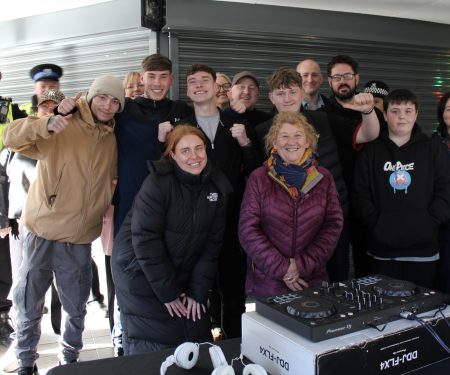
Last Friday, Police and Crime Commissioner Susan Dungworth and local councillors met with some of the project’s youth workers and the young people who have been dropping into Ocean Road Community Centre, to find out more about how the project is becoming the new place to go.

The Friday Night Project is run by South Tyneside Council, with its Business and Community Responders and its Youth Service. It is supported with funding from the PCC’s office through its ASB and serious violence initiative, Project Shield.

It sees the responders and youth workers engage with people at places like bus stops and the transport interchange, and they invite them down to the community centre as an alternative place to hang out, with plenty to keep them entertained.

By offering tasty food and good music, along with a range of activities like rock climbing and football, more and more young people are heading to the community centre to find out what it’s all about – averaging around 35 people per session.

One young person told Susan, they started coming because it’s better than being out in the cold and the food is ‘pretty good’ too. A youth worker also explained that some of the kids coming to the centre had been linked to ASB on the streets – due to boredom and lack of facilities. They said: “They are different kids in here, more respectful and engaging – even with the police. The centre changes them for the better and they get on with the youth workers – we can be someone for them to talk to or look up to outside of the family unit or school”.

Northumbria Police and Crime Commissioner, Susan Dungworth said: “Providing this space and these activities is a direct response to residents’ concerns around young people at the Interchange and in other public spaces either getting involved in ASB or at risk or becoming involved.

“Instead, we are intervening early by giving them a place to be and activities to do – that’s often all young people need – and it’s really positive to see them choosing to engage with this. It’s a win all round and really is a great piece of work helping the delivery of my plan for safer streets and stronger communities and improving feelings of safety for everyone.”

The project was piloted on Friday nights back in October and during this month ASB fell in South Shields Town Centre by 13%. It is believed this youth diversion work along with additional police and partner patrols in the area, funded through Project Shield, have helped contribute to this reduction.

This positive impact and its growing popularity has also led to the Friday Night Project becoming more than just a Friday night thing, as it now covers Thursdays and Saturdays too, and now also includes access to a large sports hall.

Cllr Jane Carter, Deputy Leader of South Tyneside Council with responsibility for community safety, said: “Our Friday night youth project gives young people a safe, welcoming place to spend time and try new things. Attendance has grown week-on-week and as relationships have developed, we’ve seen a real improvement in behaviour, with the young people showing greater respect for staff and the facilities.

“The sessions have been co-designed by our workers and the young people themselves, offering everything from arts and crafts to music and sports including football, dodgeball and badminton.

“The project is proving a real success story, with youth ASB in South Shields town centre reducing by 46% between October and December 2025, and we’re delighted that we’ve been able to expand it.”

As well as youth intervention work, from April 2025 to Dec 2025, South Tyneside Business and Community Response Team and local Police Neighbourhoods Team have carried out in excess of 12,000 patrol engagements with public, youths and local businesses as part of Project Shield. All this work has helped achieve a 24.6% reduction in ASB in South Shields Town Centre, including the North and South Marine Parks during this period.

The Friday Night Project is a multi-agency partnership including the Business and Community Response Team, South Tyneside Youth Service and Ocean Road Community Association (ORCA) Staff.

The project links with other services to offer additional support and education as and when appropriate such as the Violence Reduction Unit Education team, Connor Brown Trust and One punch.

ENDS


Our Stats

The latest data shows real impact over the last 12 months, with a 9% drop in hospital admissions caused by sharp objects, and a 4.2% drop in offences involving the possession of a weapon.

Established in 2019, the Northumbria Violence Reduction Unit takes a long-term, public health approach to tackling serious violence, addressing its root causes through early intervention and targeted initiatives.

Over the past year, a wide range of interventions have been delivered with partners to respond to local needs. These are just some of the initiatives making a difference across the region:

  • Violence Reduction Education Officers delivered 654 sessions to 23,298 young people, increasing awareness of a range of topics including knife crime, county lines and online safety.
  • The Violence Prevention Ambassadors e-learning programme received over 800 sign-ups, with almost 300 individuals completing all four modules, joining a growing network of informed ambassadors.
  • 261 professionals received workplace domestic abuse and vulnerability awareness training, equipping them with the knowledge and confidence to spot signs of harm, and support those who need it most.
  • Student Support Champions provided tailored, one to one support to 117 young people, with over 86% saying their concerns were listened to, helping them to them enjoy and engage with the work.
  • Through the Local Youth Fund, young people across the region secured £13,500 to lead innovative projects designed to prevent serious violence, promote positive choices, and improve local areas.
  • The SAIL team in Sunderland continues to take a multi-agency approach, working with targeted cohorts to reduce offending by offering tailored support that meets individual needs. Many young people have reduced or stopped harmful behaviour through consistent guidance and trusted relationships.
  • The Seasonal Violence programme, which increases activity during the popular summer and winter months, continues to see reductions in serious violence, knife crime and anti-social behaviour.

This week, partners from the Northumbria Violence Reduction Unit, Police, Fire and Rescue, Local Authorities, Education, and Health, came together for the first Serious Violence Reduction Board meeting of the year.

The partnership reviewed progress from the last 12 months, discussed emerging trends and new ideas, and explored how existing initiatives could be strengthened to deliver even greater impact – ensuring a joined-up approach to tackling serious violence in the year ahead.

Northumbria Police and Crime Commissioner, Susan Dungworth said: “This isn’t just about preventing violent crime, it’s about changing lives for the better. Quick fixes won’t do that, which is why we need solutions that bring lasting change. That means continuing to invest in prevention, intervening early, educating and empowering young people, supporting families, and creating positive opportunities that steer individuals away from crime.”

“Through the Violence Reduction Unit, and our partners, we are committed to ensuring you feel safe, whether out in public places, or in the comfort of your own home. We will keep listening to what matters most to you and adapting our approaches, because for every individual we reach, and every life we help steer away from harm, is another step towards safer streets and stronger communities for everyone.”

Northumbria Violence Reduction Unit Director, Steven Hume, said: “A long-term public health approach, focusing on prevention and early intervention is essential, and so are the strong partnerships that we have across Northumbria. We’re starting to see the results of our collective efforts, and together we will continue to tackle the root causes of serious violence.”

For more about the Northumbria Violence Reduction Unit, visit the website or email vru@northumbria-pcc.gov.uk

ENDS

Our Stats

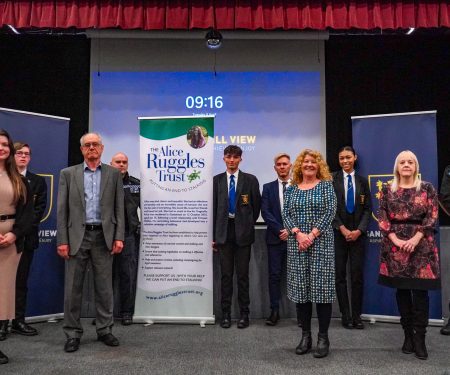
SCHOOLS across Northumbria are being encouraged to plan ahead for 2026 by signing up to a specialist stalking prevention programme delivered by the Alice Ruggles Trust and commissioned by Police and Crime Commissioner, Susan Dungworth.

From September 2026, updated national Relationships, Sex and Health Education (RSHE) guidance will require schools to include teaching about stalking and so the PCC is urging teachers to act now to get educational inputs in the timetable.

The Alice Ruggles Trust delivers age-appropriate assemblies that help young people recognise stalking behaviours, understand their impact, and know where to seek help. Since the programme began in Northumbria, the Trust has delivered 45 assemblies, reaching more than 3,150 students in schools across the force area.

Just before Christmas, the Government launched its new Violence Against Women and Girls (VAWG) Strategy detailing stalking as a key priority. This focus aligns with the PCC’s Police and Crime Plan and local VAWG strategy, all of which emphasise the need for prevention, early intervention and education — particularly among children and young people.

Recent national figures highlight why education is so important. Office for National Statistics data shows that young people aged 16–19 are the age group most likely to experience stalking, with around 8.8% reporting stalking victimisation in the last year. Within this age group, more than one in ten young women and nearly one in fifteen young men reported being stalked — a higher proportion than any older age group.

Stalking affecting young people increasingly involves online and digital behaviours, including repeated unwanted messaging, monitoring through social media, and misuse of technology such as location sharing. These behaviours can be easily minimised or misunderstood, particularly by teenagers, making education in schools a critical part of prevention.

Northumbria’s Police and Crime Commissioner, Susan Dungworth, said: “Stalking can start young and can escalate if it is not challenged early. That’s why education is one of the most effective tools we have to prevent harm before it happens. Schools play a vital role in helping children and young people understand healthy relationships, boundaries and consent — including in online spaces.

“With stalking now included in updated RSHE guidance from September 2026, I am highlighting this programme to support our schools with this and am encouraging them to plan ahead and take advantage of this programme from The Alice Ruggles Trust. Thousands of young people in Northumbria have already received this vital education, and I want to see it reach more and more.”

Lydia Bond, Community Engagement Coordinator for the Northumbria area said: “The Alice Ruggles Trust was established in Alice’s name to improve understanding of stalking through education. Our school programme helps young people recognise stalking behaviours, including those that occur online, whether they are experiencing, witnessing , or engaging in them, and to understand where to seek support.

With stalking recognised as a priority within the national Violence Against Women and Girls Strategy and new RSHE requirements, this is a crucial opportunity for schools to embed specialist and evidence-based education that empowers students to challenge harmful behaviours and play a role in long-term prevention.”

The Alice Ruggles Trust was established in memory of Alice Ruggles, who was murdered by her stalker in 2016. The Trust works nationally to improve understanding of stalking and strengthen responses through education, training and awareness-raising.

Schools interested in taking part in the programme are encouraged to register their interest by emailing lydia@alicerugglestrust.org.

Ends

Our Stats

Exit
Site