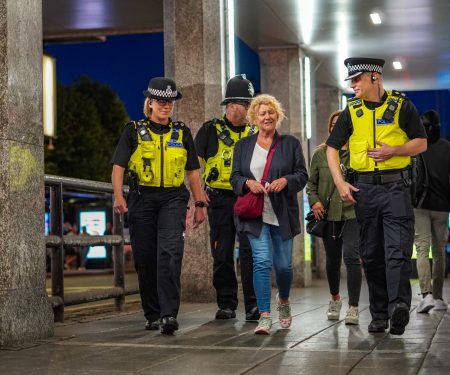
A Police and Crime Commissioner has called time on using ‘X,’ formerly Twitter, stating she “cannot, in good conscience be part of a community where hatred is so rife.”

Northumbria’s PCC, Susan Dungworth, announced her pledge to move away from the social media platform at a hate crime and community cohesion conference held in Newcastle on Friday.

In recent months, a growing number of businesses, police forces, councils, MPs, and charities have announced they have stopped posting on X or have removed themselves entirely from the social media channel. Many have made the move due to the spread of misinformation or disconnect with the site’s values.

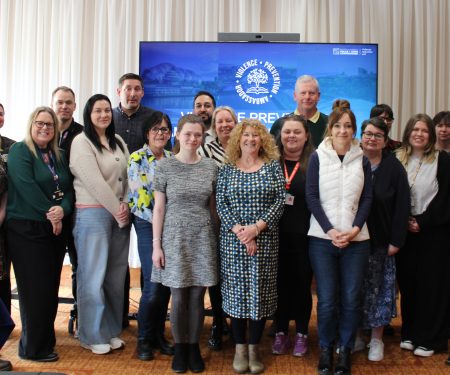
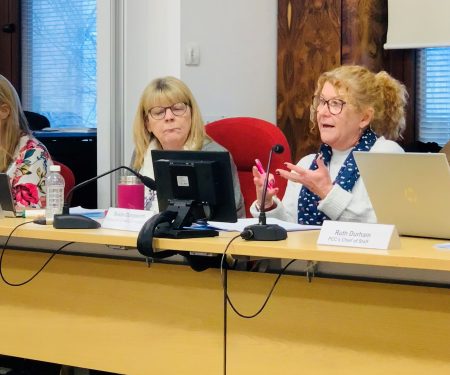
Susan Dungworth echoed these reasons at a conference entitled ‘Being you is not a crime – communities tackling hate crime together.’ It was hosted jointly by Northumbria Police and the Office of the Police and Crime Commissioner. More than 160 practitioners from a range of backgrounds and professions attended to discuss the impact of hate crime and explore ways of promoting inclusivity and safety across the region.

Northumbria Police’s Assistant Chief Constable, Andrew Hill, opened the conference and attendees were also given a strategic overview of hate crime policy from Paul Giannasi of the National Police Chief’s Council.

Addressing the room at the conference, Susan made a pledge of her own, saying: “I give up my place in the Twitter community, my place is here in this room, in this positive community where all are welcome. Mr Musk can keep his blue ticks and toxicity – it’s not for me.

“I have seen far too many reprehensible posts – really disturbing content, attacks on gender and religion, homophobic and transphobic abuse, and racism. And let’s not forget the role social media played in stirring up the awful disorder experienced in Sunderland this summer. I cannot in good conscience be part of such a community where hate is so rife.”

She took the opportunity to highlight the swift robust policing efforts of Northumbria Police which has seen a growing number locked up due to the violence and harm they caused during the civil unrest.

She praised the efforts of faith groups and community members who rallied together to pick the region up again and get its strength back, as well as key services like Connected Voice and Streetwise who she funded to deliver emotional and advocacy support to people of all ages and ethnicities who were victimised or affected by the disorder.

She said: “I am very thankful to everyone who stepped up at a crucial time to not only protect but provide support of all kinds to whoever needed it. As Northumbria’s PCC, I’m totally committed to preventing hate crime in our communities and ensuring that victims receive the best possible support, and I’ll keep working with the Force to deliver this. Twitter might be a community full of hate, but we won’t let Northumbria be.”


Our Stats

POLICE and Crime Commissioner Susan Dungworth is encouraging residents across Northumberland and Tyne and Wear to have their say on the Force’s budget for the next financial year.

From today (Monday 6 January 2025), local people across the area are invited to give their views on spending plans for local policing – known as the police precept.

Keen to protect and sustain current service levels and ensure the Force continues to meet the needs of the public, Susan has launched a public consultation.

Police and Crime Commissioners are responsible for setting the police precept – which is the amount that local council taxpayers contribute towards policing.

The police budget is always based upon the Government’s assumption that each police force raises the precept by the maximum amount allowed, therefore anything less than this would mean the force would be required to review the service it delivers.

This means Northumbria Police’s allocated budget from Government assumes that taxpayers locally will contribute an increase of 78p per month for a Band A property. More than half of all properties in the North East are Band A.

The survey asks if people feel 78p per month is an acceptable increase to help keep the force appropriately resourced, meet budget pressures and allow for some investment. Potential areas include: preventing ASB in urban and rural communities, tackling fraud and online crimes, targeting offenders and preventing Child Sexual Exploitation, and increasing resourcing to help bring offenders to justice.

The survey also states that choosing not to pay a slight increase would mean significant budget challenges for the force, with reduced funding of over £5.9m, requiring associated cuts and efficiency savings to be identified.

Looking to the coming year’s finances, Northumbria Police and Crime Commissioner, Susan Dungworth, said: “I have to set the scene here – the budget will be tight and there are difficult choices to be made – raising a precept being one. Sustaining current police levels by slightly increasing the police element of the council tax is what we need to happen if we are going to protect and sustain current policing levels – and we are all keen for that.

“We’ve already welcomed funding news from Government of around £3m for neighbourhood policing – a real commitment – but it doesn’t cover it all. We also await more special grant detail but, in the meantime, the Chief Constable and I are determined to map out a budget that offers real value for money for the people of Northumbria.

“We will do all we can to protect frontline policing and ultimately protect the public and this does come with a price tag. We can’t expect a new Government to put a decade’s worth of cuts and underfunding right in year – but we eagerly await details of the police reform plans to help deliver efficiencies nationally across the police service – and these are all great steps forward.”

She added: “I always want to hear the views of local people – everyone should play a role in shaping decisions that impact community safety.

“Setting the police precept is always challenging, particularly during times of high inflation, rising costs, and increasing demands on our police service. For me, it’s important we protect what we have got and continue to meet the needs of the public.

“Despite the challenging years of austerity, and the impact this had on officer numbers, we are working hard to undo those effects and will keep doing so.”

Northumbria’s Neighbourhood Policing Teams recently saw an increase of 134 dedicated officers, and last year’s precept increase funded a dedicated motorbike disorder team to deliver on priorities set by residents.

When asked what people can expect for their money this time, the PCC responded: “I want to work with the Chief Constable to tackle ASB, fraud and online crime and   strengthen all departments to help bring more offenders to justice. All of this requires additional funding though. This is why I am asking how much people are willing to pay to be able to help support our region’s efforts to deliver safer streets and stronger communities.”

To share your views, the consultation can be found online here

END


Our Stats

AS Christmas party season gets into full swing, Northumbria’s Police and Crime Commissioner, Susan Dungworth, has announced a cash boost of £30k towards upgrading Newcastle’s Safe Haven Van.

The Safe Haven Van is jointly funded by the Police and Crime Commissioner and the North East Ambulance Service (NEAS) creating a go-to hub for safety and medical needs on a night out, for instance if some is lost or injured.

Moved from its regular location outside St Nicholas Cathedral, the van will be parked up on the Bigg Market for the festive season. It will be operating on Friday and Saturday nights through to the early hours of the morning, as more than 100K people come into Newcastle’s night-time economy every weekend – a figure that soars in the lead up to Christmas. With this in mind, the PCC is keen to ensure people know that the Safe Haven and other measures are in place so people can enjoy the safe and welcoming city.

At the Safe Haven Van’s site, police officers are joined by partners from the NEAS, Newcastle City Council Street Marshals and Newcastle’s Street Pastors, who come together to look after revellers.

The funding will see the van get a fresh make over ensuring it’s equipped for party goers to get help if they are in difficulty, sober up if they get too worse for wear, or even just to charge their phone so they can reunite with friends if they are lost.

The busy Christmas period also sees Northumbria Police ramp up wider policing efforts to help partygoers enjoy their nights out safely, extra patrols will be carried out as part of Operation Salus targeting anyone coming to the city centre who has a history of violence against women and girls and poses a threat to women’s safety. In the last year the Operation has made 350 interventions with men due to concerns around their behaviour, including 173 vehicle interventions.

Operation Salus protects those out on the town though a range of prevention measures including CCTV surveillance and Automatic Number Plate Recognition. Background work like this helps to stop perpetrators from targeting vulnerable people and addresses issues before they escalate, leaving people free to enjoy their evenings in safety.

As well as this activity, the Police Commissioner’s office invests in training staff who work in the night-time economy helping them to understand their responsibilities and how they can identify risk. The training which is delivered by the Violence Reduction Unit and Northumbria Police has been delivered to almost 600 people who work across the hospitality sector in bars, hotels and as security.

Northumbria Police and Crime Commissioner Susan Dungworth said: “A happy Christmas is a safe one. Thousands of people will be headed out onto Newcastle’s streets over the festive period, and it’s a policing priority to help ensure these people can enjoy their nights out safely.

“There is a great deal of work that goes on behind the scenes to protect people and train up staff, so they intervene and keep customers safe if hey spot sexual harassment. It’s important that everyone heading out over the festivities look out for each other – we just want people to have fun and stay safe.

“The partnership approach with the Safe Haven Van has worked well in recent years and it’s hoped that this joint working will once again lead to a safe and merry Christmas for the people of Newcastle. It’s important that people know it’s there and it’s important we invest in it, so it stands out and offers a safe comfortable environment when people need it.”

Chief Inspector David Wheeler, of Northumbria Police, said: “Newcastle is renowned as a fantastic place to enjoy an evening out and we want to keep it that way.

“This latest funding for the Safe Haven Van is very welcome as together alongside our partners we continue our pledge to assist members of the public and identify offenders.

“Proactive work within the city’s Night Time Economy such as Operation Salus is designed to keep you safe and where we see or are made aware of people committing crime, we take action, while also getting the appropriate support to those in need.

“If you or someone you are with needs help during a night out this Christmas, please do not hesitate to visit the Safe Haven Van or approach one of our officers on duty. Remember that we are here to help.”

Stu Holliday, head of emergency preparedness, resilience and response at North East Ambulance Service said: “Working closely with the police in the city centre means that we can assess and treat people quickly. This frees up our resources to help patients in the greatest need.

“The additional funding allows us to build upon the safe haven support we offer throughout the year. We want everyone to enjoy the Christmas celebrations without needing us, but the Safe Haven allows us to be there for those who do.”

The Safe Haven is also funded from the late night levy, an annual fee that since 2013 has seen businesses in Newcastle that serve alcohol between midnight and 6am contribute towards the cost of late-night policing and clean-ups.

Cllr Irim Ali, Newcastle City Council Cabinet member for communities, said: “Newcastle is a safe and welcoming city, and this Christmas we expect tens of thousands of people to come and enjoy our renowned Geordie hospitality.

“Our licensing and community safety teams work closely with pubs, bars and venues, emergency services, and partner organisations to make sure that everyone can have a good time, hopefully without incident.

“However, there will always be instances where some people may need more support, and so this investment in the Safe Haven – which sees so much good, collaborative work to aid those in need – can only be welcomed.”

Paul Waugh who co-ordinates Newcastle’s Street Pastors said: “The safe haven is a vital part of taking care of people who become vulnerable while out in the night time economy.


ENDS


Our Stats

STALKING prevention charity The Alice Ruggles Trust is appealing for volunteers to help deliver impactful awareness assemblies in secondary schools across Northumbria.

Northumbria Police and Crime Commissioner Susan Dungworth’s office is funding the project that aims to equip young people with knowledge around healthy relationships and stalking and help them know where to turn to for help.

Alice Ruggles, a Northumbria University graduate, was tragically stalked and subsequently murdered by her ex-partner in Gateshead in 2016. In the wake of her murder, her family set up a Trust in her name and embarked on a mission to put an end to stalking and prevent what happened to their daughter from happening to others.

Their work focuses on long-term prevention by sharing Alice’s story with as many young people as possible to educate them on how to recognise and respond to stalking.

To help raise awareness and spread their message further, The Trust is searching for outgoing and engaging people who want to be part of a team delivering 30-minute-long assemblies across the Northumbria Police force area.

The assembly covers the following:

  • Understanding stalking is an obsessive, unwanted, repeated behaviour;
  • Knowing that stalking includes online behaviours as well as physical;
  • Recognising they can tell someone and talk the police if they are being stalked;
  • Knowing how to support a friend; and
  • Knowing that stalking is a crime.

Stalking is an offence that can completely control the life of a victim because of the obsessive and unwanted fixation shown by the suspect. It can take many forms, such as taking everyday actions to the extreme both in person and online.

Stalking is a crime affecting 1 in 5 women and 1 in 10 men and over 500,000 people under 25 each year. It is often an escalation of harassment, however as the level of obsession builds, behaviour can become more erratic and aggressive.

In the year to March 2023, stalking and harassment accounted for a third (34 per cent) of all police recorded violence.

Northumbria Police and Crime Commissioner, Susan Dungworth, said: “Stalking is a crime which can cause major disruption to someone’s life, involving them living in constant fear and distress and, sadly, sometimes even murder as was the devastating case with Alice. It’s so important that victims of stalking, and those around them, recognise the seriousness of what is happening and the need to seek help as early as possible. Alice’s family have been tirelessly campaigning since her death, and I welcome the opportunity to get Alice’s story in front of as many young people as possible to help raise awareness and help prevent similar losses in future.”

Victoria Charleston, Managing Director at The Alice Ruggles Trust, said: “We are committed to trying to prevent what happened to Alice happening to others; to bring stalking to an end. We know that education is the key to reducing stalking. We are delighted to be offering our assemblies across Northumbria and would love to work with some brilliant, enthusiastic volunteers who want to make a difference.”

The Alice Ruggles Trust has free lesson plans and assemblies to educate young people.

The volunteering opportunity is great for anyone studying criminology, psychology, or is interested in a career in Violence Against Women and Girls or in education. Anyone interested should contact The Alice Ruggles Trust for further information. You will also

Our Stats

Written by JoJo Kirtley and performed by PCC Susan Dungworth at the Newcastle-Gateshead march on Saturday 30th November

Co-created with Northeast women & girls

Together we reclaim the night… this is the spark of our rebellion: The suffragettes pounded the Toon’s cobbled streets- chanting, ‘Votes for Women!’ we echo their strength and resilience. How many of us walk with one earphone in,
Listening for footsteps echoing behind? We reclaim the right to wear both earphones
losing ourselves in our favourite songs.
We dream of dancing on these streets, to the soundtrack of our lives, carefree, not looking over our shoulders.
Listening to Aretha’s Respect as we walk along the Tyne.
Florence & the Machine, Little Simz, a 90’S Cher anthem pulsing through our veins as we stride along the Quayside,
Little Mix’s Power, and one for the Swifties, as we cross the Millennium Bridge.
What an amazing sight. We reclaim the night.

Instead, walking home at night feels:
Uneasy. Hypervigilant. On edge. Eerie. This is what the girls said.
Every shadow, every sound, a warning. Public spaces stained with horror stories: whistles, catcalls – “Whey, it’s harmless, pet.” We grip our keys “just in case.” Do our sons feel this burden, or only our daughters? One in two women experiences harassment in public places,
And yet the weight of safety falls on us. We reclaim the right to exist without fear and demand to feel secure everywhere. Because – it’s safer for a squirrel in a park than a woman. And we’d rather face a bear than a man. Surely, safety is our basic right. We reclaim the night.

The patriarchy looms large, unchallenged, unaccountable. If we dare speak up, we’re labelled “difficult.” If our clothes are deemed provocative, we’re accused of “asking for it.” We reclaim our bodies from trauma and Hollywood ideals, breaking free from society’s expectations. We reclaim our voices from rule makers, online trolls, and demand the right to live on our own terms, celebrating our individuality. We refuse to shrink into corners, we reclaim our space, free from manspreading. Imagine a world without women’s voices: our laughter, our herstories, erased. The sound of your mam singing when she’s happy gone. It’s happening now—women being silenced Worldwide. And we could be next- unless we fight. We reclaim the night.

We reclaim respect from the sexism in our schools,
And demand teachers create a learning environment free from “get back in the kitchen.” Taunts, from lads who mansplain the big bang theory,
Even though we study triple science- thank you very much.
We reclaim our right to play football—howay the lasses! To wear knee-length socks without anyone saying its inappropriate We reclaim our independence and to feel comfortable in our own skin,
To have periods without feeling ashamed or disgusting,
For our mental and physical health to be taken seriously. We want a world where all our reproductive rights are safe and protected,
Where we can all wear summer dresses without comments like, “That’s a bit too tight.” We reclaim the night.

From the headwaters of the River Tyne, Tees and Wear to the shore of the North Sea,
We stand for our own liberation.
No matter your race or faith, whether a Magpie or a Black Cat,
We will never forget the daughters lost:
Sarah. Alice. Sabina. Nicole. Bibaa. Sara. Holly.
The list goes on, and the femicide continues.
Yet we’re still expected to say, “Not all men”
And endure relentless whataboutery.
We’re told the #MeToo movement has gone too far,
That it’s just “a few bad apples.” We don’t want to take the night away from men.
We want to share the moon, the stars, the Northern Lights equally.
How about all men be our allies and stand with us?
For every woman, every girl, every voice silenced by violence—
We believe you.
As Gisele Pelicot said, “It’s not for us to have shame; it’s for them.”
These streets belong to us too: Geordie women, black and white.
Because… we reclaim the night.

Our Stats

Following its early success, a ground-breaking initiative is again offering young people an immersive, hands-on experience to understand the impact of knife crime through a week-long programme that mirrors a real-life investigation.

Developed by Northumbria Police, and in partnership with the Northumbria Violence Reduction Unit, Trainee Detective Week enabled 25 students from Jesmond Park Academy to step into the role of junior detectives.

Over the course of the week, they explored the devastating impact of knife crime while developing vital life skills that will help them make safer choices for their future.

The programme began with a powerful session led by Tanya and Simon Brown of the Connor Brown Trust, who shared the heart-break of losing their son Connor to knife crime in 2019.

In a moving exercise, they asked the students to help solve Connor’s murder, with the group becoming immersed in a simulated investigation, beginning with a reconstructed crime scene.

Utilising immersive technology at Northumberland College’s Kirkley Hall Campus, the students were transported to a virtual recreation of the events leading up to Connor’s death, and guided by police and forensic staff, they were able to put their learning and investigative techniques into practice.

A session with medical staff provided further insight into the realities of knife injuries, which can lead to devastating outcomes for victims and their families, highlighting the vital and urgent work of first responders.

As the week progressed, students analysed the evidence and built their case, with a visit to the magistrates’ court in Bedlington, providing them with a first-hand look at how the justice system handles knife crime.

The programme also emphasised teamwork, incorporating activities that encouraged clear communication and collaboration as students worked together to solve the case.

The week culminated in a presentation where students showcased their findings and received recognition for their understanding of the impact of knife crime, and the importance of preventing it.

Northumbria Police and Crime Commissioner, Susan Dungworth, said: “There is never a right time to carry a knife, and we know the tragic consequences that it can have. I don’t want to see another family left heartbroken, or a community destroyed as a result of knife crime, which is why we must continue doing all we can to tackle the issue.”

“Through innovative technology and real-life case studies, Trainee Detective Week provides an impactful way for young people to understand the harm caused by knife crime, and look at how it can be prevented.”

“It puts young people at the forefront of a real-life investigation, taking them on a journey that shows the devastating consequences of knife crime while equipping them with essential skills and knowledge to make informed decisions.”

“By immersing students in every aspect of the investigative process, we’re empowering them to think about the impact of their actions and work together to create safer, stronger communities.”

“My thanks to all those involved in making this programme possible, including Northumbria Police, the Violence Reduction Unit and Northumberland College, but also to Tanya and Simon Brown, who after losing their son Connor to knife crime, continue to do all they can to educate young people on the dangers of carrying and using knives.”

Chief Inspector Angela Hewitt, of Northumbria Police’s Prevention Department, said: “As a Force, we sadly know all too well the utter devastation that knife crime can cause. This innovative programme is a great way of explaining to our young people the danger of carrying and using knives.”

“We hope that by taking part in the course, the students have understood how by choosing to pick up a knife you can not only destroy your own life, but the lives of those around you too.”

“I’d also like to pay tribute once again to Tanya and Simon Brown for their unwavering and invaluable support in the fight to prevent knife crime.”

“Together, alongside our partners and through producing courses such as Trainee Detective Week we can continue to educate younger generations so that more lives are not ruined.”

Tanya Brown of the Connor Brown Trust, said: “It has been an incredible week with a different cohort of students embarking on the Trainee Detective Programme. From the first moment we met the students they were eager to engage with us by asking questions, listening and wanting to learn more. They were all so respectful and thoughtful towards us which to us shows compassion and an awareness of the impact it has had on us as a family.”

“As the week progressed, the students welcomed us when we visited and told us all about what they had been learning with such enthusiasm and empathy. What the students are learning through this programme is vital life skills, it’s not just about knife crime but about choices, consequences and lifesaving medical skills involving catastrophic bleeds.”

“I understand the need for academic structure, but these life skills are just as important, all children and young people face challenges in life and they all need to be equipped to deal with those challenges. The Trainee Detective programme focuses on some of those challenges and the young people are learning a wide range of skills without even realising, such as communication skills and teamwork. The students have excelled themselves with their positive attitudes to the programme throughout the week.”

Steve Campbell, Principal at Jesmond Park Academy, said: “This has been a truly unique experience for our students and will have a lifelong impact on the children that have attended.”

“Knife crime and the associated consequences are very much at the forefront of the minds of anyone that works with young people. It is one of our biggest fears that our children would ever have to be witness to, or become involved in any type of violent crime. Any support to empower the children to make informed safe choices is always welcomed.”

“I am pleased that we have been able to support the initiative by letting our children out of school for a week, although they will have studies to catch up on I am sure that they will have learned many valuable lessons which will remain with them forever.”

“I am sure that they will have found the week hard work and at times difficult to listen to some of the real life stories but I am equally sure that it will have been very worthwhile.”

For more about Trainee Detective Week, email vru@northumbria-pcc.gov.uk.

Our Stats

Exit
Site