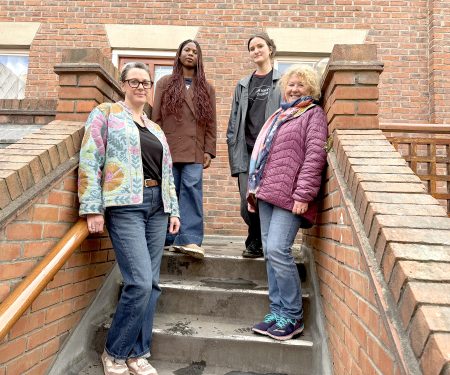
Following its early success, a ground-breaking initiative is again offering young people an immersive, hands-on experience to understand the impact of knife crime through a week-long programme that mirrors a real-life investigation.

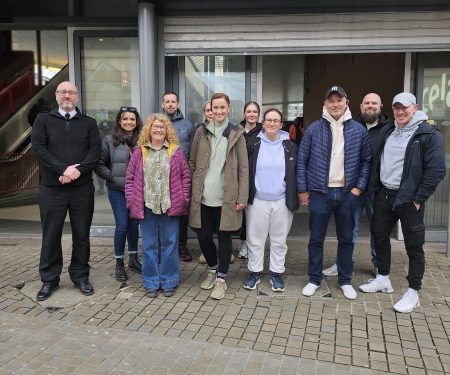
Developed by Northumbria Police, and in partnership with the Northumbria Violence Reduction Unit, Trainee Detective Week enabled 25 students from Jesmond Park Academy to step into the role of junior detectives.

Over the course of the week, they explored the devastating impact of knife crime while developing vital life skills that will help them make safer choices for their future.

The programme began with a powerful session led by Tanya and Simon Brown of the Connor Brown Trust, who shared the heart-break of losing their son Connor to knife crime in 2019.

In a moving exercise, they asked the students to help solve Connor’s murder, with the group becoming immersed in a simulated investigation, beginning with a reconstructed crime scene.

Utilising immersive technology at Northumberland College’s Kirkley Hall Campus, the students were transported to a virtual recreation of the events leading up to Connor’s death, and guided by police and forensic staff, they were able to put their learning and investigative techniques into practice.

A session with medical staff provided further insight into the realities of knife injuries, which can lead to devastating outcomes for victims and their families, highlighting the vital and urgent work of first responders.

As the week progressed, students analysed the evidence and built their case, with a visit to the magistrates’ court in Bedlington, providing them with a first-hand look at how the justice system handles knife crime.

The programme also emphasised teamwork, incorporating activities that encouraged clear communication and collaboration as students worked together to solve the case.

The week culminated in a presentation where students showcased their findings and received recognition for their understanding of the impact of knife crime, and the importance of preventing it.

Northumbria Police and Crime Commissioner, Susan Dungworth, said: “There is never a right time to carry a knife, and we know the tragic consequences that it can have. I don’t want to see another family left heartbroken, or a community destroyed as a result of knife crime, which is why we must continue doing all we can to tackle the issue.”

“Through innovative technology and real-life case studies, Trainee Detective Week provides an impactful way for young people to understand the harm caused by knife crime, and look at how it can be prevented.”

“It puts young people at the forefront of a real-life investigation, taking them on a journey that shows the devastating consequences of knife crime while equipping them with essential skills and knowledge to make informed decisions.”

“By immersing students in every aspect of the investigative process, we’re empowering them to think about the impact of their actions and work together to create safer, stronger communities.”

“My thanks to all those involved in making this programme possible, including Northumbria Police, the Violence Reduction Unit and Northumberland College, but also to Tanya and Simon Brown, who after losing their son Connor to knife crime, continue to do all they can to educate young people on the dangers of carrying and using knives.”

Chief Inspector Angela Hewitt, of Northumbria Police’s Prevention Department, said: “As a Force, we sadly know all too well the utter devastation that knife crime can cause. This innovative programme is a great way of explaining to our young people the danger of carrying and using knives.”

“We hope that by taking part in the course, the students have understood how by choosing to pick up a knife you can not only destroy your own life, but the lives of those around you too.”

“I’d also like to pay tribute once again to Tanya and Simon Brown for their unwavering and invaluable support in the fight to prevent knife crime.”

“Together, alongside our partners and through producing courses such as Trainee Detective Week we can continue to educate younger generations so that more lives are not ruined.”

Tanya Brown of the Connor Brown Trust, said: “It has been an incredible week with a different cohort of students embarking on the Trainee Detective Programme. From the first moment we met the students they were eager to engage with us by asking questions, listening and wanting to learn more. They were all so respectful and thoughtful towards us which to us shows compassion and an awareness of the impact it has had on us as a family.”

“As the week progressed, the students welcomed us when we visited and told us all about what they had been learning with such enthusiasm and empathy. What the students are learning through this programme is vital life skills, it’s not just about knife crime but about choices, consequences and lifesaving medical skills involving catastrophic bleeds.”

“I understand the need for academic structure, but these life skills are just as important, all children and young people face challenges in life and they all need to be equipped to deal with those challenges. The Trainee Detective programme focuses on some of those challenges and the young people are learning a wide range of skills without even realising, such as communication skills and teamwork. The students have excelled themselves with their positive attitudes to the programme throughout the week.”

Steve Campbell, Principal at Jesmond Park Academy, said: “This has been a truly unique experience for our students and will have a lifelong impact on the children that have attended.”

“Knife crime and the associated consequences are very much at the forefront of the minds of anyone that works with young people. It is one of our biggest fears that our children would ever have to be witness to, or become involved in any type of violent crime. Any support to empower the children to make informed safe choices is always welcomed.”

“I am pleased that we have been able to support the initiative by letting our children out of school for a week, although they will have studies to catch up on I am sure that they will have learned many valuable lessons which will remain with them forever.”

“I am sure that they will have found the week hard work and at times difficult to listen to some of the real life stories but I am equally sure that it will have been very worthwhile.”

For more about Trainee Detective Week, email vru@northumbria-pcc.gov.uk.

Our Stats

THOUSANDS of additional patrol hours have been delivered by Northumbria Police and partners since the start of Project Shield earlier this year, resulting in 103 arrests.

Police and partners have spent more than 14,338 extra hours patrolling anti-social behaviour (ASB) and serious violence hotspots across the force area leading to weapons seized, ASB powers used, arrests made and positive engagement with the public.

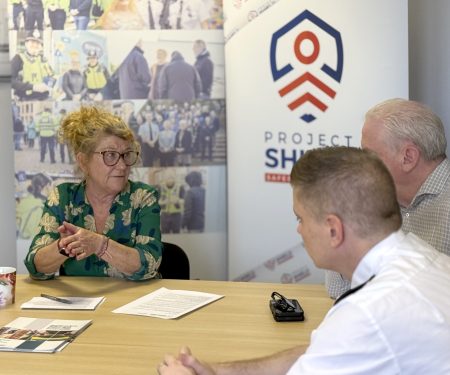
Project Shield was set up to bring partners together to maximise visible uniformed patrols in hotspot areas and ensure collaboration on longer term problem solving to tackle the root causes of ASB and serious violence.

These additional patrols, funded by the Police and Crime Commissioner’s office seek to prevent crime and gather important intelligence.

The project brings together Northumbria Police, Nexus, Stagecoach, British Transport Police and the six local authorities that make up the force area. The joint aim is to increase visibility in areas of concern, helping to deter crime and reassure the local community.

Figures from between July and September this year, show an overall ASB reduction in hotspot areas of 19% and a reduction in serious violence of 6%.

South Shields Town Centre has experienced a notable fall in ASB, which is down 48% compared to the same period last year. A Meadow Well hotspot area in North Tyneside has also seen a welcome reduction of 35%.

Northumbria Police and Crime Commissioner, Susan Dungworth, said: “We launched Project Shield back in July to come together and boost resource and boost visibility and it’s having a real impact on both ASB and serious violence. I really believe increased visibility like this is crucial to people feeling safe and comfortable in their community. There has been a lot of good work happening and it’s paying off – I want to see this continue.”

Susan added: “It’s not just about the patrols, there’s a huge variety of work going on alongside them in the background. On one hand our police are busy with warrants and arrests and on the other hand, we have a whole raft of prevention, support and diversion work. It really is about coming together to deliver safer streets and stronger communities.”

Chief Superintendent Joanne Park-Simmons, of Northumbria Police, said: “Project Shield is a vital part of our work in reducing serious violence and ASB across the Force area and we are encouraged by these latest figures and the clear progress being made.

“No-one should have to live with this kind of criminality on their doorstep and rest assured we have much more activity planned in the coming weeks and months to tackle serious violence and ASB, using all the powers and resources at our disposal.

“If there are issues with serious violence and ASB in your area, please contact us so that we can take the appropriate action.

“Together, alongside our partners, we can ensure our region remains one of the safest parts of the country.”

Cllr Jim Foreman, Lead Member for Housing and Community Safety at South Tyneside Council, said: “This is a fantastic result and shows that we are really delivering for our communities.

“We’ve been working hard alongside our partners to crack down on ASB because our residents consistently tell us that it is one of their top priorities.

“Our Project Shield officers, working with the business and community responders, are a valuable asset who provide a visible, reassuring presence, helping to target hotspot areas.

“This operation is really paying dividends in helping create stronger, safer communities.”

Cllr Karen Clark, Cabinet Member for Community Safety and Tackling Anti-Social Behaviour at North Tyneside Council, said: “The results of Project Shield speak for themselves, with significant reductions in ASB in hotspot areas, thanks to some outstanding partnership work. These extra patrol hours are helping to make our communities safer and reassure residents, alongside our ongoing efforts to tackle the root causes of ASB. We remain committed to this work, ensuring our neighbourhoods stay safe, secure, and welcoming for all.”

Project Shield is a force-wide project to protect communities by tackling serious violence and antisocial behaviour in hotspot areas. Project Shield investment was secured by the Office of the Police and Crime Commissioner for Northumbria through the Hotspot Response Fund and will run until March 2025.

ASB Awareness Week 2024 is running from 18th – 24th November. The overarching theme and hashtag for the week is #MakingCommunitiesSafer.

END

Our Stats

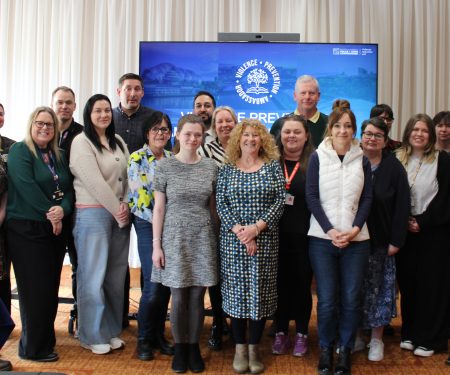
The Northumbria Violence Reduction Unit has launched a series of e-learning modules to increase awareness around the impact of knife crime, joint enterprise, gangs and youth violence, and hidden harms.

Equipping youth workers, practitioners, and community leaders with the knowledge and tools needed to address serious violence at its roots, the new courses focus on identifying risk factors, understanding the law, and safely intervening at the earliest point to help create safer communities.

The e-learning initiative is part of a wider effort to tackle serious violence and ensures training is available to provide frontline workers with a comprehensive insight to engage young people at risk and prevent violent behaviour before it escalates.

Developed in collaboration with online training provider, Me Learning, the resources make it easy for participants to learn at their own pace, and on completion of four mandatory modules, they will become a Violence Prevention Ambassador, with the opportunity to join a network of likeminded individuals.

Each module incorporates important information, engaging content and interactive quizzes, with the four packages covering:

  • Knife Crime Awareness: Through the Me Learning platform, this course is available to a national audience, with a key focus on understanding the causes and effects of knife crime, including strategies for prevention, and signposting additional support.
  • Joint Enterprise: This module provides a clear understanding of Joint Enterprise, and sets out to demystify the complex topic by addressing common misconceptions, awareness of the legal framework and the consequences of participating in a criminal act.
  • Gangs and Youth Violence: This course provides a comprehensive overview of gangs and youth violence, helping learners understand what gangs are, what they do, the role of women and girls, and the work done to prevent recruitment.
  • Hidden Harm: This module helps learners understand the cycle of events around parental substance misuse, mental health and domestic abuse, as well as highlighting how to spot signs of harm.

Focusing on these specific issues, the Northumbria Violence Reduction Unit aims to empower trusted adults to help tackle the root causes of serious violence, and build safer, stronger communities locally.

Northumbria Police and Crime Commissioner, Susan Dungworth said: “Addressing serious violence means tackling its root causes head on. It requires a proactive, informed approach that reaches young people before issues escalate. By equipping youth workers, community leaders and practitioners with this training, we’re giving them the tools to address underlying issues that drive violence.”

“These courses are more than just awareness; they’re about empowering trusted adults in the community to intervene at the earliest point, ensuring support is available to help young people make positive decisions for their future, and preventing further harm. Together, we’re building a network of informed individuals who can help break cycles of violence and build safer, stronger communities.”

Sarah Howarth, Managing Director at Me Learning said: “This collaboration with Northumbria Violence Reduction Unit represents a pivotal opportunity to make critical knife crime awareness training accessible to a broader audience. Previously, face-to-face training meant that participants had to travel significant distances, limiting the reach of this essential knowledge.”

“By digitizing the course and creating a solution that would have far reaching impact at scale, we address an urgent need for greater accessibility, allowing the Northumbria Violence Reduction Unit to extend vital training efficiently and effectively across a much wider area. Through this digital Knife Crime Awareness Course, practitioners will gain comprehensive, consistent training without geographic constraints—enabling them to play a proactive role in reducing knife crime and fostering safer communities.”

For more information about the Northumbria Violence Reduction Unit or the Violence Prevention Ambassadors programme, visit the website.

Our Stats

Northumbria’s Police and Crime Commissioner, Susan Dungworth, is asking employers to get involved and empower their people to become Active Bystanders to help tackle public sexual harassment. People spend so much of their days and weeks at work, which provides real opportunity to reach responsible citizens to act, giving them the confidence to intervene in every-day life, says the PCC.

With White Ribbon Day just round the corner, which kick-starts the 16 days of action for the elimination of violence against women and girls, Susan is encouraging employers, particularly in male dominated professions like mechanics and construction, to get in the driving seat and build culture change that can have an impact on wider society and their organisation.

Active Bystander Training gives people the understanding and confidence to have conversations with friends, family and colleagues around issues like misogyny and sexism that lead to violence against women and girls. It also offers a range of tools to skilfully challenge sexist attitudes and behaviours to help people around you recognise the problem and think about how harmful it is. A few calm words can make the difference.

The training was introduced in May 2023 and to date 430 active bystanders have been trained up across the region. Impressed by the scheme since taking over as Police and Crime Commissioner, Susan has ambitions to double the number within the next year. With 63% of men agreeing that men in society aren’t doing enough to ensure the safety of women and girls, she says there is a welcome appetite for this training – people just need to understand the problem, know how to handle things and feel empowered to decide on the best course of action.

Northumbria Police and Crime Commissioner, Susan Dungworth, said: “According to UN Women UK eighty per cent of women have experienced sexual harassment in public, and that’s a lot of people witnessing these behaviours too. I have spoken to people who have been on the train, at the gym, or even at work events and they have seen harassment and have been left feeling guilty that they didn’t know how to step in to stop it. It’s understandable that people feel unsure about what to do or worry they might worsen things – and that’s where this training can help.

She continues: “I want to be clear, we’re not expecting heroics and always recommend that in dangerous situations call the police on 999, but there are times we can call out sexist comments and say, ‘look that’s not OK’ – that’s how we can encourage pro-social behaviour.

“This training is for anyone who might witness sexual harassment – which is all of us. When we see or hear sexual harassment and do nothing, we empower the harasser. Sexism, misogyny, and unwanted comments that degrade women and girls – they’re often disguised as ‘banter’, well the joke is over.”

The office has delivered 15 courses since May 2023, most recently to team members at Opencast – the first private sector business to champion an active bystander approach. Opencast is a fast-growing technology consultancy based in Newcastle who have recognised the part they can play in supporting colleagues’ societal change.

Opencast Head of People Engagement and Inclusion Sheena Widdowfield shared: “We’re proud to be the first private sector business to take part in the programme.  The ongoing epidemic of violence against women needs action and this training is a key part of the movement to change that. Opencast is proud to have some involvement in this, and we’re looking forward to seeing the broader spotlight grow for this subject matter to be heard, far and wide.”

Police Commissioner Susan Dungworth called into the training that was being delivered at Opencast last month. She said: “Opencast is clearly a forward-thinking company, and they get it – and they get their responsibility with this, and I hope others will follow their lead. We’d also love to work with employers in typically male dominated professions – builders and mechanics and so on, – together we can drive change.”

This year’s White Ribbon Day theme is #ItStartsWithMen”. Allyship is at the heart of WRUK’s work to prevent men’s violence against women and girls. “It starts with men” underscores the role men can – and must – play to end gender-based violence from society.

Northumbria OPCC Active Bystander Training takes place across two half day sessions and more information and details on how to sign up can be found at www.northumbria-pcc.gov.uk. This training was developed by Kindling Interventions who trained organisations across the region to deliver this course focussing on prevention of public sexual harassment. Kindling Interventions have developed Active Bystander courses for a range of audiences and settings, so businesses who want to specifically tackle workplace sexual harassment can contact them for help with their duty to prevent sexual harassment in the workplace.

ENDS

Our Stats

The A&E Navigator initiative is making significant strides in its mission to tackle serious youth violence in Sunderland, with exciting plans to replicate the project in Northumberland to foster safer communities.

Since its launch, the programme has provided vital support to young people from 10 to 25 years, presenting in A&E for injuries or concerns related to violent crime, with 34% of those engaged receiving additional tailored support in their local communities.

Reducing hospital admissions for knife related serious violence is a top priority for the Northumbria Violence Reduction Unit, which identified A&E departments as crucial points of contact.

Whilst hospital teams provide year round safeguarding support, specialist A&E Navigators are on hand during busy Friday and Saturday evenings to identify and connect with vulnerable young people in Sunderland Royal Hospital, offering a ‘teachable moment’ when they are more likely to be open to receiving support and intervention.

This collaborative effort brings together key partners, including the Violence Reduction Unit, Waythrough, Sunderland Royal Hospital and Together for Children, all focused on the health, wellbeing and interests of young people to divert them from crime.

The ongoing success of the initiative underscores the importance of early intervention, and the upcoming rollout in Northumberland sets out to replicate these positive outcomes.

Northumbria Police and Crime Commissioner, Susan Dungworth said: “The A&E Navigator initiative is proving extremely effective in addressing youth violence in Sunderland, and while still in its early stages, the results we are seeing are truly encouraging.”

“I’ve witnessed the impact of this project first-hand, along with the inspiring dedication of the team behind it, and a strong partnership approach that made it possible. As we prepare to roll out this great work in Northumberland, I look forward to seeing this momentum grow even further.”

“We must keep doing everything we can to break the cycle of violence, and this project not only helps achieve this, but also connects young people with the support they need for a brighter future. Together, we’re building safer, stronger communities for everyone.”

Hannah Evans, Service Manager at Waythrough, said: “The Sunderland Royal programme has made a significant impact for many young people so far. The team has an unwavering commitment to all of the people they support and are passionate about breaking the cycle of violence through empowering people to create lasting change. We are honoured to be a part of this initiative, and we are looking forward to supporting even more people in the future in Northumberland.”

Dave Bramley, Clinical Director for Emergency Care at South Tyneside and Sunderland NHS Foundation Trust, which runs Sunderland Royal Hospital, said: “We welcomed the Hospital Link workers to our A&E at Sunderland Royal back in April. We recognise the support they are able to offer someone hurt during a violent incident at what will be a crucial time in their life.”

“They’re asked to step in and speak to any patient aged from 10 up to 25 if they come to us for treatment because of an assault during those two evenings. That’s across both our children’s and adult emergency departments and it is part of the wider work we do to help protect young people from harm.”

“Our hope is this kind of intervention has a long term impact to help prevent any further instances of harm, both to that patient and others. We’re grateful for the input this project has into our teams.”

Simon Marshall, Director of Children’s Services for Together for Children said: “Being part of the Navigator initiative has meant key partners in Sunderland have been able to collectively work together to tackle the important issues of youth violence in the city. We are encouraged by the initial findings of the programme and fully support any initiatives that help young people to access the help and support they need which will make a long-term difference to their lives. The programme being rolled out across Northumberland is testament to the effectiveness of the project and the strength of the partnership, ensuring best practice and invaluable learnings are being shared across the region to the benefit of all.”

For more information about the Northumbria Violence Reduction Unit, visit the website.

Our Stats

POLICE commissioner Susan Dungworth vows to tackle ‘toxic Andrew Tate type’ attitudes through early education by launching a new digital resource to help drive culture change around sexual harassment and misogyny.

Through the all new ‘It All Adds Up’ resource, young people across Northumbria will be encouraged to watch a series of short films to spark discussion and help raise awareness and educate.

The learning materials have been developed by Rape Crisis Tyneside and Northumberland and have been funded through the Office of the Police and Crime Commissioner. They will be available to schools, youth leaders and educators and can be downloaded online for free.

The resource has been developed following widespread concerns over youngsters being exposed to the social media content of online influencer Andrew Tate – in which he expresses extreme views about women. Her office has received many messages from educators seeking support with tackling this in the classroom to help with behaviours they are seeing that reflect misogynistic and sexist ideology.

The materials are an extension of the #ItAllAddsUp digital campaign that was launched last year featuring a series of impactful videos shared across social media channels. The films showcase the experiences of women and girls in the North East – bringing to life real, everyday interactions and misogynistic behaviours and the impact on women and girls.

The films feature women of different cultures, ages and sizes to highlight how sexual harassment happens to all women. They’re experiencing harassment in different settings too, such as on the bus in a rural community, with a child in a park or when popping to the shops in broad daylight.  Research says 71% of women of all ages in the UK have experienced some form of sexual harassment in a public space and most women blame themselves.

Northumbria Police and Crime Commissioner, Susan Dungworth, said: “Ultimately, we need young men and boys to be anti-Andrew Tate. We need them as allies. If we allow twisted viewpoints to seep into people’s minds, we are allowing them to potentially develop into abusive, violent behaviours. Young people are inundated with a lot of harmful content online and I want us to counter that by showing them how women are impacted every day with misogynistic attitudes.

“Along with so many parents, teachers and police, we want to take action that will help prevent youngsters growing up into future Andrew Tate types roaming the streets.

“I remember seeing Rape Crisis share the films online last year, before I was PCC, and they really made an impression on me so I am delighted we can put them to further use and get them in front of key audiences. The films have been praised for their truth and authenticity – with so many women telling us how they relate to them and also men saying they see this stuff going on and it makes them think.

“Now we want to encourage these types of discussions in the classroom or at the youth club. The earlier we get in front of young people, involving them in the conversation, calling out behaviours and raising awareness of how they can impact women, the better. We want to help teachers who have felt left in the dark about how to tackle this sort of topic – here’s the answer. But it’s not just a job for our teachers, we all need to speak out and call out harmful attitudes and behaviours whether you’re a teacher, a friend, a colleague – it’s a problem for society and society as a whole needs to respond.”

Sue Pearce, CEO of Rape Crisis Tyneside and Northumberland, said: “This resource goes live on the 4th of November for use in educational spaces for young people between the ages of 14-18 and is also for professionals that work with that age group. This means an awful lot to RCTN as it is raising awareness about sexual harassment.”

Jamie Allinson, Deputy CEO at Rape Crisis Tyneside and Northumberland, said: “We really hope that the benefits of the resource will be that it can be used to educate and inform children and young people about sexual harassment and the impact that this has on women and girls. We’ve developed the resource following our previous campaign about sexual harassment. We’re really excited to share this to support in the educating of children and young people within the North East, and we’re really pleased to have worked closely with the Police Crime Commissioner during its development. You can find out more on our website.

The pack, which can be downloaded from RCTN.org.uk includes lesson plans, presentations, films and activity sheets tailored for young people aged 14-18.


ENDS


For more information visit: RCTN.org.uk

To sign up for our next Active Bystander Training course click here.


Our Stats

Exit
Site