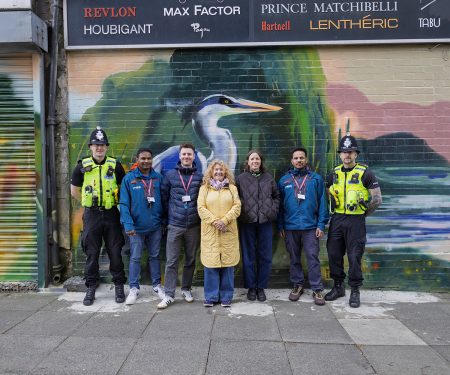
Just four months after its launch, the Violence Prevention Ambassadors Programme has reached a major milestone, training over 100 ambassadors and engaging more than 500 individuals, in the fight against serious violence.

Led by the Northumbria Violence Reduction Unit, the initiative is growing rapidly, building a strong network of frontline staff, youth workers, and community leaders equipped with the knowledge and tools to intervene early and prevent violence before it escalates.

With tackling serious violence remaining a top priority across the Northumbria force area, this surge in trained ambassadors reflects a growing commitment to breaking cycles of violence and creating safer communities.

By identifying risk factors early, Violence Prevention Ambassadors can support young people before they are drawn into violence.

The programme’s online training, made up of four interactive modules, offers individuals with crucial insights into:

  • Knife Crime Awareness – The causes, consequences, and prevention strategies for Knife Crime, and signposting additional support.
  • Joint Enterprise – The legal implications and common misconceptions of group-related criminal activity.
  • Gangs and Youth Violence – what gangs are, what they do, the role of women and girls, and the work done to prevent recruitment.
  • Hidden Harms – Recognising the impact of parental substance misuse, mental health issues, and domestic abuse, and understanding how to support those affected.

Upon completing the training, participants become Violence Prevention Ambassadors, joining the fast-growing network dedicated to tackling the root causes of serious violence.

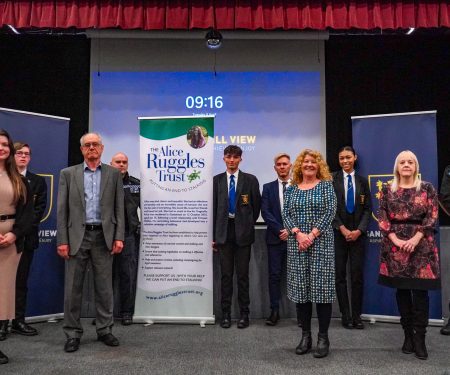
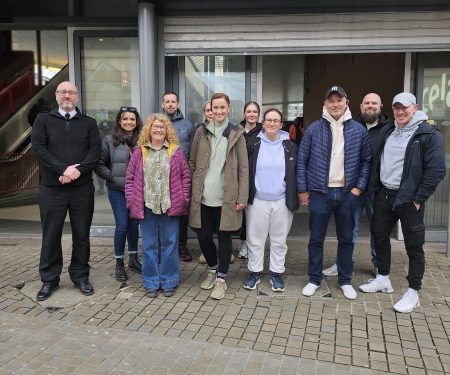
To mark this significant milestone, the Northumbria Violence Reduction Unit brought together the first cohort of trained ambassadors, recognising their commitment to preventing violence, and encouraging more professionals to take part.

Northumbria Police and Crime Commissioner, Susan Dungworth said: “Tackling serious violence isn’t just about policing, it’s about prevention, education, and empowering those working with young people to intervene at the earliest point. In just four months, we’ve built a network of over 100 Violence Prevention Ambassadors, all committed to keeping young people safe and diverting them away from harm.”

“Becoming an ambassador isn’t just about knowing the facts, it’s about taking action. For every young person reached, every conversation had, and every barrier broken down, this contributes to a future where violence does not define our communities.”

She added: “Please keep spreading the word about this programme. Tell your colleagues, share it with your networks, because imagine the impact we could have if even more people got involved. Together, we can build safer, stronger communities for everyone.”

Steven Hume, Director of the Northumbria Violence Reduction Unit said: “The Violence Prevention Ambassadors Programme is part of the wider work of the Northumbria Violence Reduction Unit, and our partners, in tackling the root causes of serious violence and diverting people from violent crime. Every ambassador represents a trusted adult who can help support a young person in making safer, more informed choices. The fact we’ve already surpassed 100 trained individuals in just a few months shows the demand for this kind of support. We’re determined to keep growing the network, and I encourage you to sign up.”

Our Stats

As the new Netflix show Adolescence grips the nation, Northumbria’s Police and Crime Commissioner is backing calls for the series to be shown in schools across the region, as supported by Prime Minister Sir Keir Starmer earlier this week.

The gripping series tells the story of a 13-year-old boy arrested on suspicion of murdering a female classmate. It exposes how online misogyny and sexism are radicalising men and young boys – fuelling behaviours that can lead to Violence against Women and Girls (VAWG).

Tackling VAWG is a key priority in Northumbria Police and Crime Commissioner Susan Dungworth’s Police and Crime Plan for safer streets and stronger communities. The delivery of educational programmes engaging men and boys to reduce harm to women and girls is a key area of work for her office.

With growing concerns among parents and teachers alike, the PCC is highlighting other free resources available to schools in the area to help educate young people and open up conversations.

Examples include:

It All Adds Up – created by Rape Crisis Tyneside and Northumberland and funded by the PCC’s office, this free digital resource helps schools, youth groups and educators address sexual harassment and harmful attitudes through early education. DETAILS

Pol-Ed – an innovative educational programme designed to enhance learning around healthy relationships, staying safe, and understanding the law – funded by the Northumbria Violence Reduction Unit. DETAILS

Northumbria Police and Crime Commissioner, Susan Dungworth, said:

“There’s been a lot of talk about the Netflix series ‘Adolescence’, and ‘toxic masculinity’ this week and it’s an issue I am very aware of. If we don’t educate others and speak out on this topic things will only get worse. This may be a drama, but it highlights very real lessons for us all.

“As we saw with the character Jamie – misogynist toxic views can escalate into the unthinkable. It makes you think as society what more can we be doing to stop this and intervene earlier whether it’s calling out behaviours or making mental health support more accessible.

“Adolescence showed a relatable ordinary family whose life is torn apart and it highlighted how parents and schools, all of us, can be clueless about the language young people are using, what young minds are absorbing and how it’s impacting them.

She continued:

“I worry for teenagers who are regularly served up horrific content on social media apps, including violent and sexually explicit material – they say it pops up randomly – they’re being targeted through algorithms and who knows what influence it can have.

“I want to support teachers navigating this issue and that’s why my office has funded various packages to help guide lessons and discussions. I want to really build on this work, and I plan to lobby for more funding to tackle this – it’s a growing cultural crisis.

“Fortunately, we have a Government that’s acutely away of these issues and is encouraging Adolescence to be rolled out in schools to raise awareness, educate and deter young minds. Ministers are pressing on with things like the Online Harms Act and I know lots of top level conversations are being had around how we protect children from an environment that is increasing hostile and dangerous. If a TV drama helps push this work to the top of the agenda to drive change then it has to be a good thing.”

For more information around school resources made available through the Office of the Police and Crime Commissioner’s office visit: www.northumbria-pcc.gov.uk.

Or email enquiries@northumbria-pcc.gov.uk


Our Stats

PROJECTS making a significant impact tackling anti-social behaviour and serious violence across Northumbria have been given a boost, following a Government announcement of a further £4million to help deliver on priorities that matter to local people.

Northumbria’s Police and Crime Commissioner, Susan Dungworth, has welcomed news that funding has been secured for two of the region’s key crime prevention initiatives – Northumbria’s Violence Reduction Unit and Project Shield.

Together, the funding will support robust targeted policing and early intervention initiatives tackling two of the priorities set in the PCC’s Police and Crime Plan – ASB and serious violence.

An extra £1.8m is coming to Northumbria through The Hotspot Action Fund allowing Project Shield to continue providing increased patrols and engagement in target areas. A further £2.2m has been secured for Northumbria’s Violence Reduction Unit, as part of Government’s Safer Streets Mission. This means the Unit can continue building on its preventative work in tackling the root causes of serious violence.

Northumbria Police and Crime Commissioner, Susan Dungworth, who launched Project Shield with partners following her election last summer, said:

“It’s great we have a Government that is giving financial backing to two key approaches that we’ve seen are making a real difference across our force area. There is no single solution to stopping things like ASB and serious violence but combining a range of approaches certainly helps. People want to see more patrols to support communities and deter crime – as we’re delivering through Project Shield. And they want fewer people to turn to crime in the first place, and that’s where the VRU comes in – identifying issues early and responding with targeted diversionary work.

“What both these projects recognise is the need for the whole region to come together in tackling these issues – they’re not just police problems – our council, transport and community partners can, and are playing a key part in the successes we have seen to date. There really is a sense of togetherness among all those working hard for our communities.

“Residents are telling me they’re seeing the impact this work is having, and they want more of it – and that is what they will get thanks to the Government’s confirmation of continued funding. As PCC, I have set out a clear plan for delivering safer streets and stronger communities and I very much see Project Shield and the work of the Violence Reduction Unit, playing a valuable role in achieving this.”

Assistant Chief Constable Andy Hill, of Northumbria Police, said: “We are aware that anti-social behaviour and serious violence can have serious and life-changing consequences, which can also affect the wider public.

“Through the work of Project Shield, latest figures show that we are having a significant impact in addressing these issues in order to reassure residents and keep our communities amongst some of the safest in the country.

“We remain grateful for the continued support of our partner organisations as well as residents as we carry on our efforts in this area.

“We are confident that this latest announcement confirming additional funding will help us to further drive down ASB and serious violence in our region, getting more weapons seized, locating more known offenders and engaging further with the public we serve, including our young people, in the process.”

Since its launch, Project Shield has delivered an additional 21,664 patrol hours by police and partners, as well as targeted activity across areas of concern. It is one of a number of initiatives that has helped anti-social behaviour fall by 18.10% in localised areas, and serious violence by 12.85%. Alongside other VRU interventions, it has contributed to an overall force wide reduction of 5.8% in serious violence and 5.7% in offences involving a knife.

Our Stats

A pioneering youth programme aimed at tackling knife crime is marking one year since its launch, with the original group of young people returning this week as Ambassadors to share how their experiences are shaping the choices they make.

The Trainee Detective Programme, developed by Northumbria Police in partnership with the Northumbria Violence Reduction Unit, has welcomed multiple cohorts over the past year, giving more than 80 students the chance to step into the role of detectives.

Empowering young people to take a stand against knife crime, this immersive, week-long programme mirrors the real-life investigation into the murder of Connor Brown, a Sunderland teenager who was fatally stabbed in 2019.

At the heart of this ground-breaking initiative are his parents, Tanya and Simon Brown, who continue to share their personal story in a powerful effort to educate young people on the devastating impact of knife crime.

A wide range of partners, including police staff, education teams, forensic specialists, medical professionals, and legal experts, have helped bring this programme to life, ensuring young people not only learn about the consequences of knife crime, but are also empowered to make safer choices.

Since taking part last year, students have remained engaged in activities designed to deepen their understanding, including a visit to the Knife Angel in Sunderland last summer, alongside an awareness session delivered by the Connor Brown Trust, reinforcing the clear message that knives impact everyone.

Now, returning as Ambassadors to offer insight into how the initiative is influencing the choices they make, one young person said: “Taking part in this programme has made me realise how serious knife crime is, and the impact it can have on so many people. Now, I want to help others understand the consequences before it’s too late.”

Northumbria Police and Crime Commissioner, Susan Dungworth said: “Reaching this milestone is a testament to the power of education and the incredible team behind this programme. Most importantly, it reflects the dedication of the young people who have taken part.”

“Initiatives like this spark vital conversations, and I know many of the young people have already spoken with their friends outside of the programme on the devastating impact of knife crime. We need more of this, as prevention is so important.”

“The fact that some of the original group have returned, not only to share their experiences but to take their involvement a step further by becoming Ambassadors, speaks volumes about the lasting influence of this programme. It also reinforces the crucial role of peer support in tackling knife crime.”

“I want to extend my sincere thanks to Tanya and Simon Brown, who continue be an integral part of this programme, sharing their story and channelling such pain and loss into something so positive.”

She added: ‘Equipping young people with the knowledge and confidence to make safer, more informed choices is essential. That’s why we must continue working together to build safer, stronger communities and, ultimately, prevent further tragedies.”

Chief Inspector Angela Hewitt, of Northumbria Police, said: “When this project was launched it was the first of its kind, and I’m over the moon that alongside our partner organisations we’ve been able to make it a success.”

“The triumph of this project means we can continue to raise awareness of the utter devastation carrying a knife can cause and it’s brilliant to see the impact this programme has had on the young people who have already taken part. As a Force we will continue to work with young people, doing all that we can to prevent further instances of knife crime.”

“Thank you again to Connor’s family and our partner organisations. It’s thanks to your collective dedication and enthusiasm, we’ve been able to educate more than 80 students on this incredibly important issue in society so far. I hope this initiative is something we are able to continue to work together on, empowering young people to make the right choice before it’s too late.”

Tanya Brown of Connor Brown Trust: “We feel so proud to be part of this unique programme and work alongside all the amazing people involved. Sharing Connor’s story in this way helps these young people feel the devastating reality, it also empowers them to find out exactly what happened as they delve into forensics and witness statements and all the other elements.”

“The learning outcomes from this is so much more than they realise, and what they learn they share with peers and families. This programme has also inspired some of the young people into considering a future in some of the professions that are involved in the programme which is incredible.”

“We believe in educating to prevent knife crime and we also understand that everyone learns in different ways, this programme offers so many different learning experiences with one clear message, and that is knife crime impacts on everyone. We do all we do because we believe in young people. Young people are tomorrow’s future, and we do not want more families living through the heartache of losing a child or loved one to knife crime.”

Vicky Pinkney, Principal at Hetton Academy said: “I am immensely proud of the students who took part in The Trainee Detective Programme. They have become ambassadors both within school and in the community. They can passionately articulate the impact that knife crime has on families and the community and are not afraid to share their knowledge with others. The impact that this programme has had on the students is life changing”.

The Trainee Detective Programme is part of the wider work of Northumbria Police, the Northumbria Violence Reduction Unit, and partners, in tackling the root causes of serious violence, and diverting people from violent crime.

Our Stats

A project making a significant impact on anti-social behaviour and serious violence has delivered further crime reduction in key areas, says Northumbria’s Police and Crime Commissioner, Susan Dungworth.

Speaking at the Northumbria Police and Crime Panel in Gateshead today, the PCC shared welcome news that rolling figures from the latest quarter show a 17% fall in ASB, 20% reduction in serious violence and a 50% reduction in knife crime – in the areas covered by the project.

Project Shield was launched last summer by PCC Dungworth, along with Northumbria Police and partners from all six local authorities and the region’s transport network. It was set up to bring the region together in tackling crime and ASB in identified areas.

The latest quarter, which covered the period from October 1st to December 31stof last year delivered more than 8,000 additional police and partner patrol hours and 81 stop and searches were carried out. This resulted in 52 arrests made and six weapons seized – just through Project Shield patrols alone.

The increased visibility and engagement have received widespread praise among residents, councillors and businesses, who have said the project has helped grow confidence and created more engagement opportunities for local people to report their concerns.

Project Shield activity includes stop and search operations, weapon sweeps, community engagement events, as well as robust action to catch known offenders in hotspot areas.

Alongside this The Violence Reduction Unit and partners are also taking a public health approach to tackling serious violence by engaging vulnerable individuals in targeted initiatives, and ensuring they have the support they need to divert them from crime.

Northumbria Police and Crime Commissioner, Susan Dungworth, said:

“Project Shield and its partnership approach to hotspot policing is certainly playing a key part in driving down incidents of ASB and serious violence in areas of concern. It’s really boosted officer visibility and created a sense of togetherness among all those working hard for our communities.

“Residents have seen the impact this work is having, and they want more of it. We are hopeful of further Government funding to help us do just that and support Government’s national ambitions of halving knife crime in a decade. As PCC, I have set out a clear plan for delivering safer streets and stronger communities and I recognise the targeted approach of Project Shield can really play a valuable role in helping achieve this, as these latest figures show.”

Chief Superintendent Barrie Joisce, Northumbria Police’s Lead for Anti-Social Behaviour, said: “This is a great result for the project, and everyone involved – and demonstrates just how effective partnership working can be. We are committed as a Force to tackling issues that matter most to the communities we serve. Anti-social behaviour can have a significant negative impact on people’s lives and businesses. Through Project Shield, we have been able to locate areas where ASB is prevalent quicker so we can allocate the necessary resources and apprehend offenders.”

He added: “It is important, however, that we continue this good work and maintain the relationships we have worked so hard to build within the community. As always, we rely on the assistance of you, the public, to be our eyes and ears in reporting this type of crime to us. If you have witnessed ASB activity in your area, do not hesitate to contact us so that we can take the appropriate action. Send us a direct message on social media, use the live chat on our website or go to the report forms, which are also on our website. Alternatively, if you’re unable to contact us via those ways, call 101.n an emergency, or if a crime is taking place, always call 999.”

Our Stats


HELPING ex-offenders is not always a popular cause, but if we don’t support prisoners on their release, they may soon be back inside leaving more victims behind – says Northumbria’s Police and Crime Commissioner, Susan Dungworth.

Her comments were made during a visit to HMP Northumberland where she met with prison officials and colleagues from Nepacs, a North of England charity supporting those affected by the criminal justice and care systems including families, young people, children and prisoners.

Discussions focussed on the systems in place to support prisoners both before and following their release to help them live a life free from crime on the outside, and break the cycle of re-offending. Adults released from custody after serving less than 12 months have a re-offending rate of 56.9% and an overall re-offending rate after leaving custody of 33.8%. The numbers are showing a year on year increase.

Nepacs are a key provider of this support and run initiatives such as the Re:settle project and departure lounges which provide guidance and practical information to support prisoners and their families during what can be a challenging period of adjustment.

Whilst on site, the Commissioner had a tour of the prison’s newest House Block, Alnwick House – which provides rehabilitative accommodation supporting residents with the transition to life outside, for those nearing the end of their sentence.

Near to this site, prisoners have access to a wide range of training and employment opportunities which are part of the prison’s focus on providing a real working environment.  The aim is to equip offenders with skills and experiences that will lead to improved employment opportunities on release and reduce re-offending.

Northumbria Police and Crime Commissioner, Susan Dungworth, said:

“I was impressed with how well the police, HMP Northumberland and the fantastic Nepacs team are working together already, but we all know more needs to be done, and more funding is needed, particularly following the previous Government’s austerity measures and prison underfunding.

“For me, the visit highlighted the difficulties faced by prison leavers when they’re released – and there is a real gap in funding for this. The North East is lucky to have the charity Nepacs working hard to plug this gap and fulfil this need.

“Our police are totally committed to catching criminals and getting them before the courts to seek justice for victims, but once they’ve served their sentence time, they need to have a plan. If an offender is released and wants to turn their life around – we need to support this – if they don’t have a roof over their head, a job to go to, it’s likely they’ll turn to crime once again.

The Commissioner added: “Prioritising victims and justice is a feature in my new Police and Crime Plan and reducing re-offending is a key part of this. If we are going to deliver safer streets and stronger communities, we have to give people in the criminal justice system the opportunity to change and help with housing, employment and health needs to rebuild their lives. Doing this brings benefits to the whole of society.”

Suzanne Henderson, Head of Reducing Reoffending at HMP Northumberland, said: “The prisoners and staff at HMP Northumberland were pleased to showcase and discuss the work both the prison and Nepacs do regarding prisoner’s families. The importance of having strong family ties while in our care cannot be underestimated. With the support of prisoner’s families and significant others, upon release, they are far less likely to reoffend while being integrated back into the community.

Not only do we recognise the importance of maintaining family ties for prisoners’ rehabilitation, but also for the families who often experience loss when their partners, parents, grandparents start a custodial sentence.  It is also important to acknowledge the impact on those who do not have family. We are equally committed to supporting prisoners who do not receive visits or contact from family by exploring support from the wider prison teams and community organisations.”

Amanda Lacey, Chief Executive Officer at Nepacs, said: “We were delighted to welcome Susan Dungworth, Northumbria Police and Crime Commissioner to meet our team at HMP Northumberland and to hear about the vital support we provide to those who come into prison, their children and families. Our staff and volunteers ensure that anyone impacted by imprisonment can receive the support and information they need to help them navigate the justice system. The impact of imprisonment on children and families can be particularly devastating which is why we feel it is important to support them every step of their journey and why funding for this type of work is so essential.  This includes ensuring those being released and their loved ones are supported when they leave prison and know where to go for help, maximising the chances of successful rehabilitation and ultimately reducing crime.”


ENDS


Our Stats

Exit
Site