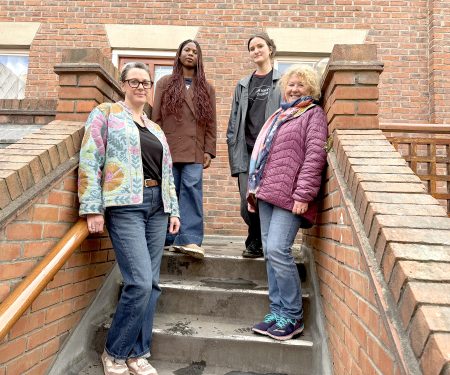
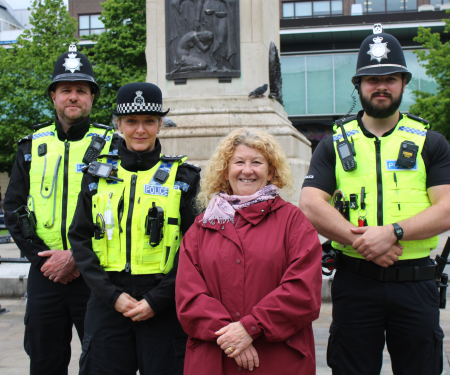
A film project challenging Manosphere attitudes is one of 27 good causes set to benefit from a share of a £100,000 funding pot set up by Police and Crime Commissioner, Susan Dungworth.

With documentary film maker Louis Theroux’s latest programme making the headlines for exposing online manosphere influencers and their misogynistic and harmful beliefs, a new film project by The Young Women’s Film Academy (YWFA) couldn’t have come at a better time to give young women a voice on the topic.

The YWFA is known for supporting young women and girls to creatively explore concerns, anxieties and issues that are important to them. Funding from the Commissioner’s Community Fund will be used towards a ‘Stories of the Manosphere’ documentary-drama – guided by professional female film makers exploring the lived experiences of girls and women who have suffered misogyny and abuse. It will then be used to educate young people, parents and the professionals on the subject.

The project is a strong fit with the Fund’s aim of supporting organisations and grassroot projects that want to help towards delivering the Police and Crime Commissioner’s plan for safer streets and stronger communities – supporting organisations striving to make where they live a better place.

This project is just one of a range of organisations delivering social action projects, targeted youth work and community cohesion initiatives that are set to benefit from the Commissioner’s Community Fund.

Other beneficiaries include: Prudhoe Youth Project (Northumberland), Springwell Community Village Venue (Gateshead), Al Azhar Mosque (South Tyneside), North Tyneside Disability Forum (North Tyneside) and Parker Trust CIO (Sunderland).

A total pot of £114,820 is being shared between these groups and other successful applicants from across the Northumbria Police Force area. Some of the money used to create this fund has been recovered by police under the Proceeds of Crime Act (PoCA) – ensuring that money taken from criminals is reinvested into the communities it once harmed.


Northumbria Police and Crime Commissioner, Susan Dungworth, said: “This fund is about giving people positive opportunities, which in turn can deliver a positive impact on the local community. We were inundated with bids this year and I am thankful that Northumbria has so many fantastic organisations, led by brilliant people wanting to achieve great things in their local area.

“The Young Women’s Film Academy was certainly one of several stand-out bids. We know misogyny is at the root of all violence against women and girls and influencers like those in the Louis Theroux documentary are undoubtedly having a really worrying impact on young men and boys’ attitudes to women and relationships.

“While many, including myself, welcome this documentary for shining a light on an important issue – the documentary seems to lack how this manosphere culture actively affects women – many have commented on the limited female contributions.

“And so here we are with a project idea aiming to do just that – explore real life experiences and give women a voice in all this manosphere chat and I can’t wait to see the film and make sure they get heard.”


Clara Shield, Founder & CEO, YWFA, said: We are delighted to have received this funding which will enable us to create a film and educational resource, that shares the lived experiences of the girls and young women we work with, telling the stories that audiences are not hearing. We know the importance of raising this issue with boys, young men and wider society, however this should never be to the detriment or the silencing of women and girls. They are the victims. Our film project will provide a platform to do justice to their stories, handled with care and compassion.

This year, the Commissioner’s Community Fund applications were managed Community Foundation North East. Community Foundation North East is a charity that has guided effective giving across the region since 1988, to help to build a thriving, generous, and inclusive North East today and for generations to come

Pete Barrett, Senior Programme Advisor at Community Foundation North East, said: “The Police Crime Commissioner’s Community Fund demonstrates the strength of partnership working in addressing complex social challenges and supporting safer, more resilient communities. Community Foundation North East is pleased to have managed this programme on behalf of the Police and Crime Commissioner, ensuring funding reaches grassroots organisations that are creating safe, inclusive spaces and delivering meaningful change at a local level. Projects such as the Young Women’s Film Academy highlight the importance of empowering voices that are too often unheard, while equipping communities with the awareness and tools needed to challenge harmful attitudes and behaviours.”

A full list of projects funded by this round of the Commissioner’s Community Fund can be found HERE.


Our Stats

FOLLOWING the success of Northumbria Police’s ‘Trojan’ bus – a decoy bus where the passengers are plain clothes police officers heading to catch crime in action – a Trojan Metro has now been launched, bringing a similar principle to the tracks.

Previously, the innovative policing tactic involved officers boarding what appeared to be a regular bus service but was in fact a staged service on route to pick up anti-social behaviour (ASB) offenders at bus stops and stations – helping officers make any necessary arrests.

Now the initiative is being rolled out on the Metro lines with its first operation taking place last Friday. What may appear to be a regular train carriage carrying Metro customers is actually also transporting plain clothed police officers, ready to respond to crime and ASB on the move, or helping catch trouble-makers by surprise at stations, interchanges and nearby neighbourhoods.

The Trojan Metro initiative is being funded through Police and Crime Commissioner Susan Dungworth’s Project Shield. 2026 data so far shows that across all the hotspot areas, ASB has fallen by an impressive 24% thanks to high visibility patrols and strong partnership work.

Deployments on the Metro have been determined by hotspot data and focus on routes connecting areas where members of the public have repeatedly raised concerns.

During the first Trojan Metro operation on Friday, 1,000 people passed through knife arches at stations, while police engaged with over 200 people and businesses about the operation. Officers made six arrests of individuals on suspicion of being drunk and disorderly, breach of bail and failing to appear before court. Investigations are ongoing around other recorded crimes for public order offences, assault and possession of cannabis.

Project Shield is a partnership covering joint activity from police and partners working to help deliver safer streets and stronger communities. It involves greater police and partner patrols in hotspot areas, effective resource targeting led by data, and community engagement and prevention activities, including working with youth services.

Northumbria Police and Crime Commission, Susan Dungworth, said: “Opportunistic thieves, antisocial groups, harassment – these – or the fear of these, can put people off from catching a bus or a Metro – it can hold people back.

“And so, I want to make sure we are doing all we can to help people feel safe and comfortable on our public transport. I hope hearing about work like this helps deter criminals and increases passenger confidence.

“We often talk about people wanting high visibility policing but this approach brings its own benefits too by allowing officers to identify offences as they happen and intervene quickly.

“Through Project Shield, we’ve been trying a range of methods to catch offenders and reduce crime. The Trojan Metro is another great example of our joint efforts responding to concerns and helping people feel safe as they go about their lives.”

Chief Inspector Phil Baker, of Northumbria Police, said: “Passengers should feel secure when it comes to travelling on the wider transport network and between bus stops, stations and hubs.

“Policing in this way through Project Shield gives us a unique opportunity to identify those behaving in an anti-social or criminal way in real time – so that along with our partners Nexus we can disrupt offenders swiftly and take the appropriate action against those involved.

“It’s not just about ASB though. Officers deployed on the Trojan Metro are also trained to safeguard those in need such as missing people, those who may have mental health issues as well as suspects we believe may be involved in County Lines drug-dealing criminality.

“It also assists with our ongoing commitment to tackling violence against women and girls.

“Ultimately, we are using the Trojan Metro as a way to fight crime as it is happening so that we can prevent further disorder – ensuring that all passengers and residents feel safe when using public transport.

“Together with our partners, we will continue to use every tactic at our disposal to prevent and disrupt crime and keep our region among the safest places to live in the country.”

Transport operator Nexus says they’ve been investing heavily into tackling ASB and crime, and have seen positive results which they hope the Trojan Metro initiative can help boost. This additional resource will help achieve their primary objective of a safe and secure network for their customers and employees and hope deploying specialist police in a plain clothes capacity will help deter anyone thinking of offending on Metro.

Cathy Massarella, Managing Director of Nexus, said: “Special policing operations like this are absolutely essential for keeping the Tyne and Wear Metro system safe and secure for our customers.

“It’s a unique way to target crime and anti-social behaviour in and around Metro. It sends out a clear message that anyone who causes trouble on our transport system will get caught and will face prosecution.

“Plain clothed policing and high visibility patrols are key elements of Project Shield in partnership with Northumbria Police and the Police and Crime Commissioner, delivering safer streets and stronger communities. Tackling violence and intimidation against women and girls in particular is a vital focus.

“We take this very seriously. Metro is a safe system to travel on, and where issues do occur, we work closely with the police to deal with it.

“This builds on the work we have already done to improve safety and security on Metro, including the introduction of our dedicated security teams, investment in new CCTV, and the ongoing roll out of our new train fleet.”

Our Stats

“Together, we’re pulling out all the stops so Project Shield success can continue” says PCC

A crime crackdown project that has helped anti-social behaviour (ASB) levels plummet in targeted areas across Northumbria is set to stay, despite recent funding uncertainty.

At a meeting which brought partners across the Project Shield partnership together today, Police and Crime Commissioner Susan Dungworth laid out her plans to help save Project Shield.

To rescue the project, the PCC has drawn on other funding pots and negotiated contributions from all partnership members, which will allow the initiative to continue in a restructured way using the same joint efforts and targeted approach already being delivered.

Since the project launched back in July 2024 it has been hailed a success by all local authorities and transport network partners, helping achieve significant crime reductions and improvements in public confidence in the designated hotspots.

2026 data so far shows that across all the hotspot areas, ASB has fallen by an impressive 24% thanks to high visibility patrols, strengthened partnership work and problem-solving intervention and engagement activities.

New plans will help fund the continuation of local authority and transport patrols to support regular neighbourhood policing patrols in key areas. Additional police patrols will also be delivered through the Home Office Knife Crime Concentration Fund (KCCF) as part of a programme of work supporting Project Shield led by Northumbria Violence Reduction Unit.

Local success stories through Project Shield:

South Tyneside County Council – Ocean Road youth diversion work has helped achieve a 46% drop in youth ASB

Northumberland County Council– Super Spud geo-targeted digital media ASB prevention ads achieved over 1 million impressions on digital ads across YouTube, TikTok, Snapchat and audio streaming

North Tyneside Council – Significant improvements in the reporting of retail thefts through increased engagement with local businesses.

Gateshead Council – The launch of the WalkSafe app, which can be used by students living in, and people visiting, the town centre to find information on safe spaces and walking routes

Newcastle City Council – An art installation at an underpass in West Denton has helped strengthen community pride and reduce anti-social behaviour.

Sunderland City Council – Significant reductions in anti-social behaviour in Concord, Pallion and Sunderland city centre through high vis patrols and engagement with businesses and residents


Northumbria Police and Crime Commissioner, Susan Dungworth said: “When I launched Project Shield with our partners, we all knew the Home Office Hotspot Action Fund was never a long term fix – it was about kickstarting focused enhanced work and it really kickstarted something good for our force area – something none of the partners want to see end. That’s why my office has been holding workshops and planning meetings to bring everyone together – determined to save it.

“It’s made such an impact in communities needing extra support and police presence – and it’s not just helped ASB numbers fall, people are telling me they feel safer thanks to Project Shield. I want that public confidence to keep growing; the whole of the partnership does. I’m grateful to all partners as the backing has been brilliant, and we are exploring new ways of working to keep Project Shield as part of regular business so we can all play our part in delivering safer streets and stronger communities.”

Chief Superintendent Barrie Joisce, Northumbria Police’s anti-social behaviour lead, said: “We’re delighted that we’ll be able to continue the important work of Project Shield alongside our committed partner organisations.

“Since the initiative was launched two years ago, we’ve seen a significant fall in ASB right across the Force area, thanks in no small part to the joined up working between ourselves, the PCC and local authorities.

“We’d like to reassure the public that in no way will we become complacent in this area. We know how important it is to keep on top of important issues such as ASB and knife crime so that residents feel safe and secure in their daily lives and in the coming weeks and months we’ll be building on the extensive existing work we’ve done.

“Thank you for your ongoing support and please continue to work with us by reporting any suspicious behaviour in your community so that we can take the necessary action.”

ENDS

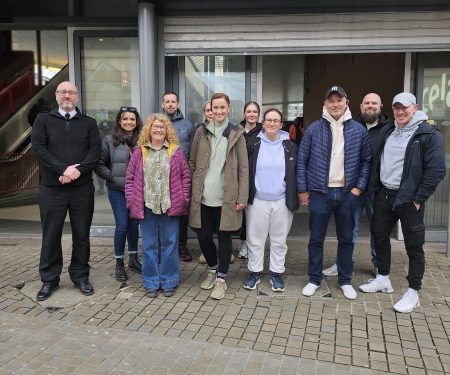
PHOTO: Decision makers, Town Centre Ambassadors and Community Safety Officers join PCC Susan Dungworth to map out the future of Project Shield

Notes to editors

Quotes supplied by LAs:

Cllr Karen Kilgour, leader of Newcastle City Council, said: “Every day council officers are out across the city, making a positive difference for our communities. And Project Shield has greatly supported that, delivering a range of benefits, from helping to fund youth art projects to ensuring that, alongside Northumbria Police, we have a presence in the most problematic areas when needed. That has helped prevent crime and anti-social behaviour as well as helping the most vulnerable people to get the support they require. We clearly all want safer streets and stronger communities and we are encouraged to hear of the plans to make the type of action Project Shield has taken a more regular part of police’s work.”

Councillor Kelly Chequer, Deputy Leader and Cabinet Member for Health, Wellbeing and Safer Communities at Sunderland City Council, said: “Project Shield has been a real success story in Sunderland, significantly reducing anti-social-behaviour in a number of areas across the city, so I’m delighted to see it continuing. We know that anti-social-behaviour is a real concern for many in our communities and joint projects like this have really proved their worth in helping us tackle it.”

Northumberland County Councillor, Gordon Stewart, cabinet member for Public Safety said:

“Project shield is a great partnership success story with teams working together in targeted areas not just to respond to crime – but to prevent it too. Through this proactive approach we are protecting vulnerable residents and creating safer neighbourhoods.  I am incredibly proud of what has been achieved to date and I know the partnership work will go from strength to strength.”


Our Stats

Launched during a national week of action to disrupt organised criminal networks, this new online awareness course will help more people recognise the warning signs of county lines activity and criminal exploitation.

Developed by the Northumbria Violence Reduction Unit, and informed by specialist staff from policing, education and children’s services, the free course gives youth workers, community organisations, and frontline staff, the knowledge and confidence to identify when children and vulnerable adults may be being exploited.

County Lines, which refers to the transportation of illegal drugs from one area to another, often involves the targeting and exploitation of young and vulnerable people, who can be coerced into carrying drugs, money or weapons.

The new module explains how criminal networks operate, the tactics they use to recruit and control victims, and how more people can recognise the warning signs if someone may be at risk or involved in this activity. It also provides guidance on how to report concerns and access support.

Equipping people with the tools to intervene early, and prevent violence before it escalates, the course expands the e-learning topics available within the Violence Prevention Ambassadors Programme and supports the wider work of the Northumbria Violence Reduction Unit, and its partners.

Since the programme’s launch, which already includes modules on knife crime, joint enterprise, youth violence and hidden harms, it has helped create a growing network of more than 300 trained ambassadors from across the Northumbria force area, raising awareness and strengthening early intervention in communities.

Northumbria Police and Crime Commissioner, Susan Dungworth said: “County Lines ruins lives, drawing young and vulnerable people into danger, violence and crime, and placing them at significant risk of harm.”

“This new course will help those working in our communities better understand what County Lines is, the dangers and risks involved, how individuals are recruited, the life-altering consequences that follow, and importantly, the support available. It’s a powerful example of how we can all play our part in keeping people safe.”

“Through the Violence Reduction Unit, Northumbria Police, and partners, we will continue to tackle the root causes of serious violence, taking a proactive and informed approach that supports young people and prevents them from being drawn into harm.”

“By working together, we can make a real difference – educating young people early, supporting those at risk and taking action against those causing harm, helping to create safer streets, and stronger communities for everyone.”

For more information about the Northumbria Violence Reduction Unit or to sign up to the Violence Prevention Ambassadors programme, visit the website.

ENDS

Our Stats

EXTRA police patrols being rolled out across the public transport network, funded through Project Shield, to help as part of ongoing strategies to tackle Violence Against Women and Girls (VAWG).

The additional police and partner patrols are there to help increase visibility, promote engagement and provide law enforcement as required.

So far, during the month of February, British Transport Police have made several VAWG related arrests. A man was charged with Observing a Person Doing a Private Act in the female toilets at Newcastle Central Station. Another was charged with Outraging Public Decency following an incident that took place in a food outlet in the station.

Now, VAWG focused patrols have been introduced on key routes connecting people to nightlife across the force area and aim to help improve feelings of safety and to deter offenders.

Project Shield is a collaborative initiative launched by Northumbria’s Police and Crime Commissioner, Susan Dungworth. It brings local authority, transport and policing partners together in a joint effort to tackle serious violence and ASB which can include VAWG related crimes.

VAWG on public transport might include sexual harassment, intimidation and non-consensual physical contact. These can all make women feel fearful and sometimes lead them to alter plans or even avoid public transport altogether.

Northumbria’s Police and Crime Commissioner says women regularly tell her about VAWG related experiences on transport and national figures suggest 72% of women, compared to 40% of men are concerned about sexual harassment on public transport.

This is why the Safer Transport Northumbria initiative has set up a VAWG working group which brings together Northumbria Police, British Transport Police, North East Mayoral Combined Authority, Nexus, Northern Rail, Stagecoach, Go North East and Arriva together, to take a joined up approach to tackle VAWG across the transport network. The additional patrols through Project Shield are just one example of ongoing efforts across all partners to improve feelings of safety, target predators and bring about lasting change. Other ongoing work includes training for transport staff and a range of educational programmes that help tackle misogyny throughout society.

Northumbria Police and Crime Commissioner, Susan Dungworth, said: “How safe people feel directly impacts whether people feel comfortable using buses, trains, and stations. Nobody should change routes or alter travel plans due to fear. We are very aware of this in Northumbria and are working closely with partners to ensure we are doing all we can to improve people’s feelings of safety particularly in the late hours – that’s why my office has funded these additional patrols through Project Shield.  We know a strong police presence builds confidence and encourages the reporting of incidents.”

Local Inspector for British Transport Police Michael Forster said: “No woman or girl should ever feel uncomfortable on the rail network. We work tirelessly to keep every journey safe, and our officers regularly collaborate with partners through initiatives like Operation Shield to protect passengers. This proactive policing is supported by our campaigns encouraging passengers and witnesses to report incidents, every report helps us to keep people safe. We take all reports of unwanted sexual behaviour seriously. No report is too small, and sexual harassment is never your fault. We urge the public to save our text number, 61016, so they can discreetly contact us whenever they need to.”

Erika Allen, Quality Health Safety Security and Environment (QHSSE) Director at Nexus, said: “These extra patrols across the local public transport network are hugely welcome as we build on the work to reduce crime and anti-social behaviour. Nexus has a key part to play in supporting the police and our local authority partners in keeping the public safe and secure when using the local bus and Metro system. We fully support the strategy to tackle Violence and Intimidation Against Women and Girls across local communities. This builds on the work we have already done to improve safety and security on the, including the roll out of our dedicated security teams on Metro and investment in new CCTV.”

Chief Inspector Phil Baker, of Northumbria Police, said: “The extra patrols play a key part in ensuring that people feel safe when using the transport network in our region. It also shows the overall benefit Project Shield has to our communities through working together with our partner organisations to identify crime trends and take the necessary action. We understand that women and girls can at times feel wary when using public transport and we will continue to do our utmost to help people to feel as comfortable as possible while on a bus or train. We would also encourage anyone who spots anything suspicious on the transport network to approach an officer on duty. Please remember that we are here to help.”

ENDS


Our Stats

NORTHUMBRIA residents have backed plans to pay slightly more towards their council tax to support local policing – but will continue to pay the lowest precept in England and Wales.

Proposals made by Northumbria’s Police and Crime Commissioner at the Police and Crime Panel in Gateshead today (Friday 6, February), had the support of the majority of local residents, following a public consultation.

Panel members agreed to proposals which mean a small increase of 24p per week for Band A council tax payers. Band A properties make up the largest share of properties in the Northumbria force area.

Each year, the Police and Crime Commissioner is responsible for setting the amount of money households contribute to local police services through their council tax bill – this is known as the police ‘precept’. The PCC sets the amount taking into consideration the views of the Chief Constable along with the findings of a public consultation where residents are asked how much they are prepared to pay to support policing in the local area.

This year’s survey showed significant public support for paying a little extra with 59% of respondents saying they would be happy to pay a small rise.  Of those in favour of paying a bit more, the majority (66%) were supportive of an increase of either 28p or 37p.

Of those who shared support for the increase, many cited it would be good value for money if it helps improve visibility and ensures the police are adequately resourced. Common reasons of those reluctant to pay more were affordability and the belief that funding the police should not be the responsibility of the taxpayer.

Addressing the Panel, Northumbria Police and Crime Commissioner, Susan Dungworth, said: “Although the role of PCC is changing in 2028, right now I have a job to do — and that is to make sure Northumbria Police is properly resourced and in the best possible position to deliver for our communities, keeping people safe and offering value for money.

“Police budgets are still reliant on part of their funding being raised through local taxes – and I can’t change that. But people’s views matter, and while I recognise our police force is facing financial pressures, so too are many households in our area. And so, when budgets are tight, there are difficult choices to be made – raising a precept being one – and so I am pleased our survey found the majority back proposals for a small increase.

“We have made real progress over the last year— from faster response times to reductions in ASB across all area commands. This demonstrates the impact of sustained investment in local policing.

“Through the Police Reform White Paper published last week, we know Government has made a real commitment to neighbourhood policing, backed by a funding boost at national level. We can’t be complacent though, ongoing inflation, rising costs and funding changes mean Northumbria Police still faces significant financial pressures.”

She added: “The precept rise agreed today is in line with Government expectations and will bring in an extra in 7.958m for Northumbria Police to help tackle ASB, invest in new technologies and proactively safeguard women and girls.

“I want us to be doing all we can to keep delivering on the priorities outlined in my plan for safer streets and stronger communities. We are fully on track with recruitment as part of the Government’s Neighbourhood Policing Guarantee, and the additional funding we are now able to raise through the precept will allow us to remain resilient and invest in improvements that matter most to the people of Northumberland, Tyne, and Wear.”

ENDS

Our Stats

Exit
Site