
11th December 2025
ASB and crime
“Our mission to tackle ASB is working” says PCC as Project Shield areas see 32% fall

0191 2219800
enquiries@northumbria-pcc.gov.uk
NORTHUMBRIA Police and Crime Commissioner, Susan Dungworth, says a collective mission to tackle anti-social behaviour is working – as new data confirms the growing impact of Project Shield.
The latest quarter figures show targeted action in priority locations across the force area has delivered a 32% reduction in ASB, and on the region’s transport network this has fallen by an even sharper 38% – when compared to the same period during the previous year.
These reductions have been achieved with the help of 8,465 additional hours of police and partner patrols funded through Project Shield. Alongside this the initiative has rolled out youth diversion schemes, and policing tactics like the popular Trojan bus. This is a decoy bus carrying plain clothes officers used to catch offenders unaware.
During Quarter 2 alone, Shield teams made 67 arrests, conducted 113 stop and searches, used 13 ASB powers, undertook 39,925 engagements, and seized 13 weapons.
Funded through £1.8 million secured by the Office of the Police and Crime Commissioner via the Government’s Hotspot Action Fund, Project Shield was the first initiative to be introduced by the Commissioner since taking office.
It brings together Northumbria Police, British Transport Police, Nexus, Stagecoach and all six local authorities, combining high-visibility patrols with long-term problem solving to address the root causes of ASB and tackle serious violence.
Alongside the police, community safety officers and transport staff on patrol, the project has a dedicated team of analysts and researchers who ensure deployments are guided by local intelligence and real-time data — allowing resources to be focused where they make the greatest difference.
Northumbria Police and Crime Commissioner, Susan Dungworth said:
“Our mission to tackle anti-social behaviour is working — and these figures prove it. People told us they wanted more visibility; more action and more results. That’s exactly what Project Shield is delivering; great ASB reductions in our targeted areas, particularly on our transport.
“Residents have been telling me they feel safer because they’re seeing more uniforms out and about and retailers, I’ve been speaking to have said they’ve noticed improvements too. For me, this is targeted neighbourhood policing at its best.”
“Since launching Project Shield, we’ve seen it go from strength to strength, and it shows how we are putting my Police and Crime Plan for safer streets and stronger communities into action – working together to tackle things like ASB and serious violence.
Looking ahead to 2026, the Commissioner emphasised her determination to build on this year’s progress: “These are strong results to end the year on, and I want us to keep going further: continuing to cut crime, strengthening our partnership work, and improving how safe people feel in every neighbourhood. People want more of this — and I look forward to continuing to monitor the project’s progress into the new year.”
Superintendent Scott Cowie, of Northumbria Police’s Prevention department, said: “These latest figures are testament to the hard work and dedication of our officers and partnership staff working on Project Shield.
“The statistics show that we are significantly driving down ASB, particularly on our transport network where everyone should feel safe and secure when travelling around our region.
“The feedback we’re getting from members of the public and businesses is that they are seeing a real tangible difference right across our communities. This is something we aim to build on in the coming weeks and months with further activity planned, using all of the powers and tactics available to us.
“Rest assured, we remain determined as ever to do everything we can to further reduce ASB. To the public, thank you for your support and please continue to help us by reporting any crime or suspicious activity in your area so that we can grow our intelligence picture and plan accordingly.”
Erika Allen, Quality Health Safety Security and Environment (QHSSE) Director at Nexus, said: “It’s great to see Project Shield having such a positive impact in lowering crime and anti-social behaviour on our public transport network.
“Nexus has a key part to play in supporting the police and our local authority partners in keeping the public safe and secure when using the local bus and Metro system.
“This builds on the work we have already done to improve safety and security on the transport network, including the roll out of our dedicated security teams and investment in new CCTV.”
11th December 2025
ASB and crime
“Our mission to tackle ASB is working” says PCC as Project Shield areas see 32% fall

10th December 2025
Victims and Justice
New video resource launched to support domestic abuse victims through the criminal justice system



24th November 2025
Serious Violence and Organised Crime
Students create impactful bench in memory of those lost to knife crime tragedies
REPORTING domestic abuse takes immense courage. Staying engaged with the criminal justice system can feel overwhelming – even frightening – but victims are not alone. That’s the message from a new video resource launched by the Northumbria Local Criminal Justice Board (LCJB) designed to help victims of domestic abuse feel informed, supported, and confident as they move through the criminal justice process.
The video is a response to feedback from victims who have said they want more information to better understand the process and support available. It is hoped the resource will improve the overall victim experience, helping more victims stay engaged in the system, feeling confident to attend court and in turn increase conviction rates.
The video explains the range of protective and supportive measures available to victims at every stage of the criminal justice journey. Examples include pre-trial visits, separate court entrances, safe waiting areas, and special measures to make giving evidence easier.
It also highlights the key role of Independent Domestic Violence Advisors (IDVAs) and victim services, who provide emotional, practical, and financial support – from transport and childcare arrangements to guidance about court proceedings.
Northumbria Police and Crime Commissioner, Susan Dungworth, who is also the Chair of the LCJB, said:
“The very idea of going to court can feel scary, but it doesn’t have to be a total unknown. Knowing what to expect will help victims feel calmer, more confident, and in control – and that’s what we all want. People who feel supported are far more likely to stay engaged with the process.
“We need to reduce the number of victims who drop out by addressing the causes and making people aware of the help and solutions that already exist that might make it easier for victims to give evidence in a way that suits their needs.
“As part of my plan for Safer Streets and Stronger Communities, I made victims and justice a top priority and am committed to improving awareness of the support available and ensuring its easily accessible – this new resource is about doing just that.”
Assistant Chief Constable Alastair Simpson, of Northumbria Police, who is the victim and witness lead for the LCJB, said: “The heart of this project has been about making sure victims of domestic abuse are fully informed about what they can expect before their case goes to court.
“We recognise different people have completely different needs – and whatever might be right for one person won’t be helpful for another.
“We want this video to demystify the criminal justice process so that as many victims are staying engaged with the process as possible, as we consistently see more positive outcomes when they do.
“As a Force, we’re committed to doing whatever we can – alongside our criminal justice partners – to ensure victims are supported every step of the way so we can bring their perpetrators to justice.”
Debbie Breen, Deputy Chief Crown Prosecutor with CPS North East, said: “For victims of domestic abuse, this video provides key information about what to expect during the investigation and prosecution of these types of cases. The engagement of victims with the prosecution process is invaluable to us and, in some cases, their attendance at court may even be sufficient to secure early guilty pleas to domestic abuse offences. We understand that any involvement in criminal proceedings can be a daunting prospect for victims of crime, but we hope that this video can address some of that apprehension by explaining how we can use special measures to support them if they are asked to give evidence.”
Domestic abuse is a significant issue across Northumbria, accounting for around one in five crimes recorded by the police each month. In a typical month, over 2,000 domestic abuse-related crimes are reported, with the majority of victims being women, though many men are also affected.
The new video resource is designed to be used internally by professionals working with victims as well as publicly as part of awareness campaigns – and it showcases the positive side of the criminal justice system and reinforces the message that support is available every step of the way.
Northumbria’s Local Criminal Justice Board brings partners across the region together to work towards increasing public confidence in the criminal justice system and support people to feel safe in their local communities. Partners include: Northumbria Office of the Police and Crime Commissioner, Northumbria Police, Northumbria Victim and Witness Service, Crown Prosecution Service.
The video can be viewed here.
A full list of support services commissioned by the Office of the Police and Crime Commissioner for Northumbria can be found here – Victims Services Directory – full list – Northumbria PCC
11th December 2025
ASB and crime
“Our mission to tackle ASB is working” says PCC as Project Shield areas see 32% fall
10th December 2025
Victims and Justice
New video resource launched to support domestic abuse victims through the criminal justice system
24th November 2025
Serious Violence and Organised Crime
Students create impactful bench in memory of those lost to knife crime tragedies
Project Vigilant a year on – keeping people across the North East safe at night
Project Vigilant is aimed at targeting perpetrator behaviours, which are often displayed before a sexual offence, spiking or theft takes place.
The initiative is a joint effort by the North East Regional Organised Crime Unit (NEROCU), Cleveland Police, Durham Constabulary, Northumbria Police and all three North East Police and Crime Commissioners, who all work to ensure a safer environment for members of the public enjoying a night out.
It was first launched in the North East in December last year and has already seen numerous targeted deployments across Newcastle, Durham and Middlesbrough.
During activity, specially trained officers are deployed during the Night Time Economy and identify individuals who may be displaying predatory behaviour such as harassment, loitering without reason and stalking behaviour. Those individuals are stopped by police, enquiries are carried out, dispersal orders given or where necessary arrests are made.
The targeted police operations will continue to be carried out across the North East with the aim of proactively preventing violence and sexual offences against women and girls and ensuring a safer environment for all.
Detective Chief Inspector Paul Hallowell, from NEROCU, has reassured the public Project Vigilant will continue to disrupt offending against women and girls.
DCI Hallowell said: “It is important to us that members of the public feel they can have a safe and fun night out in the North East without the fear of assault, violence, or theft. National figures show that violence against women and girls is something that requires robust action and already in a year we have seen fantastic results from this initiative – and we’re not slowing down.
“Predatory behaviour is never acceptable, and we remain committed alongside our partners to continue our work to tackle this issue. We also urge anyone with any concerns about someone’s behaviour to report it to police.”
Northumbria Police and Crime Commissioner, Susan Dungworth said: “During the 16 days of action campaign to prevent and end violence against women and girls, I think it’s really important to be highlighting proactive policing efforts like Operation Vigilant. People don’t necessarily know this work is happening, yet it forms part of a raft of measures we have in place to keep people safe on a night out.
“This activity sends a clear message that our police are doing so much more than responding to crimes and supporting the vulnerable; we have officers whose mission is to proactively target those who cause harm and prevent crime.
“I hope hearing about this operation reassures people about the work in place to catch predatory behaviours before they escalate. The results show the positive impact this is having towards delivering safer streets in our night-time economies across the region, and I will continue to monitor progress in this area.”
Durham Police and Crime Commissioner, Joy Allen said: “Protecting women and girls from sexual harassment and violence and ensuring they feel safe in our public spaces, including our transport systems and within the night-time economy, are top priorities for me as they featured highly in my consultation with the public. I have been clear in my Police, Crime and Justice Plan that I will tackle all forms of violence against women and girls, from spiking and stalking to rape and murder.
“Operation Vigilant has become a vital tool in our work to tackle VAWG, challenging predatory behaviour early, before it escalates, to prevent serious and traumatic crimes that can take victims a lifetime to recover and heal from.
“Women and girls should be able to enjoy a night out safely, without fear or risk. By taking a proactive and intelligence-led approach, putting trained officers in the right place at the right time, we not only safeguard potential victims but build confidence and trust in the police which reinforces feelings of safety.”
Cleveland Police and Crime Commissioner, Matt Storey said: “Our research shows that more than 81% of women surveyed felt unsafe in Cleveland’s town centres after dark. Research like this proves how important work like Project Vigilant is in our communities to protect women and girls from potential predators.”
Anyone who has been the victim of a sexual assault, whether recently or in the past, is encouraged to contact their local police force.
If you have information or concerns about someone’s behaviour you can report it to police or via the independent charity Crimestoppers anonymously on 0800 555 111.
11th December 2025
ASB and crime
“Our mission to tackle ASB is working” says PCC as Project Shield areas see 32% fall
10th December 2025
Victims and Justice
New video resource launched to support domestic abuse victims through the criminal justice system
24th November 2025
Serious Violence and Organised Crime
Students create impactful bench in memory of those lost to knife crime tragedies
Northumbria Police and Crime Commissioner Susan Dungworth is raising awareness of the Dog’s Trust’s urgent appeal for more volunteer fosterers across the North East to support people fleeing domestic abuse by caring for their dogs. This follows new data showing that referrals to its specialist domestic abuse pet fostering service have doubled in the last five years.
Freedom is a service provided by Dogs Trust which offers temporary foster care for dogs, giving owners the ability to find freedom from domestic abuse without the heartache or risk of leaving their pet behind. It was established in response to growing evidence of the link between domestic abuse and animal abuse, alongside the lack of pet-friendly accommodation. Fosterers play a critical role, providing safe and loving homes for dogs until they can be reunited with their families.
Dogs Trust is now calling for more people to volunteer as foster carers across the Northumbria Police force area, as demand for the service continues to grow. from Northumbria Police shows that the prevalence of domestic abuse continues to remain high, with 1 in 5 calls to its control room being domestic abuse related and, on average, police receive a domestic abuse related call every 30 seconds.
97% of domestic abuse professionals (including police) recognize that pets are used as tools of coercion and control. That’s why Freedom is widely supported by frontline agencies, including the police, local councils, Women’s Aid, and many local domestic abuse services, which often make referrals to the scheme for survivors needing help with their dogs.
Those wanting to help as volunteer foster carers receive full support from Dogs Trust’s experienced Freedom team, including all necessary pet supplies and veterinary care. Regular updates are sent to the dog’s owner, helping them stay connected with their pet while they are apart. Confidentiality is maintained at all times – no personal information is shared between foster carers and pet owners.
Crucially, there is no cost to the foster carer. All expenses are covered by Freedom making fostering an accessible and rewarding way to support people and their pets in times of crisis. To find out more, or to sign up to become a fosterer, visit www.dogstrustfreedom.org.uk.
The need for such services is underscored by Dogs Trust research*, which found that pets are often used by perpetrators of domestic abuse as a means to control and coerce. In some cases, animals have been physically harmed or killed. In a survey of professionals supporting survivors of domestic abuse, 97% reported that animals were commonly used to exert control over those they abuse.
Northumbria Police and Crime Commissioner, Susan Dungworth, said:
“Abusers know the power of a pet — and they use it. For too many victims, the fear of leaving a beloved pet behind is the final barrier to escaping abuse. We see a rise in people reaching out for help after Christmas, yet many still stay because they believe their dog or cat won’t be safe. That must change. Through specialist fostering projects like the brilliant Freedom, we can offer a path to safety for both survivors and their pets.
“You can leave — and your pet doesn’t have to be left behind. During the 16 Days of Action, I want to raise awareness of the support available and back calls for more foster carers to help make this possible. No one should have to choose between escaping abuse and protecting the animal they love.”
Laura Saunders, Freedom Manager at Dogs Trust, said:
“Sadly, too often we see cases where perpetrators of domestic abuse have used dogs as tools of coercion and control, often threatening or harming them to exert power. This creates a devastating barrier for people trying to escape – many delay leaving purely out of fear for their pet’s safety.
“Through Freedom, and with collaboration between other UK pet fostering services, we provide a vital lifeline, giving survivors the chance to reach safety while knowing their pet is in a loving, secure foster home.
“Right now, demand for our service is higher than ever. We urgently need more volunteer foster carers to step forward. Offering a temporary home not only protects a dog from harm – it helps transform a survivor’s life at a time when they need support the most.”
| Anonymous case study |
| After enduring over two years of abuse, Yvonne (name changed) made the difficult decision to leave her home for the second time; this time for good. Her greatest concern throughout was for her beloved dog, Henry, who had been a source of emotional comfort and protection throughout her experience. Initially unable to bring Henry with her to the refuge, she was referred to the Dogs Trust’s Freedom team which offered a lifeline. With support from her refuge worker, the referral process was simple and fast. Henry was placed in foster care through Freedom, where Yvonne received regular updates and photos, bringing her reassurance and emotional support during a traumatic time. From health check-ups to grooming, every detail of Henry’s care was handled with compassion. The experience brought such peace of mind that Yvonne has since included a legacy donation to Dogs Trust in her will. She expressed deep gratitude to the foster carers and highlighted how vital the Freedom is for people facing domestic abuse: “I put up with abuse for over two years because I couldn’t leave my dog, Henry, behind. Freedom gave me the lifeline I needed, and knowing he was safe meant I could finally escape. If I’d known about it sooner, I would’ve left sooner, and Henry wouldn’t have had to suffer either.” |
To find out more about Freedom, or to sign up to become a foster carer for the project, visit www.dogstrustfreedom.org.uk.
11th December 2025
ASB and crime
“Our mission to tackle ASB is working” says PCC as Project Shield areas see 32% fall
10th December 2025
Victims and Justice
New video resource launched to support domestic abuse victims through the criminal justice system
24th November 2025
Serious Violence and Organised Crime
Students create impactful bench in memory of those lost to knife crime tragedies
As this year’s 16 Days of Activism to end gender-based violence continues, Police and Crime Commissioner Susan Dungworth is calling on more schools to make use of Pol-Ed, a suite of educational resources covering a wide range of important topics.
Thanks to continued funding from the Northumbria Violence Reduction Unit, the programme is available free of charge and already adopted by 81% of schools from across the force area, reflecting a growing demand for more preventative education.
Pol-Ed provides teachers with a powerful tool to address behaviours, pressures, and risks that can contribute to violence against women and girls, with lessons covering the law, consent, red flags in relationships, online safety, sexism, and more.
The programme equips students from primary and secondary school education with the knowledge, skills and confidence to make informed, positive choices in their everyday lives.
It encourages open and honest discussions, helps break down barriers, challenges misconceptions, and supports practitioners in identifying those at risk earlier, ensuring support is available when it’s needed most.
More than 417,530 students across the region have now taken part in this innovative educational programme. Developed by West Yorkshire Police in partnership with teachers, Pol-Ed helps young people better understand the law, build healthy relationships, and stay safe from harm.
The initiative complements the wider awareness work delivered by the Northumbria Violence Reduction Unit and Northumbria Police Education Teams, ensuring young people not only recognise the risks associated with gender-based violence, but also feel empowered to seek help when they need it.
Calling on more schools to use the Pol-Ed resources to help prevent violence against women and girls, Northumbria Police and Crime Commissioner, Susan Dungworth said: “We all want our children to grow up feeling safe, supported and confident in making the right choices, and Pol-Ed is one of the tools helping us achieve that.
“We’ve already had fantastic take-up with 81% of schools in our region using the resources, but I want to make sure that all children are able to access this learning. That’s why I’m asking more schools to adopt this approach.
“What’s important here is that it’s not just about delivering the lessons and assemblies. It’s about having those open and honest conversations early on, providing opportunities to identify those at risk, and ensuring young people feel heard and supported.”
“When I set out my police and crime plan earlier this year, residents, local services and partners said they want to see more done to reduce violence against women and girls. That’s exactly why I made it a key priority.
“Preventative approaches, such as educating young people, are essential to achieving that goal, and through the work of the Violence Reduction Unit, Northumbria Police, and our partners, we continue to prioritise early intervention, support for survivors, action against perpetrators, and strengthening the systems that keep people safe.”
She added: “And while we continue to support the 16 days of activism campaign, our commitment to ending abuse must continue all year round. Together we will continue to drive meaningful, lasting change, and build safer stronger communities for everyone.”
Sergeant Simon Reid, Problem Solving and Early Intervention at Northumbria Police, said: “We’re delighted that such a wide-range of important resources are available free to schools through Pol-Ed and would encourage educators who haven’t yet taken a look to do so.
“Education is vital so that our young people make informed decisions, helping them to ultimately lead better lives.
“By providing an educational resource such as Pol-Ed we are also helping to fight crime by preventing people being harmed, which is something that reduces the demand placed on our public services.
“Tackling gender-based violence is not an issue we as police can do alone and we believe that this programme helps us to address the factors that contribute to these types of crimes.
“Although more than 80 per cent of schools have adopted the programme, we want as many as possible to do so in order for Pol-Ed to have the greatest impact it can across our Force area.
“We would also encourage those already signed up to embed the lessons as part of their ongoing PSHE curriculum.”
If your school is interested in signing up to deliver Pol-ed resources, or would like more information, please contact Northumbria Police: school.liaison@northumbria.police.uk
11th December 2025
ASB and crime
“Our mission to tackle ASB is working” says PCC as Project Shield areas see 32% fall
10th December 2025
Victims and Justice
New video resource launched to support domestic abuse victims through the criminal justice system
24th November 2025
Serious Violence and Organised Crime
Students create impactful bench in memory of those lost to knife crime tragedies
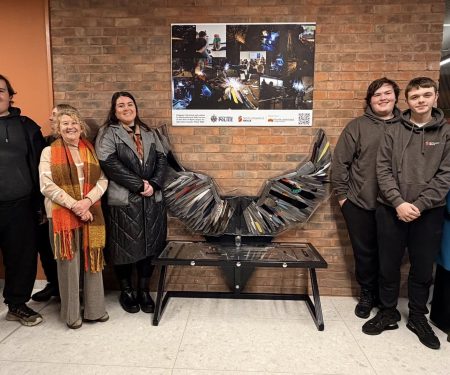
Dedicated students have unveiled a lasting tribute to knife crime victims as part of a pioneering art project.
Young people studying at Northumberland Skills at the Port of Blyth have used the college’s state-of-the-art welding centre to design and produce a bench made out of confiscated or donated blunted knives.
It will now go on display at The Pavillion in Blyth for the public to see and use.
The unveiling of the bench comes during Sceptre, a week of activity across the Northumbria Police Force area to tackle knife crime and its root causes by carrying out education and engagement activity in the community.
The students have also received inputs from the Violence Reduction Unit (VRU), which is funded by the Office of the Police and Crime Commissioner for Northumbria, Susan Dungworth.
Nicky Boyle, 18, who was on the Northumberland Skills learners who worked on the bench, said: “It’s been hard work to put the bench together, but now that it’s finished it looks phenomenal. I’ve loved every second of it and I’m really proud of what we’ve produced.”
The project has the backing of a number of families who have been affected by the devastating impact of knife crime, including the loved ones of Samantha Madgin.
Samantha was aged just 18 when she was fatally stabbed in Wallsend in 2007, just months after she had given birth to her son.
Samantha’s family, including mum Alison and sister Carly, have used their heartbreak to fight tirelessly to prevent serious violent crime in the North East, setting up Samantha’s Legacy in her memory.
During the process of creating the bench, Samantha’s family have given talks to the students about the devastating impact knife crime has had on them.
Through Project Shield, which is funded by the Office of the Police and Crime Commissioner for Northumbria, the Force is committed to tackling ASB and serious violence right across the length and breadth of the communities it serves.
Alison said: “I’m quite emotional now that I’ve seen the finished bench. I’m so proud of everyone who’s put in the effort towards this, they’ve done an excellent job and they were so excited to unveil it.
“Hopefully, it’ll make people think about knife crime and lead them to have conversations with their families of the dangers of becoming involved in it.”
Superintendent Scott Cowie, of Northumbria Police’s dedicated Prevention department, said: “It’s been fantastic to see the hard work and skill that has gone into creating the bench during the past few months.
“Northumberland Skills’ learners have taken considerable time to not only design the sculpture but also put in many hours of work to complete it too.
“The project is a fitting tribute to those we have sadly lost their lives to knife crime in our region, but we also hope it acts as a serious deterrent to those thinking of arming themselves with such weapons.
“We hope it will be used as a point of reflection for people to stop and take time to think about how dangerous knives are.
“As part of our work, we believe it is vital that young people don’t just hear about knife crime but are part of the solution to solving these problems too.
“We know as police that we alone can’t prevent knife crime, which is why it’s so important that everyone plays their part in tackling this issue within society.
“We are building on the work we do to tackle and prevent knife crime each and every day in our Force area as part of Sceptre this week. Officers are carrying out warrants at addresses to arrest those suspected of knife crime and serious violence while also seizing weapons and drugs.”
As part of other activity, colleagues in the Violence Reduction Unit (VRU), which is funded by the Office of the Police and Crime Commissioner for Northumbria (OPCC), are putting on engagement sessions at schools and colleges to emphasise the dangers knife criminality.
Alongside counterparts at British Transport Police, teams are riding the rails on the region’s Metro system to spot any knife crime issues and pass on safety advice to the public.
As part of Operation Sceptre, knife surrender bins are out in place at the following stations:
Northumbria Police and Crime Commissioner Susan Dungworth said: “It’s inspiring to see young people using their skills and creativity to raise awareness and take a stand against knife crime.
“Sadly, too many families have experienced the heartbreak of losing a loved one to such senseless violence. Knives destroy lives, and the impact ripples through entire communities, which makes initiatives like this all the more important.
“By creating this bench, the students have given their community a place for reflection and a powerful reminder of the consequences of carrying a weapon – encouraging people to stop, think, and make positive choices.
“This project complements the wider work taking place across our region, during Sceptre and throughout the year, including enforcement activity led by Northumbria Police, extra patrols through Project Shield, and targeted interventions and education sessions delivered by our Violence Reduction Unit, and partners such as Samantha’s Legacy.”
She added: “Thank you to everyone involved, but most importantly the students whose hard work and creativity have brought this vision to life. Together, we are sending a clear message that there is no place for knife crime, and we will continue to build safer, stronger communities for everyone.”
Cllr Guy Renner-Thompson, Cabinet Member for Inspiring Young People at Northumberland County Council, said: “This project captures everything that education should stand for – creativity, collaboration and community impact.
“By transforming confiscated knives into a symbol of hope and remembrance, our learners have not only developed exceptional technical skills but also a deeper understanding of the difference they can make in society.
“It’s a powerful example of learning with purpose.”
Anyone who wants to report suspected knife crime can do so by sending Northumbria Police a direct message on social media or by using the live chat or report forms on the Force website.
For those unable to make contact via those ways, call 101.
In an emergency situation, always ring 999.
To report suspected criminality you can speak to the charity Crimestoppers anonymously by calling 0800 555 111.

11th December 2025
ASB and crime
“Our mission to tackle ASB is working” says PCC as Project Shield areas see 32% fall
10th December 2025
Victims and Justice
New video resource launched to support domestic abuse victims through the criminal justice system
24th November 2025
Serious Violence and Organised Crime
Students create impactful bench in memory of those lost to knife crime tragedies