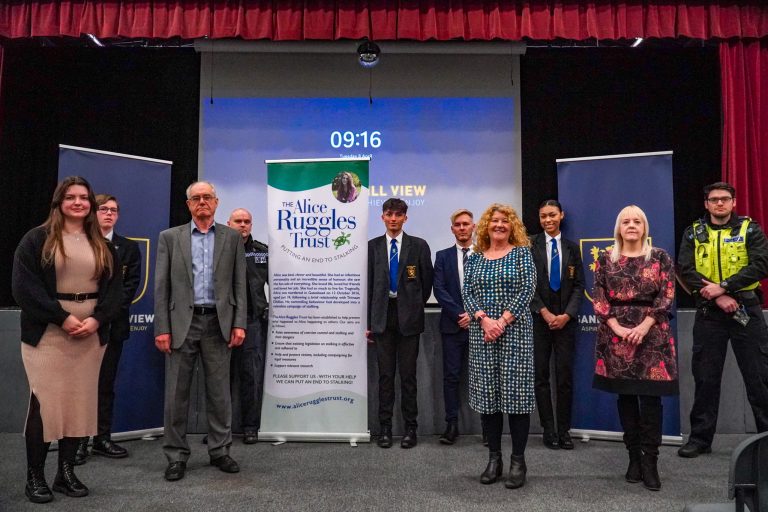
SCHOOLS across Northumbria are being encouraged to plan ahead for 2026 by signing up to a specialist stalking prevention programme delivered by the Alice Ruggles Trust and commissioned by Police and Crime Commissioner, Susan Dungworth.
From September 2026, updated national Relationships, Sex and Health Education (RSHE) guidance will require schools to include teaching about stalking and so the PCC is urging teachers to act now to get educational inputs in the timetable.
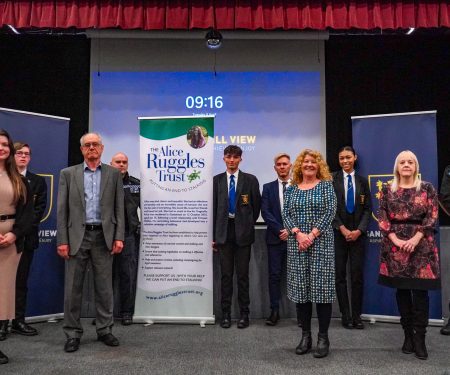
The Alice Ruggles Trust delivers age-appropriate assemblies that help young people recognise stalking behaviours, understand their impact, and know where to seek help. Since the programme began in Northumbria, the Trust has delivered 45 assemblies, reaching more than 3,150 students in schools across the force area.
Just before Christmas, the Government launched its new Violence Against Women and Girls (VAWG) Strategy detailing stalking as a key priority. This focus aligns with the PCC’s Police and Crime Plan and local VAWG strategy, all of which emphasise the need for prevention, early intervention and education — particularly among children and young people.
Recent national figures highlight why education is so important. Office for National Statistics data shows that young people aged 16–19 are the age group most likely to experience stalking, with around 8.8% reporting stalking victimisation in the last year. Within this age group, more than one in ten young women and nearly one in fifteen young men reported being stalked — a higher proportion than any older age group.
Stalking affecting young people increasingly involves online and digital behaviours, including repeated unwanted messaging, monitoring through social media, and misuse of technology such as location sharing. These behaviours can be easily minimised or misunderstood, particularly by teenagers, making education in schools a critical part of prevention.
Northumbria’s Police and Crime Commissioner, Susan Dungworth, said: “Stalking can start young and can escalate if it is not challenged early. That’s why education is one of the most effective tools we have to prevent harm before it happens. Schools play a vital role in helping children and young people understand healthy relationships, boundaries and consent — including in online spaces.
“With stalking now included in updated RSHE guidance from September 2026, I am highlighting this programme to support our schools with this and am encouraging them to plan ahead and take advantage of this programme from The Alice Ruggles Trust. Thousands of young people in Northumbria have already received this vital education, and I want to see it reach more and more.”
Lydia Bond, Community Engagement Coordinator for the Northumbria area said: “The Alice Ruggles Trust was established in Alice’s name to improve understanding of stalking through education. Our school programme helps young people recognise stalking behaviours, including those that occur online, whether they are experiencing, witnessing , or engaging in them, and to understand where to seek support.
With stalking recognised as a priority within the national Violence Against Women and Girls Strategy and new RSHE requirements, this is a crucial opportunity for schools to embed specialist and evidence-based education that empowers students to challenge harmful behaviours and play a role in long-term prevention.”
The Alice Ruggles Trust was established in memory of Alice Ruggles, who was murdered by her stalker in 2016. The Trust works nationally to improve understanding of stalking and strengthen responses through education, training and awareness-raising.
Schools interested in taking part in the programme are encouraged to register their interest by emailing lydia@alicerugglestrust.org.
Ends